

 Apple Podcasts

 PocketCasts

 Spotify

 Overcast

 TuneIn

 RSS Feed

 YouTube

 Amazon Music
“Resetting our Future” Book Series with Publisher Tim Ward
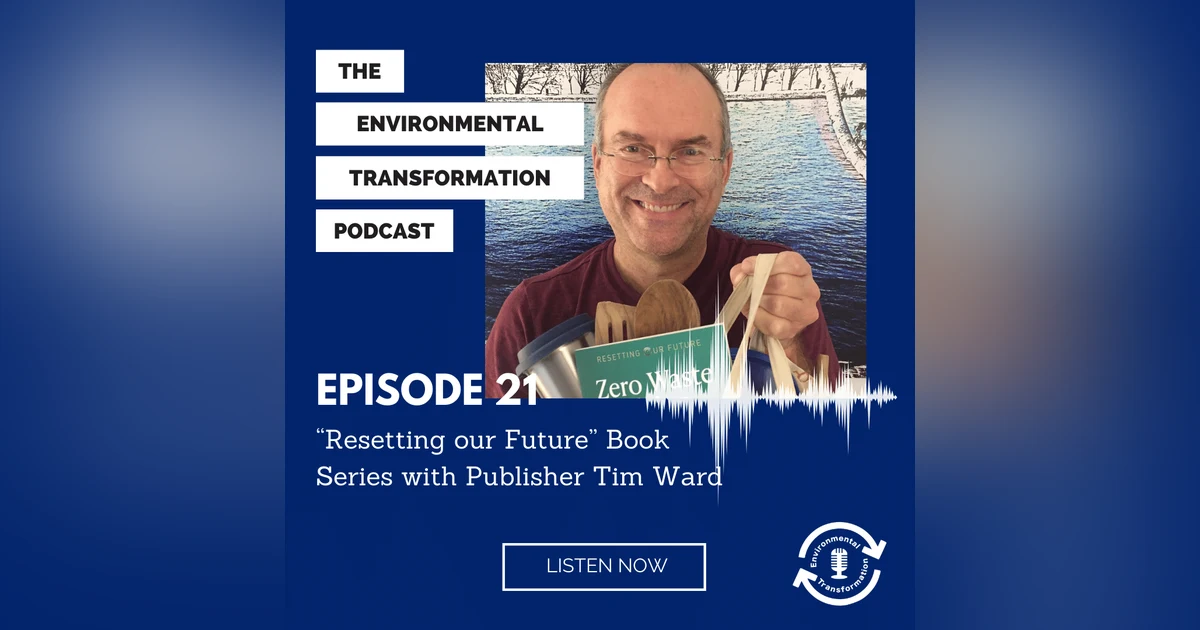

Tim Ward, Publisher of the Resetting Our Future Book Series, talks about how he came up with the idea for this series. How he selected the amazing authors and topics for the book series. Tim says, at this critical moment in history, with a pandemic raging, we have an opportunity for a Great Reset - to choose a different future. This series provides a platform for pragmatic thought leaders to share their vision for change based on their deep expertise. For communities and nations struggling to cope with the crisis, these books will provide a burst of hope and energy to help us take the first difficult steps towards a better future. I hope you enjoy the episode. #resettingourfuture
0:03 The world economic forum is taken up the term, the great reset. How does this did? How does resetting our future differentiate between that version or that visions that I showed us a? Yeah, I was so annoyed at the world economic Forum. They stole they ripped off rewrite. I began this. I was thinking about it. I was working at all through in May, and then sometime in June, they came out with this thing. The great, great reset. And they had people like the head of the IMF and Prince Charles, and, and a couple of billionaires and everybody, and they were like, yeah, we are going to make that we are going to remake capitalism, so that it fixes all the problems caused by capitalism. And they're like, wait a minute.
0:51 They just ripped off my whole concept here. Yeah, but they did except you know, and the world economic forum for all its genuine virtues. It's Basically something financed by the very rich and built around this. Very rich conference that takes place in Davos once once a year. So it's not likely to come up with solutions. That really don't also serve the very, very rich to some degree. Yeah. Sure. So I my series is scrappier. It's resetting our future, not you guys determined at the top, right? What kind of a reset we will do, but let's hear from the people who've been in the trenches. Made their way as really great thought leaders.
1:33 Let's hear what they have to say. Let's hear how these can be actualized by businesses corporations nonprofits policymakers, doing the grunt work, not at the top theoretical level, but really by the people who are, you know, I've been hard at it for some time. Welcome to the environmental transformation podcast where we talk with industry leaders who are making an impact and their businesses. Each leader is solving complex challenges and provide Solutions within their respective areas of expertise. Our host is Sean Grady.
2:16 He is passionate about helping clients transform their businesses and solving their environmental challenges. And here's our host, Sean Grady. Well, Tim word, welcome to the environmental transformation podcast. God, glad to have you. I am delighted to be with you today. This is good. This is gonna be a great interview for the listeners out. There. Tim is the publisher and author. Well, he is an author but he is the publisher of the changemaker book series called, resetting our future and I had the benefit or the the pleasure of interviewing Stephanie Miller who's one of the authors in this book series a couple about a month ago or so, on the podcast and we thought it'd be a great idea, an opportunity to talk with Tim about this, resetting our future series and understand.
3:15 You know, what, you know, what, how did this come about? And so Tim, welcome to the show and give us a little bit about yourself and then let's talk about this book series. Sure. So I've been the publisher of changemakers books for 10 years and my passion is transformation and because I'm an author myself. I'm fascinated by how words can create change. Really? When you think about it, words are the most powerful energy source in the world. Because words can engage people to act right. Words, can words can create a movement words. Can Inspire our religion, words, Create deep passionate experiences that make life meaningful him where it's going inside a resurrection and Insurrection.
4:01 So we have to be very careful with. Yeah, that is they were age. Probably powerful. So at this particular moment in time well in the midst of this pandemic, we're all struggling to make sense of. Well, how do we find a way forward after it? One of the things that we can do is we can look at this horrible thing that's happened in realize. It's actually also helped us cut our carbon emissions. Yes. Realized that the life of running around and working 80 90 hours a week, two and four from the office. That's actually not necessary for our survival. Amen. To that had one friend of mine says, it's as if Nature has said to all of us go to your room and think about it.
4:44 Yeah, that's kind of a good perspective of this because you're right. I mean how much energy conservation has been, you know, basically forced upon us because of the pandemic. I mean, We're not driving our cars. I've only put maybe 4,000 miles on my car and I put three thousand a month on it. So, you know, over the whole year. So it's been crazy how much gas I'm saving. And, you know, there's just a lot of energy consumption that's less. Now. There's probably a little bit of some energy consumption based basically won't being home, you know, in their homes. However, I think in general the mass balances It's gotta be a lot less right? I just read a report literally this morning that said the u.s. Consumption energy consumption was down. Down about 10 to 12 percent over the previous. Here's now, the reality is for anybody who's following climate change.
5:33 We actually need to be cutting our energy consumption by about 7% per year in fossil fuels in order to hit the targets and avoid extreme climate disasters. So, actually what to us is in one's way, been a disaster in another way has been kind of what we need to keep doing sure. Year, in terms of the change. It's making in our emissions. And in, are we live? So this was, this was really the Genesis of it for me. It was like, okay. So how can we take what this pandemic has done? Is a big stop and turn it into a big reset? And as we get vaccines, as we pull out of the crisis and the economic Fallout from it, how can we literally reset the track?
6:16 We were on tracks that we knew were doing as to climate change Extinction out-of-control inequality leading to Just an injustice, but leading to to riots and protests. This is actually an opportunity if we can get past the right, horribleness of it. And that's what I started doing with this series of books. So you started thinking about this. You're probably at your home, you know, really kind of stewing and like, it's Nalan at you. It probably because you know, I'm a, your book publisher and you're like, I gotta create something to, you know, you do get this information out and here's a great idea. So, you know, how did that conversation go? With, you know your company that you work for saying.
6:57 I got an idea, I want to do this. So the front part of that story is I'd already convinced my Publishers to publish a 10 book series called resilience, which was different aspects of building personal resilience to help you through the pandemic. How to handle, anxiety, how to connect with nature in a time of Crisis, right? How to communicate in the new virtual world. So, they gave me a green light to that crazy project. And I I got 10 of my Best Authors together and they each put out a book. They wrote it in three weeks. We published it in two weeks. Literally. 40 days from the idea to the finished series available on Amazon 40 days.
7:38 That's these are short books. Yeah, honey pages, right? Okay, books that sounded page. And that's perfect. Yeah, but if meant to be no fat, just here's what you need. Boom. That's about my tin and on exactly this series worked found. We could actually do. Okay, so when I came back to my publisher, my boss is at the Publishers and said, I've got another idea. They sort of went. Oh, no, I made a production process normally takes three months. You're stressing the system to have literally literally, I think they were ready to either jump ship, or push me overboard good. This, that's okay. And so, this time, I work differently instead of looking at people who are established authors, which I did for the first series.
8:25 Look, people within my networks who were the most knowledgeable the most likely to have really good. Well, thought through until the smes in the business, right? Exactly. Exactly. But also people who were like, you got these big organizations, the people at the top of the organization's. They're not the idea makers, the people's the bottom. They do the work, but the people in decide embedded in it are often the ones who are the true thought leaders. Sure. That's what I want wanted. Thought Leaders with good ideas, and I sent to each of them. You need a plan, you are planning a flag on a hill and then pointing the way to the path to get there. Okay, that's good. I've got a pretty good Network and my network has good networks.
9:10 So I got a vice president of Oxfam, international trade a book and inequality. I got a executive director of the World Bank to write a book on how and why we need to have a global playbook for the next pandemic. So that we Don't get the world ruin like it was, there is. Yeah, I did, you can put in place. I got somebody who's the president of an educational institute on intrapreneurship for how we can jump-start the economy and have young people create their own, their own jobs. They wrote a book called impact dead. So I got these amazing people stepping up and saying yes, so you got through your network.
9:50 You just kind of reached out and started, you know, kind of putting feelers out. And did you have to turn anybody away? Yes. Unfortunately, the main thing was people who said, yeah, this is a great idea. I can get started in about six months, 200 feet, that will be finished in about secure. They weren't prepared and have that that that they didn't have that lead time to get it there. Yeah. Yeah, and if I had had good ideas too. Exactly. So they had good ideas, but you know, people are used to a two-year. Timeline for writing a book. Well, that's not really going to be useful when we're looking at a and you wanted to get that information out fairly quickly because, you know, the list the readers and the people listening on this podcast.
10:40 I mean, they are in the midst of the pandemic and they want to understand this reset concept of when I come out when we emerge. What should I be thinking about? How do we you know change the way we do things, right? Exactly. You know, we time to catch on to we took a political bet. One of the, the Irish author of power switch the book of an inequality. He said we're taking a flutter Irish word for a calculated bet you think you're going to win but you could lose lose big. Yeah, the Biden would win the election and that a new Administration coming in at the end of January, would have so much work to do.
11:21 They would not be able to start thinking about ideas. They want to grab whatever was at hand. So we wanted to make sure they had a series of books like this hand and I will be nurtured start exhausting. And I need two things, you're grateful that the people who wrote them could actually get through to the people in the transition team. And this this particular book impact. Ed. It turned out this woman. The president of her Association was tapped by the transition team for the small business Network because she's, you know, pretty big Player in determining education. Sure, there are other with one of our other books. They're working very hard.
12:02 We don't have anything solid yet, but to get in with those who are the key, climate players, in particular, John John Kerry, because one of our books points away from the u.s. To do it, take significant steps to regaining some of the climate leadership. That was lost under the Trump Administration in the Paris Accords. So there's a lot of good information in these books and a lot of thought leadership. Ship. I've obviously I haven't read any of them, except the one, which was from Stephanie mellors, which was about, you know, zero, waste living, which I thought was a really good book. And like you said, 200-page digestible quick, you know, book to get the concepts down and realize. Wow, there's some practical ways that if I want to make a change, I can do it and it's not the heart. Yeah, exactly.
12:55 Yes, please book has certainly changed my life. Yeah. No, I was very impressed. And, you know, we had her on and she did a fantastic job. And, you know, I mean, I do environmental Consulting as my full-time job and and I'm helping, you know, clients through, you know, these types of zero, waste and environmental compliance and greenhouse gas, reductions and things like that. So it's spoke to me that look, you know, companies that high-level can do with, but At an individual level. That's where I think. You know, if we had more people individually doing things, you're going to see bigger change down the road, but now that was good. So so, you know, what was the reaction to the authors who agreed to do the writing and then you said, okay guys, you got a month. Give me the, the the book.
13:45 Well, the good news is everybody. Everybody said, yeah, we'll do it. Also had full-time jobs, right? And you know, that month has slid in some cases 2455 months, but that's okay. I know they're working on and helping them through it. For some of them. It's the first time they've they've written a book. We've got an editor on call. You can help those who really need some structural work and getting it all nicer nice and tight. Like, it needs to be needs to be and she's been built an awesome contributor to the to the series. But I basically let that's like we had the time, right?
14:26 We're the first books came out in late 2020, as long as we get this next bunch out in the couple of next couple of months. We'll be fine in terms of hitting the possibility for big change, right? When there's a new Administration. Here you are. So that's still aiming for that. And some of these books, they there's a real need for them. Not just the policy level. But for individuals, for corporations, for organizations that are looking at, how do we do things differently? Okay, so, you know, there's the world economic forum is taken up the term, the great reset. How does this did? How does resetting our future differentiate between that version or that visions that I showed us a?
15:09 Yeah, I was so annoyed at the world economic Forum. They stole, they ripped free. Right? I began this. I was thinking about it. I was working adults through in May and then sometime in June, they came out with this. Thing, the great great reset, and they had people like the head of the IMF and Prince Charles, and, and a couple of billionaires and everybody, and they were like, yeah, we are going to make that we are going to remake capitalism, so that it fixes all the problems caused by capitalism. And they're like, wait a minute. They just ripped off my whole concept here. Yeah, but they did except, you know, and the world economic forum for all its genuine virtues.
15:54 It's basically something financed by the very rich and built around this. Very rich conference that takes place in Davos once once a year, so it's not likely to come up with solutions. That really don't also serve the very, very rich to some degree. Yeah. Yeah. Sure. So I my series is scrappier. It's resetting our future, not you guys determined at the time, right? What kind of a reset we will do. But let's hear from the people who've been in the trenches. Choose a made their way as really great thought leaders. Let's hear what they have to say. Let's hear how these can be actualized by businesses corporations.
16:34 Nonprofits policymakers, doing the grunt work, not in the top theoretical level, but really, by the people who are, you know, I've been hard at it for some time so that to me is the different differentiation and we're like, we're like Avis to hurts, right? Yeah. It is not very kind to the ultra-rich who have become Ultra richer through the pandemic, right? Yeah, and there's been a lot of that, you know, unfortunately, for some of us, you know, links. Well, okay. So when you went to go put together, the series, did you have kind of like a framework of topics that you really wanted to really touch on in the development of these?
17:21 These these books? Like yeah, like Categories, like circular economy or, you know, greenhouse gas, or climbing. Did you how did you come up with these and or did, you know what were they? I did. I had a couple of big categories. Climate was one all, it's all on its own. Okay, because that really is the, you know, we think this pandemic was bad. Climate is the big one, right? Still still to come and if we don't address that we're really really in trouble behind that were a whole other host of environmental issues, sort of you. You put them in an environmental box. So Stephanie's book is in there dealing with pollution and waste. We have another book in the series dealing with food, which is both essential and also a huge environmental problem and has a climate component in.
18:08 It is yep. In it as well. And then the third bucket was more which you would call social activism issues dealing with things like inequality. And what I discovered is that cluster in itself, included the Education the book on helping us prevent future, pandemics the themselves. And even when that connected climate change to inequality, and how our political system was Arch, our economic system and our political system. We're driving the climate system. So those are say would be the three well, and then the fourth bucket would be other aspects of social change to make life better. So we've got a beautiful book being written right now. Bye.
18:53 Three women who are very senior in large organizations, about how to lie different post pandemic. What is the being Zoom mom's dub? There's so many ways in which, the work-life balance shifted because nobody had any control over it. But these women are really are in a position to create a new Revolution for women leaders well, and then, you know, just, you know, talking about that the new shift, in the way we do bit, you know, do our data Daily Business. The term zooming, who would have used that term, you know, right, right months ago. I've been zooming zooming all day. I'm tired, you know, but I think, you know, there's these new ways of doing business electronically, remote virtually, you know, is a stress on the system because we're not used to being home.
19:44 Most of us all the time and then still taking care of our kids, you know, making sure they're getting their homework done because you know, well, it's the school went virtual to you know, right. So those are things that are challenging for us. Today's podcast is sponsored by Stephanie Miller, author of zero, waste living the 80/20 way. The busy Person's Guide to a lighter footprint. Stephanie's business zero waste in DC provides virtual webinars and talks for organizations committed to a sustainable future. Stephanie will virtually speak with you and your colleagues about how to quickly and painlessly reduce your carbon and waste Footprints break up your Zoom fatigue and invite Stephanie to energize your team and learn.
20:29 On how you can have an immediate impact on the environment and if you want to know how your own household is faring, Stephanie also provides virtual individual household, consultations asked her to do a recycling out, at, for you and your family, or gather, your friends, and have a fun and informative group recycling audit. I highly recommend that you buy your book. It's a great read and provides practical applications for anyone that wants to implement new ways to become more sustainable. You can contact step. Here via her website at www.zenithawards.com in DC.com. That's www.oasisdoc.com. Or you can contact your via email at Stephanie at zero waste in DC.com. When check her out on her Instagram account at zero waste in DC.
21:25 I want to take a moment and introduce the current books and authors that are part of the resetting, our future book series, before we jump back into the interview, first top. What if solving the climate crisis is simple. By Tom Bowman. Tom's book is an inspiring and practical narrative that will leave readers feeling uplifted and empowered to create a future that they can eagerly Embrace while solving the climate crisis. Then we have zero, waste living the 80/20 way. A busy Person's Guide to a lighter. At Pratt by Stephanie. Jay Miller Stephanie combines her career, focus on climate change with her own research, and personal experience to show how a few relatively easy lifestyle changes can create significant positive impacts using the Simplicity of the 80/20 rule.
22:13 She provides practical applications that we can Implement. That will make the biggest difference in reversing the climate and waste crisis. Then we have a chicken, can't lay a duck egg. How can covid-19 solve the climate crisis by Graham Maxton and Bernice Maxton Lee. And this book explains how societies can Embrace this unique chance to build a future where people live with decency and in balance with nature. Next up is a global playbook for the next pandemic by and cabig am be at the heart of this book is a bold new proposal to create a global. Endemic Playbook, that can be quickly deployed when the next pandemic strikes.
22:57 And explores the options and argues that to fail to learn from covid-19 and to neglect to create a global Playbook now would cost far more. When the next pandemic strikes, then we have power switch. How can we reverse extreme inequality by Paul O'Brien with Billionaire's able to decide the fate of Nations private? Corporations more powerful, and less accountable than ever and political, autocrats around the world, shaking our confidence, in Democratic institutions, the power resides in all the wrong places. Paul's book offers practical action steps for activists who want to drive a power switch that overcomes extreme inequalities in our world and finally impact Ed how Community College entrepreneurialship. Creates equity and prosperity by Rebecca Corbin Andrew gold and Mary Beth curly.
23:59 This book provides Leaders with insights into how entrepreneurial thinking and action can put local communities on the path to recovery from the economic devastations induced by the covid-19 pandemic. So be sure to get your copy of these books from the resetting, our future book series today. But what's been the initial response of the six books that you put out so far, and like, what are the best sellers of the six? Another truly the best seller and these. But these books basically came out at the in November. So they're all very very new. But our book on the climate crisis, which is called what if solving the climate crisis. It's simple.
24:46 Yeah, well, that's so so that's got a lot of interest right now. So so such a because it the heart of the book is that we tend to get depressed when we think of the climate crisis, from the point of view of the technology shift from the point of view of the economic system and how that needs to be shifted. But if you actually look at, it is coming down to the people. Yeah. And people's intention and people's desire to Be on board with something to do the simple things that it takes then. We are not a lot of control over that right, right, that when it's when it's put in those dark human terms.
25:28 If everybody sees it is everybody's problem. Then we can actually make some big shifts towards towards accomplishing it. So, this book, really hit, not only did it hit a nerve, but because the author was, well, connected with climate leaders people like Michael Mann, one of the chief climate scientists and at my back, who's the head of a climate Communications program at George Mason University? These People are influencers and they got the word out. Well, so some of the people reading this book when it first came out, they were calling the author up and saying, Tom, I need a hundred of these books. One for everybody in my office, right? Oh, that's great effort to have the government GoGo climate-neutral.
26:09 She said get me a book for everybody, my office right away. So, it's Pat. It's that's this, that tab, that's exciting. That's, that's definitely touched a nerve like that for sure. You know, I think that there's going to To be a big shift in a lot of perspective of, you know, environmental changes coming forward in the new Administration for sure. And sounds like these books will kind of help Drive some that thought leadership and who was them alter the author of The, the climate change. What if it was simple book? I don't remember, his name is Tom Bowman, and he's been engaged in climate issues for many, many years. I think his book has some gripping stories.
26:51 About about how he came came to this. He is actually mostly a communicator himself, but he's one of the author's. This is how we found each other. He's one of the authors of an incredible compilation of over a hundred and fifty organizations within the United States, the have forged a civilian path for what does the US need to do to reduce its own climate carbon emissions. Even as the US government has been inactive over the last for four years. So all this work has been going underground and he wrote this report. In fact, that's how I found him to write this first book, but after writing this first book, the work of this whole report finally got Consolidated and I said, you know, this report by itself. It's just going to be a PDF living online. What if we put some chapters in front about how you and your co-author guided this process, with all these different actors in players.
27:51 How did you figure out what is the Strategic plan? That the u.s. Could sure. So explain the process and then write about, what are the next steps? How would it be actually useful for policymakers and different actors in the US will publish it as part of the series, right? Well, that's great. We said, yes, it just hit Amazon this week. And the author sent me a very excited email today saying it is the number one bestseller in green business. It just bumped off Bill Gates. Forthcoming book The Climate crisis. Nice. Nice. Wow. Well, so ok. So the sounds like, this is already like a huge success with this book series, and congratulations because that's impressive.
28:36 I mean, especially with the concept of doing this in such a compressed timeline, getting the I mean, I can only imagine the pressure that these guys felt like having probably weekly calls with you going. Hey guys chop-chop. Where's my? Where's my draft report over my dress, right? I was right. Oh, yeah, like that like, oh my God, I gotta get on the phone with Tim. I don't know if I can do that. Oh my gosh, I'll have a very good sense of humor. And they and they know I'm helping them realize their dreams. Our ambition, the book is part of the mission that is their their lives. Before I move on. I do want to say to Tom's new book is called empowering climate action in the United States and atop it. That's it.
29:25 That's it. That's it. Tom Bowman, and it's fairly good. I think we need to kind of hook up with Tom and get him on the show. That would be great. I think it'd be a fantastic. So I'm sensing that, you know, you're going to have like subsequent follow-on. Book, you know, series or should I say issues of from this series? Like hey, I got to do a couple more on this topic because of the interest is so great. Yeah. Yeah. That's that's true. I've been getting new people are now coming to me to request to be added to, to the series, which is great. We just signed the food book last last month. So, it seems to have a lot of momentum on its own. And by the way, if any of your listeners want to somehow, Get involved.
30:11 I hope at the end. We can leave them information to the Facebook page, which is going to be our, which is our landing page for. Yes. Yes, we'll definitely put that up there. Yeah, because we need, we need help. We need, you need authors. Got a lot of authors right now. Still room for more, but we need our Champions. We need influencers. We need people who want to, you know, feed books with transformational ideas in the places where they're needed, especially if it's incredible tipping. Point not just for the us but for the world. Well, this is great. I mean, I'm, I've been, you know, I've been working with Stephanie a little bit trying to get her book, a little, some attraction. As a matter of fact, I think what I'm going to do is repost her episode this week on social media, just to let people know about that about this book and it being part of this series and then kind of give them a little teaser about your your episode. We're going to push next week.
31:06 So I'm gonna be good but no, I think that's So, how did you, you know, how does this book series address concerns that you know, there's a lot of concerns out there about climate change and how it aligns with the potential agenda of the new Administration, you know, because I could see you know, you kind of put this book series together with a lot of ideas and like you mentioned earlier, this anticipation of taking the bet that, you know, Biden was going to come in and, you know, it's kind of kind of come to fruition. Ation, so to speak for you guys, right? It's like hey, we hit the jackpot almost in a sense, right? Because this is going to be the top thing driver. How you know, how is it?
31:49 How is it addressing these concerns? You think there's going to need to be action and that action is going to need to be Deft and it can't a lot of it comes to climate can't simply be done at a policy level. The policy has to already be connected into what organizations people's groups communities. Are doing or want to do. So, in the sense. You can look at Toms first book as motivating people to get involved to see that. The pessimism is our enemy right now. There is a clear path and it will take commitment of everybody.
32:29 Not just people in government legislate patha passed a law, right? It climate changes our life. It's our children. It's our energy consumption, right? So it's a way to engage anybody, the empowering climate action. The u.s. Is the what is the Strategic way that policymakers can hook in to what's already been done? And then the third book that I haven't mentioned yet. That will be coming out in February on. The issue is something very important about a small group of super climate pollutants, which are both very powerful. But also very short-lived. These authors of this book are all experts in this field there things like Methane like black carbon.
33:13 And they say that if we can dramatically cut these Force, small groups of chemicals. We can shave off about 40.6%. Centigrade of the currently projected warming between now and 2050. And that will buy as crucial time. To stir, start bending the curve because CO2 is so long-lived. We're not going to really bring down global warming by just reducing CO2. So they make an incredibly Deft argument that you got to get the science right to sew together. The suite of books is about as good as the incoming climate policy mixer ever going.
33:56 To find, right, right. Well, so I'd be interested in, think our to see books kind of kind of on this new concept of, you know, Ben ization Goal Zero, you know by 2035 or 2050, you know, strategies behind how does you know companies or globally that we do, we get there because if I'm going to do is a couple of episodes coming up on, you know, what's the energy transition look like, you know, because we've got a lot of petroleum companies who are transitioning to energy companies, you know, so they're like a, you know, like a shell. L or Chevron or all these big companies like that.
34:36 There are slowly making a transition and what does that look like? And how does that happen? And you know, what's all involved? Because, you know, hydrogen's in their solars in there while, you know, you know, wins in there. I mean, there's all kinds of renewable Gas Energy, type sources out there, to help us decarbonise. How do you do that? How do you measure that? How do you report on that? How do you really value? No understand, you know the impact. And so I think that be an interesting kind of topic from books. So just throwing it out there but the door is open. Yeah, so yeah, no kidding. Um, well, this is great. So the book series is out. It's called resetting the future, our future, resetting our future.
35:21 You've got currently six books out there on the on the of the series, you have six more forthcoming apparently, right? And yep. And due in about another what to three months and I'll be out. I think that's going to be great. And so, the hot sellers are the the climate change. What? If it was easy? Yeah. What is solving climate change in standard simple? Right, right. It's simple that one in and education impact, Ed. Okay, impact adds another good one and then I will know which about extreme inequality. Okay? In Stephanie's lovely book. Zero-waste living. Yeah, that's great.
36:02 So, that's some good books and It also, what are like, you know, for consumers who want to buy these books? How do they get a hold of them? And what are the average prices for books, like these for people who say, I want to get a copy of that book, you know? Yeah. So, the books are 1095 and I believe, it's like six bucks as eBooks from no k, whatever providers you can get them at any online retailer. That's where most people are going these days. You can get them there. Anybody who's got a local bookstore, that they're supporting everybody. Bookstore can order it if they don't have it in stock already, in major cities. They probably will have it. And in stock, if you go to Barnes and Noble or in Canada, if you go to Indigo is the big, the big book chain chain there. I always as a publisher.
36:48 I always really appreciate it when people support their local bookstores. So check there first, but you can always get them really quick from any online retailer. So have you ebooks a lot of people I talk to especially the younger. Generation, they love to, just listen to the book, you know, not technically flip through the pages, right? So already the books audio not at this point. Well wait and see if they proved to be popular enough. There's no reason they couldn't be sure. Okay until then, let's hope let's just hope that some Millennial has a loving parent who will read them the story. In their basement.
37:33 Just a joke, everybody. Okay, so that was fight. All right. So this series seems to be profoundly optimistic at a very dark time or if Humanity. So are you personally optimistic about this? I think we aren't you. I am optimistic about What's best in the human spirit and for whatever reason we seem to be able to rise to our best, when challenged with our worst and this is, this is a moment. It's so for so many reasons, and I think that's because people need to be shaken out of their comfort zone. Well, frankly, Sean who's got a comfort zone left these days. I yeah, no, kidding.
38:20 Right? I think everyone's, you know, it's like, It's something new comes up. It's like oh my gosh. Yeah, it's yeah. Okay, what else is new? I mean, it's like everybody's did experiencing very different things that no one expected to see. I mean, The New Normal, The New Normal is it's constantly changing. And yeah, it'd be nice if we had some sense of normalcy, but I think now that everything's happened. We're not going to have a sense of normalcy for a long, long time. I don't think we're always going to be a kind of this mode of changing completely and what does nature do. Something like that. They're two things. It either goes inside. It becomes small, and contracted, and tries to wait it out and then waits for it to flourish or it starts sending out seeds. You get you get nature just goes, boom, whatever it takes to spread to growth revived and and try to get this burst of activity and I want to be amongst the ones. That are the burst of activity that are you're on The Cutting Edge.
39:27 Look looking to make a new future, not to try to get back to the way. Things used to be right now. You're right. And you know, I it's funny you bring that up about you know, the the plant analogy because right before the pandemic hit my wife and I are like, you know, we really want to kind of get in the garden and be producers, you know, does this produce our own? Let's kind of get off of this. You know, this dependency of, you know, the the, you know, the supply chain right and grow our own stuff. And and we never realize when we were planning that last winter for the spring, this past spring and that this was all going to hit in March and we already have a plan in place to do a lot of growing, our own vegetables and flowers and such.
40:15 But now it's like, you know, you could do a book series on you know, just being Independent Producers of your own, you know. No food and not being so reliant on supply chain. How cool would that be? I mean, yeah, you know, be a Producer instead of a consumer all the time, but you know, there's there's all kinds of good topics go. I'm sure. But that's it. Such a great little environmental impact, you know, personal impact. You can have by doing that you save on all kinds of cost of consuming products and stuff and reducing waste. No, this is great. Tim. So what are the anything else?
40:57 Like you think, you're what's the future look like for you with the the changemaker book company, as you're getting ready to maybe finalize the the book series and anything that's going to be forthcoming after that. Yeah. And to my surprise in the last month or so, I've had two people approach me who want to do not a book but a series. Like the see the two series that I put out this year. So I'm looking for putting one together right now called communities of the future, which is going to be for communities that are recovering from the coronavirus. There's going to be Federal money flow at floating in, there's going to be organizations that are looking at. How do we get our economy's going again? How do we deal with issues of long-term unemployment inequality, our community level?
41:46 So these are going to be books that help communities. In to what's possible for the future. Again, rather than simply try to shrink back into themselves. And then the other is something, somebody fairly senior an Amnesty International approached me about. They want to do a short series with me called taming big tack. No way. That would be a good thing to be careful of, put that one up on Amazon. This wouldn't be the organization wouldn't be running. We actually want several different organization. People to come together. So it's not something we run by Amnesty International, which is someone who works there came to me first.
42:28 But so that may be up by the second half of this year. Well, that would be good. We got that's that's a Hot Topic sir. I think you're on The Cutting Edge to him. This is going to be good on my think. There's a lot to look forward to coming from your camp. And I'm really encouraged by what you've done. Really appreciate, you know, the thought and the leadership you put together on this this Resetting, our futures book series. I mean, I'm sure these authors were very happy to have a publisher like you to help them, you know, navigate the publishing landscape because it's not a, you know, clear path for a lot of people who's, like, I got an idea for a book. How do I do it? You know? Yeah. It's the authors have been great. My production team at John Hunt publishing. They've been absolute, you know, amazing, you know, amazing people making it, they can't work. And, and those Who run the show?
43:21 Who said, well, all right. Let's give it a try. I can them a lot of credit to because this was by no means a sure bet. Now, this is good. And well, this is exciting. I'm I'm really excited to do some another podcast interview or two if maybe with one of your book authors, I think there's some good content there to cover. That's important for people to hear especially, you know, this is the Environmental transformation podcast, and we're really about trying to communicate and educate the thought leadership in the Business Leaders in this. Country that are trying to make changes and whether that's through books and words whether that's through implementation of practices, whether that's to service providers through regulatory knowledge, whatever, right technology. That's what this industry podcast is about. And I think more authors that want to come on the show, talk about their product and their book and their ideas, the better.
44:13 And I think our listeners are going to really appreciate it. So I really appreciate you coming on. This has been a great show any Last moments are any less parting words you'd like to you know say and maybe how do our listeners get a hold of you and also the books sure. The easiest way for the the books is still with the website. I set up which is resetting our future.com doesn't get an easier. You'll find all the links that you need there. Including to contact me. We also have a Facebook page for the publishing imprint and right now it's just being filled with resetting our future authors. Mostly and that's simply changemakers books.
44:54 You'll see a lovely stylized. See when you go to it on Facebook. Yeah, this is great. Now, you guys are doing great things there. You know, Tim. Thanks so much for coming on the show. You're doing, you know, like I said, great things looking forward to seeing the new works that are come out here shortly and we'll catch up and see how the progress is going. I'd like to maybe keep in touch with you and bring you back on and talk about some more authors that you bring. It out into the, the series shown, that would be my pleasure in. Hey, you've made me a fan. I'm going to get on your membership list. Well, you just click and subscribe and start telling your folks and will maybe do a little cross pollination and get some word out about the process of elimination. It doesn't get any more environmental than the this, right?
45:39 That's right. Well, we really appreciate it to him will look forward to catching up and thanks for coming on the show today. My pleasure. Bye. I'd like to thank our guests him Ward publisher of the resetting, our future book, series for coming out of the show. Today. We really learned a lot about why Tim wanted to publish this book series at this critical time in our society and discuss the topics being covered by some of the authors who are contributing to the book series. If you have questions for Tim and want to learn more about the authors and the books currently available, go to www.recepttura.com.
46:20 That's Www dot resetting. Our future.com., You can also follow them on Facebook at resetting our future. I'll make sure to put a link to his website on my webpage, to listen, to Future, environmental transformation podcasts. You can check us out on Apple podcast, Spotify, Google podcast and other podcast, networks, or from my website at www.shawnacoronado.com. You can also follow me on Instagram or the environmental transformation podcasts. Book page, if you enjoyed the podcast, don't forget to subscribe and tell your friends. We also would love to hear feedback from the ET Nation about this episode and any future podcast topics that you'd like me to cover.
47:03 Thanks for listening. And until next time, make a positive impact in someone's life today.

Publisher
Tim Ward is the publisher of Changemakers Books, and the creator of the Resetting Our Future book series. He is a communications expert in international development & environment issues, and has authored ten books, including The Master Communicator’s Handbook and Pro Truth: A Practical Plan for Putting Truth Back into Politics.
