

 Apple Podcasts

 PocketCasts

 Spotify

 Overcast

 TuneIn

 RSS Feed

 YouTube

 Amazon Music
Lisa Foster: Emotional Intelligence Training and One-on-One Meeting Tips for Managers
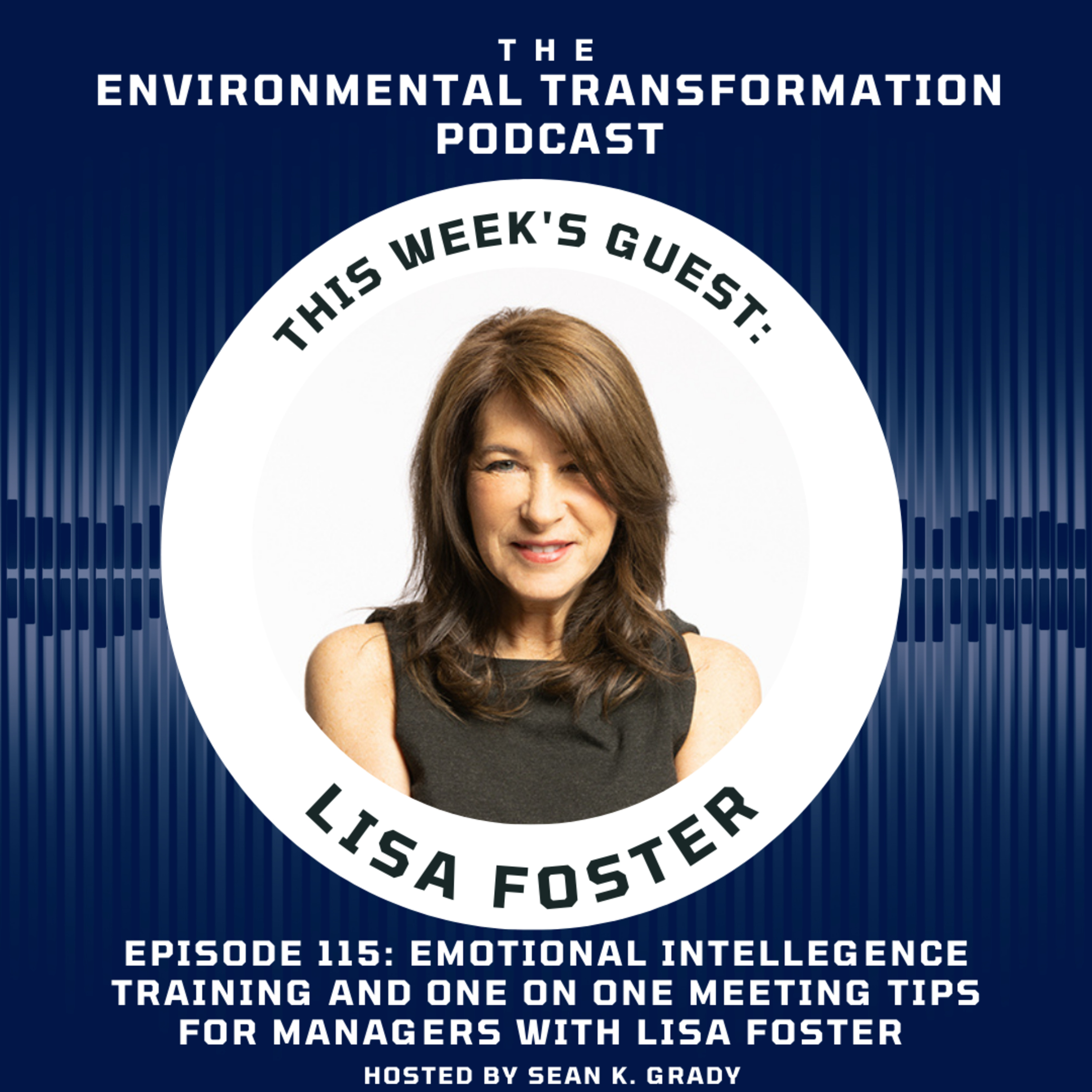
Lisa Foster is a business coach, speaker, and author of Bag Lady: How I Started a Business for a Greener World and Changed the Way America Shops. In this episode of the Environmental Transformation Podcast, host Sean Grady talks with Lisa about her journey founding 1 Bag at a Time, Inc., one of the first reusable grocery bag companies in the U.S., and how she scaled it to sell millions of bags. Lisa shares insights on leadership, emotional intelligence, and building high-performing teams. She also previews her free one-hour training on one-on-one meetings and her upcoming six-week leadership series.
To receive at 20% discount on Lisa's Leadership Essentials course starting September 24, 2025, sign up here!
https://calendly.com/lisadfoster/leadership-essentials-group-coaching-series-clone
Thanks to our sponsors: Cascade Environmental, E-Tank, and WASTELINQ.
0:00 So the first one is instilling trust. Trust the basis of human connection, right? If your employees do not trust you, right, you build a relationship of trust. You got nothing. You think about me sourcing bads across the world. If we had no trust, we had nothing. Welcome to the Environmental Transformation Podcast, where we bring you interviews with industry leaders, climate champions, sustainability practitioners, EHS and hazmat professionals making an impact in their businesses today. Each leader solving complex challenges and delivering solutions within their areas of expertise. I'm your host, Sean Grady, and thanks for joining us today.
0:43 Before we jump in, make sure to follow us on your devices and visit my website at www.seankgrady.com and sign up for our newsletter and e-mail announcements. Now let's get started. Welcome to the Environmental Transformation Podcast. I'm your host, Sean Grady, and today's guest is Lisa Foster. Lisa is a returning guest. She was on the show, Jeez, I want to say like 3 years ago, maybe four years ago. I don't know. We've been going for about 5 years now on the podcast. So Lisa, we're happy to have you back. So welcome. Thank you, Sean. I'm delighted to be here. Yeah, yeah. Well, you know, for the listeners who maybe not familiar or listen to that episode, I want to give a little bit of a bio background on you so they get a picture of what you've done and why you're a returning guest.
1:30 So for the listeners, Lisa started her career as a high school teacher. Then in 2005, with no business training but a powerful purpose, she launched a business that to disrupt the plastic bag industry. In her first year, she sold a quarter million reusable grocery bags. Pretty amazing. In her second year, she sold 2 million bags. And it's like, wow. And by three-year 3, she had 8 million bags she sold and each bag could replace up to 1000 plastic bags by cutting the usage by billions. Over the next 12 years. She remained a top supplier and LED a team of over 200 plus people.
2:13 Then she sold the company, published a book and gave a Ted talk. And so for the listeners, the previous episode that she was on was about her buck that she published about being the bag lady. And so we're so glad to have her come back on the show and talk to us about what she's doing. So welcome back, Lisa. I really appreciate it. Thank you, Sean. It was really fun to be here last time and I can't wait for this time. And yeah, there's there's always plenty to talk about. Well, I mean, you know, the book, I think was a big success for you, right? Maybe we can talk a little bit about, you know, what happened with the book and then is it still, you know, kind of getting some traction for you in certain circles.
2:53 It sure is. Yeah. It continues to sell. It's just kind of got those long legs a little bit. People hear about it. And a lot of people, you know, just write me. And they say, you know, they're so inspired by my story. I had someone over the summer write me up and said, I want to be you, but I live in England. I said do it. Just be it. Just do it. Start this in your neighborhood. And I have a possibility of going to London also later this year about a a conference that does looking for inspirational eco speakers. And they reached out to me. So it's really got me where I want to go and and I'm so happy to share my experience with other people to inspire them well.
3:37 That's great. I mean, you know, you had such a great impact in the industry, especially around the plastic bag. You became an entrepreneur obviously and, and that led to you to growing a business, you know, from your kitchen table, as we know based on our previous interview. But you know, as as that, you know, kind of matured and you sold the business and now you're into your kind of a different transition into your career. Talk about your success a little bit. Maybe now you're experienced that you now are leading a leadership coaching business. Yeah, You know what, When I finished the whole thing and I sold my company and I reflected back on what that was, you know, what just happened to me.
4:22 And I realized pretty quickly that I should. Certainly I got lucky and I had good timing, but that's not what accounted for my success. 9 out of 10 startups fail even if they have luck and good timing, Right. And what is it that separates the people who have who are successful and who aren't? And what we know, we know this from all the research to is that it's emotional intelligence. And I think all that purpose that I had and throwing my whole heart into it, but just listening to people, working with people, collaboratively solving problems together, encouraging people to be their best and to bring their best everyday grocery margins are notoriously small.
5:05 If my team wasn't great, any mistake cost us our homework margin, right? The margin of error had to be just really small and inspiring people to just come in and do their best every single day is a skill. And it is all these different emotional intelligence skills that we know, you know, really building trust and communicating well, competence and self-awareness, empathy, impulse control and decision making and managing your own stress. Cause things can happen really fast, right? But we know these are the things that make people everywhere succeed. So I've been coaching people over the last eight years, helping them find their way to these to the the the skills we know help everybody succeed.
5:57 When you were going through that process, was there a moment in your leadership of the business back when you were in the entrepreneurial bag lady growth mode that you realized, OK, I've got a superpower here that I didn't realize and it's one of the things that it's helping me grow? What was there a moment in time that just like, ah OK, I'm on to something here? I think with the leadership part, you know, I, I really believed in the bags and the environmental impact from the very beginning. But the leadership part, I wasn't sure. I mean, how do you lead people across oceans doesn't really even always work directly for you.
6:39 How do you lead this massive organization? And what I learned was that it was really just like I named my my company one Bag at a Time was about just those human to human interactions. It was the same in business, really just spending the time with my supplier overseas day after day on Zoom, going to visit her in China every single year, which was an amazing experience. I saw things, I think, you know, most Americans have no idea, you know, how the stuff what happens to get all the stuff we have in our house. And I went to those places where they make them and honoring those people and the people who really make our lives better. We should be thanking them.
7:26 I don't know why we're always seem to be in competition with them. We're a great team. If we could just lean into that and and collaborate, it makes everybody's life better. And it's just. Put human things just treating real humans with respect and decency and honesty, asking 1,000,000 questions and being able to admit when you don't know anything 'cause I went into that not knowing anything I had. You're you're, you're just learning. You're like, hey, please teach me, right? I need to learn this. And that was a superpower to that willingness to learn, the willingness to ask questions. That was really, really helpful.
8:07 But it takes a certain amount of confidence to say I had no idea what I'm doing. Marijuana, do it anyway. Let's do it What? How can how can we work together and get it done? Yeah. And so, so you, you, you kind of, you assessed all those techniques and skills and some of them are learned, Some of them are just like you're born with. I mean, you, you just innately have, you know, that that empathy to listen or to support and others may have to work a little harder at, you know, maybe understanding where the other side's coming from to, you know, to, to get a get along to, to make something work, right? You know, I mean, when you thought through that and you started to pull this together, you know, what was your motivation in, in the, in the developing of the coaching business?
8:57 Because now you're like, I've got all these tools and then you must have realized there's a lot of people that need this too, right? That's right. And that's exactly right. And I really wanted to share it. In a way, it brings together the two parts of my career. I did start as an English teacher, you know, and then I went off to be an entrepreneur and I thought, gosh, I have all that teaching experience and I was a PhD. And so I have all the research experience that I can. I can start to put the research behind my own experience and explain why it worked. And I knew why it worked. And I just thought I learned so much. I'd really like to share that with other people. And yeah, it turns out there's a huge need for leadership skills.
9:38 It's just most places just don't, they don't invest in it. We didn't used to, right. You know, when, when you were first starting out, Sean, did anyone say, hey, let's, let's get you some leadership development? No, it was basically work under maybe a mentor and that was about it. I mean, and learn on the job, you know, OJT, you know, and, and that's how I came up. And I think that it'd been nice if there was some, I guess, resources to, to lean on to help leaders as I'd like for myself as I was coming up to, hey, you know, we want to invest in your growth and we want you to work with Lisa Foster to, to learn some new techniques to help you become a better, a better manager, better leader. That way you become better, our staff become better, our business becomes better, right?
10:33 And it's really that that whole thread there, right? Yeah. I mean, the stats are that the return on investment and coaching is that it returns 7 times your investment. So if you spend, let's say, I mean most people, you know, if you spend $1000 on coaching, you're likely to end up with somewhere around $7000 more on productivity. For individuals, that means your next promotion. Right, Yeah. I mean, people hopefully see the results of the things they're learning from coaching, you know, if it's yours or others and, and they're implementing them and then, yeah, they're rewarded for becoming a better leader, right?
11:18 Yeah, Yeah, people notice it. When you start to become really high performing and your team all starts performing well, you get noticed. I know my clients are promoted in an average of 12 months. That's pretty much all of them except the ones who are CEOs and they they can't get. A they're right at the top. Let's think we on the board, I guess. But they're getting ROI because their teams are doing better. And so, yeah, leadership in in leadership development really pays off. But I think what stops people from doing is they think, oh, it's so expensive. And I think they make assumptions about how much it's gonna cost.
12:01 Well, and, and, you know, they're just afraid, but I don't think it should be afraid. I think you should really look at it. There's a lot. I mean, I have look, I have a free leadership. Well, we're going to get to that. Yeah, we're going to get to that because, you know, one of the reasons, Yeah, one of the reasons I reached out to you and we haven't spoken in a few years actually, but I always track on what you're doing and especially on LinkedIn. And I noticed that you're offering a couple courses for leaders who want to improve their skills. And one of them was a a free one for one-on-one, one-on-one training that, you know, helps motivate them to become a better leader. And you know, a lot of managers are required to do one on ones with people.
12:47 And I got imagine there's not really a great prescribed way of doing it sometimes with people. I mean, but I think anything you could do or leaders can do to learn what's the good way or a process that works or just understand why they need to do it is important. And so talk about your training that you're going to give as a free one-on-one type course coming up. Talk about this. Yeah, this is a free one hour course on September 17th at 3:00. And I've done this twice before and there really is that need. I keep doing this. I think I'm going to do this every two or three months going forward because there is this huge need.
13:29 And I do talk to people who really think one on ones are a waste of time. And what I've found is that one on ones are really being most productive tool that a manager can have. But you do have to do it right and you do have to know, again, just starting with the purpose, as you said, why are we doing this? A lot of companies make you do it, but they don't give you any training. And so it does become a waste of time just to check the box exercise. But when you really know where it came from and what you're supposed to be doing with it, it's incredibly powerful. So here are you know, I will go over the five things that every manager can accomplish every single week and.
14:12 Well, let's break them down. Let's let's break down the five goals that each manager should do. I mean, we'll give a pre pre course here just for the listeners because if they can't join you. But let's talk about 5 things that a one-on-one should include a manager should do. I think that'd be a good thing to step into here. OK, so here are the things that a manager can accomplish every week in a one-on-one one gathering information. So sometimes people think one on ones is them talking to their team. No, this is about the team talking to you. What are they doing? What are their progress updates? What are they working on? Is it aligned with your with what you with company priorities, right And what are the problems there in Calgary? So all these you get all of that information. So you end up with fewer errors, you end up with fewer problems, you get ahead of problems rather than behind them. So all this information gathering is the number one thing and.
15:09 That's good. That's good because you know, a lot of times they're like, hey, I need you to do this. What's your? What are you? What are you working on? But they don't really try to suss out what's really happening, right? Really happening, right. That's why they should be 60 minutes every week. And you give people the time to just really, you know, you figure there's 5 minutes of connecting just as a human being at the beginning. And then let's say they've got four different projects. Well, that's 10 minutes for each project. You're already at 45 minutes. Yeah, right. Yeah. And then you really don't have enough time to get through it. You really should talk about right? And then if you have any kind of training you want to throw in there, which is another thing you can accomplish or a decision you need to make, which is another thing you can accomplish.
15:56 You get the information you need to make the decision to train your team to motivate them, right? So these are all the things you should be doing in these teams. So you've got you've got to really listen to what's going on and then have that give and take and know what you're trying to accomplish. And once you know that you're like, it makes more sense. So one of the tips that I give is that the direct report should make the agenda. Oh, OK. I like that. I like that. If you're a manager and you've got eight people, it makes no sense for you to make 8 agendas for one on ones every week. They get that. They know what they're working on better than you do. They come in with the agenda and you're listening.
16:38 I like that because I've experienced this as a manager many, many times. You know, you've got, I don't know, I may have 10 to 12 reports and you're right, like I have, I have to do once a week, one hour session, that's all. I mean, that's like a full almost 25% of my whole week gone just dealing with one on ones. And what about the prep, right? You got prep time in there. So I love the agenda thing. There's zero prep for the manager, what the manager gets right. If you have 8 or 12 people that are working for you, how many of them do you really know what they're doing? Right. That's a lot, I mean. Are they aligned?
17:21 Are they working? Do they have some problems? What is really going on? I've had people who never had a one-on-one and started doing it and their mind is exploding. They're like, oh, I should have been doing this the whole time because I know there were people who were not doing anything because they didn't know what they were supposed to do. Hurry, thank you. What to do? You're meeting weekly and they're telling you the three things you're going to do and you say, OK, that's great. Can I put two more things on your plate? Yeah, or you can connect the dots because your others, you know, direct reports doing something that they need support, that person can help or whatever, right? Correct. So that's all the information that I was saying, like gathering information.
18:01 OK, so if you're not doing one on ones and you have to make say a decision, right? And you're like, oh, I need to go and check and see what's happening at that project. In order to make the right decision, you have to get up out of your chair. You have to go over to where, you know, Joe, whatever, whatever they're doing and ask them what's going on and get the project update and then come back and then figure it out. But if you have regular one on ones, yes it might take 8 hours, 10 hours out of your week but it's going to free you up because the information you need comes to you. Yeah, no, I love that. I love that. So that's really good. So, so you, you know, first goal is, you know, information gathering what what's the next thing that we should be focusing on if we're doing our one on ones properly?
18:47 So decision making, every engine has to make decisions but you it has to be based on the information. So start with information and then helps you make better decisions. Bring your team. Training. That's three training. #3 is training your team right there coming in, they have this right and they're talking about doing this or that and you're saying, well, when I was doing it, you know, the most important thing for me to think about was this. What are you thinking about making the the thinking about the right thing that you're doing a little shot talk, which is usually really pleasurable to the direct report and the manager. This is getting into the nitty gritty technical details and that's so helpful to them. Yeah, right.
19:34 I mean, this also kind of similar to maybe, you know, that's the mentoring side too, right? Where you may not technically train them on something, but you advise them on how to do something that you've got the experience at and they're like, Oh yeah, this makes more sense. OK, so helps. That mentoring or what I call sometimes influencing them, just saying, not going to tell you what to do, but you know, here's what I was thinking is really important. What do you think? And they're thinking, Oh yeah, wow, I might have forgotten that. Yeah, I don't. Yeah. Like, well, why didn't, why did you make that decision? Just so I understand your process and you can, you know, understand that where they're coming from. And maybe it's a logical position that they that they didn't, or maybe they had all the information, or maybe they didn't have all the information, but they just made that decision and then you can help them.
20:27 If it's the right one, you're like good, good job. If it's not, did you consider this? And that gets us to #4 which is problem solving. OK. All right. Yeah, they didn't do something. They missed something, they messed up, right? That's OK, You wrote. What happened? What do you want to do going forward? Can you make up for it? What can you do? Well, what are your options now? All right, that didn't happen last week. What do you want to do this week? I always liked it when staff if they had a problem and they recognized there was a problem, they would bring it to me and instead of me just like hey, I got a problem, they bring a problem and say I got a problem. But here are maybe what I could do to solve it. What do you think where they've already thought through kind of bringing a solution to their mistake or what the challenge is?
21:15 May not be their mistake. It could be just a challenge, right? But they're thinking and they're done. They're, they're not just sitting there going tell me what to do. I have a whole problem solving protocol, just a way for managers to train their employees to do just that. To be able to identify a problem, look at the options, make sure they're checking the obstacles, you know, just what could go wrong here before we plunge Ed first into this, you know, make sure you know what could go wrong and then make a decision about what you want to do after all of these options, right? And that is a conversation between a manager and a direct report.
21:57 And so that problem solving protocol I go over exactly the details of how to get that done. No, that's great. That's great. And then what's the fifth one? The fifth one is really motivating your team and it's that recognition when they do a good job, it's supporting them when they need that support. And really, honestly, just the listening and making them feel heard, right? They feel like, wow, you know what we want them to feel is wow, my manager really does care about me. That turns out to be a hugely powerful motivator. My manager cares about me. It's the best way to motivate, you know, an employee and also, I think develop loyalty, right?
22:47 Because now you know, you're, you're supporting that individual, you're backing them publicly or in just in person just to make them feel like, you know, like you mentioned, they've been heard. I think that's really great advice because motivating and providing, you know, giving recognition for job well done or something that they've accomplished. This is super motivating. It's completely, it just builds their self esteem. They get, you know, and they feel good, right? I always say you have and here's a spoiler alert on my full thing at the end, but you have done your job as a manager. When they walk out of your one-on-one saying I have the best manager, I better do a great job to keep this great job. Yeah, and they're also like, I'll see you next week and you. Know I can't tell you I know people who haven't had a check in with a boss for up to two years who knows what the heck they're doing or not doing.
23:54 You are definitely not getting the most out of your employees if you're not checking in. They said that regular one-on-one making them feel good, making them feel heard and cared about, supported and you get all the information. I mean, this is a great two way St. and about it what I've found for most, most people that they always push back and say I don't have that kind of time. They always come back to me and say I have so much. I'm getting so much more done because all the time I used to spend getting interrupted, problem solving, training, doing this, doing that, it comes to me every week. I've got it scheduled and I do schedule that 8 or 10 hours a week, but I got another 30 hours a week. That's now much clearer.
24:42 I'm, I'm yeah, can be more focused, right, Because I know the issues. Yeah, yeah. Hello, ET Nation. I want to thank you for listening to the podcast. If you're enjoying the interviews we bring you, consider supporting the program by visiting my website at seankgrady.com and buy me a cup of coffee. Proceeds will go towards helping me continue producing timely content and offset production costs. I'd also like to take a moment and recognize a few of our sponsors of the show who have been amazing partners and our ET Nation legends. If you're looking for a drilling and environmental contracting firm to help you delineate the extent of contamination at your site, then look no further than Cascade Environmental.
25:23 Cascade has over 37 offices across the country and offers a huge range of environmental and geotechnical drilling, site characterization, and remediation services. With their huge fleet of equipment nationwide coverage, Cascade is a great choice to support your environmental and infrastructure needs. To learn more, check out their website right at cascade-env.com. That's cascade-env.com. Hey, are you looking for an equipment rental company to help you with your next wastewater remediation or waste management project? E Tank is the only environmental equipment rental company in the industry that offers 100% guaranteed certified clean temporary liquid storage tanks at no additional cost.
26:08 This protocol gives Peace of Mind for the previous customer by limiting their downstream liability as well as the future customer by preventing any cross contamination for all of their rental tanks. E Tank also runs a one-of-a-kind complete maintenance program for all rental items including liquid tight roll off containers, fluid transfer pumps and filtration items. The next time you are presented with an environmental challenge, call E Tank to come up with the solution for your problem. I want to thank one of our sponsors, Waste Link. Waste Link is the all in one software platform transforming how environmental professionals manage waste, connecting generators and service providers and disposal facilities in a way that is simple, connected and transparent. Your platform helps streamline everything from waste profiling and routing to inventory management and billing, giving you the tools you need to operate more efficiently and reduce cost, whether you're a generator looking for better options.
27:12 Or. A service provider seeking greater efficiency? Wastelink has you covered if you're ready to take control of your waste management processes and optimize your business. Visit Wastelink com to schedule a demo today. Have you had any situations and maybe you've encountered this? I know I've encountered just recently in a job I was at. But where you've got direct reports, it'll kind of in a way, but functionally they report to somebody else in a way too. And so a lot of times that maybe that employee will divulge or talk to the other person and not really to you and, and really they should talk to you, but they don't. And and then you kind of hit get hearsay going on it. Where do you find or how do you deal with those situations from a leadership perspective and how can you maybe correct those scenarios?
28:09 Yeah. So that's really the art of influence and what is based in is relationships at the end of the day, right? Those are the people, even though they're not your direct reports. I have a lot of my clients do one on ones with people who are not their direct reports. No, maybe every two weeks or once a month. But what you want to do is not calling that person every time you want something from them. How annoying is that? Is that friend who always calls you when they want to borrow something or they want something from you, right? But they don't ever call them, say hey, what's going on? You want to go out and have a beer like so it's the same, right? Building the relationship, finding time on their schedule regularly, you know, every two weeks, once a month, and just saying how are you? Yeah, what's going on with you?
29:02 Again, giving them that sense that you care about them and they can trust you to open up. Then when they have that problem, they are going to come to you. So when you when you ask the employee to develop the agenda, so to speak, or. Should you as a? Manager give them kind of the the top hits like these five topics like these are the five I want you to hit cover on when you come to me. So they already know what they need to put together. But or should you just let them be organic and just come to me with whatever you got and let's talk. I mean, you know, not making it too formal. I suggest a a a temp. I give you a template for an agenda. Basically you start with a little chitchat.
29:44 Just connect as human beings because we are and and then, you know, maybe a little follow up from last time. Hey, last time you said you were going to do something. How did that go? Make them fit. They're like, oh wow, my manager does remember what I'm supposed to be doing. I guess they do camp. And then what you want is a is a project update on all the things that they're working on. So this is 8 to 10 minutes. Then after you got four or five, six things they're working on, you want to keep it to an hour. So you know, they might spend 8 or 10 minutes and really it's like a 5 minute update and then there's a 5 minutes of discussion, right?
30:26 And that might be training, shop talk, influencing decision making, problem solving, any of those things might come up. You let that happen organically. But if they give you a 5 minute update, you spend 5 more minutes just talking about the issues with that project and making sure they're they're on track. Great, move on to the next and get the update. A little shop talk, the update and a shop talk. By the end you're almost done, but you got one more question at the very end. What's that one? Always have to ask, is there anything else on your mind? Yeah. Anything else you want to talk about? Let them kind of open the door.
31:11 Right, that's exactly right. It's an invitation to open the door. You can assume. You can assume there are things they won't want to put on the agenda. Yeah, that's. Good. May I just assume those things are not there? That's right. That's right. So that's when you're going to hear the gossip, the innuendo, the the real, the deeper problems. How they really feel, maybe. Sometimes how they really feel or sometimes how someone else really feels because they told them the other day, right, Whatever that is going on, right, That's when you get usually, you know, it's just good information.
31:54 Now you have more information about what they're thinking, how they're feeling, all of that, what other people are thinking, word on the street. You get a lot of information there. And once in a while you're going to hear about something that is maybe, you know, like a threat, an existential threat, right? Some new competitor or some problem that you now have an early look into, right? A month or two months down the line, it's going to be really hard to deal with this. But now you're in a position where you can actually do something, right?
32:35 So as a manager, your ears are always out for what is that big thing? The one big thing is it here is it here, who's got one, who's got that is really going to disrupt, right That we need to be prepared for. And sometimes you have to take that up to your to your higher ups and say, Houston, we have a problem and you get all hands on deck and solve the problems when they're just an inkling of a problem. No, that, that's, that's great too. And good insights there on getting that last little bit of was there anything else on your mind? I like that approach and I think that's really good. But you know what, as I'm thinking through kind of maybe even my own journey as a, as a, a leader in the industry over the years and managing a lot of people, hiring a lot of people. You know, we talked about it earlier, the leadership development and the lack thereof, so to speak, of training opportunities for leaders that they who find themselves in a space where they have a lot of responsibility with staff.
33:36 I mean, there's a lot of time when you as the leader, you're dealing with personal issues that your staff have and they bring it to the table like their home life comes to them at work a lot of times. And you, it's hard to not have to address those things right in the workplace because it's part of them. And I think that's hard to deal with as manager sometimes to understand. I mean, then now you got empathy and, you know, you've got the sensitivity and the emotional intelligence you need to really be able to be smart about how to respond to some of these concerns, issues, challenges these people face. I mean, how are you helping leaders deal with all these facets of leadership? I'm assuming, you know, maybe you dive into this during your leadership, you're more in depth leadership training. Maybe you could talk a little bit about that and maybe some of the things that you're doing to help leaders learn how to address these types of concerns.
34:36 Absolutely. That's something a little beyond the scope of of a one hour free. But bring me another. I do have another leadership series coming up. It's six hour and a half sessions. We're going to do them on Wednesdays. It's going to be 6 consecutive Wednesdays from the end of September on the 24th to the end of October. And then you're going to get 5 key skills. And it does go into exactly, you know, that kind of a of an issue, right? When somebody we're going to do a whole a whole session on empathy, right and just knowing when somebody comes in with their home light, somebody comes in with a divorce, somebody comes in with their pet die, somebody comes in with whatever. These are big problems.
35:22 People get very upset. Yes, they do. I you all leave it at home. It come you right into the office. So just learning how to use the empathy strategically. That's what all this is about is like not just letting the emotion flow, right? Emotional intelligence is about learning how to use these empathy as a skill strategically. So someone's comes in with some disaster, whatever is from their pet to their marriage, whatever it is, they stump their toe. I don't care what they're upset about. You come in and you listen to them and you're empathetic and they feel heard, They feel validated, they feel like you care about them. And actually you tell them you can't be like, wow, that really sucks.
36:12 Gosh, this must be so hard. I identify with them, be in there with them. Yeah. And that's all you have to do. Yeah. And and you know that that goes a long way with with them employees or your subordinates as a leader. I mean, you want to provide, I call it like the safe space, right? For them to come. They need the job to do their make their livelihood and you, they don't need to hear they don't care. You don't you know, people don't care about them when they come to work. They need to know that's safe, right? That's right. That's right. Because they're not going to care about the work if you don't care about them.
36:53 But if you let them know you care about them and that's all you really need to do. Listen, empathize, be in it with them. And a lot of leaders where they get into trouble is they crossed the line into trying to solve their personal problems. Not do that. You don't need to. It's not required. And they don't want you to solve their problems. They just want you to understand their problems. Understand that today I have this problem, right? And that's all you need to do. I talked to somebody once and he said, well, I have an employee who came in. This was a few years ago when Russia just invaded Ukraine.
37:35 And the employee had all their family in Ukraine. And this is not something the leader can do anything about. But he just, he was really good. He listened, he empathized. He said, what do you need from me? And the employee said I really need today to take the day off because I'm going to try to get my family it though. Yeah, that's easy. Yeah, go for it. Yeah. That was all that needed to happen at that moment, but that employee is so grateful. Yeah, right. So that's, that's great. I mean, and that's a good example of you're not solving the problem of what's really the problem, but they're helping them go deal with their own problem.
38:18 Or do what you need to do. I'm here to support you, to do what you need to do. Well, OK, the next day, they're just like so grateful. They're like, all right, I'm going to do twice as much today because I know I wasn't here yesterday and they're going to bang it out. Leaders, we're all challenged in certain areas of our abilities. You know, some have more problem solving skills or public speaking skills or negotiations. I mean, let's break down, if you could, some of the main skills. I think there's going to be in your new, the extended course you just mentioned six weeks. What are the main skills that you know somebody attending the course will learn and the takeaways that they can expect?
39:00 OK, so #1 and we're going to do a session on each one of the five and then we're going to have a wrap up where we get everything to put it all together. So first one is instilling trust. Trust the basis of human connection, right? If your employees do not trust you, right, you can't build a relationship of trust. You got nothing, right? You think about meat sourcing bags across the world. If we had no trust, we had nothing. Isn't that also part of integrity for you? I mean, in this. Yeah, right. Yeah. So you have, there's a lot that goes into building relationships with trust. We're going to go into all of it, right?
39:41 Yes, there's all of that. And if you have trust, then you don't have to play the power games. You don't have to play, you know, this person off that person and and territorialism and all that. No, everyone trusts each other. We're there to do something. We've got a common purpose or it didn't get worked out. So it's trust. Number 2 is confidence. And people have a lot of trouble with this when when I define confidence I really mean self regard, which is accepting yourself full the good. The bad and everything in between. And some people like to, you know, some people think accepting your weaknesses or acknowledging your weaknesses is weak, but actually it makes you stronger because if you're pretending you're good at something you're not good at, or anytime somebody gets close to that, you're going to have a stress response.
40:35 So you're going to come out then with a fight flight or freeze. And if you see this in the office, right, somebody just says, I don't have time for this and they walk away, that's a stress response. Or they just start fighting. You have no business doing this. You better keep out, you know, has a stress response response. We've seen it too in meetings. Somebody just goes and. They start rambling, yeah. Has the freeze response. These are all stress responses. So if you acknowledge the weakness and somebody comes to you and says, well, what about this thing you know that you're not good at, you go, Oh yeah, that is a problem. Let's go down the hall and talk to Sean because Sean's really good at that. And then you don't have the stress response. So that's something your weaknesses really helps you not get triggered and helps you stay in the moment and just solve problems collaboratively to that confidence of know your strength, identify your weaknesses and compensate for them.
41:37 That's good. That's really good. I mean, yeah, but I like that one. So that's confidence and, and, and there'll be exercises, the whole thing to talk about all of that and making sure that you're not overconfident. Coming off as arrogant and respecting others is number 3. And I put it that way because respect is mutual. So if you want to earn respect. Give respect. You need to start by giving it right. No one's going to respect you if you don't respect that. If you treat somebody like crap, how how are they going to feel about you? They're going to feel like whatever. There's no loyalty, there's no motivation. There's no, they don't, they don't care what happens to you.
42:19 They'll throw you under the bus, right? You have to respect others if you want to earn respect. And it's just a huge, it is a huge skill. Again, it's a strategic skill. I can think back a few times in my career where maybe I crossed the line on that before and like, oops, I probably should have given a little more respect. And I think, yeah, it can and does at times. And and then you realize, well, maybe I could have been a little more collaborative. It's a learning moment in your career at times. And hopefully you just keep learning and building and growing and moving forward, right? But think if that, you know how things would have changed for you, Sean, if you had had that kind of training in your early career. And then you have you came to those crossroads and you're like, all right, I could be respectful here. I could just blow them off.
43:13 You might have made another decision. Yeah, you know that. I think that when I look back, I go, well, you know, you need like a situation like, well, maybe I'm in the right, but I'm being attacked for doing something that's right. But instead of just trying to be respectful and get along, you go back on the attack too, right? And that's like that emotional intelligence as well to understand, uh oh, I better do this, right? And and that radar, that radar needs to be up a little higher catching the signals, right? Yeah, Yeah, I just did a blog on that last week on how do you manage change, right. Even if you're right, there's just a whole process to getting everybody to buy in, raising their awareness and collaborate on what I know it. Especially when you're in a bigger organization and everything's being decided upon like by committee, Oh my goodness, it's even more important, right? Yes, and it can take you 2 years to get something done, but you get it done right and people love you for it. Yeah.
44:18 Now you can try to ram it through, but it may not work and people might hate you for it. It's like better to know the process is is just. This is how organizations work. They're collaborated by nature. So that respect thing is a big one for people. It's a big thing. It's really a big thing. Well, we've just uncovered one of Mike. Maybe not completely a huge weakness, but you know where you make mistakes every now and then. Every now and again, and we all do, right. We all do. We all get rocked up in what we're doing and.
44:59 Well, yeah, you're passionate about what you do and and you know, you know, that's, I think I if I'm going to fail, I'd rather fail knowing that I, I was falling on my, you know, what I thought was right, my beliefs and thinking you're trying to do the best, but and just may not have been the right way of getting it done. And that's that self-awareness that comes into all of these things, being aware of how other people are perceiving you and just, you know, just trying to to make sure that you're bringing them along, you're competent enough, they trust you, they respect you, you respect them, and things go better. I mean, I mean, the ET nation's listening to this and they're probably going, Sean, you're getting your coachings money's worth of the city. You're about to get some ROI here. This is good, this is good.
45:49 OK, we're going to #4 Now what's, what's? The number 4 so #4 is negotiate alignment. And those are two different skills, negotiation and alignment, but we put them together because when you're negotiating internally in your company, it's different than when you're negotiating externally regarding negotiation is about external, right? But this is getting alignment. And so really, you know, there is a lot of back and forth, but it's so important for everybody to be aligned, pulling in the right direction. That's when teams gets become super powerless, right? Is is not just one person doing this and what those silos, right?
46:30 This person's doing this, this person's doing that, that person's doing that. You can get so far. But when everybody is in the boat rowing at the same time in the same direction and everybody's aligned and we're all contributing some little thing to this bigger thing, it gets massive, right? That's where you start to get top quartile performance. That's when all the synergies are kind of meshing, right? So you need to know how to negotiate with all the respect, confidence, trust, building self esteem, supporting them and making sure they're aligned right. So I think we going into that, we'll be talking, going over some of the one on one's techniques to make sure that you are weekly, knowing what they're doing every single week and keeping people just moving in the right direction. Everybody's getting along.
47:20 We're all gone in the same place, right? Focused on common goals. Everybody's focused on comical. Well, that's good. I mean, a lot of team members, you know, they, they're trying to do the right thing, but they're not always collaborative, collaboratively working together to see where the alignment really happens. And yeah, the the sooner. Where they start off in One Direction, but pretty soon they're going over to the left or they're going over to the right. Or sometimes these like I was in a, in a, you know, previous role where the company was fairly siloed in, in the groups that were all part of the same group. And, and I came in and I was like, hey guys, we're all wearing the same jersey.
48:10 We're not wearing the previous company. And you got this other company is like, we need to come together as a group. And when we started doing that, then we started cross collaborating and realizing, oh, OK, I can work with you on this problem. I've never talked to you before, but now I know that you're part of the team. And now you're solving one of my problems by not having a resource to do this, this, you know, the service. And you know, then it's like everyone started working together and it made a huge impact getting the alignment in, in, you know, full connectivity. And it was just great. It was it was one of the bigger positives that that came out of that effort and it was good.
48:54 And teams like to be connected when they realize that there's the other people that can help them. Right. And that the need for people to belong to something like I love what you said about, well, we're in the same jersey, they'll belong together. We're a group, we're a teen. People are hard wired. You think about human being is developing 10,000 years ago, human being out in the Bush meets a tiger. We're not very fast, we're not very big, we don't have big teeth or claws. That that human being does not have a really good chance. But you put 10 guys maybe with Spears and one tiger. The Tiger's chances go way down hardwire to work together. That, that, that sense of belonging, of wearing the same jersey and that sense of we're all together and I can come and ask you even if I don't know you because I know what jersey you're wearing.
49:52 Like all on the same team, we're not against each other, we're all together. That does really improve results in it. That's when you get top quarter 1000 results. That's great. So what's the 5th? The fifth topic? The fifth topic is decision making, because when you complicate and people have a lot of problems with it, when we talk about it from an emotional intelligence perspective, we break it down into 3 discrete skills. One is impulse control, right? Some people just take the first idea off the top of their head and just go with it. Not always the best idea. It's just the first idea.
50:33 So impulse control, reality testing, right? Some people just get a gut feeling and they go with that. Maybe let's learn how to reality test it before we go too wide or too far with an idea and impulse control and information gathering. So these are and right, you need to just know what are the next steps? What is the information? We need all of this to make a really good decision. And then you need to also. So we'll break it down into those skills. And then we'll also talk about some of the other things that get in the way of good decisions, like our own emotions, our biases, conscious, unconscious.
51:16 You know, our passions sometimes get in the way of good decisions, right? And sometimes they lead us toward good decisions. You have to have that, that moment to check and say, OK, I'm really passionate about this. Is it helping me or hindering me? Do I have to manage my own emotions or are they going to help me inspire others and checking in? Have you had the situation where your managers are like information overload and they can't make a decision, you know, because there's too many alternatives and they're paralyzed by actually making a decision instead of leading and making the the decision. So tell me about that, your experience and maybe how you address that.
52:03 You know, when I work with people on decision making, it really is about process. You need to have the process and you're it's never going to be, you have to accept it may not be the right decision. So sometimes especially there's a lot of ambiguity and so many factors where I encourage people to do is just what is one thing you can test this week? Why don't you take one thing, one option and test it? Is that going to work? And if it's not going to work, you got five others, right? So you've got all the options. You've taken a look at at the obstacles, right? What could go wrong? All right, which one you want to test first? Let's get some testing done.
52:46 Just take a few baby steps. It's ambiguous. We don't know what's going to work. Feel your way through, right? If you think about somebody who's blind walking down the street, but they get down public streets, right? How do they do it? Tap, tap, tap. And that's what you want to do. Is it in a decision when there's so many variables and you're not sure what's going to work? Little test here, a little test there. Feel your way to what's going to work. OK. I mean, that's good. I like that. I like that. So so leaders can expect some in depth training on these topics. You've got decision making, you've got negotiation in alignment, you've got respecting others, you got demonstrating confidence and building trust, right? So those that's the big takeaways from your in depth course.
53:38 Is there anything else that the attendees might get by taking the the class with you? Yes, absolutely. Right. So I do emotional intelligence training and I do emotional intelligence assessment. So everybody gets included in the course. An emotional, a full emotional intelligence assessment, you get those 5 scales, each scale is divided into 3 subscale so you can get data on 15 separate skills. You'll be able to see what are your real strengths, right, that you want to lean into every day. And you're going to see, Oh my blind spots. I didn't realize I had one person who took it and impulse control was very low, like below, you know, really below normal.
54:23 And she just looked at me and said impulse control is that a thing? And I said, yeah, it's a. Thing for some people. It could be. And she goes, well, in my house, if you didn't say what you thought you were being fake. And I said, yeah, but you could be authentic and tactful. There's a time and a place and a way to say everything. So the impulse, you want to listen to it, right? This is using these skills strategically. OK. My impulse is this isn't a good thing for someone to do. Yeah. Is the right thing for me to do is say, hey, you shouldn't do that?
55:04 Or should we just sit down and have a chat and talk about what could go wrong? Like what is the best way to go through it? Right? It's always going back to taking these skills, using them strategically in the moment, what is going to get the best outcome? And so learning how to manage your impulses on all those things. So you'll get data from all of that. And then a one-on-one with me. In addition to all of these time, you get one hour with me and I will go through that report and make sure that you're really clear on your leadership development. What do you need to be your best self? So you'll get a leadership development plan that's customized to you. And it's, I mean it, it's an incredible package, right?
55:46 It's 10 hours of coaching, it's $1500. It is just an unheard of price. You're going to, I guarantee you, you will get our rely on this. Yeah, that sounds like a really good opportunity to level up. You know, so if you're a manager listening to this podcast, you know, I think that Lisa is interested in really having you join her and Lisa, what's is there any promotion or benefits or how do we get a, how do they get a hold of you to sign up if they're interested and taking your course? Spots are limited. So, and I'll tell you what for you listeners, I think I can do a discount code.
56:29 OK, Can I send it to you afterwards and make sure I can do this? We will send you a 20% off if you if you've got the code from this podcast. That's right. Yeah. And we can use a code that's, I don't know, ET podcast or something like that or whatever you want to call it. Yeah, yeah. I'll just try to do ET podcast but I need to make sure I know how to set it up before I prom. OK. All right. That would be great. Well, I'd love to give you guys. I'd love to give you guys a 20% off if you hear about it here on this podcast. Yeah, get get a little bit off because I love Sean. I love hanging out with you and I know this podcast was a great podcast.
57:10 You build a great following and you touch on really important topics. Well, thank you, Lisa. I really appreciate you coming back on the show and talk a little bit about leadership development and all leaders needed, whether they're already top performing leaders or not, because everybody is, you know, can always improve. I mean, I know I always need to improved educational opportunities. So I've become a better version of myself and better for my employees and then and my customers, right? I mean, that's and my listeners and my guests. I mean, you know, it just goes on, right? My parents, you know, my kids and my wife, you know? So yeah, it's all of that, right? It's all that.
57:53 Yeah, exactly. Well, that's great. Well, Lisa, I'm so glad you get you came back on the show and to give us an update on what you've been working on. The the book was a huge success. Your your story about being an eco entrepreneur for the guests who haven't listened to that, that episode was fantastic. That book came out during the COVID season at the time and and we did a whole series of books, interviews from books from that period. And it was really great to have you on back then and learn about your journey. And so for the listeners, you definitely need to go back and check out that episode. But this one's also very important and really exciting.
58:33 And thank you for coming on the show again. And we will, we will promote the discount code on social media. So Lisa, once you get it, send it over, let me know and then we'll put up a code thing out there for everyone and promote it on social media too. That's. Great. Thank you, Sean. Thanks for listening and watching the show. If you enjoyed the show then please share it with your friends and coworkers on social media and tell somebody in person. Thanks for being with us, ET Nation.

Leadership Coach
Lisa started her career as a high school English teacher. Then, in 2005, with no business training but a powerful purpose, she launched a business to disrupt the plastic bag industry. In her first year, she sold a quarter-million reusable grocery bags. In her second year, 2 million. By year three, 8 million. Each bag could replace up to 1,000 plastic bags—cutting usage by billions. Over the next 12 years, she remained a top supplier and led a team of 200+. Then she sold the company, published a book, and gave a TEDx Talk. The key to that success wasn’t luck or technical training—it was emotional intelligence. Emotional intelligence helped her build, lead, and succeed—and now she helps leaders like you do the same.


