

 Apple Podcasts

 PocketCasts

 Spotify

 Overcast

 TuneIn

 RSS Feed

 YouTube

 Amazon Music
Climate Optimism and Pragmatic Action with Author and Microsoft Sustainability Leader Charlie Sellars
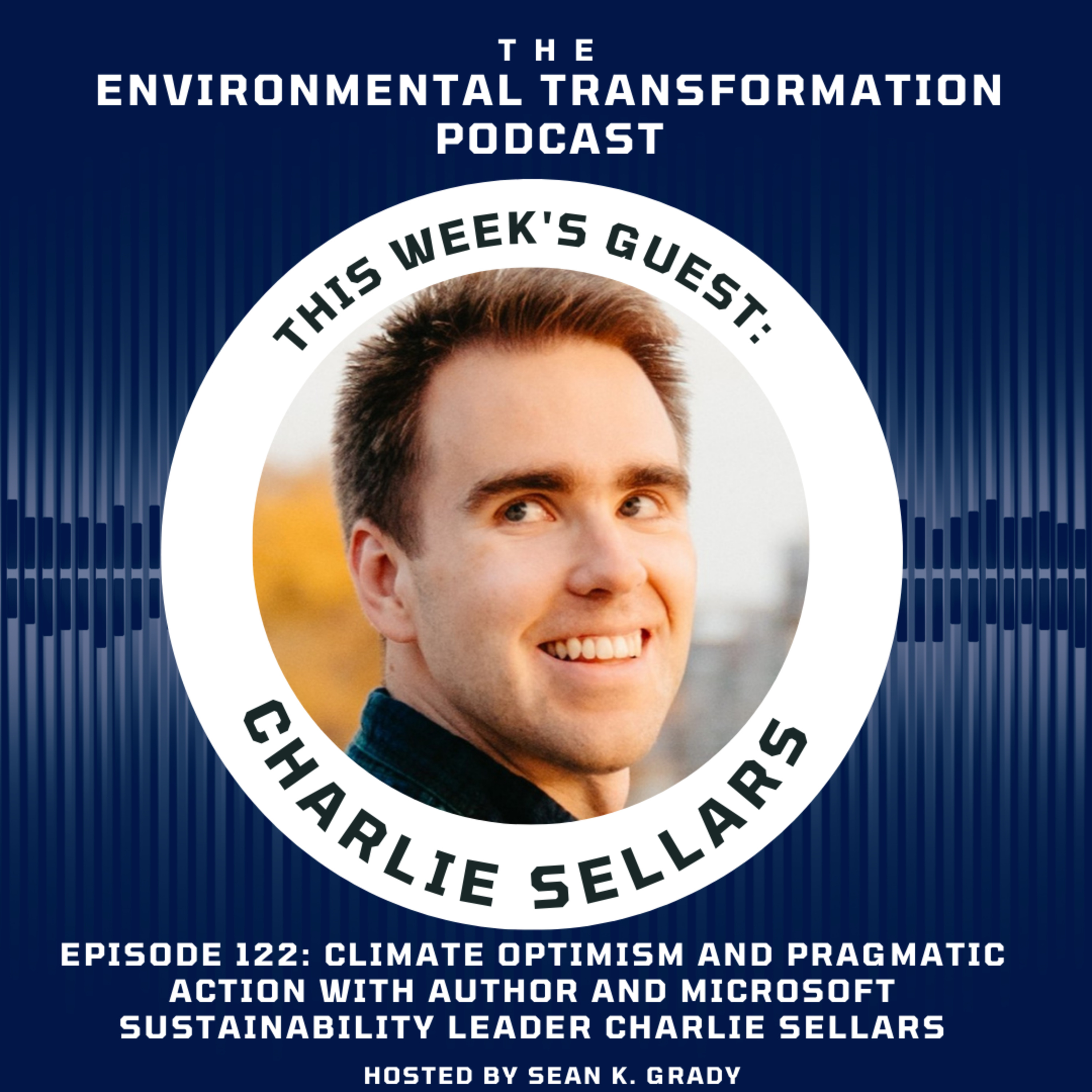
On the Environmental Transformation Podcast, host Sean Grady talks with Charlie Sellars, author of “What We Can Do, a Climate Optimist Guide to Sustainable Living” and a director of sustainability at Microsoft.
Topics include:
• Why “crisis language” can burn people out, and how Sellars frames “pragmatic” climate optimism. (“crisis language kind of burns people out”; “The optimism language is a pragmatic language.”)
• Carbon accounting basics and early carbon footprint labels in food. (“we’re kind of at day one of carbon accounting”; “Sweet Green will actually put the, uh, carbon footprint of your meal”)
• Life cycle assessment and the “make it, move it, use it, lose it” framework. (“It’s called lifecycle assessment”; “make it, move it, use it, lose it framework.”)
• Right to repair, product longevity, and the power of buying signals and reviews. (“right to repair movement”; “voting with their, uh, their wallets”; “leaving a positive review”)
• Clean energy debates on nuclear, solar barriers, and how AI is driving data center energy demand. (“discouraging nuclear power generation”; “preventing people and companies from installing solar panels”; “what they’re used for is now ai”; “AI obviously takes a lot of energy.”)
0:00 Being a climate optimist does not mean putting your head in the sand. It does not mean that every day is an optimistic day. Sometimes you'll see a news headline and it'll just totally gut you. But it's a more of a kind of on on on average, on balance, you know, do we have what it takes to look for the right things and the right trends underneath the noise that we're not normally going to be exposed to? Welcome to the Environmental Transformation Podcast, where we bring you interviews with industry leaders, climate champions, sustainability practitioners, EHS and hazmat professionals making an impact in their businesses today. Each leader solving complex challenges and delivering solutions within their areas of expertise. I'm your host, Sean Grady and thanks for joining us today. Before we jump in, make sure to follow us on your devices and visit my website at www.seankgrady.com and sign up for our newsletter and e-mail announcements. Now let's get started.
0:55 Welcome to the environmental Transformation podcast. I'm your host, Sean Grady. Today's guest is Charlie Sellers. Charlie is award-winning author of What We Can Do, a climate optimist guide to sustainable living. He's taken a holistic, data-driven view across our personal, professional, and political lives, and What We Can Do aims to install readers with pragmatic optimism in the fight against climate change. In addition to being an author, Charlie is a Director of Sustainability at Microsoft, having LED programs for both Windows and devices and cloud operation teams. He's recognized by 100 or by 1M. Well, maybe it's I AM 100 as one of the 2024 top 100 most impactful individuals in the digital infrastructure industry. Charlie also serves as the Governor governing body, member of the I Masons Climate Accord in an industry coalition. It's an industry coalition united to decarbonize the digital infrastructure that underpins the next generation of cloud and AI services.
2:02 He he, he loves the outdoors. He went to William College. He's got ABA in physics. Well, that's a tough one. I can tell you. I love my physics classes in college. He's raised outside of Milwaukee. He he lives in Minneapolis. And he wants to be closer to snow. Well, he's got it. He loves the snow. So he's there. Charlie, welcome to the show. Yeah. Thanks for having me, Sean. And indeed it is. It is actively snowing as we have this discussion. So I've I've succeeded. You succeeded, Yeah, No, Yeah. Well, you're in the state. Is that the state of 1000 lakes or a 10,000 lakes or something like that right? So we got more than that, but we just stopped counting at 10,000. There you go.
2:43 Well, I mean, you know, you like the outdoors and that's great. I do too. And I think any environmental loving person is kind of drawn to nature. That's where they first, I think, get their passion for preserving our environment and doing what we can to preserve it and conserve it for future generations and for our own benefits. So I think that's a great segue into what you've been doing and why you wrote the book. I mean, So what motivated you, right, what we can do and how does it differ from other climate books that often focus on like the crisis is happening and you know, more than and and rather than, you know, making it an optimistic view book.
3:27 Yeah, you know, it's a great question. Now there's the cheeky answer, which is it was COVID and I was really bored. I was just playing a lot of video games on my couch and I wanted to do something better with my time. But there's the more pragmatic answer of the climate change isn't really like crises that we're used to as humanity. Most crises that we're used to tend to be relatively short lived. And so, you know, we're really good as humans at galvanizing against short term crisis. Like if if your house were to catch on fire, people would hopefully kind of arrange themselves quickly to be able to, you know, extract you and save you. But like, if the house is just simmering and it's been simmering for decades, the crisis language kind of burns people out.
4:08 And it has, in my mind, sometimes the opposite effect of what you're looking for, which is some people feel so overwhelmed that they just give up. And if they're giving up, well, they're basically, you know, there's no better than being a climate denier in many regards because your actions end up being the same. You're like, nothing I do matters, so why do anything? And then, you know, you go and live a life that might not necessarily help the planet. But the good news is we all can do something. It's why I called it what we can do. And we'll get obviously get into the details, but you know, just by virtue of some of the things I've seen in my professional career, as you know, a long term sustainability professional in the, in Microsoft currently, is there so many things we can do in our personal lives, in our professional lives, in our political lives, if we only kind of know where to look and have the the real grounded data to understand the real important things to, to make a difference.
5:00 So like, obviously turning off the lights when you are out of a room is a great place to start. But now we can like quantify like how valuable is that compared to driving an electric vehicle or, you know, eating chicken instead of beef like that? That's where it gets really fun, is the data is here to make us more empowered than ever. Yeah, when I read the book, I was trying to wrap my head around that data process. Like, how am I quantifying the impact of of, you know, the various activities, whether that's buying a car, recycling, you know, curbside recycling, driving back and forth to work, all of those data points for emission calculations can be extremely daunting for people to go wrap their head around. And at that point, you kind of just like, I give up. I can't figure this out, right?
5:52 I mean, I think there's a challenge there with a lot of people that want to do good, but you really can't wrap your head around how do I even figure out the bad I'm doing or the good I am impacting, right? Because it's too complicated to get the data. Well, it's not just too complicated, it's sometimes literally impossible. So, you know, I say it in the book, we're kind of at day one of carbon accounting and, and, and your listeners like, oh God, he's already talking about accounting. It's like 3 minutes in. But hold it, Hold on, because it's quite a fun topic. This is literally just the same thing as figuring out how many calories are in your food. You know, there had to be a lot of work to figure out how to actually do that and then standardize it so you could see that across everything. The industry is learning how to do that, but for carbon emissions, for greenhouse gas emissions. And that is awesome.
6:39 And eventually my dream is that that becomes ubiquitous across pretty much every product. You can already see it in some places, like a sweet green will actually put the carbon footprint of your meal next to it. And there's actually a local ice cream shop here in Minnesota that has the carbon footprint or the relative environmental impact of the ice cream flavor that you pick, like starting to permeate. But. Until it permeates all the way kind of understanding what are the frameworks and the general guidelines now that we have data on some of the things I really do feel helps us make the more sustainable decision in most everything now and we can get into exactly what that is of course. Yeah, yeah, Yeah. Well, I mean, you describe yourself as a climate optimist. How did you balance optimism with the urgency of this climate crisis?
7:22 Because a lot of people put out there this existential threat, you know, like this is, you know, we're going to all die, you know, anytime, you know, soon if we don't change by 2050. And, and I think that's a little overshooting the existential threat that we really do face. However, I feel like there is reality in this climate issue that we need to address that we should be paying attention to. It's just how do we do it in AI guess meaningful way that society wise, we don't hurt ourselves like everyone's financially struggling because we we, we've, you know, adopted these crazy policies that we can't really deliver on right away.
8:05 And anyways, I think there's just like this whole thing. So I want to be optimistic about it and do the right thing. But how? How do you balance all this? No, it's an awesome question. And I also want to clarify when I say optimism, like, who am I targeting with that message? If you are, you know, watching your house get flooded away, I am not telling you to be more optimistic that you've just become a victim of climate change. Obviously not. You're a victim. The, the focus that I'm on is around, you know, for those of us who are fortunate enough to be able to be part of the solution, the optimism language is a pragmatic language. And it's not just like, oh, let's feel better about things. It's oh, actually, if we turn the way we think about things as a crisis and a challenge and a fear into an opportunity and something that can bring us joy working on the solutions.
8:51 That's really important, not just for ourselves and our own ability to not burn out, but also for our ability to pull other people who might not have started on their journey into the space. It's one of the things I saw was was so critical in my day job is, you know, so much of the actual sustainability work happens by people with regular jobs, people who do not have a sustainability background. And they would much rather be inspired into coming and helping you rather than shamed and saying like, oh, if if you don't change the design of this mouse, then we're going to write a strongly worded letter against you. Like, I mean, like, that's kind of the sad reality, Sean, And you know, this just as well as I do is a lot of times you don't have a ton of leverage in sustainability.
9:33 And so it's being more intentional and pragmatic around like, well, in a world where I might not have any technical leverage against other people to get them to do what I want to do, what are the other ways that actually get people excited to want to do things? And that's where optimism in my mind really fits in. Well, that's good. I mean, yeah, I think, you know, there's some good themes in the book I want to get to. I really like that you touched on. I think when I started to read the book and I really was going through the first couple chapters, I was like, Oh my gosh, there's so much thought that goes into like, you know, does everybody really think like this? Does everyone really want to know their carbon impact? I mean, you know, because I was starting to get get concerned just as I was reading going, Oh my gosh, there's a lot of thought that goes into every step, every practice, everything you do in life and will society or the common man, so to speak, person woman read this go.
10:30 Oh yeah, I'm I'm aligning with this because I think like this every day. It's really affecting me my my core being right. So I was kind of wondering, wow, OK, But then we started getting into some of the real practical examples, which started to really kind of change the way I was looking at the book and I was like, OK, this is good. I really like this. So in the book you introduce some, make it, move it, lose it, use it frameworks and and. Can you explain how this came about and why it resonates with readers when you start really kind of explaining it? Yeah, that's kind of my fun overlay of something that's a lot more of a technical science. It's called life cycle assessment. And so for the listeners who might not know what that is, it's an attempt to look at the product you have and figure out what are the calories, the carbon calories of that product. But the thing that's unique about life cycle assessment is that it, it looks at everything it took to make that product happen.
11:22 So for example, I'll hold up my phone. Normally when you think about the energy of your or like what it takes to make your phone or the energy of your phone, you're kind of just thinking about charging it. But what you don't necessarily look at is, well, all the raw materials that had to get mined and all sent to an assembler. And then, you know, having that assembly happened, then having that get put on a plane or a boat or a train to move to the stores. And then people actually driving to the stores and picking them up. The only reason any of that activity is happening is because of that purchase of the phone. And so the the make it move it lose it, use it framework. I, I screwed that up. Make it, move it, use it, lose it framework is trying to understand like, what are the impact of making something?
12:03 What are the impact of what is the impact of moving it to you? What is the impact of you using it? And then what is the impact of you quote UN quote losing it, which I had to say that to make it rhyme. But that's like if you're recycling it or throwing it away at end of life, there's also energy required to like incinerate something if you are tossing it away. And this is such a fun, profound framework because you start to, for the folks that have started, you know, publishing their data, see some really interesting stuff. And I'll give an example, actually, it's a fun one, Sean. And for my book, you can apply this even to literally a book. And so I did a lot of work to reduce the environmental impact of the book, which is quite fun. And we got it down to the emissions equivalent of a year of charging a smartphone a year.
12:48 And it's like, wow, that's actually already a really low carbon book. But that's how like much the impact of making things can sometimes overweight the impact of using something. So like, even though I want of course to have a physical book for folks that want that option, now that we have this framework, we also know like, hey, listening to it on audiobook or reading it on an ebook that's like hundreds of times lower. Impact, Yeah, right. Yeah, No, that, that is true. I I agree with that. That's great. I mean, of course, I I'm kind of a old school guy. I do like reading the actual book itself because I write notes in it and the underlying stuff and can pull out. And but I do like the idea of like, hey, well, why don't you hand that book over to somebody to read, give it back to you, recycle it, you know, reuse it, that type of stuff, which makes sense.
13:29 And I think, you know, society, I was the other day, I was at a dollar Dollar Tree. You've been a Dollar Tree. OK, You go there and they, they got good stuff. I mean, as far as what you need to, you know, make crafts or some necessities or things like that. But what caught my eye the other day when I was there was everything was made in a way that was so temporary, you know, was it like designed for like long term longevity use? Like almost, I wouldn't quite say one time use, but definitely not, you know, 3 or 4, right. So I was like, wow. And, and it kind of goes back to, you know, one of the, the comments in the chapter in, in one of your chapters, which I think it was in Chapter 14, which was the buying signal.
14:22 Oh yeah. The signal virtuing is what I was calling it, you know, I mean, you call it the, you know, the the economic signal, but it's a virtue signal of people are buying with based on their values, right. And so I was like, wow, we're really not making products to to have longevity as much as you know, well, and I wouldn't say everywhere because there are some good products out there that, you know, have longevity. Cars for one thing, I think are they last for, I mean 23400 thousand mile? I mean I just got rid of a car unfortunately just because the transmission went out but it had 245,000 miles on it. Yeah. That's a good run on a car, right? Good run.
15:04 That is good run and so they make them more efficient in a lot of ways as long as you keep them up. But anyways, I guess this whole concept of being the the more of a disposable society as far as products, that's a big concern. I think until society starts to change their ideas of what's really valuable as far as buying something and reusing it and reusing or fixing it. I mean, where's the mechanics of the, of the, of the day or the, you know, the guy, the handy guys and just fix things and reuse them. That kind of is a lost art in our society. It is, but also, you know, sometimes the manufacturers are making it more difficult for you. So one of my favorite totally bipartisan movements of the last five years has been the right to repair movement.
15:51 And from an environmental point of view that's awesome because as we said, there's a hidden cost often of making things. There's a lot more impact that goes to making things then we might normally think about and repairability is a great way to improve the longevity of that thing. And so, you know, laws that let you actually fix your thing, make it so that there have to be spare and replacement parts to do it. That's so important. And I'll give give a couple of fun examples. Here is I'm going to say something that is like the most evil thing I could possibly say, and I hope nobody gets any inspiration. Imagine if your car had a kill switch in it. It said after 50,000 miles the car is updated. Over there, it's kind of. Kill the motor. Oh my God, wouldn't that be a nightmare scenario? Like that has to, you know, obviously if that ever happened, don't buy from that car company.
16:36 But also that's where the the regulation and legislation is so important. But also just thinking about the other side of it of anti repairability and like anti repair design, that has to change too. I remember I had a piece of luggage once and the, the, the handle got broken. I was like, oh, I'll just go ahead and fix it. The only way for me to get to the screws to, to fix it, I would have to cut through the fabric at the bottom of it. I couldn't remove it without putting it back. So I'd have to literally destroy my own piece of luggage to try to fix it. So that, and that's a fun one where you know, if we are consumers, we want to reward the companies that are creating more repairable. Better design, better design, right? Oh, God, yeah.
17:19 But also if we're in the companies, like pushings, like, hey, can we make our products more repairable? Or if we're just at the ballot box, like I'm pretty sure Duluth, MN just had a right to repair item on the most recent ballot. Like, you have opportunities to vote on this stuff or vote for people who are going to report support it as well. So there's a lot of different ways to tackle something like So I don't go, I can wax poetic about repairability, but I'm going to stop right here. Yeah, no, that's, that's great. I mean, hello ET Nation. I want to thank you for listening to the podcast. If you're enjoying the interviews we bring you, consider supporting the program by visiting my website at seankgrady.com and buy me a cup of coffee. Proceeds will go towards helping me continue producing timely content and offset production costs.
18:05 I'd also like to take a moment and recognize a few of our sponsors of the show who have been amazing partners and our ET Nation legends. If you're looking for a drilling an environmental contracting firm to help you delineate the extent of contamination at your site, then look no further than Cascade Environmental. Cascade has over 37 offices across the country and offers a huge range of environmental and geotechnical drilling, site characterization and remediation services. With their huge fleet of equipment nationwide coverage, Cascade is a great choice to support your environmental and infrastructure needs. To learn more, check out their website at cascade-env.com.
18:46 That's cascade-env.com. Hey, are you looking for an equipment rental company to help you with your next wastewater remediation or waste management project? E Tank is the only environmental equipment rental company in the industry that offers 100% guaranteed certified, clean, temporary liquid storage forged tanks at no additional cost. This protocol gives Peace of Mind for the previous customer by limiting their downstream liability as well as the future customer by preventing any cross contamination for all of their rental tanks. E Tank also runs a one-of-a-kind complete maintenance program for all rental items including liquid tight roll off containers, fluid transfer pumps and filtration items. The next time you are presented with an environmental challenge, call E Tank to come up with the solution for your problem. I want to thank one of our sponsors, Waste Link. Waste Link is the all in one software platform transforming how environmental professionals manage waste, connecting generators and service providers and disposal facilities in a way that is simple, connected, and transparent. Your platform helps streamline everything from waste profiling and routing to inventory management and billing, giving you the tools you need to operate more efficiently and reduce cost.
20:08 Whether you're a generator looking for better options or a service provider seeking greater efficiency, Waste Link has you covered if you're ready to take control of your waste management processes and optimize your business. Visit wastelink.com to schedule a demo today. I mean, well, you know, in the book you kind of outline top ten actions you highlight that you think have the greatest potential impact if widely adopted. Let's talk a little bit about some of those if you could, and maybe hit the ones that you think are the best. Yeah. And I think this is where it's so valuable for us to remember that we live in larger spheres of people, larger impact spheres of communities where like when we're making decisions in our regular lives, we're kind of only making decisions for ourselves, maybe our families.
20:56 And so the impact therefore is one to five people's worth of impact. You know, you go to a farmers market and you say, you know what, today I'm not going to use a plastic bag for this head of lettuce. And that's awesome and you should do that. But that saves one plastic bag. But if you are the person in charge of the stand, you can make the decisions like I'm not going to offer plastic bags to people and maybe that's 1000. Then plastic bags you get to avoid because you're giving paper bags instead. And so like, you know, that's 1000 X multiplier if you start layering it into your work. And then it can be a million X multiplier if you vote for it. And so I remember doing the math on why voting in particular is one of the top things you can do in that top ten list.
21:39 I forget if it's number, I think it's number two or three is literally a single vote for a politician that supported the Inflation Reduction Act back in 20-20 that would have had the equivalent of 2 1/2 years of your emissions just from a single vote. That's how powerful the Inflation Reduction Act was in terms of putting the right policies and the right incentives in play to decarbonize the entire economy. And we're still going to see a lot of that benefit even though a lot of of it's been rolled back. So maybe it's not 2 1/2 years of your emissions anymore. It might only be 1.5 but still like. It's good. In terms of bang for your buck, like literally just going on a Tuesday to vote, that's more impactful than you turning the lights off on your home for two straight years.
22:19 Yeah, yeah. Well, I mean that those are good. Those are good anecdotes. You know, I think 2 basic things for everyday people who are just living normal lives. I mean, I think most of us have curbside recycling. We have a recycle bin at that at the house. You know, I think most of us are thinking we need to reduce our electricity use, you know, save money, right? Like a lot of it's been, you know, directly associated with saving money because it's a cost to us as individuals. So it's like, why wouldn't you do these things, right? But I think, you know, those are those are things I think we can all do.
22:59 And I like the idea of getting involved with groups, things like that, that can to help change a little bit here and there. You know, some of the critics argue individual actions are too small compared to like, a systemic change. But how does your book reconcile personal responsibility with the need for corporate and government action? Yeah. And so we mentioned, you know, I just mentioned a little bit some of the, you know, kind of like supporting the right to repair there, the value of a vote for the Inflation Reduction Act. But to that point of the individual action, First off, those are individual actions. You know, voting is the most important. But you, you mentioned it before, it's that, that, that purchase signal to, to the makers of the things. I think sometimes people just look at their own frame of reference of, oh, I'm going to buy the large bulk bag of cereal because it's cheaper, bang for the buck, and that way I can have cereal for longer and that's awesome. But what you're also sending is a signal to the manufacturer of that cereal that that is something that they might want to keep investing in because they can keep selling it. And I think this is something that people don't realize how powerful that signal can be.
24:07 Like within Microsoft, I have been in so many meetings where someone will be like, hey, sustainability is a top three purchase intent. So now we have to go invest in like make sure that we can do it. And that only happens if people are voting with their their wallets, but also voting in like surveys. You know, one of the funniest things, Sean, that like everyone overlooks is the environmental impact of leaving a positive review on a product that is environmentally friendly. Oh my God, I wrote a whole blog about it is, you know, the way we decide what to buy, We think it's entirely us. We are so socially conditioned to buy the things that other people say are good. Like when? Out of curiosity Sean, when's the last time you bought something on Amazon with a rating of less than 4.6?
24:50 Yeah. I mean, I don't really know. I really. Yeah, I couldn't quite tell you. My wife does most of the Amazon. I mean, I'll buy a few things there, but usually it's something I really want to get. But yeah, no, but you're right. I mean, you're looking at if you're going to go, like if you're going to a restaurant, right, and you're on Yelp or something, you want to say, hey, how many stars those guys have? Yeah. You're buying off the feedback of customers. I get what you're saying there. And I yeah, I'm with you. I think you do want to buy products that have good reviews, right? It's very natural, very human, but then you kind of under like realize that is the secret and sneaky way that people get directed into determining what to buy beyond the traditional levers of like price and quality and availability, etcetera. And you know, just on a personal anecdote, you know, I am a big urbanist in the sense of I really want to see thriving urban environments.
25:41 I love the walkability. I love being able to walk to a restaurant and walk home and there's a restaurant I went to recently that I just thought was the most amazing food I'd had in a long time. And I looked him up on Yelp and it was a 3.6 review. And I was like, I got to do something about that. So set up Yelp account gave him the five star review, encouraging other people to go to that restaurant and also give five star reviews. And you might be like, wow, what does that really matter? But I mean, it can be the difference between life and death for some of these companies and some of these products, and I'm not. Just saying that businesses too, right, small businesses, they need those, those positive, you know, reviews to, to sustain their business. I mean, you're right. I think there is a lot there. I mean, heck, look, I'm, I'm the same way with a podcast.
26:24 I'm like, hey guys, can you at least leave a review every now and then? I I get likes occasionally, but the reviews are fairly low. Be honest with you. And I'm like, there's a lot of people listening to podcasts. I know they are every time I will go someplace like, oh, I listen to your show. I was like, oh, OK, good, thanks. I really appreciate it. But I don't hear any feedback. I don't get, it's like you put it out in the Internet and you're like, well, it went to the cloud. Who knows where it went? There's our call to action. Anyone listening is when you're done, do Shawn a favor and throw him a nice review. Absolutely. I mean, it's great to get the feedback. It kind of gets you motivated, keeps you going, right? I mean, it's funny, I've been doing this podcast now for five years.
27:04 I can't believe it. I started during COVID, didn't have much to do. Like you writing a book, you know? And I thought, well, jeez, I got to do something. I've been in this environmental industry for nearly 30 years and I said I don't think there's anybody that's really doing an industry, an environmental industry podcast covering all the topics. I mean, you've got like a safety person doing safety, you got climate or sustainability, and they're only doing that, but they'll cover all of the topics. And I figured I think we could do a really good job about this. And so here we are five years in and we're just still going strong. It's been so much fun. I meet great people like you and others, and it's been just a blast. Totally. But then in terms of discoverability for people who you don't know or who have never heard it to stumble across that podcast, that's where the reviews become so important too, which is another another call to give Sean a nice review because and same thing for my book.
27:56 Like if my book were to have a three star review on Amazon or something, no one would buy it from Amazon. And it's not that. And that can be so influenced. It could just be 5 people out of 500 that didn't like it. And we're so animated that they wanted to give it a bad review. And so it's it's almost like the gerrymandering of our minds. Like boy. Yeah, Anyway, not to keep going on reviews. As you can tell Sean, I can get real animated about a lot of topics. No, it's great. I mean, I love it because, you know, there's a lot of enthusiasm here. You know, one of the things I liked about the book that we, you know, you kind of touched on was every job can be a sustainability job. I mean, and, and I thought through that and I was like, yeah, it really can, if you frame activities you're doing in light of how it impacts from a sustainability lens a green decision or whatever, right?
28:50 And I kind of like we've talked about that in the in the past on the podcast, but walk through a little bit about the core framework a little bit, if you could for listeners, because I think that was an important segment in Chapter 8, how you kind of discuss that and how that can relate to everybody's job. Yeah, and and when I say every job can be a sustainability job, I'm not the first person to say it. My friend Drew Wilkinson, that's, you know, his rallying cry, not mine. But I reinforce that because I really do believe it and it's from personal experience. You know, there are not a ton of folks in the world with sustainability in their titles. I'm lucky to be one of them. But I look at what those roles tend to do. And so much of it is basically trying to make sure that we build the processes and the structure so that people without sustainability in their jobs can go and do the sustainability work.
29:39 You know, if I'm designing a, a, a PC and I want it to be the most sustainable PC in the world, dear God, you do not want a bunch of sustainability professionals to try to design a computer because I have, I don't know how the first thing about actually, you know, the electrical engineering and all that, you know, you mention I have my physics background. That's a Bachelor of Arts, which meant I was taking theater at the same time. So I don't think that counts. But but yeah, I mean, like, you know, it's so much about if you're a sustainability professional, bringing the folks who have the really good skill sets and other things to basically give them just enough insight and, and inspiration and optimism and tooling so they can then go and start to see themselves as part of the journey too.
30:19 So the core framework is a framework in my book focused on what people can do themselves if they want to be that change on their own. So core, CORE, the C is connect to impact. And that's the notion of like, hey, maybe the work you're already doing is like hella sustainable anyway, but you're not branding it as such. You're not thinking of it as such, like anybody who works on anything with regards to efficiency, Hey, guess what? You're already working on sustainability. And these are those things where if you can start to put it in the language of sustainability, that's a jumping point to start to do more. The O is the organized internally. That's oftentimes thinking about that we're more powerful as groups than individuals and thinking about, you know, can you start an employee research resources group around sustainability at your company or can you find other people who are like minded?
31:07 And then if you all come together, you might be able to have, you know, you're bringing the band together. But if you're just a bassist, it's hard make a real solid album if you don't have the drummer and the singer and the guitarist. And you know, I'll give a shout out to the flugelhorn in case somebody's in a flugelhorn rock band somewhere. The the R is reduced waste. And this is a classic one where just there's, that's my friend calls it the gateway drug to sustainability. I love that. Yeah, I love that day comment. I was like, oh, this is so true. It's like the door opener. We all see waste and nobody likes waste. I mean, like, even if you're a climate skeptics skeptic, you probably don't love seeing a bunch of trash dumped or a bunch of food thrown out. That was perfectly fine.
31:48 Nobody likes that. And so much of the initial kind of getting started is just saying, hey, where's waste happening around me? And can I, can I just volunteer to see if something can change? And then that could leads into the E of the core framework, which is enact the change. And that's saying, hey, I'm going to be the one to do it. And that's like the big secret I found Sean is at so many companies and in so many communities, it's not, there's not like a good reason that sustainability isn't happening. It's not like some higher up said, you know what, screw sustainability. I'm banning it from the premises. Now, obviously if you work in the federal government right now, it's a different story. But if you are at a regular, like, shop or whatever, sometimes it's just being like, hey, can I work on sustainability is enough for someone to be like, oh, what do you mean? Like, what does that look like?
32:36 And you see that everywhere from like Coldplay decided to put out a sustainability report to like a wedding venue here in Minnesota has a sustainability wedding package. And no one's telling them that they have to do this. There are people who are like, what if I give it a shot? And that's kind of the same thing, Sean, with like me as an author is going to my publisher and saying, hey, the physical book, I want to make this the most sustainable book that you've ever made. And that was really fun for me and for them because they're like, wow, no authors ever asked us that before, but they have the capability to do it. Obviously, we figured it out. And it just takes someone asking and enacting that change to be the start of that movement to hopefully now they can do that with more and more of their authors and ideally the entire publishing industry at some point. Well, I really liked some of the examples you had in chapter 8 there about, you know, using core in. And I think what, you know, the one that really kind of struck me was the first one you talked about the software salesman, because I, you know, you're like this guy just sells software. I mean, what I mean, what's he going to do? But as you start, as you started to explain how the impact of using this new product is more makes maybe your equipment more efficient, less energy can demand. I mean, now you start to tie all these benefits of the product to a sustainability perspective that people are like not even thinking of.
34:03 Then it becomes this differentiator that goes, oh, wow, not only can this product do this, but we're going to send probably no other person that, you know, highlighted those types of benefits that are ticking a box that, you know, from a sustainability perspective of buying something that maybe a corporate purchasing person cares about. Right? I just had this conversation just the other day with a, a contractor who was doing some work actually at my house. And I said, I said, you know, construction, managing construction debris and all that. I said you, you could easily, cuz he asked me what I did for a living. And I started to explain it to him.
34:44 And he was like, you know, he was just trying to put it all together, right? Cuz. And I said, well, you know, I, I work in waste management for big company Veolia, who I work for. And so we're focused on reduce, reuse, recycle. The whole sustainability theme is, is the core to our fabric of our business, right? And I said you could present your sustainability efforts to your customers by saying, hey, we recycle all our products, weigh all our construction demolition debris that we take out of here. We do this. And, and you don't have to. You could just use it as a promotional type activity that you do, which no one else is probably going to be doing. And somebody's going to care and you're going to get a job just because somebody cares.
35:31 The fact that you take good care of the environment by recycling the plastic, all the wood, all the, you know, metal, everything out of there. And then you're like, wow. And he's like, yeah, that's a really, really good idea. I never thought of that. And so it was like this whole concept, what you just described in here in this chapter, I was like, wow, this is really cool. So I just was like, it is like, every job can be a sustainability job. It's just how you frame it. And I think for far too long that I've noticed, you know, the whole sustainability themes and terminology started to really creep up into society, you know, late 2000, late 2010, or, you know, let's say in the, you know, 2015 on people start really talking about it.
36:17 But there still wasn't really a big push. I think one problem that happened that I saw in the industry was that the waste industry was slow to adopt the language. And that's what they do. And they're sustainability professionals and they were shaping up with the jargon and re, you know, positioning their value pitch to their customers that they are the most sustainable and it took them a while. Now they are doing it, obviously, but it took them a while. I was very shocked. I was like, well, we're the OG of sustainability. That's what we do. Totally. Yeah. You know, it's so funny and it's not. And I think I want to kind of address what what some listeners might have creeping into their mind that this is not like an invitation for everyone to go greenwash. It's certainly not, you know, but it is an invitation to say like, are we doing things that we're just not talking about? Yeah.
37:07 Are really helpful for the environment. And we just. It's a missed opportunity to not mention it to people like that was Sean. You know, just think about my own background. If folks are curious as to how I got into the sustainability profession. Sean mentioned I have a background in physics. That's cool that I use it for my career. Not at all. I actually came from an events role. I haven't. I took no sustainability classes in college. I ended up in a glorified events role before joining Microsoft to do sustainability work. And when we were there, that was one of my Aha's. I was looking at the topics that we were putting together for our events, and of course, I was trying to direct them to be more about sustainability. And I was like, wait a second, we are convening some of the world's most preeminent supply chain leaders to talk about sustainability.
37:54 And there's probably in this room a collective opportunity to have some really transformational industry wide impact. And this company has never said the word sustainability before in its life. So I, I remember I was, I got with the the CEO's communications team and I said, Hey, this is a story we're not telling that we're already doing. Let's, let's make people aware of it. And, you know, to their credit, they said that sounds great, let's buy it. And then it was a whole company, like, you know, the whole town hall at the whole company got to watch little old me on camera. I was, I think 26 at the time, basically saying like, hey, you know, we literally just had a massive forum on like what we're going to do to try to solve the future water crisis. And I was like, wow, our product can do that for people. And it's like, yeah.
38:39 And so like, ironically also Sean, which is fun, is that's how I got my job, is one of the people in that community was my future boss at Microsoft. And she effectively was just like, all right, Charlie, you've convinced me sustainability is important. I get it. I don't know what to do about it, though. Do you want to come and like start my team and help me figure it out? So in that case, I actually got very lucky that I I made my job just by virtue of using this framework for myself in an events role. Well, you know, that's so powerful to to see, you know, you taking up something you're passionate about driving the change within your company or the the events business, it being recognized by your customers who you were, who you were developing a network with a professional network with that ended up being your next job and very.
39:30 Lucky, Yeah, but it was intentional. Yeah, yeah. I mean, but it all goes back to, you know, being authentic, right? And, and being a good communicator and networking properly and keeping good contacts with people. I mean, to me, I, I, I try to emphasize on the show. Networking is so powerful and it's such a major, major aspect of anybody's professional career and and largely a lot of times just goes undervalued in, in our business. People like keep their head down. They're just doing their job right. But I'm like, no, guys, you guys got to really can, you know, manage your network and keep your contexts and don't burn bridges. You know, it's a small world.
40:10 We we recycle through businesses like crazy in this business man. Oh, yeah. You know, it's we, the sustainability world is relatively small. You go to any conference and you're going to see like half the people you already know. It's like, oh, good to see you again. Even just, you know, like I was at a an energy event here in Minneapolis on Monday. And then I bumped into a guy who I was, I spoke at a conference with in New York with. I was like, what are you doing here? He's like, what are you doing here? I'm like, well, I live here. He's like, OK, that's fair. Yeah, right. Exactly. Well, you know, couple things that struck me in, in chapter 14, we were talking about, you know, energy and clean energy and the, and you know, how do we make an energy transition? Because there that is probably one of the larger systemic type changes that could happen in society that could have a big impact or should have a bigger impact. And I think, you know, you, you touched in the book, you know, the inflation reduction act and stuff and, and the benefits of that.
41:12 I watched that go through and unfortunately, I didn't feel like some of the impact, like, say, the EV grid that was going to be, you know, deployed across the country didn't quite hit the mark as hope as well as I would have hoped it could have gone. Because I still think there's the a challenge with EV charging of cars, you know, and at every maybe gas station or across the country or whatever, right? And it just didn't take that didn't go as far as I was hoping it would go, to be honest. Can I, can I maybe recontextualize that comment, Sean? Yeah. Because, you know, the Inflation Reduction Act was signed in 2022 and it was largely rescinded in 2025. That's only two and a half, three years of it existing.
41:55 Think about comparatively how long it took to build out the entirety of the gas station infrastructure. That we have, right. Like, that took years, decades. And so, you know, give a little grace maybe to the EV corridors. It's like they tried to do everything they could in two years when their competitors have been doing it for 2050 a hundred. That's fair. That's totally fair. And I, I agree with you there. I just was hoping that be more adoption and maybe I think from an industry perspective, over time, naturally the industry will will, you know, get there because all the virtue signal buying will happen by people's keep buying cars and they're going to have to make it more available and and industry will figure out how to monetize and and make that affordable for everybody. But it's going to take time.
42:41 And I agree with you there. So, but I would, you know, I think a lot of the adoption of EB cars are still taking a little time and it's still going to take time. And maybe who knows, maybe we won't be talking EV, maybe we'll be talking hydrogen by the time anyways. I don't know. I mean, there's so much technology advances going on, it's crazy. But I guess going back to the energy thing, if I want to get back to that, I did like your discussion points that you highlight in some of the chapters, like, you know, like what reasons did environmentalists originally have for discouraging nuclear power generation and why is that stance changing today? That was a great question. And I thought, well, you know, it is more efficiently, it's cleaner energy. I think we're probably figuring out how to maybe better manage potential, you know, not the potential, but the nuclear waste at some point.
43:31 The one that I also liked in the subsequent to that one, which was preventing people and companies from installing solar panels on their homes. I, I have been this one has really bugged me for a quite a while. I've actually had a couple episodes on solar here on the show. And in my view of solar is this, unfortunately, the utility grid's not really set up to be a storage grid for all the excess storage power that the solar could potentially generate. If we had that many, everyone had solar on the roof. So that's a right there is one of the, I think the biggest limiting factors that we probably have. However, I think personally that solar should be so simple. Oh yeah.
44:17 Like it should be like I go to Home Depot, I know the size of my home and my roof and I can put those dimensions in and, and, and it'll tell me how many panels I should be able to buy and give me every piece of equipment. It's plug and play, completely plug and play. And a caveman can do it, you know so. Sean. I think it's go. Sounds like you need to move to Germany, Sean, because that's actually happening. So yeah, it's, it's amazing. It's called Balcony Solar. And so have you heard of it? No. That's so cool. So if you live in Germany, you can literally go to the supermarket and buy a solar panel from the supermarket that you can then hang from your balcony and just plug into an outlet in your home. And then that can then pull solar panel into your grid in your house.
45:07 And it's it's you don't need it. You don't need a contractor, you don't need an installer, you don't need a permit. You can literally just go to the supermarket and then later that day have a solar panel ready to go on your balcony. Now, unfortunately, the thing that America is struggles with is the ironically over regulation here. And so like, you know, even for traditional solar installations on roofs, I can't remember the specific number, but I think like compared to Australia, the actual cost of implementation of it is like 3X what it is in Australia. You know, people always hear like, oh, solar panels, solar is the cheapest form of electricity in the world. That is true. But it's everything around it that can become expensive if it's not instrumented in the right way. And I think here's two other things that are really interesting on this one, Sean.
45:50 The 1st is, you know, I didn't really kind of, it didn't really click in my head until recently. But it's like when you install a solar panel, the marginal cost of energy goes to 0 because you don't have to do anything else for that asset to keep giving you energy. But if you have like a diesel generator or something, there is a huge marginal cost to running that thing because you have to always go and get more fuel and bring it in, get more fuel, bring it in. That goes away completely with solar. And that's why it can be so cheap. But like literally this week, I think the other thing that's really fun around solar is this, you know, burgeoning movement to decommoditize energy. I just made a post on this this week and the kind of the notion there is like what if we actually could differentiate between our energy based on the source it came from in a more unique and like interesting way?
46:39 Like, do you ever play Settlers of Catan, Sean? No all. Right. Well, hopefully some of your listeners do Settlers Catan was a lot of my college experience, but it was, it's a board game and they just put out a new version of it called New Energies. And they partnered with the company, I think called Clean Counts. And they said we want to offset the impact of making the actual board game itself. And then they got to to like pick through like a, a almost like a menu of different kinds of ways to do it, different types of energy projects. And where they landed was on pollinator friendly renewable energy certificates. Basically, they were buying energy from a solar farm that was also, you know, putting a bunch of wildflowers all around the panels to be able to be a pollinator friendly habitat. And like, that's so cool.
47:27 Now I can, you know, now we're potentially getting into a world where you get to like artisanal energy, like artisanal solar energy. It's like, do you want? Honey, we got some honey for you too. Yeah, they literally gave me some solar honey after the fact. They're like, yeah, you have some, have some solar honey, but like. Who doesn't need honey? What's that? Who doesn't need honey? Oh. Exactly, exactly. But you know, it's, it's like, OK, do I want the solar, you know, like the, the bee friendly solar? Do I want the, the balcony solar? Do I want the community solar? That's like, oh, it's almost like the community garden where you like your tomatoes grown in the community garden, your energy's grown in the community solar garden, you know, like. I mean, yeah, I think that, you know, because I looked into it for my own house and, you know, essentially they came back and said, well, it's going to cost you. I want to say, if I remember right, it was like 55 or $60,000 to put solar on the top of my house. I was like, I got to get a second mortgage for this. I don't know, I'm not going to do that. And and of course then you're like, why even be in this house long enough to pay that off, right? Then Then you know, you're like doing the cost benefit analysis and as much as you think you'd want to do it, it ended up just not, doesn't make sense, which is unfortunate because it should be so inexpensive.
48:42 Like TV's these days. A wide screen TV is like what 450 bucks now for like a 52 inch. I mean, remember when those things were like 3 grand to buy one of those TV's and now they're so cheap. It's like the solar panel should be so cheap. And again, I got kind of go back to this plug and play, you know, with all the inverters and the connectors and everything. I mean, it should be just, I'm, I'm plugging them against together and then I, I connected to the box down in the basement and whether I have a, a battery backup or not. You can do it and be affordable and you can add it over time. You can't get all the panels at once. You can get like 10-5 or six of them and then add another 5 or 6 later. Make it simple.
49:23 And if the industry could do that and whoever can solve that, I think internally or you know, from a, a manufacturing perspective for everyday common people, I think that would be a big change. And this is where I'm going to say something slightly controversial, but this is where the Inflation Reduction Act getting rescinded might actually help a little bit. And that's you're going to be like, Charlie, wait a second, like that took all the subsidies away from solar. It's going to make it more expensive in the short term. Yes, in the short term, if you missed your window to get solar on your roof, it's going to get a lot more expensive. That is a bummer. But that also then means that these solar installations are going to really have to start focusing a lot more on their cost structure to stay competitive.
50:03 And so that can then lead to longer term, you know, efficiencies, potentially longer term deregulation to make it more and, you know, affordable where ideally we can get this stuff three times cheaper. Because to your point, the panels themselves are not expensive. That's the cheapest form of electricity we have in the world, bar none. It's just all the red tape around it that makes it so that we're the one of the most expensive countries on earth to actually install home rooftop and home solar. Well, I mean, yeah. And I think we could go down this rabbit trail a little hole, I guess, a little longer, but I don't know that we should. It's good. But let's talk about a couple other things here. So how do you see emerging technologies, AI, cloud computing, renewable energies, and all this, you know, playing a role accelerating climate solutions? Yeah, You know, this is this is the really interesting challenge, right?
50:56 And this is 1 where I'll be maybe slight somewhat controversial again, which is if I think about, you know, my day job, so much of you know, how data centers, which is where I'm accountable for what so much of what they're used for is now AI. And so AI obviously takes a lot of energy. I think that's pretty well documented. But at the same time, it is also putting a large demand signal for clean energy into the world. And so this is one of those interesting challenges where it's like, well, because there's now billions and billions of dollars flowing into the market. Is that money that otherwise wouldn't have been there without AI? Like would that still have flowed in the right way to the right players?
51:38 Now, granted, there are long term issues of just having the grids like take a ton more energy than normal. But if you're a solar developer right now, you love AI because you're like, wow, there's so much demand for my product. Like nuclear power coming back online, Sean is only possible because there's demand for that power now. And. So the hope is that the long term benefit to the environment and the long term kind of like kick start we're giving to all these forms of clean energy will kind of take off and be ubiquitous once the demand starts to level off for additional accretive electricity. So that's the hope. Whether or not it is going to happen is a fair question, but it's certainly one. It's an interesting food for thought. Yeah.
52:23 I mean, yeah, the whole, the whole nuclear energy question too, I think is, is certainly I, I think we should be pushing more into it and developing more of it. And you know, a lot of countries out, like I think you highlight in the book, Germany went and decommissioned quite a few of their nuclear facilities. And now they're totally reliant, more reliant on other sources of renewable energy and natural gas type energies. And you know, that's ends up kind of almost being a geopolitical issue too. And then you see, you see France, they've they've like, hey, we're still doing nuclear and they're doing great. They don't really have much of an impact and they've got reliability. And it's like the USI think needs to double down and, and make it more, I guess, easier to build these facilities. You know, from a permitting perspective, I think that far too long it's gone down way too difficult. And unfortunately, there's been NGOs and people like that, you know, opposing a lot of these activities when in reality they are a better option than what we currently have. You know, it's really interesting. So do you know Bill McKibben, kind of a pretty famous climate activists who's been doing this stuff for like maybe 20 years? No, I'm not sure I know him.
53:36 Well, you know, it's, it's really interesting. I read his most recent book called Here Comes the Sun, and he has been an activist. You know, he's been arrested multiple times for protesting. You know, he is really kind of tried to push against the energy industry for a very long time. And it was interesting because he's been doing it for his whole life of this moment of introspection he's having now of like, does our activism need to completely turn on its head? Because before it was all about stop, stop, do not do make sure it doesn't happen. Make sure it doesn't happen. But now he's like, are we the ones actually preventing environmental progress because we're the ones, you know, using environmental regulations to prevent the permit of a new solar farm or, you know, concerns about nuclear waste preventing the, the, you know, recommissioning of a, of a, of a nuclear power plant. And he kind of had this moment where he's like, wait a second. Maybe as activists, we need to be going into communities to advocate for people to say yes to these things. And he talked about an interesting nonprofit called Green Light America that's trying to do that as well. But I think that is one of those interesting things as you're starting to see a lot more community push back on land development for anything.
54:43 But kind of the reality is if we want to make this clean energy transition happen, we do need land to be used. For energy, I mean, there's, there's a logical balance to some of this. I mean, it's just like fossil fuels, like unfortunately, we can't really go away and completely, you know, be independent or, you know, not depending on it. It's every product we have just about. I mean, it's so much yes, can we reduce it? We should reduce, but the reality of we'll ever no, we can't. We have too many things that we, we rely on it for too many products and too many existing, you know, mechanisms and machinery and everything else that's using this products to, to provide the services that every American wants and needs.
55:31 So there's a balance here. There's a balance, I agree with you, but it doesn't mean that means that like it doesn't mean we have to keep growing the fossil fuel environment as we both know. So like, yeah, it's, it's kind of chipping away at that in part. So it's like you, you look at the way I kind of think about, I talk about it in the policy section of my book. It's like, well, for us to need to, to be able to apply clean energy to these things, it needs to be electrified in the first place. And so, you know, so much of the, the fight against fossil fuels is really the fight for electrification. And so, you know, I'm thinking about like EVs are a great example. It's like before, if you wanted to move around, you literally had no choice. You had to combust fuel to get around for 99% of America. But now that does not have to be the case similarly to generate heat, you know, I live in Minnesota, which gets down to like it was -7�� here this week in early December. And, and the, the at the time, you know, decades ago, the thought was, well, you need to have a gas boiler to, to get your heat because otherwise anything else will freeze. But you can see above me, here's an electric heat pump and it is functioning just fine to give me all my feet purely, all my heat, rather purely from electricity, even in these really, really cold temperatures.
56:43 So now like we can start to take heating into the electric electrification journey, induction ovens, you know, there's all these different ways we can chip at it until we, we're only left with like the really tough stuff remaining, which is like jet fuel. And you know, some of these like very high temperature manufacturing processes. But even then, like then you can look at sustainable fuel, you know, food stocks and fuel stocks like sustainable aviation fuel. So there are transition paths out there. It's just going to take a while, and it only happens if the demand for it stays. I think, I think we will, we'll, I think we'll keep adding more of these alternative fuels and, and be more efficient and have a little bit less demand on the existing fossil fuel type industry. But I, I feel like it's going to be around for our lifetime. It's not going away.
57:31 I mean, reality wise, and I think if we could just still chip away at clean energy like solar and some renewables and things like that, I think that will definitely be the way to go. And, and we all just need to do what we can to, to make an impact, to think if we do that, it'll, it'll change. And let's virtue signaling a signal buying is, is a big deal. Hey, you know, if we look ahead, what gives you the most hope about the trajectory of climate action globally or do you have any hope for? No, no, I do. I absolutely do. It's not like I have it every single day. Just to be very clear, Sean, to you and anyone else listening, like being a climate optimist does not mean putting your head in the sand. It does not mean that every day is an optimistic day. Sometimes you'll see a news headline and it'll just totally gut you, but it's a more of a kind of on on on average. On balance, do we have what it takes to look for the right things and the right trends underneath the noise that we're not normally going to be exposed to? I think you and I both know that the most news is inherently and social media is inherently built for anger and outrage because that's what gets people engaged.
58:41 That's what gets animated. We don't necessarily hear the good things happening. I'll give a great example. When the Inflation Reduction Act was rescinded, Obviously that's not great for the environment. It would be much better if it were not. It would be better to have a lot of the subsidies have lasted for longer, but as everyone is saying, well, this is the death of clean energy in America. Then you go to the clean energy ETF, the clean energy index funds, the clean energy investment vehicles, and then you see something very different right now. It's not necessarily, I think right at an all time high just because the markets generally pulled back, but it was very recently clean energy stocks were at an all time high. In this current administration, even with the administration pulling back all of these subsidies for clean energy, it's still investors are voting with their dollar.
59:28 They're like, no, this is where I want the money to go. And so, you know, that's really cool. And that to me indicates that there's so much return on investment in this space that the economic engine of capitalism, which I think a lot of people will decry very often when it comes to the environment and for good reason. But like the engine is starting to work in favor of sustainability because the cost have come down so much other than for rooftop solar as we talked about that this is kind of a long term bet that financiers think is going to be the future of energy. So and like that to me is very optimistic. I would have been a lot less optimistic if like I had seen the share price of all these energy companies go near 0, but that's not happened.
1:00:09 The opposites happened. They've gotten more valuable. Well, I think, I think you, you get you kind of point back to people buying and investing in products that, you know, they really want to see succeed. And even though maybe a policy is not in place, but that's the free market. And if the free market's going to push the demand, then it's going to move that direction and it'll naturally happen. And I think from a sustainability perspective, most companies and industry people would just say, yeah, well, this makes sense. This makes more sense. We've got to preserve our our world, the country we live in. We want to be more efficient. We're going to provide for future generations. Most people will go, yeah, that's, that's good conservation, that's good.
1:00:55 You know, environmental policy, we need to do that. And I think that's a no brainer. And I think that's what we'll start to see bigger, you know, more and more, which is really good. I mean, I'm glad. Well, can I, can I throw one last thing on that note because you mentioned geopolitics earlier. This is also where I'm very optimistic in a funny way is if you know, obviously you and I have been kind of have taken an inherent US bias for a lot of this conversation. But let's look to China, Let's look to the to the people around China as well. Geopolitically, China has every incentive to get going on the clean energy revolution because they're a relatively energy poor country. And so geopolitically, it's like, well, do they want to have their future in the hands of several petrochemical states who could, you know, shut them off and, and prevent their ability to to, I don't know, do anything?
1:01:42 Or are they going to invest in something that is basically a democratized form of energy that gives them fungibility? Same thing in Europe. You know, now that Russia has been at war with Ukraine for several years, Europe has really taken the mantle and said we want to wean our dependency on this Petro state away. And the only reasonable way to do that, well, not the only, but one of the reasonable ways to do that is for local generation of assets and that or energy and that's solar. That's when that's nuclear in in France, you know, you look even at Pakistan and they're like, well, you know what, we just have a bad grid sometimes. And so why not just get my own solar energy so that I can still keep managing my day. And a lot of the grid reliability issues because of solar plus battery have started to go away as well. So there's like all these interesting geopolitical and like company or country level, you know, ramifications for why this transition is likely going to be inevitable despite the kicking and screaming of several Petro states, which the US is currently acting as one.
1:02:45 Yeah, I mean, it's going to be interesting to see how this manifests and changes over time over the next, you know, 1520 years or 30 years. But yeah, I think, I think it, you know, most people that come on the show, they're really optimistic about, you know, the future and sustainability and doing things that can really change and make a difference. And this is great. I'm glad that you've written your book, Charlie. This is a great book. I, I highly recommend everybody to get a copy of this. It's AI. I've highlighted your book in my newsletter and it's a good Christmas, good Christmas gift for people who want to, you know, give it away to their family members. But feel free to check it out.
1:03:31 Charlie, wanted to say thank you for coming on the show and really appreciate your time. And I'm sure we'll this will get out the next week. We'll get this out to people and it'll be fun. Awesome. Well, Sean, thank you. Having me on it was a great conversation, a lot of fun. Thanks for letting me get animated with you on a couple topics. But yeah, no, I, I hope to, I hope to see some good reviews start to roll in for you Sean from. Our that's right, that's right, that's right, that's good. Well, I appreciate you. All right, thanks a lot. Thanks for listening and watching the show. If you enjoyed the show, then please share it with your friends and Co workers on social media and tell somebody in person. Thanks for being with us, ET Nation.

Author
Charlie Sellars is the award-winning author of "What We Can Do: A Climate Optimist's Guide to Sustainable Living".
Taking a holistic, data-driven view across our Personal, Professional, and Political lives, What We Can Do aims to instill readers with pragmatic optimism in the fight against climate change.
In addition to being an author, Charlie is a director of sustainability at Microsoft, having led programs for both the Windows & Devices and Cloud Operations teams.
Recognized by IM100 as one of 2024’s top 100 most impactful individuals in the digital infrastructure industry, Charlie also serves as a governing body member of the iMasons Climate Accord, an industry coalition united to decarbonize the digital infrastructure that underpins the next generation of cloud and AI services.
Charlie has previously served as board member and CTO of an impact-focused non-profit, The $100 Solution, which believes that “solutions to big problems start with small steps.”
He initially joined this non-profit while studying for a B.A. in Physics from Williams College, a small liberal arts school nestled in the Berkshire mountains which helped to grow his love for nature.
Raised outside Milwaukee, Wisconsin, Charlie is currently based in Minneapolis, Minnesota to be closer to snow.


