

 Apple Podcasts

 PocketCasts

 Spotify

 Overcast

 TuneIn

 RSS Feed

 YouTube

 Amazon Music
Relyion Energy Inc: Redefining Energy Management Through AI-Powered Energy Forecasting
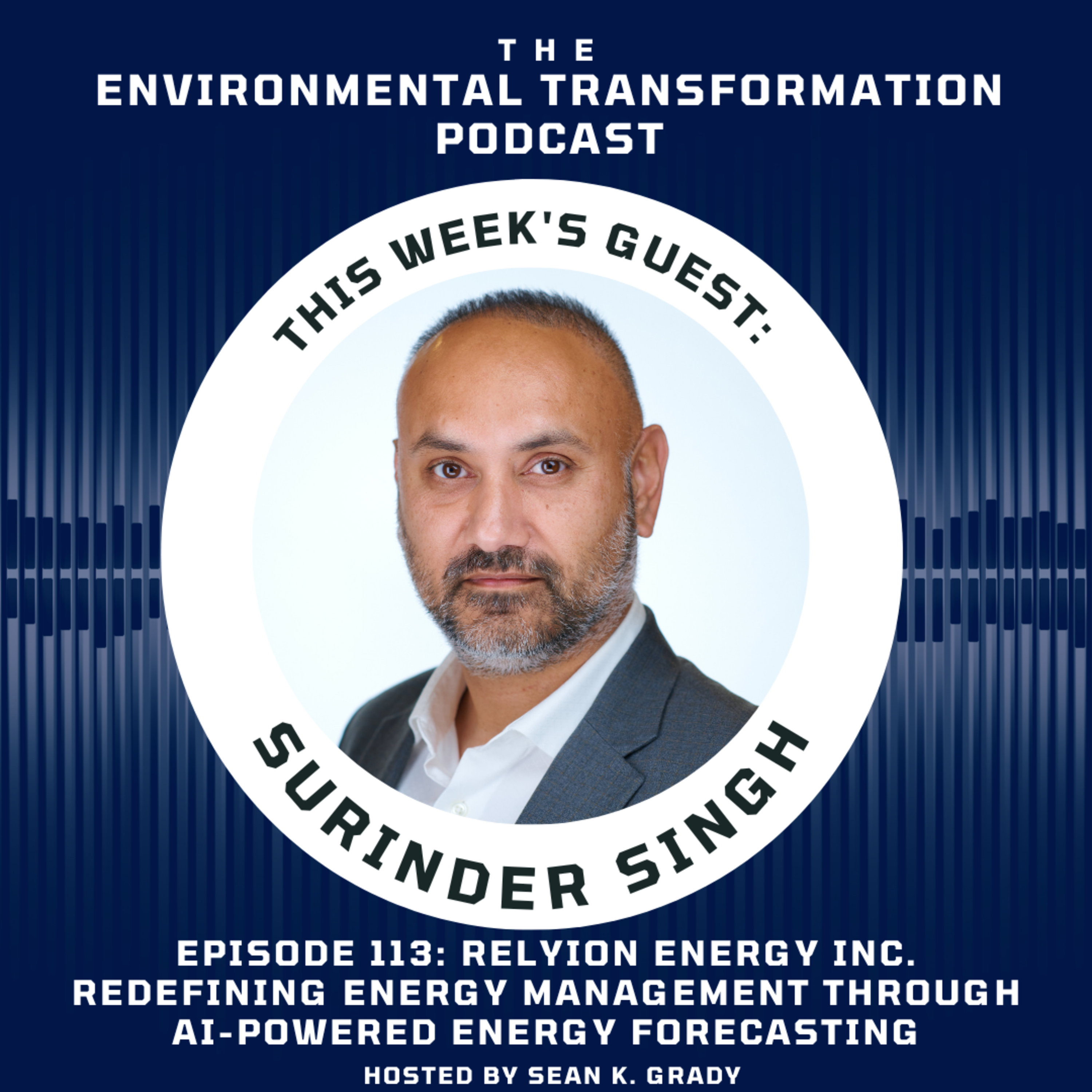
Host Sean Grady interviews Dr. Surinder Singh, CEO and co-founder of Relyion Energy Inc. Dr. Singh explains how his company is reshaping energy management through AI-driven forecasting, energy management systems (EMS), and battery management systems (BMS). He shares the story behind Relyion's technology, how it extends battery life up to 20 years, and why utility-scale clients, data centers, and commercial operators are turning to their solutions for smarter, more efficient energy usage. Learn how Relyion outperformed traditional forecasting tools by 13x in ERCOT and why now is the right time to adopt these game-changing innovations.
Chapters:
00:00 – Introduction to Dr. Surinder Singh and Relyion Energy
02:13 – The Three Pillars: Forecasting, EMS, and BMS
07:25 – Extending Battery Life Beyond 20 Years
12:40 – Relyion’s Early Use of Recycled EV Batteries
16:50 – Transitioning from Product Demonstration to Platform Innovation
21:30 – Minimal-Invasive Technology and Deployment Flexibility
24:42 – Beating Traditional Forecasting Models: PG&E and ERCOT Case Studies
29:58 – The Power of Forecasting + EMS for Grid Efficiency
34:22 – Grocery Store Case Study: ROI in Under 3 Years
38:09 – EV Charging, Microgrids, and Peak Shaving Optimization
41:32 – Battery Agnosticism and Real-Time Adaptation
48:40 – Implementation Timeline and Customer Onboarding
53:01 – Cloud-Based Forecasting and Edge AI Hardware
56:11 – Commercial Growth and Market Expansion
59:55 – Relyion’s Holistic Approach vs. Siloed Competition
1:03:05 – Utility Design and Grid Planning Applications
1:05:28 – Gen AI and New Demands on the Grid
1:07:20 – How to Connect with Relyion Energy
🔗 Learn more: https://www.relyionenergy.com
📧 Contact: contactus@relyionenergy.com
#EnvironmentalTransformation #EnergyAI #BatteryTech #UtilityGrid #Sustainability #CleanTech #DrSurinderSingh #RelyionEnergy #PodcastChapters
0:00 People used to talk about, you know, five years, seven years, 10 years of life for for new batteries. And what we were able to showcase was that actually for the batteries that people are thinking have reached their end of life, actually are are nowhere near their end of life. And with the right technology and the right Business Innovation, you can make them last much longer. Welcome to the Environmental Transformation Podcast, where we bring you interviews with industry leaders, climate champions, sustainability practitioners, EHS and hazmat professionals making an impact in their businesses today. Each leader solving complex challenges and delivering solutions within their areas of expertise. I'm your host, Sean Grady, and thanks for joining us today.
0:40 Before we jump in, make sure to follow us on your devices and visit my website at www.seankgrady.com and sign up for our newsletter and e-mail announcements. Now let's get started. Welcome to the Environmental Transformation podcast. I'm your host, Sean Grady and today's guest is Doctor Surrender Singh. He's the CEO and Co founder of Rely on Energy. Rely on Energy is a redefining energy management. They are redefining energy management through a proprietary AI powered energy forecasting tool, energy management system and battery management system. So, so that's the EMS and BMS. By integrating advanced AI software and energy, Brain, so to speak, is that the company enables owners, operators, and end users to unlock unprecedented value from power generation and utilization assets.
1:33 So doctors Singh has a distinguished career focused on advancing and incubating technologies that address climate emergencies with a focus on the fundamentals of science, systems engineering, and business models. He's also authored the many publications. He's also has over 50 patents granted or pending in the in the climb tax. So he's a busy guy. He's lots of experience. He's also worked at GE and a couple other companies that he's also mentoring startups in the climate and energy space right now. And so we're really happy to have Surrender come on the show and talk about rely on energy. Welcome to the show.
2:16 Sean, thank you for the introduction and thank you for having me. Looking forward to the conversation. Absolutely. So, you know, why don't we step back a bit here and give the listeners a little bit of background on rely on energy and you know how you got started in this space and you know, give us a little bad background on that which you. If you could, yeah. So rely on actually we started in 2021. So we're completing our four years and what we pride ourselves with actually a very strong technical foundation that we've expanded towards business fundamentals and so on. And the three pillars on which we've built the technology is on energy forecasting or AI forecasting. That applies to, you know, many different sections in the energy sector, whether that is demand, whether that is lowered, whether that is power protection that whether that is renewable, so solar and wind and so on, battery energy storage or another other energy storage devices. So forecasting related to all of them with the respect to both on the production side, on the utilization side as well as actually on the pricing side also. So there are things like you know, LMP and and so on at the utility scale level, at the ISORTO level that includes the pricing forecasting also.
3:30 So we do that. So that's the first pillar, which is on the AI based forecasting. The second pillar is on the energy management system or the EMS in in short and there what we are doing is actually optimizing the assets in terms of how you can maximize the revenue that you can generate from these assets. And these assets can be, you know, whether renewable energy assets or even non renewable energy assets as well. So, you know, power production and utilization devices, that's that's what I put them into. And that again includes, you know, solar includes, you know, conventional power generation technologies, including, you know, fossil fuel power generation, including natural gas power generation as well as energy storage. And the EMS is basically if you're sitting on all of these assets and you want to produce power or consume power or store power at the most optimum periods of time, when the pricing is high or the pricing is low, or when you know the carbon production limit is, is high or you want to reduce it and so on.
4:36 So how do you optimize all of these assets and optimizing them in terms of their value stacking, in terms of their, you know, revenue generation, in terms of saving on, you know, transmission, distribution or, you know, electricity bills if you're a, you know, a commercial and industrial sector and so on. So that's the, the second piece which it utilizes actually the first pillar, which is the forecasting. So the EMS becomes really exponentially more powerful when you're utilizing actually forecasting or bringing the forecasting into the EMS or the energy management services. And then the last piece or the third pillar, last but not the least is in terms of life maximization or asset life of the asset maximization. And in this particular case specifically, it is related to batteries.
5:28 And that is where the Edge Air device comes in for the battery management system where what we have already shown with many, many patterns that actually we've applied and from the company within a short period of time, we've published our results where we took batteries that were manufactured by other folks and that were close to their end of life. And we took those batteries and have published our results where we took them to 20 plus years of extended life. This is a game changer, if I may call it actually, because this opens up a space where traditionally batteries were not open to. So what people used to think about is lithium ion batteries, maximum you can utilize them for is like, you know, five years, 10 years, right?
6:15 And So what we've done is with, with these patterns and publications that we've already published out in the public domain that have gone through peer review and other people have seen it is that we can take new batteries or old batteries and make them last for, you know, 10/15/20 plus years of life in as a, as a stationary battery energy storage system. And that's where the edge AI device for the BMS comes in, in terms of life extension that applies to old batteries as well as new batteries, independent of actually the battery chemistry, the battery type, the battery form factor, you know, with nickel cobalt containing batteries or lithium iron phosphate or the LFP kind of batteries that are cheaper to make and are growing significantly right now.
6:58 So we can work with any battery manufacturer and with this edge AI make them last much longer. So those are the three pillars of the technology. So that's. Good. That's great. Well, I mean, you've made a lot of advancement. So I guess what I'll share with the, the audience here is about 3 years ago I met Surrender and we were the company I work for was interested in investing a little bit within with rely on as they were growing their, their tack. And it was with the battery management system with the Edge program and and it was really fascinating to see what they were designing and essentially creating battery backup of Gen. sets essentially. For alternative backup power. And they were using, you know, recycling basically, or reusing EV batteries to do that with this technology.
7:42 And then it was a really fascinating process and, and the design and the technology you guys have put together to, to make those and then produce those is, is really remarkable. And it was fascinating to see how you were able to, you know, maintain and optimize and extend the life of these batteries that like you said, they may not be able or capable of, of still like powering a car. But when you pull these together, stack them together individually, utilize the cells that do have the power through your tools, you're able to maximize these, the life of these batteries in a way that was like, OK, no one's doing this right now, at least that we know of. And it was really interesting. So I really, I'm glad you get that you brought that up.
8:24 But you know, I think there was a lot of success early on with those that those systems, but something happened along the way that made you pivot a little bit, didn't it? And with these other two pillars that you've, I mean, not that you're probably forgetting or you're still doing battery management, but the EMS and your forecasting tool is really showing to be a bigger game changer. So Sean, that's actually very interesting. So let me put it this way. I think actually, you know, with with the BMS and with the battery life extension, what we have shown is actually absolutely tremendous with respect to where everybody else was. You know, people used to talk about, you know, five years, seven years, 10 years of life for for new batteries.
9:07 And what we were able to showcase was that actually for the batteries that people are thinking have reached their end of life, actually are are nowhere near their end of life. And with the right technology and the right Business Innovation, you can make them last much longer. And so that is what we, we started with and as a vehicle to demonstrate actually the capabilities of the BMS, which is the brains of the battery energy storage system using the, the human body analogy, right? So that, that was the key that what we built is the, the, the BMS or the brains of the battery energy storage system. But when you're starting as a company, when you go out and, and, and speak with customers and, and, and so on, everybody would look at you and say that show me actually that it works, right?
9:53 And when you, when you have to show that it works, what you have to do is actually build the full product. And by building the full product, that is where. So even though our tech was on the brains with the BMS, but we have to build the full human body analogy. We had to fill the build the full battery energy storage system so that people can actually put their hands onto it and believe it that yes, it works. And So what we did is actually as a vehicle to demonstrate the the benefits of the BMS or the brains. That is what we did and we built full battery energy storage systems where one of the things that we recognized in the very beginning also was that we were not going to be manufacturing battery energy storage systems or manufacturing batteries ourselves, right. I, I think there are a lot of big companies and, and very innovative and, and good companies all over the world that have significantly reduced the cost, you know, over the last decades plus within the last few years actually the costs have come down by, you know, sixty, 7080%, you know, and it has become really, really cheap with respect to lithium ion batteries manufacturing.
11:04 And so our innovation, which is demonstrated now is, is on the brains, which is the BMS. And So what we have now extended to is, is showcasing that because of this brains that we've built, we can make the batteries last much longer and we don't have to make the batteries, we don't have to manufacture the batteries ourselves. So whether these are the Teslas or the LGS or the Panasonics or the BYDS or the CATLS, you know, you name it, any company that is manufacturing lithium ion batteries including you know nickel cobalt, you know, NMCNCALFPLMO, right, Any type of battery material with all their pros and cons, right.
11:44 Each of them have a certain space to occupy. What we are saying is that actually without BMS technology and on top of that, when you add the EMS and the forecasting, what we are doing is actually maximizing the the value that you can extract from these assets. So all of the the commercial and industrial sector, all of the the utility skills sector that is using more and more renewables, using more and more energy storage and actually fossil fuel power generation is not going away, natural gas power generation. No, it's not going away. The base load has to come from that. And So what we are doing is, is now if you look at the whole umbrella, the whole envelope is what we're saying is we're optimizing the whole grid. We are maximizing the value for everybody involved, whether these are power generators, distributors, you know, consumers, anybody and everybody. We're making the grid more efficient, we're making the grid more reliable, and we're maximizing the value of everybody who sits in this space, whether you're consuming power or you're you're, you're making power. Hello ET Nation, I want to thank you for listening to the podcast.
12:54 If you're enjoying the interviews we bring you, consider supporting the program by visiting my website at seankgrady.com and buy me a cup of coffee. Proceeds will go towards helping me continue producing timely content and offset production costs. I'd also like to take a moment and recognize a few of our sponsors of the show who have been amazing partners and our ET Nation legends. If you're looking for a drilling and environmental contracting firm to help you delineate the extent of contamination at your site, then look no further than Cascade Environmental. Cascade has over 37 offices across the country and offers a huge range of environmental and geotechnical drilling, site characterization, and remediation services. With their huge fleet of equipment nationwide coverage, Cascade is a great choice to support your environmental and infrastructure needs.
13:45 To learn more, check out their website site@cascade-env.com. That's cascade-env.com. Hey, are you looking for an equipment rental company to help you with your next wastewater remediation or waste management project? E Tank is the only environmental equipment rental company in the industry that offers 100% guaranteed certified clean temporary liquid storage tanks at no additional cost. This protocol gives Peace of Mind for the previous customer by limiting their downstream liability as well as the future customer by preventing any cross contamination for all of their rental tanks. E Tank also runs a one-of-a-kind complete maintenance program for all rental items including liquid tight roll off containers, fluid transfer pumps and filtration items. The next time you are presented with an environmental challenge, call E Tank to come up with the solution for your problem. I want to thank one of our sponsors, Waste Link. Waste Link is the all in one software platform transforming how environmental professionals manage waste, connecting generators and service providers and disposal facilities in a way that is simple, connected, and transparent. Your platform helps streamline everything from waste profiling and routing to inventory management and billing, giving you the tools you need to operate more efficiently and reduce cost.
15:12 Whether you're a generator looking for better options or a service provider seeking greater efficiency, Waste Link has you covered. If you're ready to take control of your waste management processes and optimize your business, visit wastelink.com to schedule a demo today. And so this technology of like the BMS, you know, the brains behind the, the operation, so to speak, of optimizing the, the use of the, the batteries and, and the cells and the, and the power within it. Is this a technology that, you know, maybe one of these big manufacturers could, could purchase to deploy to better manage their, the batteries they're producing now? Or is this like an add on aspect after the fact? I mean, is this something that you know could be deployed earlier in the in the in the process for say some of these big companies?
16:05 I guess I'm. Just trying to understand, you know, how they could be deployed. Is it, is it after the fact or you know when the battery's over with or could it be used, you know, during its, you know, initial optimization to the initial use? Oh, everywhere, yes. So there are multiple, you know, portions of the technology, some more invasive and some less invasive. But what we are showcasing is that with the Edge AI device and, and with the EMS and the forecasting, it's actually very, very minimally invasive and it doesn't have to wait for the end of life. So it can work with new batteries, you know, on day one that are supplied by manufacturers and we put our EMS software and the if needed, we can put in our BMS on the battery energy storage system. But the EMS is actually completely independent as well. So the forecasting is, is very, very, it's 0 invasive, right. So the energy forecasting can be utilized by you know, existing power producers and consumers as to if you if you know actually what the the power demand is going to be tomorrow, what the power demand is going to be day after tomorrow and when would be the best time to actually produce. If you have the flexibility to produce at different times of the day or consumed at different times of the day or stored at different times of the day.
17:24 How would you actually utilize your asset more efficiently by having this forecast which is significantly better than everybody else, And let me actually give an example just on the forecasting side. I don't know if I'm jumping around, but I'm. You're you're fine, you're fine. You know about all the. The different things is, you know, we've published many case studies as well now, which are publicly available. Actually many, I would direct the, you know, the listeners to, you know, visit our, our website also where we've given links to, you know, the different case studies. And we've done case studies with, you know, many of the, you know, the Isos and the RT OS. We've published, you know, Kaiso for case study, PG&E with PGM with Arcot and so on. And as an example, actually what we've and over multiple years and each of these you know IS OS and RT OS have their own forecasting tools as well.
18:16 And they, they publish, you know, the day had market and and so on and the LMP forecasting and things like that and so on. And so with these case studies, what we've shown is as an example with Kaiso over a one year period, actually less than a one year period over a couple of 100 days. What we were able to show is that within a, A, a small subset of of Kaiso, just looking at actually PG&E, we were better in forecasting day over day, cumulatively better by 300 GW hours. Let me repeat that 300 GW hours, yes? It was just within. You know, subset of Kaiso, Yeah. And and when people are talking about, you know, data centres, you know, coming online and you know, needing, you know, significant amount of power.
19:07 And what we're talking about is just one example, a subset of you know Kaiso PG and D where 300 GW hours we were able to demonstrate that we were better by 3X overall versus versus Kaiso in terms of our forecasting with respect to you know what the demand is going to be. Well, OK, so that's. Very. Small so, but that. That's great information and it's interesting case study. So how did PG&E respond to that? Did they be like, wow, Oh my gosh, that we've got to have this technology or or you know, what did they say? Yeah, so. That's actually a very interesting question. And so we just recently published this study and I think it's getting a lot of traction and I'm getting a lot of inbounds with, with respect to request to find out how this can be actually utilized even further. And what I was going to say is that when when I paused is that this was actually one of the small smaller portions of of the case studies that we've shown or the benefits that we've found. We did PJM and we did Arcot and when we did it for the all of Arcot for one of the years, I believe I this was 2024, we were 13 X so with guys, so I mentioned 3X actually for that case study with with Arcot we were 13 times better. This is 1300% plus better versus actually the predictions for the forecasting coming from our court. And right now this is very
20:38 relevant because as you can see, there are, you know, heat waves going around, you know, all of North America with significant portion of the US and, and Canada where we're talking about PGM and Urquhart and and so on. All of them actually going through significant loads and, and, and load shedding and and so on. Now when we are able to forecast and predict what the demand is going to be day in and day out and be better by 30 next, the the the benefit of this is limitless and optimization of this is limitless. And so you can have a more efficient grid and you can actually make a lot more revenue and profit when you utilize these services. Yeah.
21:19 I mean, yeah. Totally like, you know, the, the efficiency opportunities are massive. And so, you know, the forecasting tool works and, and it's actually, you know, identifying when the peak demands are or when it's going to be lower demands. And how does the utility take that information and act on it in, in a proper way so that they can adjust their, their systems to, to, to take advantage of either the savings or, you know, the increase there, you know, is there another step here That's part of this process that yet you we get that information for the forecast. Now we need to adjust. Now we need to actually do and make the changes.
22:00 How does that work right? And so maybe the one example over there is so I'll, I'll pick on a, a very specific case which which happened actually not too long ago. So just about a month or so ago, what happened in in Texas was there was towards the evening, there was a significant peak that that happened with respect to, you know, power spiking. And what everybody thought is that, OK, this is this is a huge peak that has come and everybody discharged all of their assets with respect to the batteries that they were sitting on, battery energy storage systems. Thinking. That this is actually a big peak and so all of the systems were discharged, but that was only a a small peak that nobody knew that there is going to be a much bigger peak that is happening later on. And later on a much bigger spike happened and all of the batteries were already discharged. There was no power that actually they they could have if they waited and if they recognize that this is just actually a pseudo peak and there might be actually a much bigger peak or much higher power demand that is going to happen later, they would have people would have waited on it, made more money by discharging it later and also actually made the grid more much more efficient by discharging it later. The prices spiked to like $4000 a MW hour where typically the prices can be as low as a few dollars a MW hour, right? So imagine how much efficiency losses took place and how much actually what's the right way to
23:33 say it is how much revenue or or profit loss that took place because you didn't know that actually there is a, a much bigger peak that is going to happen later on. Now how does it tie to actually our, our tools, right? So it's not only the forecasting, but it is also the EMS as well. So the forecasting, you know, puts the EMS on steroids. So as to say, you know, traditionally the EMS or the energy management systems are kind of like playing a little bit on the blind where you know, what they're doing is actually finding out. You know, if they, let's say, if you take the specific example of peak shaving, right, a smaller subset where the EMS says how they operate is they would, you know, say that at a certain, when a demand or the, the load increases off at a certain reaches a certain threshold, then you know, the batteries should, you know, discharge and when it reaches a, a threshold on the low side, then the battery should charge, right?
24:29 But they're, they're kind of like sitting in the, in the blind because the, the, your load can actually be very different at not only different times of the day, but different months of the year and different seasons of the year. So if your your EMS is operating just on a fixed load based peak shaving or a time based peak shaving, you're losing out on all the efficiency and all on the power savings that you can do if you operated the EMS more smartly. And what we've done is by joining the forecasting along with the energy management system, we're able to maximize again, the, the, the savings or the revenue that you can generate or utilization of your asset is much more powerful than what would have been traditionally.
25:14 And so there as an example, again, as a case study, what we did is we took an example for a grocery store. You know, we've spoken about utilities. Now let's talk about actually, you know, a commercial and industrial sector as well, right? We took a grocery store example where we, we, we took solar and storage use case and for the peak shaving as an example, when, when the, the load was high, the, the, the batteries would, you know, discharge provide the power so that you are, you know, demand charges or the time of use electricity bill goes down, right? And you would charge when the pricing is low and the demand is, is low so that you don't hit the high demand charges, right. We operated the same system under two different scenarios. 1 is a traditional EMS which is based on load based peak shaving and then an EMS which is, you know, rely on based EMS which has the forecasting and, and and smartly at just, you know, at different times of the day and different, you know, days of the month and the different seasons of the year to find out what is the right place at which it should be doing the peak saving peak shaving.
26:18 The difference was huge. So what we did was what we found out that if the the return on investment for a traditional scenario was like 50 plus years, which is meaningless, the batteries would not last 50 years. And in in reliance case we were able to actually have a return on investment in less than three years. So it was about like 2 1/2 years. And so, So what that means is, you know, if the batteries were on the other side when we're saying actually that we had shown that we, we can make the lithium ion batteries last for 20 to 30 years. What that means is by making an investment where you did a return on investment in as short as 2 1/2 years for the rest 18/20/20 plus years.
27:00 You're generating. Money you're making money, you're not sitting on a dead asset. Traditional. Scenario. Whereas here it is making money for you, You know, by saving money, you're making money, you know, right, Right. Right. So, so the difference between say like a traditional EMS and the rely on EMS is, is really the brains behind us, the forecasting tool and this and and your I guess innovation around the the the design of it, right, yes. Absolutely. That's great. Awesome. You know, when we look at these these types of tools, you know, can you talk about how Reliance EMS supports the applications a little more? Let's double click a little bit more on this peak shaving thing with EV charging and the micro grid resiliency Talk a little bit more about, you know, how does that work and how can you know rely on CMS system, you know, help these other these these types of micro grids?
27:59 Absolutely. Yes, So there's many, many different use cases actually, you know, time of use is is one example with demand charge reduction, another example peak shaving, solar integration or renewable integration backup power actually where you know, it's almost like you know, you can treat them as huge UPSS so as to say, right. So if the power, you know, shuts down or you know, PSPS events takes place, you know, power, public safety power shut off events takes place, right? And you need backup services. So there's the backup power. These are called, you know, traditionally these are like the BTM services or behind of the meter services, right? And then there is the front of the meter as well with respect to frequency regulation or you know, voltage regulation and so on.
28:39 So all of those that tie into these different use cases that we that we can provide for. So you talk a little bit about the, you know, rely on his hardware light and the battery, your battery agnostic, you know, on the BMS. So why is that? And, and what's, you know, and in I guess an intent is that an intentional design choice? You know, how does how does that help customers? And, and you know, wouldn't you need to deploy your technology partners in that space to really, you know, adopt some of the technology with you and their products to, to be a team, right and making this work? So there's two.
29:22 Portions in, in, in this question actually. So 1 is on, on, on being hardware light and and 2nd is with respect to being technology agnostic, right. So on, on the technology agnostic side, one thing that I mentioned earlier, as well as what we wanted to build since the beginning itself was, you know, we, we, we started with the assumption that the, the technology evolution is, is, is going to take place, right. With lithium ion batteries. You know, they're called lithium ion batteries, but they're not just, you know, one type, right? So there's, there's many different, you know, permutations and combinations that have taken place within lithium ion batteries, right? Whether it, that is because of the chemistry or the form factor, you know, the nickel cobalt containing ones, the NMC, the NCA, you know, there's the LMO, there's the LFP, which is the lithium ion phosphate and so on.
30:11 And different actually within the same battery materials, different ratios in which actually these materials are also used, right. So there's many, many different flavours. And so that is the current status of the technology and that it is not going to stop over there. The, the technology evolution is, is taking place there. There are, you know, significant and, and very important innovators and people and companies that are there and technology evolution is going to take place. So if we're building ABMS and EMS technology that has to be independent of, you know, these different sources, right, different companies, different battery materials and so on. So what we started with the assumption was that we have to build a technology that should be applicable to all of these battery chemistry types and and so on. And that is why we were, we started with that assumption and we were able to build a technology that can work with all of these different types of chemistries and form factors and different sources.
31:07 So that is, and how we were able to do that was because we, we went away from a traditional mindset where the technologies were built on a thing called SoC or a parameters called SoC and SOH, which is the state of charge or state of health, which are, you know, to simplify it is it's just ratios of, of, of parameters to add that take the ratio of the capacity at different the times of the, or the life of the battery in terms of state of health. And you know, in terms of the state of charge, it is at that particular moment of time, it doesn't have a physical significance. So these are actually built on empirically drive models.
31:48 And so when you're. Running actually a battery with ABMS that is dependent on these empirically Dr. models, then you're limited. It doesn't have a physical significance. And these batteries, they age at different rates. So even if you take like a lab scenario, right, if you take batteries that are manufactured by the same manufacturer, same chemistry coming from the same batch, and then you put them into a lab environment by running them under same temperature condition, same charge and discharge cycles throughout day in and day out. Still, if you take, you know, 100 different batteries or thousand different batteries, they're going to degrade at different rates. There are intrinsic factors that make the batteries degrade at different rates and on top of that then there are extrinsic factors due to which actually batteries would degrade at different rates.
32:35 So by that what happens is if you build Abms technology that is dependent on the SoC and the SOH inherently on the ratio of these these parameters which do not have a physical significance. You end up with, with a, with a, with a brain that is trying to control these individual battery components that are all degrading at different rates and you're limited by the worst performing component and the bad apple spoils the whole bunch. So the problem keeps on becoming worse and worse as the more you age. So what we did is actually we went on to develop this BMS technology that goes away from that goes away from the SoC and SOH kind of, you know, these, these parameters that do not have a physical significance. So we don't, we go down to the physics of how the batteries actually degrade, how the batteries operate, and we make them actually discharge and discharge in different manners so that we are accounting for the differences in how they're aging on the fly.
33:32 Rather than actually looking or or or being dependent on just the history or the past on empirically drive models, we look at actually the current status of the battery and the system all together, individual components and the whole system all together and operate them differently on the fly. Rather than looking at the past, we look at the present and how they would evolve in the future. Well, how long does? That assessment take, you know, take to kind of evaluate the different batteries that you are, you know, essentially going to manage in that space. Like, you know, how long does it take for the system to kind of evaluate each of the batteries in that way based on its characteristic and everything else? What's what's that look like?
34:13 Very important. Question and actually what we do is actually we do it on the fly. So it's not that actually you need a lot of data to run these batteries and then find out actually how they're degrading and then actually operate them in a different manner. What we do it is we do it on the fly. So we start with the stock model. You know, when, when you're starting with actually a new battery of energy storage system, you start with actually a stock model. So when you, when you start all batteries, they start with actually a very flat line and then they start crashing. So the big thing is actually very uniform. So you start with a stock model, but then it keeps on adjusting on the fly. And that's how we're able to actually, you know, not wait for huge amounts of data and, and correspondingly not wait for a huge amount of time before we can actually start operating. We can start on day one.
35:03 OK, All right. What does you know, what does it look like for a customer who says hey, surrender, I want rely on energies, you know EMSBMS and forecasting technology to come and evaluate my operations to see what you guys can do to help us, you know, optimize our energy usage, save money and generate revenue, whatever it depends on if I've got a bunch of batteries I can generate revenue with right I mean tell me how that looks What does that look like for a customer right there's. Multiple ways on this. So one of the the easiest ways is that actually we can operate in a in a shadow mode, right? So and by by what?
35:44 By that what I mean is if you, if you have an existing set up an existing operation and you're utilizing actually a certain technology, you don't need to modify anything at all. What we are going to do is we can operate in a in a shadow mode where you don't have to change anything that is on the system itself, but you can actually recognize if we were maintaining and operating the whole energy management system and the forecasting, then what it would look like, right. So you can, the customer can recognize or start seeing the benefits directly in parallel without even modifying their system. That is one way to do it. Second way is that we can actually get the data from the customer and they can anonymize it.
36:25 You know, they can redact it in, in whatever form and so on. We can take the data and run studies on our side and and give the results back to them. So for example, in terms of the forecasting study, right, So we can give the results back and they can compare the results, you know, day in and day out, you know, they can do it for a week, you know, 15 days a month and so on. Then you can continuously see that there is, you know, we're significantly better than what they already have or, you know, versus what exists in the market, they're automatically going to get converted. So these are the, the, the least invasive ones. And then the, the ultimate goal is that obviously we start operating or managing the assets ourselves.
37:08 We provide the forecasting tools. We, we, we manage the assets in terms of the energy management system and we, we maximize the value and the life of these assets. Moving on, one for the customers, so in that. Scenario, the last scenario there are you guys is this like a cloud service? Is this on premise? How is this tied into their system so that you can actually start managing this right so? The AI forecasting and the EMS is completely cloud based. The, the BMS side is an edge AI device and that's where actually the hardware light component comes in where you, you had asked earlier, which I, I, I, I think we started discussing other things. But the hardware light portion is the edge AI device, which is actually a small controller that can snap on to or sit on the outside of the, the battery energy storage system. And that edge AI device or the BMS portion is the only portion that is specifically related to the batteries. But the EMS and the forecasting is applies to the batteries, but many other types of assets in addition to the batteries as well.
38:13 OK. All right. Wow. You know, I say here, I see here you've generated about $1,000,000 in revenue from early adopters. What's the next commercial growth and market expansion for you guys, right, so. And the what we did as as an example is we showcased our our benefits on, on the BMS technology. So we use that at the battery energy storage systems as a weaker to demonstrate the benefits of our BMS and the EMS. Now the next stage the growth of the company is with respect to all of the huge waves that are actually simultaneously happening right now with the data center growth, with the the power demand growth, with electrification of everything, with more renewables, with more decarbonization, more sustainability. So there's so many multiple waves that are happening actually right now and we're sitting in the middle of it where are cloud based AI forecasting and the EMS and the edge AI device.
39:10 BMS can significantly increase the value at commercial and industrial scale and actually going into the utility scale. The utilities have traditionally and rightfully so have been very risk and worse, they want to see the technology out in the field. You know, they won't be the first ones to actually adopt A new technology. What we've done now with significant patterns actually that have been applied for. We have significant data that is already published that have gone through peer review. We have systems that have already been sold to different customers. So with all of that actually already achieved, now the next exponential growth is is just about to happen. Wow. Yeah, that that's really good. I mean, when you when you when you think about it, I mean is it the utility scale the biggest, you know, opportunity for you guys in a sense because of the the large volume of energy that will constantly being, you know, either delivered just, you know, through distribution transmission, I mean.
40:07 It seems like that's probably the most lucrative or the most, you know, impactful type target for you guys in a way, right? I mean, I'm wrong here, but it seems like that would be it. What I would say is I. Think actually there are kind of like 3 sectors that are really important and are all going to grow. You know there's the utility scale which you as rightfully mentioned there is the data center kind of like the sub sector, you know that is significant consumers. Of the of the energy, those guys, right, yes. Absolutely, and then I wouldn't disregard actually the C and I sector. This is more like actually, you know, the distributed energy kind of analogy that we can utilize from, you know what happened with the Internet as well in in in the past.
40:51 And so the C and I sector with the distributed kind of grid is, is going to also significantly grow and and see huge benefits. What we have to do is actually to have an efficient and an optimized grid. We need to make sure that these are there are not only we're looking at the system holistically at utility scale level, but also these kind of like small, you know if you can call it the nodes, right or the neurons at at different places. So these can be optimized and make the the grid even more efficient. Well, how is Relion's approach to forecasting different from traditional grid or ISO forecasting methods like Casio? Yeah, so. What, what you've done is actually we're, we're looking at it actually again, the physics of, of every system. So rather than looking at it just as a, you know, just blindly finding out what the the next number can be, you know, in terms of just looking at it from a maths, A mathematics standpoint, what we look at it is, is from a physical and a physics standpoint.
41:54 I call, you know, our system and there are actually this terminology has been used or have been started. It's starting to get used more and more right now is physical AI. So what we're doing is actually we've brought in the physical AI with the physics also along with it. So what we're doing is we're looking at it the whole energy sector from the standpoint that there are these individual parameters that all are really important to look at. So whether these are, you know, the the temperature, you know, whether it is the weather, you know, weather or how the batteries operate, how you know the solar power, you know, generation takes place and so on. So we're looking at it from a physical standpoint with the physics involved rather than just predicting actually a number from a mathematics standpoint. So there is AML and AI portion that looks at the physics of the system and that's how we're able to forecast it better. It seems to me like, you know, some investors, like utility scale type investors should be really thinking about reaching out to talk to you guys about the technology or some of these solar power battery backup type.
43:06 You know, companies should be reaching out to to, you know, find out how they can, you know, work with you to utilize your technology. I mean, what am I missing here? Who else is, who should be a customer, You know, if you're an investor, you know, or partner who's listening? What makes now the right time to work with you guys? I think. This this is actually a really good time with respect to, you know, all of the the changes that are taking place in in the grid right now with the data center growth, with the Gen. AI growth, with more renewables growth as well and with climate changes also taking place. So we're at the right place at the right time.
43:47 So we're, we're enjoying the benefits of, you know, being sitting on these these right waves that are taking place at the moment. And and just the future is amazing. Well, I mean, if you were to Fast forward 10 years from now, how will the platform like rely on reshape the relationship between energy producers, consumers and the grid? I I think. The, the way the the sector is growing is I don't think anybody would doubt the fact that this is going to be big from multiple fronts, right. What is important to recognize is that there are going to be multiple winners in in in this space. This whole pie is so big that actually each of those winners is going to be big themselves and rely on is what we are making sure is that rely on is one of them. You're getting a piece of the.
44:37 Pie, right? Yes, yes. Yeah. I. Think that the feature is amazing and we're we're we're just you know making sure we're doing the right things at the right time well, I was just. Curious because one of the questions I didn't ask, which is like, you know, I'm assuming you get competition in this space too. There's other, you know, companies that are doing something similar to or maybe it's exactly the same type of similar type thing. I mean, So what does that look like from the landscape from your perspective as well? Is it does anybody compare to you guys or do you have such a, you know, kind of edge on everybody else right now that you know, you kind of are in the driver's seat here, right? So I, I think competition is good.
45:18 You know, it makes, you know, everybody better and, and, and you know, you always stay on your feet and become more innovative and, and you run faster, right. So competition is is good. At the same time though, what we saw is I think there are a lot of companies that are kind of like operating in these silos. You know, there are companies that are just working on, you know, the battery analytics side. You know, there are companies that are working on the battery, you know, Second Life or, or repurposing side. There are recycling companies, right. There are companies that are on the forecasting side and so on. But they're and there are, you know, energy management services companies as well as well. So, but all of them are operating in silos.
45:59 There was a huge need that we saw that there needs to be a holistic solution that makes all of these things actually become better. So instead of being, you know, 111, you can become elevens or 100 elevens and so on by combining all of these things together and be, you know, the best at actually each of those things as well. So you know, there is a lot of competition and that is a good thing. You know it. It makes us better and hopefully makes others better as well. And what, what we are doing is actually doing this more holistically by looking at the whole system problem. That is where my background comes in. Actually, I, I'm more like a systems engineer and, and a techno economics background and so on.
46:42 And so we're looking at the whole system together and and and doing this holistically, which nobody else is doing. So if you're like a utility design engineer helping utilities build their networks and their grids and everything is, is that that type of a firm somebody that should be reaching out to you as well in an early stage to help, you know, implement and deploy this technology in the design? Absolutely. I you know, what we can do is we can help with respect to, you know, how much load is expected to increase at, you know, various places of the grid. Where would be the right place to put, you know, more power generation or more. You know, if a data center needs to be put at a certain location, we can find out whether that is the right place or are there other alternative places?
47:27 What are other technologies that should be put in and what they're right sizing should be right In terms of design before even going to, you know, operation, we can help on the design side. And then going into the operation side as well. How do you optimize all of the different, you know, consumption and generation devices that that you have and how do you make them last longer? How do you minimize your, your degradation? How do you maximize your, you know, power savings and so on. So all of that actually at various stages, you know, design, operation and, you know, life, all of that, actually we apply at multiple places. Yeah, you know. This the, the, the utility energy boom is what I would call it, that's going on right now across the US with, you know, the demand of power from all these data centers and the, you know, for AI, it's, it's remarkable right now.
48:18 What the, what, what we're hearing from the utility sector is like there's just isn't enough engineering firms, you know, production firms design, you know, firms, whatever to help them meet the demand that's already out there for all the data centers that's being required or requested to be built across the country. It's, it's amazing and it's going to have a big and there's not enough power. That's the other thing is there is not enough power to meet the demand as well right now. So anything in these guys could do to optimize and will become more efficient would be, you know, in my mind a good move, right? I mean, that way you're taking advantage of the existing power they do have and using it more efficiently to meet the demand, right? And and.
49:03 There are differences with, with respect to what the data centers of the past were versus what the new data centers are and how they're actually being utilized, right. So, you know, traditionally, you know, the Internet, the data center load used to be, you know, very kind of uniform, but with now the Gen. AI, with the AI training and and so on, there are these, you know, data centers that have these, you know, power spikes that happen, you know, so frequently and at at, you know, very high, you know, loads that you need to have solutions that are more innovative with respect to how do you get all of these power spikes that are happening so frequently and you know, big spikes.
49:45 How do you utilize assets or how do you bring assets that are most efficient in terms of providing that kind of load which is changing at at the least amount of cost. And that is where again our innovation comes in with the with the with the forecasting, the EMS and the BMS as to how you can utilize these, you know, assets, you know most efficiently. Well, it sounds. Like, you know, I know for the listeners who've hung on for this interview and and, and I appreciate you all. This was a very technical conversation around around that, you know, some some technology and solutions and software that's really helping energy systems become more efficient. And a lot of times, you know, if you're not a real techie or a real engineer in this in this space, might get hard to really conceptualize it all. But I know that Doctor surrender seeing here with the rely on energy is doing an amazing job of creating tools that I think will help not only, you know, companies across the country become more efficient, but, you know, also help deliver power in a more efficient way for in a cost effective way for us. And so how would be the best way surrender for someone to get ahold of you?
50:59 I'm thinking of, you know, you know, some company that needs your help. What's the best way for them to? I would. Say you know anybody who would like to speak with us. Our e-mail to reach out is contact us at relyonenergy.com and we would be glad to speak with with everyone looking forward to it. Yeah, that's great. Well, you will make sure we promote this, you know, on when, when we release the podcast. This will be a great episode for people really, you know, challenged with how do we deliver more efficient power with the existing assets we have. This seems to be a solution that could really help not only through battery backup batteries, you know, management, but the CMS and the your, your forecasting tool.
51:40 I think it's a game changer. So really appreciate you coming on the surrender and and explaining a little more in depth about this. And you know, I'm sure for the listeners, there's a lot more detail that I know he could get into because I've actually had other conversations with me and he can be very specific about the engineering design behind this stuff, but it's more than we can cover today. But thank you for coming on the show and we really appreciate you and and and, you know, best of luck with the rely on energy and and where you guys are going. Thank you, Sean. Thanks for. Listening and watching the show. If you enjoyed the show then please share it with your friends and Co workers on social media and tell somebody in person thanks for being with. US ET nation.

CEO
Dr. Surinder Singh has a distinguished career focused on advancing and incubating technologies that address climate emergencies with a focus on the fundamentals of science, systems engineering, and business models. He is a seasoned executive who has authored and co-authored 11 publications and more than 50 patents granted and pending in ClimateTech. He has been featured in Business Insider, Fortune, and Microgrid Knowledge. He is CEO and co-founder of Relyion Energy Inc. Relyion Energy Inc. is redefining energy management through its proprietary AI-powered Energy Forecasting, Energy Management System (EMS), and Battery Management System (BMS). By integrating advanced AI software —an “energy brain”—the company enables owners, operators, and end-users to unlock unprecedented value from power generation and utilization assets. He previously led Energy Management at NICE America Research and a program leader at GE. Dr. Singh mentors startups in Climate and Energy at Breakthrough Energy, Third Derivative/New Energy Nexus, and numerous other organizations.


