

 Apple Podcasts

 PocketCasts

 Spotify

 Overcast

 TuneIn

 RSS Feed

 YouTube

 Amazon Music
Inside CHEMTREC: Chemical Emergency Management Support for First Responders and Shippers
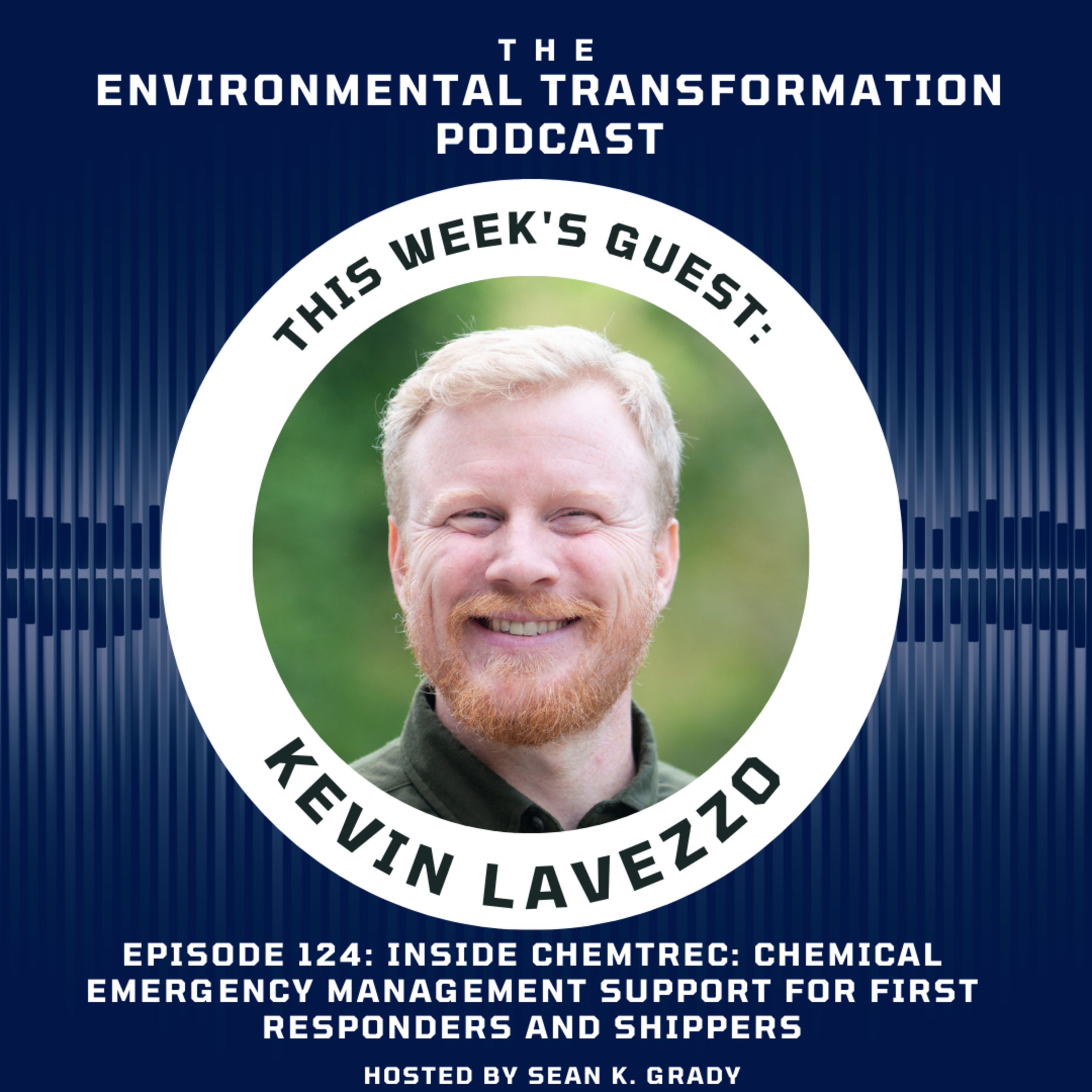
Host Sean Grady talks with Kevin Lavezzo of CHEMTREC about the side of the chemical world most people never see, but responders rely on when accurate information matters. They unpack what CHEMTREC actually does, including how its Emergency Operations Center triages calls, uses tools like the Emergency Response Guidebook (ERG), and connects callers with product experts.
Lavezzo explains a common misconception: first responders can call CHEMTREC for help without paying a fee, and the team will still work to support a response even when company information is incomplete. The conversation also covers how CHEMTREC supports compliance for shippers, manages safety data sheets, provides hazmat and regulatory training, and coordinates parts of incident response through partners.
They also dig into real-world challenges, from language barriers and global response complexity to responder skill gaps with monitors and interpreting SDS details, plus emerging trends like lithium-ion battery incidents and severe weather impacts on transportation.
Thanks to our Sponsors: Cascade Environmental, E-Tank & Pump, and WASTELINQ.
0:00 We are free to call and we will help anyone who calls in one way or another. A lot of fire departments think that they have to be subscribers and we are completely free for all. First responders will help anyone who calls, even if it's not a company that is registered with us. Don't do everything we can to support them. Welcome to the Environmental Transformation Podcast, where we bring you interviews with industry leaders, climate champions, sustainability practitioners, EHS and hazmat professionals making an impact in their businesses today. Each leader solving complex challenges and delivering solutions within their areas of expertise. I'm your host, Sean Grady, and thanks for joining us today. Before we jump in, make sure to follow us on your devices and visit my website at www.seankgrady.com and sign up for our newsletter and e-mail announcements. Now let's get started.
0:52 Welcome to the Environmental Transformation Podcast. I'm your host, Sean Grady, and today's guest is Kevin Lobezzo. Kevin is with Chemtrak. And today, we are going to dive into the part of the chemical world that's most people never see, but every responder depends on. Chemtrack has been the backbone of global chemical emergency communication for more than 50 years, connecting firefighters, law enforcement, medical teams, and industry experts in the moments when accurate information matters most. In this episode, we're going to go beyond the basics. We're going to explore how Chemtrack Emergency Operation Center processes complex incidents and how they integrate with regulatory frameworks like 49 CFR and international transport codes. We're really excited to bring Kevin on the show and dive into Chemtrak and all the services they offer. So welcome to the show, Kevin.
1:46 Thanks. Very much, Sean. And before we get started, just have to do a quick disclaimer that The opinions expressed in today's podcast are my own and not the opinions of Chemtrak or the American Chemistry Council. All right. Well, Kevin, there you go. What do you think is the most misunderstood part of Chemtraq's role in global chemistry safety? And why do you think that misconception persists? That's a great question. Chemtraq has changed a lot over the years and I think a lot of folks used to the Chemtraq of 20-30 years ago where we were very US focused with a little bit on Canada and Mexico. And you know, we were a source that you would call for expert information for a lot of safety data sheets.
2:30 And you know, we're, we're no longer just the US, you know, Canada, Mexico, North America, we operate worldwide. We have emergency contacts for chemical companies all over the world. And you know we are we are free to call and we will help anyone who calls in one way or another. A lot of fire departments think that they have to be subscribers or that there's a fee associated and they're unsure of what they will get. And we are completely free for all. First responders will help anyone who calls, even if it's not a company that is registered with us. Don't do everything we can to support them. Well, that's great to know.
3:10 I mean, that that's an interesting piece of information that I didn't, I wasn't aware of. It's it's good to know that, you know, mercy responders can rely on, you know, somebody, you know, somebody in the cloud, right? That's going to help them understand maybe what's really going on, right? Yeah. And you know, we're, we're in a nice comfortable office. You know, we're not out there in the field where there is noise and weather and radios to pay attention to calling us and helping, you know, letting us help with some of that research and reaching out to experts in a, a lower stress environment where we're not paying attention to 100 things at once. You know, we can really be a a tool in the toolbox of any incident commander that's on a hazard materials incident, at least to paying ideas off of if not to help with decision support.
3:59 So, so the misunderstood part is you guys offer a free service to to 1st responders who need help. Now if we could though, you know, let's segue a little bit into the fee structure or the fee aspect of your service because there are people who pay you for the use of your service. Maybe you can talk a little bit about what that looks like and how that how that works, you know for you guys and your customers. Yeah. I mean, it's pretty, pretty simple. You know, companies use our phone number for, you know, the emergency contact and safety data sheets to satisfy the requirement for an ERI provider on shipping papers. And, you know, somebody wants to use our phone number and once you use our service for that purpose, you know, there there is a fee associated with that to cover, you know, maintenance of accounts and things like that.
4:42 If someone is using our phone number on shipping papers, the understanding is that, you know, we know they're doing it and they communicate that to us. And, you know, we have the information we need to assess if there is an emergency involving their shipment or their product. So say you've got a client who maybe they are a customer, but they forgot to tell you that they're shipping some hazardous materials and then they're, you know, an accident happens. What what's the process? How does that work? Then at that point you just go kind of go into fact finding mode, you know what are the maybe the chemicals of concern that are are known and then how to handle it. You don't, even though you don't know that it actual the shipment took place. Yeah. And, you know, it's not usually somebody that's that's, you know, using our phone number.
5:25 He's forgotten to tell us. You know, our phone number has been around for so long that companies have come and gone. There have been mergers, acquisitions, sales, bankruptcies, reorganizations, and, you know, maybe they decided to take that in house and have their own phone number on there or go to somebody else. And we're still going to try and assist the best we can. You know, during the day it's a lot easier, you know, during the work week because we can try and find that company's phone number. If we can't solve the problem, reach out to them and say, hey, you've got a truck flipped over on the highway. I've got a Fire Chief on the line that needs help and assistance and we don't have your company information anymore. Or it could be, you know, I think 11 good example. And one aspect I like of doing this job, what really kept me here is doing some detective work right where, you know, we had an incident at a an old oilfield site and the only thing that was there was a rusty sign that said the company name and Chemtraq and our phone number on it. And this place had been abandoned for abandoned but not active for some time.
6:29 And the company name on there was no longer a registrant. They weren't registered with us. They weren't recognized being a registrant. And we were able to use publicly available information to trace where that company went, that they were bought by one company. Then that company was bought and that company was bought down to where we were able to find a company that was registered with us. And we called them and the first emergency contacts said, oh, yeah, I know exactly where that is. What can I do for you? So we're, we're still going to try and help, you know, we're going to do whatever we can. It it's a little more difficult if it's after hours on a holiday, on a weekend that because we might not be able to find emergency contact information for that company. You know, they may have stopped shipping hazardous materials or, you know, their safety data sheets may not be publicly available in a way that we can get to and see who their contact is. So, you know, at that point we will we'll engage whatever resources we have available to try and solve that problem to the best of our ability.
7:27 And then during normal business hours follow up again to say, hey, you know, we help these guys out. This is what it is. And if it is a situation where someone's using our phone number and maybe they shouldn't be using it, we'll again, we'll do what we can and then our sales team will reach out to that company during the week and say, hey, FYI, we got this call, let's talk about it. I think we need to get you under contract because you're using our number, right? Yeah, right, right. Well, okay, so Chemtrax been around since 1971. How is the nature of chemical emergencies, you know, changed over the decades, you know, and how's Chemtrac adapted to the changes over the time? Yeah, it's changed a lot. Even even in my, you know, 18 odd years here, there's been a noticeable change in the types of phone calls we get, the problems that responders are facing.
8:14 When we first started, we were 4 responders. That was who we served. There weren't nearly as many people on duty, and the incidents you got tended to be more complicated because there were not the available resources back in the 1970s, Nineteen 80s and 90s. So you had to do a lot more legwork. You know, they had binders of safety data sheets they had to go through. You're flipping through the IO SH book and the erg and then yeah, you know. It was the paper world. And now those resources are available to everybody. And after 911, a lot of money got poured into fire departments and police departments and Emergency Management. You know, those folks became much more experienced in the basics of hazardous materials response. You know, I'll, I'll never forget within the first year or two I was here, I had an incident where there was a drum behind a bank and it had a label on it with a chemical name and it was a jar.
9:08 And I was talking to a guy that was riding the back step, probably a newer guy. And I said, well, I can't tell you what's in there. The drum is open the labels, probably it could match what's in there. It might not match what's in there. And I said, use guide 111 from the erg. And he said guide 111. What's that? And you know, we, we don't get that anymore. Most fire departments, they have at least awareness of OP, not OPS and technician. So when they're calling us, they're not calling with what I would I would consider a simple problem. They're calling with a plan and they want a second or third source or they want to talk to an expert to say your plan is good or to confirm what they learned. Or they have something that's just complicated that they can't deal without the field.
9:52 And we're kind of missing that middle now. You know, we still get the occasional call from someone who just doesn't have a whole lot of knowledge and response, but that's more rare. It's usually these more complicated ones where it's a reaction between multiple chemicals or it's a large spill, or it's environmental contamination. It's in a sore and they want to know what to do about it. It's not as simple as OK well get to a safe distance, dam and dyke with dirt or absorbent, whatever you have around and then wait for the hazmat team to get there. I think of the maturity of the industry and you know, all the training requirements and expectations of fire departments and, and all the, like I said like either through FEMZA, through, you know, all the other dot training requirements, I mean, they've had to actually spend a significant amount of time and effort preparing their staff to, to be in compliance with these requirements.
10:44 So I think, you know, maturity over the past 20 years with the regulation has kind of helped. I think you and this whole, I think seeing the, the industry respond, which is good, right? I mean, that's what it's supposed to do, right? And you know, even with Hascom, you know, when the safety data sheet standards got raised, a lot of safety data sheets when I started that were still real basic. It was 2 pages. Yeah, the GHS was like it was seemed like a very slow roll out for a bit too and you know, right. Yeah. And you know, the safety data sheets that came out of that, that were in compliance with GHS are way better than they used to be, way more useful. There's a lot of a great information on there that's that's helped us be more effective. And you know, it's, it's helped fire parts be more effective as well.
11:25 They can pull a safety data sheet up on their, their laptop in the field now or on a cell phone and you know, they're, they have that access now. If they if they know what they're looking at, it can be a very useful talk tool. Well, yeah, I mean, you know, most data safety SDSS weren't really available online for many, many years. I mean, and it's just as this kind of a new thing. I mean, within the past say, what, 10 years we've had online SDS. So yeah, it's a big deal, right? Yeah, and a lot of companies have seen the value in putting their safety data sheets out there, you know, that are publicly available. They're not all behind a password now, right? So that's you know that they're, they're, they're positives and negatives to that. It's, you know, more information is always a good thing, but you have to know how to understand and and interpret the information that you're reading or you know you might not have as effective of a response. Well, walk us through if you could a little bit like you know what actually happens inside, you know the emergency operations center when you guys get a call and it comes in, you know what, what, what, what does the first min or two look like for you guys?
12:26 Yeah. So, so we want to ensure the safety of the caller and those around them, right. Our first priority is, is life safety. So we're going to ask questions to determine what's going on, who is the caller, what is their level of experience and capability, where is the incident and what is involved and what quantity, what's the circumstance of the release. You know, the information and decision support that we give for a one gallon pail of paint is going to be a lot different from a tank car of chlorine. So we want to very quickly triage that call and get the basic information we need to be successful. So we can decide, OK, well this is not a time critical incident. We can spend more time gathering information, you know, the nitty gritty of it.
13:08 You know, if we need to figure out a shipping location or if we need shipping paper information or if it's a very clear, OK, let's look at the isolation distances. Let's get you a safe place first, and then we can talk about what to do next. That's especially important with untrained folks. You know, we're not just for fire departments. We get calls from truck drivers and train masters, conductors, you know, folks on ships at sea and intercoastal waterways and private citizens that say, hey, there's this truck parked outside of my hotel and there's a gas coming out of it. Or this tank car has been behind my house for a couple of days and now there's something coming out of it. You know, we need to take that level of experience and capability into account and get that person away. We still use the ERG for that.
13:52 You know, the ERG is a great tool for the 1st 10 or 15 minutes of a response for getting away and getting safe. And you know, we, we really lean on that heavy. So, so for the listeners who may not be familiar with ERG, it's your emergency response guide. So it's a standard guy that has a lot of different response scenarios for different chemicals and it goes by number and it's a great resource for how to handle chemicals when they're spilled. So anyways, like what PPE to use, you know, what this issue should be and stuff like that. So just wanted to kind of interject there for some people because we, we can be very technical and there's a lot of layman folks that might listen that aren't into this aspect of the environmental field.
14:35 They'll be like ERG, what are they talking about, right. So anyway, just thought I would interject there. And and that's a free tool as well. There's an app in the Apple App Store, I think Google Play as well. It can be downloaded from the fibs website as APDF. And it's always fun to, you know, when you're, when you're traveling around to look for placards. Yeah, hey, that's a 1268. What is that? You know, or Yeah. Yeah, I love that. I I like doing the same thing. It's good. Yeah. OK. So so you, you basically triage the situation by making sure that the people are safe before you really get into it. And then, you know, once you've identified what the chemical concern is that's being spilled, I mean, like, all right. Are you calling emergency response coordinators to get out to the site?
15:21 Are you leveraging a network that you own or manage yourself that you know you're coordinating with partners? I mean, how does that part work? Or are you calling the the person's responder who has the contract with you, who they've already told you we want you to call these people if someone calls her, I mean, I don't know. How does this work for you on that side? Yeah, I mean it, it kind of runs cabin, you know, it depends on what that customer wants. You know, if it's a registered customer and they have that, then we'll work with that customer to facilitate communication. You know, we don't, we don't send anybody the incident scenes to do, you know, mitigation. You know, we do have an offering where, you know, we, we do assist in the lower 48 with a chemical response.
16:01 Typically that's going to be, you know, an outside party that handles that. You know, we started doing our client remediation offering because we wanted to help with the start to finish of the incident instead of us getting the information and doing isolation and then getting details and then calling the registrant, telling the registrant, OK, well, this is what's going on. And they have to in turn call their contractor. And it's a lot of extra steps where you know, if someone is one of our, you know, companies that subscribes to our client remediation service, it really streamlines that, you know, we've already got the information on the incident, we've got the location, the material quantity, all that stuff. And we can engage with our partner and then. Move them out quickly.
16:42 Yeah. So, you know, it's all about making sure the response is faster. You know, the the longer it takes to get somebody there to do mitigation, you know it has the potential to be worse. You're connecting with these responders with chemists, toxicologists, you know, in the manufacturers. How do you guys maintain this fast, always ready expert network? Yeah, it's complicated. We have a ton of contacts. You know, we have a ton of registrants, we have a ton of resources. So, you know, we do, we do have account management and we do have customer service staff that interfaces with our customers and, you know, make sure that contact information is up to date, instructions that they may have is up to date. And their safety data sheet database, whether or not we host that or not is up to date. You know, we don't want to be in a situation where we call someone who's retired or is no longer with the company or we don't have safety data sheets that are from the most recent year, something that's 10 years old. And it's, it's a big task.
17:38 You know, it does take a lot of work with the level and the number of conference customers that we have. So, you know, we also, we also lean on them to give us updates as they happen so their accounts are accurate. But like, OK, so the type of staff that you maintain in your business, I mean, you know, what type of experience do you have? Like, you know, you say you've been there for 18 years, so you're a seasoned vet that's been around the block a bit and you've seen a lot of projects come through, you know, this type of response, high pressure at times scenario to quick think, think quick on your feet. Yeah, that takes a certain type of individual. How are you like maintaining or finding those to individuals or training the next generation up to talk a little bit about that if you could?
18:24 Yeah, it's again, not easy. It's a unique job and it's always been unique. Nobody really does what we do the way that we do it. And, you know, we, we have a wide variety of backgrounds. I mean, I, I recently got a degree in environmental health and safety, but my first degree was in photography and I joined the fire service in Prince George's County because I wanted something to do that was a little exciting. And I learned about Chemtrac and, you know, was, was started working here while I was still a volunteer. So I had a first responder background. We have a few folks that are first responders. We have folks that were, you know, military CDRN guys. We have some folks that have more of a customer service background because that's also important. You know, the communication aspect of this job is it can be hard to teach, you know, de escalation and asking the same question 5 or 6 different ways.
19:13 So we want a diverse staff that has a diverse, diverse kind of experience so we can all collaborate to figure out, you know, how do we talk to this person? How do we handle this incident the best? And you know, for the folks that we don't have internally that have that sort of experience, we always have outside parties we can reach out to. OK. So do you have like CI HS on staff? Nope, although my, my, my last professor was trying to convince me to go down that route. We'll see. We are right next door to AIHA, which is always fun to ping those folks and say, hey, how you doing today? What's going on in the industrial hygiene world? You know, I have my student CHMM and I'm working towards my full CHMM. Well, good, you know you should get it. I'll be a sponsor if you need somebody because I'm a master level CHMM.
19:59 So it'd be great, you know, it's it's. You know, we have another guy that's also a CHMM and eh, and S plugs into what we do obviously with, you know, safety data sheets and response. Like, you know, you have to know that stuff if you're working in the EHS. But you know, having more people in that field is something that we're looking at as well because it's another type of experience and I can't be the only guy that has background. Yeah, you need more people. So yeah, I mean, absolutely. Hello ET Nation, I want to thank you for listening to the podcast. If you're enjoying the interviews we bring you, consider supporting the program by visiting my website at seankgrady.com and buy me a cup of coffee. Proceeds will go towards helping me continue producing timely content and offset production costs. I'd also like to take a moment and recognize a few of our sponsors of the show who have been amazing partners and our ET Nation legends.
20:50 If you're looking for a drilling and environmental contracting firm to help you delineate the extended contamination at your site and look no further than Cascade Environmental. Cascade has over 37 offices across the country and offers a huge range of environmental and geotechnical drilling, site characterization and remediation services. With their huge fleet of equipment nationwide coverage, Cascade is a great choice to support your environmental and infrastructure needs. To learn more, check out their website at cascade-env.com. That's cascade-env.com. Hey, are you looking for an equipment rental company to help you with your next wastewater remediation or waste management project? E Tank is the only environmental equipment rental company in the industry that offers 100% guaranteed certified clean temporary liquid storage tanks at no additional cost. This protocol gives Peace of Mind for the previous customer by limiting their downstream liability as well as the future customer by preventing any cross contamination for all of their rental tanks.
21:58 E Tank also runs a one-of-a-kind complete maintenance program for all rental items including liquid tight roll off containers, fluid transfer pumps and filtration items. The next time you are presented with an environmental challenge, call E Tank to come up with the solution for your problem. I want to thank one of our sponsors, Waste Link. Waste Link is the all in one software platform transforming how environmental professionals manage waste, connecting generators and service providers and disposal facilities in a way that is simple, connected and transparent. Their platform helps streamline everything from waste profiling and routing to inventory management and billing, giving you the tools you need to operate more efficiently and reduce cost. Whether you're a generator looking for better options or a service provider seeking greater efficiency, Wastelink has you covered.
22:54 If you're ready to take control of your waste management processes and optimize your business, visit wastelink.com to schedule a demo today. Well, OK. So you guys recently expanded into the incident documentation and remediation coordination. You were just touching a little bit about it, but what technical standards or report frameworks guides that process, especially when multiple agencies or or jurisdictions are involved, do you know? Yeah. So, you know, we, we act as a critical hub and facilitating response in that way, you know, with one call customer can report an incident, triage the situation and you know, dispatch remediation partner and you know, all reporting invoices saying that the customer is maintained through a single existing Chemtrak relationship.
23:37 So everything's done at once. As the technical handling of remediation Chemtrak does rely on partners with expertise, right. We we want to head. So you've got a little bit of like you probably have a Consulting Group that you work with that's supported along with an emergency response group that does that. I mean, we do have folks. Internally do like crisis management, crisis solutions, you know, we, we work with those folks to have disaster planning, business continuity, stuff like that. So they're they're prepared before an incident happens. Yeah. And then they like the spill reporting, you know, that's a lot of state agencies are really concerned about, you know, if you spill more than 55 gallons of, you know, petroleum or other types of chemicals like that, now you're automatically, you don't have to call it into the state and then that creates an incident number. Now there's an investigation.
24:25 Now you know you, so you're working with partners to help out with that aspect of a cleanup as it relates to the spill too. Is that kind of the extension of this remediation coordination? So we in the operation center we don't handle, we don't handle that there. Chemtrak does have an offering for 1500 reporting for transportation spills. But as far as the, you know, after incident if we're talking more like you know, rec rest stuff or state related programs, that's something the operation center does. We we would lean on our our industry partners for that. Gotcha. Right. So you guys play a major role in helping shippers comply with 49 CFR emergency response. You know, the telephone number requirement, you know, that's how I came across, you know, knowing what you guys do because we were like, well, we need a, we need someone who can, we can, you know, our somebody we could call because we don't want to be on call 24/7. So we're going to have Chemtrak do it or if our customer didn't want to do it, you know, so we, we, it took us a while to figure out what's the best way to deal with that requirement. But what are the most common regulatory gaps that you see in the field, and how does Chemtrak mitigate them? When it comes to this, so you know, we we make sure that our customers are appraised right, like they have access to a global regulatory tool for ease of reference across international and national regulations. We also send messages out to our customers so they're aware of these changes and they're informed. You know, 11 big challenge is compliance following revisions to Hascom in CFR 1910 dot 1200
25:58 by OSHA aligning with GHS 7 and that's to improve hazard classification labels, safety data sheets, things like that, which requires updating all of that. You know, all the safety data sheets, labels, Hascom programs and training need to be in compliance with that. So Chemtrack messages, you know, these changes kind of can assist with, you know, authoring revisions to their programs, making sure their training is up to date. And we do offer professionally maintained and managed safety data sheets as well to make sure that the data sheets are accurate current maintain in accordance with the new regulations. Would you guys? Author SDSS for clients. We do, Yep, that's something we're doing for a year or two now. OK. Yeah.
26:39 We we we like to think that our safety data sheets are the gold standard. Oh, all right. Well, that's interesting. So how many, how many clients are you know taking advantage of that service for you from you guys? I'm not sure off the top of my head unfortunately. But I mean, it's a pretty significant amount of work for you guys or what? I'm not sure, yeah, I don't do the authoring bit. I use the safety data sheets. I don't know how their own. So I'm not sure you know how many folks we have actually doing that, but we've we've got a few that are offering authoring data sheets. OK. So then what other types of services besides the emergency response number and say SDS you do you, do you offer, do you do like record training or dot training and those types of things? Do you offer that type of service? We do, yeah.
27:20 We have a few training classes on our our learning hub that are, you know, 49 CFR has com IRA stuff. We do have a hazmat refresher course on there. So, you know, we do have a wide range of trainings that are available and we've also done some bespoke training for different customers that have come to us with a need for, you know, something specific to their business, typically a specific commodity. And they'll tell us the audience, you know, what they do with the material and you know, what they're looking to train their folks on, be it just, you know, general awareness, you know, the first few minutes of response, more product knowledge stuff. So we've also done that for a fair number of customers. So for some of the basic like Recra 8 hour refresher or the dot, you know, refresher that needs to be taken, you know, every three years. Are those just like online courses you offer? Yes, yeah.
28:15 And when they sign up, I believe they have access for a few months to a year. That's all available on our website as well, the kind of the speed of training that we offer. Perfect. All right, that's good. What other types of services do you, I mean digital technology is really kind of transforming our industry right now in in this space with you know hazmat, lots of service providers or creating solutions like with the EPA with you know, hazardous waste manifest, E manifest. I mean, are you involved with E manifest type work or offering solutions from a digital tracking? I mean, what talk a little bit about that space, if you got anything there? Yeah. I mean, we're, we're, we communicate with FEMSA a lot. You know, FEMSA does, does ask us for input on things. You know, we, we do communicate with FEMSA for those sorts of things.
29:06 But from a technology perspective, are you using any data automation or communication tools to help Mercy response and improve the process? So we, we do some mass certification coordination stuff for our customers to facilitate their responses. You know, we we do look at trends within the operation center because we do get a lot of spills to kind of say, OK, well we need to do more training on this. This could be an emerging threat that we need to look at. You know, lithium ion batteries I think was the first one that really that really benefited from that because we noticed an uptick and said, OK, well we're getting more of these things. There is not a resource out there that we can point to. So, you know, we use that to approach, you know, one of the industry groups and now we have a mutual aid for lithium ion batteries that we can call 24/7.
29:57 We don't know the answer. We can call a specialist and say, hey, can you talk to this responder and talk them through the response for you, whatever battery chemistry they're dealing with and you know, whatever size and the circumstance of the incident. So that's been pretty helpful. Any 3D augment reality type training modules for you know, walking through a response that you know, you create and go through exercises and drills. I mean VR, you know, glasses and and gamification of training such a big deal now and and I was curious if you guys are in in that space at all I. Remember when I first started doing training at Chemtrak, I, I think I probably use an early version of that. It was, it was an outside vendor and it was kind of like a video game where it was, I think the level of graphics of maybe doomed to at best. And you know, you were walking through a building that had various hazards.
30:48 I remember specifically there was a radiation room and you had to choose the correct shielding based on the type of radiation. But that was an outside partner. I'm not sure if we're if we're doing anything with gamification or augmented reality, virtual reality. OK. All right. Just just trying to figure out if you guys are going to get in that space to teach the young, you know, the new young professionals coming in that are really into that stuff. Yeah, Yeah. I mean, it's, it's a different world training folks now that it was when I first started, you know, when I first started was here's your ERG, here's your safety data sheet. Let's talk through things and things are things are a lot different now. We do also offer, well, it's not, you know, a virtual training tool. We do have a drill and test call program.
31:28 So you know, if a fire department or response agency wants to test us out or test their folks before they have to call us, they can request a drill through our website. And you know, we'll, we'll help guide them through the process and help them make sure you know that the situation is realistic. I think I had 115 years ago where they, they scheduled a drill and I can't which, which agency it was or which department. And they said, what happens if I mix Sprite and VX together? And I said, well, I can try and find you an answer, but I'm not sure if this would be a good learning outcome for you. Let's talk about something more realistic that you might actually deal with, right? Like let's mix a corrosive in something else and figure out what the end product is rather than soda and a neurotoxin, right? Well, yeah, no, yeah.
32:12 It's good to kind of level set the expectations on those types of drills. But Chemtrack operates globally, right? So what unique challenges come with supporting incidents across different countries and languages and regulatory systems? I mean, that's got to be very difficult. Yeah, and it can be, you know, we do deal with a lot of interpreters. You know, we have 200 plus languages of interpreters. We have phone numbers that are all over the world where someone can call a local phone number that's toll free and get a hold of us. And, you know, there's a lot of misunderstanding of, of danger and getting a hold of contacts Sometimes with companies can be a bit different because of differences in holidays, work days, work hours. You know, for example, in the Middle East in the summer, they work much earlier in the day.
32:59 So they are inside the afternoon, the hottest part of the day. So, you know, trying to figure out, OK, well, I have an incident that's in this country. What phone number do I call for this person? Am I going to reach out to their mobile number or their office number? They're also cultural differences from what I understand for some of the Asian countries, they would rather go to the person they bought the chemical from rather than call an emergency number that's on the containers. They'll go to the guy down the street that they bought it from and say, hey, I spilled it. What I do about this, if they may eventually end up with us when that person can't help them out. But, you know, making sure that folks are calling the number and understanding who they're getting can be difficult. There's, you know, you see a phone number and you're looking at a document. Maybe it's an English.
33:41 They may think that we're they're not going to speak our language and you know, we will. We'll get an interpreter on the line and that'll help us out. Obviously, interpreters tend to slow things down because everything has to be said multiple times. And one struggle is context. I think if you're, if the interpreter is not hearing something's going on in the background and they're not thinking, hey, you know, that could be useful information. Maybe they don't relay that to us. And we, we guide the interpreters through this. You know, if we are hearing a whole lot of talking and we're hearing a whole lot of conversation in the background, we'll say, hey, stop for a second, please tell me what's going on. You know, that person in the background sounds like there's banging or coughing or something going on. Do you know what they're saying?
34:25 Can you ask what they're saying? Because that might be important information where if the call was in English, we would hear that we would know exactly what's going on. So that can also be a difficulty or just general chemical knowledge. Are they going to understand the safety data sheet? Do they have the resources to respond? You know, a truck turned over in Spain is much shorter than a truck turned over in India, right? Like Spain's got a lot more emergency responders than than India does. So trying to figure out how to best advise that person or or give them decision support rather for the resources they have available, that can also be a struggle. Yeah. I mean, I got to imagine that is a challenge. Do you find that most of your clients that are here in the US are the ones working with you globally? They're, they're basically taking you from, you know, because they're a global firm.
35:13 Or is or are you seeing individual companies in like Spain just reach out to you because you're you're, you opened up shop there and they don't know, they don't really have an understanding of your experience back here in the US. Yeah. I mean, those smaller companies and folks overseas may not know us. So it might take a little bit to take to convince them or they may not want to use us. But you know, a lot of our a lot of our international folks are also North American folks or it's a company that's based in Europe with the North American division that's been using US forever. And, and maybe they want to bring everything under 1 phone number instead of having a bunch of phone numbers everywhere and it all just routes to us. I. Got you. Yeah, it makes sense. So, you know, if we go back to training a bit, because to me that seems to be one of the biggest challenges with the industry is just understanding how to respond properly to spills. What type of skills or knowledge gaps are you seeing most often among responders and shippers?
36:10 Yeah. I mean, I think understanding tools is I understand tools can be an issue, be it, you know, meters or different monitors. You know, that's something I think folks can brush up on a bit. There's a lot of assumptions about those. You know, particularly with responders. You know, shippers aren't necessarily out there with, you know, a few exceptions. They generally don't respond to an incident. You know, one example I'll give is there was a fire department that I was talking that had a flammable spill and they were using a photo ionization detector. And they said, well, you know, I put absorbent on this stuff and I'm still getting flammable vapors. You know, why am I still getting flammable vapors? It's like, well, you're have you ventilated and also you have to remove like the absorbents going to absorb the material, but let's be taken out of there.
36:55 It's going to continue to release vapors. You know, it's got walls in there. So understanding what the tool is telling you and understanding what you're doing, yes, absorbent is great. You put absorbent on it, but the next step is removing that contaminated absorbent from the situation or understanding how to use conversion factors on meters and monitors. That seems to be an issue sometimes where they're reading an LEL. It's like, OK, well, what gas is your meter calibrated to? Have you applied the conversion factor to see if it works for whatever it is you're looking for, right? Or more of an understanding of the limitations of the ERG and I think the limitations of other sort of documentation where you know, this fifty data sheet is a good example, fantastic document that is your your primary source. But folks need to understand the the limitations of that, the limitations of the information that's available on there and how to use that information correctly. Talking about vapor pressure in there, how does that apply to where you're at?
37:51 Are you taking temperature into account? Are you taking altitude into account? Is there ventilation in space? It's not as simple as looking at section 9 and saying, OK, well, it's telling me this. It's like, OK, it's telling me this, how does this apply to my situation? Or, you know, properly applying information about toxicology and understand that that's it's giving you an LD50 and LC-50, but what does that really mean for the population you're dealing with? Do they have other risk factors? Understand that, yeah, this is not generally tested on people, right? It's tested on animals and their systems may be similar in some ways, but it's not exact. So understanding when you're looking at those sections of the safety data sheet, how they work and how they work for your situation, that's I think that's, that's a knowledge gap. And I think some folks are also hesitant to have the fire department called from, you know, the shipper manufacturer side of things because they don't know what the fire department's going to do.
38:46 You know, there's just a lack of knowledge there of, you know, everyone thinks the fire department is just put the wet stuff on the red stuff. You know, that's, that's all they know how to do. But fire departments are a lot more dynamic now and they have a lot more skills available. At the very least they can keep folks away from danger and maybe they can put down dirt around drains and engage in whatever minor response task they can do. And so you get more experienced personnel on scene versus, you know, keeping everybody away, not calling the fire department And it could be a truck driver that's kind of sitting there and waiting, engaging in that response and then being available to participate in any way they can. An incident command. You know, there's also that need there for companies to to advise, you know, as part of Instant Commando.
39:33 OK, yeah, like you guys are in charge. We're the product experts. This is what we would recommend. This is how we can help you and just being ready to engage in that if the need arises. Yeah, no, that's, that's really good. I mean, there's a lot of opportunity for, you know, training and, and I think that the more, the more is better in a lot of ways. And with hazardous materials, right, because that's what we're talking about hazardous materials that are are, you know, have a hazard that could be very detrimental to human health in the environment. And, you know, how do we manage and mitigate, you know, these types of hazards when there's a spell? And that's, that's the key here for what service you're offering is to help mitigate respond quickly. Take care of the spill, be in compliance with the, you know, 49 CFR, you know, regulations when it when you know, for the customers, I mean, that's a big thing. I mean, they, they got to know that there's a way to, there's someone to call who can respond, who has the knowledge. Not every manufacturer of chemicals or I guess, you know, production people are really that knowledgeable about how to deal with that.
40:41 You mean they know that they can make the chemical, but how do you respond to spills? So that's a good, that's good. It's a viable service, really good. Well, when you look ahead Kevin, I mean you know what emergency, what emerging risks or new chemicals or supply chain trends or climate driven events are shaping Chemtrax priorities for the next decade. Yeah, yeah. I mean, you know, I hate to keep going back to lithium ion batteries, but, you know, that's been a big one for a long time. And that was a new, a new risk for everyone, right? The the pandemic was also an interesting time. You know, there were a lot more shipments of sanitizers going out and cleaning chemicals, you know, the reagent and COVID tests, the vaccine itself, you know, and dealing with incidents involving those was different. You know, we had remember there was one specific call from a fire department that was at a motel and they said, hey, we had somebody that mixed a bunch of stuff together and trying to make their own sanitizing solution in a hotel room and it made something and just gas.
41:42 They went out of the floor and you know, we had to evacuate. Are you sure it wasn't the meth lab that they're creating? Yeah, we've, we've gotten those. Yeah, I've, I've certainly taken, you know, meth lab calls and, you know, heroin production, stuff like that. But, but, yeah, I mean, this was everyone was trying to be their own backyard chemist. Not everyone. A lot of people were trying to be their own backyard chemist during the pandemic, you know, So that was, that was kind of a unique for the time priority for us because like, OK, we're getting more of this stuff now. How do we navigate this? And the climate change is it's changing the availability of products. It's changing the way that products move. Certainly, you know, extreme weather events and we have a huge snowstorm coming to the East Coast Saturday into Sunday.
42:23 And, you know, that that may become more common. You know, we certainly get calls after hurricanes, after tornadoes, anytime that there's an ice storm or snow or significant rain event. We get more calls from trucks, you know, crashing and sliding off the roadway. You know, we're, we're, we're able to assist in those situations. You know, we've gotten calls. There was one I took years ago from a fire department that was along the Mississippi River Valley. And they said, well, the floodwaters are receding and there's tank cars on this train bridge that was submerged. What's in them, you know, which was an extreme example, but that sort of stuff does happen. And, you know, we may see more of that with with climate change. So you guys really you're connected to, well, you just talked about the railroads and there are big shippers of, you know, large volume of, of chemicals.
43:11 I mean you guys pretty well tied into the the Class 1 railroads. Yeah, yeah, we have a great working relationship with all the railroads. You know, we use ask Rail as well. So we have that that so we can we can hop in. We we get what I would consider a surprise number of calls from citizens for rail cars that are doing whatever it usually it's condensation coming out of the heating coils or it's an airline that's leaking or is broken off or it's a cryogenic car that is venting normally. But, you know, we don't know that. And prior to having Ask Rail, we had a book that showed all the rail connections in the US and we would have to go and look at a map of, you know, Missouri. Yeah. OK, well maybe UP and another railroad and another in, you know, a Class 3 railroad operate on this same main line.
43:56 You know, we would have to call each railroad and say is it yours, is it yours? Is it yours? And now we can just pop the tank car and say, OK, well this railroad has this tank car, let's call them engage with this railroad. Yeah, because ask Grills, that's a great new tool that came out. You know what's been around a little while, but that's a great tool. Yeah, absolutely. That's that's really bad response and that's real help for the first responder community as well. I know they give many first responders accounts, so you know they can figure out, you know, what's in the car and whose it is in that moment to speed up as well. That's good. That's good. What the any, any parting shots here you'd like to talk with the audience here about, you know, the value and the benefit of, of, you know, working with Chemtraq? Yeah, I mean, call us.
44:40 We're we're a one stop shop for, you know, incidents across the entire life cycle of a chemical. You know, we're not just transportation, you know, we help with incidents at facilities, storage, production. You know, we can be a great asset. Like I mentioned during extreme weather events. Another I have a million stories and I love telling them because, you know, I've been here for long enough. I truly believe in the mission of Chemtrack and what we do. I got a call from a first responder that was outside of a factory that was hit by a tornado. And, you know, the entire skin of the building was missing. There were steel beams all over the reaction vessels. There were drums all over the place. And they said, well, what's in this place? And I said, what company is it?
45:25 They gave us a company name. I called that company's contact. He said, I know I'm on the way, but I'm at a roadblock right now and the police won't let me through to get to my plant. And I said, you know what? I'm putting the two of you together and I got him into a conference call and this people he was able to get through the roadblock to get to facility to give in person assistance to that fire department. Have our number handy for first responders. Don't be afraid to call us. And that's EMS, that's emergency managers, that is hazmat responders, guys riding the back step. You know, we are more than happy to help with running a station drill, participating in a hazmat class, participating in just a station level drill. If you're talking hazmat on the Sunday night that's slow and you're going to the erg, give us a call.
46:09 We're the first number to call in the back. Schedule a drill through us, with us, through our website. We're here to help, is my main message here. That's awesome. That's awesome, Kevin. Well, ET Nation, that's a wrap. That's a wrap on our deep dive in the chemtrak and the critical role they play in global chemical safety. Conversations like this remind us that emergency response isn't just about equipment and training. It's also about information coordination and the systems that bring experts together when seconds count. If you find this episode valuable, share with your colleagues in hazmat, Emergency Management, and chemical logistics.
46:49 And if you want more technical information like this, make sure you subscribe to our podcast so you don't miss out on what's coming next. Thanks for listening and stay safe out there. Thanks. Thanks for listening and watching the show. If you enjoyed the show then please share it with your friends and Co workers on social media and tell somebody in person. Thanks for being with us, ET Nation.

Associate Director, Operations Center
Kevin is the Associate Director, Operations Center at CHEMTREC where he has over eighteen years of experience in the Emergency Operations Center. Kevin started at CHEMTREC as an Emergency Services Specialist while serving as a volunteer firefighter/EMT in Prince Georges County, Maryland and worked his way up through the ranks to his current role. Over his career, Kevin has assisted thousands of callers with chemical incidents and emergencies across all phases of the lifecycle of a chemical product. These have involved stakeholders and interested parties both domestically and internationally including first responders, medical providers, transporters, military and government agencies, chemical industry partners, warehousers, and private citizens. Kevin recently earned a Bachelor of Science degree in environmental health and safety and a ST/CHMM certification. He is certified as a HAZWOPER trainer, hazmat technician, tank car specialist, highway emergency response specialist, CHLOREP responder and obtained firefighter I/II, fire officer, fire instructor.
As the Associate Director, Operations Center he leads and manages a diverse staff with a wide range of experience and backgrounds that handle chemical incidents, emergencies, and other types of incidents from around the globe. He works to ensure that his staff have the training, technology, and information needed to be highly effective communicators who provide helpful and accurate information for decision support and write clear and complete reports for customers.


