

 Apple Podcasts
 PocketCasts
 Spotify
 Overcast
 TuneIn
 RSS Feed
 YouTube
 Amazon Music
 Thermal Treatment of Organic Containments and PFAs with TerraTherm's SVP Jim Galligan

In this episode, host Sean Grady sits down with Jim Galligan, Senior Vice President at TerraTherm, to discuss advanced thermal remediation technologies. Jim, an industry veteran with over 34 years of expertise, dives deep into thermal conduction heating (TCH), electrical resistance heating (ERH), and steam-enhanced extraction (SEE)—powerful techniques used to remediate recalcitrant contaminants like PFAS, chlorinated solvents (PCE, TCE), PCBs, dioxins, and petroleum hydrocarbons.Learn how thermal remediation effectively targets complex contaminant source zones, even beneath buildings or challenging infrastructure, and discover why depth and geology are no longer barriers. Jim dispels common myths about thermal technologies, addresses lifecycle costs compared to traditional methods like chemical oxidation, and explains critical factors such as power infrastructure and hydrogeological site characterization.Ideal for environmental consultants, remediation engineers, and project managers looking for proven strategies to achieve rapid and reliable cleanup goals. Join us as we uncover how TerraTherm is driving innovation in environmental remediation, offering sustainable solutions and unparalleled performance in treating soil and groundwater contamination.
#EnvironmentalTransformation #ThermalRemediation #TerraTherm #SoilCleanup #GroundwaterRemediation #PFAS #environmentalengineering
0:00 So myth #1, Thermal. Conducting heating TCH is ineffective. Below the water table. Yeah, I would say that's false. It's like everything else, it's, it's a design consideration. So we've done a ton of sites with TCH treating contaminants to the very low concentrations below the water table. I would say that anytime you're treating a contaminant below the water table, it's really going to end up having to be something that could could be treated effectively at 100° C, the boiling point of water, or slightly higher if you've got a big hydrostatic head from the water table above. Welcome to the Environmental Transformation Podcast, where we bring you interviews with industry leaders, climate champions, sustainability practitioners, EHS and hazmat professionals making an impact in their businesses today. Each leader solving complex challenges and delivering solutions within their areas of expertise. I'm your host, Sean Grady, and thanks for joining us today. Before we jump in, make sure to follow us on your devices and visit my website at www.seankgrady.com and sign up for our newsletter and e-mail announcements. Now let's get started.
1:10 Welcome to the Environmental Transformation Podcast. I'm your host, Sean Grady, and today's guest is Jim Galligan. Jim has over 34 years of. Experience with in situ and exit you remediation systems. He's also the Senior Vice President of Terra Therm and we're really excited to have Jim come on the show today and talk a little bit about his experience, what he's doing at Terra Therm and all the great things they're doing for our clients and for helping remediate recalcitrant type chemicals in situ. Jim, welcome to the show. Great to be here. Thanks for having me, Sean. Absolutely. So, you know, tell us a little bit about your role there at Terra Therm, if you could, Jim, and, and how long you've been there and, and all that good stuff.
1:54 Sure. I'm, I'm the business unit manager at, at Terra Therm, but I, I joined the company when it started, when it was originally founded back in February of 2000. So been there just over 25 years. Very, yeah, very happy to be celebrating our our 25th anniversary this year. You know, my day-to-day functions is really to just make sure that all of our projects are completed successfully from both the technical standpoint, safety, economic and client satisfaction. So you know, we've got a, a pretty good team, project managers, engineers, our shop fabrication team and the field construction and operations team. So my, my job is to basically make sure that they all have the resources to do what they need to deliver successful projects for our clients.
2:40 And then on the on the business side, I do, you know, budgeting, forecasting, reporting up to our our corporate parents at Cascade and estimating every once in a while I get to get out in the field and turn some wrenches. See a project or two. Yeah. Yeah, I know. And sometimes when you reach to a certain level, you just kind of you don't have time to get out in the field anymore. You're kind of doing the operations and the paperwork and the the other, you know, required tasks that are at hand. Well, that's good to hear. So, you know, for the listeners, I think a lot of people have maybe a perception about what thermal treatment is, but what are the different types of advanced thermal technologies that Terra Therm offers?
3:23 So 3 primary thermal technologies are. Our primary technology is thermal conduction heating or TCH. There's another similar technology called electrical resistance heating or ERH and then steam enhanced extraction or S EE as it's sometimes called. And we can use those technologies either independently or if the geology calls for it combined. So thermal conduction heating we're pushing or yeah, just pushing heat through the soil. So there's no, there's no electrical current. The heaters are completely isolated from the the ground. With electrical resistance heating, we put network of electrodes in the ground and we're actually pushing current through the ground using the reply voltage to the electrodes and the current flows through the ground to adjacent electrodes. That that technology, the ERH technology really relies on the soil moisture in the ground to help conduct the electricity and the soil type really determines the resistance. So that ERH is, is most applicable to contaminants that can be treated at about 100°C or maybe slightly higher if there's a little bit of hydrostatic head pressure. And then steam enhanced extraction with that, we're, we're generally using a boiler or steam generator and injecting steam into the ground under pressure to drive the contaminants to our extraction wells and, and take them out. So thermal conduction heating, ERH and and steam are really like I said, limited to compounds that can be treated at about 100° C where thermal
4:53 conduction heating can in the right environments can go to much higher temperatures up you know, 300 to 500°C to treat higher boiling compounds like PCBS, PAHS, your, you know, coal tars, MGP site residuals, you know, dioxins and and of course PFAS, which is the the top. This is the big yeah. That thing is, boy, it's driving the industry, isn't it? It is really taking over you. Know a lot of that. So Jim, what are like the best or what are the the best appropriate depths to treat or deploy this technology to treat the contaminants? For, for thermal conduction heating our partners over in Europe production.
5:41 And then we we're currently working on a design for a site that's about 300 feet deep for a thermal conduction. And then for the steam enhanced extraction, we did a site in the Mesa, AZ that was over 250 feet below ground surface. So really the depth isn't isn't a problem for most, you know most soil and groundwater contamination depths. Interesting, That's good. That's good to know. So depth isn't a limitation? It seems like to consider thermal. No, even on a, when you're looking at a thermal project in general, I was going to say, you know, a deeper site actually ends up being cheaper on a on a unit cost basis, you know, because it's, it's individual wells to a deeper depth versus having a big shallow footprint that's spread out. So you know, typically we would say deeper is cheaper on a on a unit cost basis for most thermal sites. And so, you know, what type of, what are some of the, I guess ideal remedial projects that are great for thermal treatment can maybe explain to the listener, if you have this type of a scenario on your site, this could be a good candidate. I mean, what are some of the, you know, ideal type projects? Yeah, I think thermal treatment is really a source zone remediation technology.
7:01 So it's, it's going after the heart of the contamination. So it's, it's not necessarily the the technology would use to chase a mile long groundwater plume, but the source at the head of that groundwater plume. So, you know, it's it's really ideal for high concentration, high mass contaminant source zones, you know, particularly where you've got either a challenging geology like a, a silt or clay, or, you know, a bedrock or fractured bedrock zone where you've got recalcitrant type contaminants that you mentioned earlier, like APCETCEPCBS, dioxins, P fast compounds, those those sorts of things. MGP waste from manufactured gas plants. That's obviously something that's deep enough where it's not very easy to just go excavate it out and and digging hall and take it away.
7:47 You know, I think one of the other things we're seeing now is a lot of the easy thermal sites that are out in the middle of the field have kind of been done. And now we're we're starting to see quite a few sites that have got physical challenges. So buildings or utilities or you know, other infrastructure that's in the middle of the thermal treatment zone. So, you know, we, we've done a bunch of angled wells under buildings, you know, working inside buildings, working around obstacles, working around utilities. We've had large diameter storm drain lines, gas lines running through our thermal treatment zone. So I think a lot of those, you know, challenging infrastructure elements too are becoming part of sites that are candidates for thermal technology.
8:28 And I would say the other, the other thing that I would say in particular for thermal is a site where you've got a, you know, a defined clean up goal where you need to either remove a lot of mass quickly or you need to reach low concentration standards and, and have confidence that you're going to get to those low standards. So I think thermal is, you know, is great for that. It's it's safe, it's reliable, it's effective, and it's quick. So when you previously you talked about different types of technology, you have, you have the, I guess the, the steam heat and, and you're collecting vapors off of the, the, the heated up chemicals UPS, you know, down down hole. So I'm assuming there's some sort of a SVE system soil vapor extraction component to the a combination type component to the delivery.
9:18 Is that is that accurate? Yeah, absolutely. Any one of our thermal treatment systems, regardless of whether it's thermal conduction, heating or electrical resistance or steam would always have a soil vapor extraction system because we need to capture, maintain pneumatic control, capture the the steam that we're generating from heating up the subsurface, the contaminant vapors that are coming off. And you know, we need to maintain capture and control of that. And then occasionally you depending on the site and what's going on with the hydrogeology, we would often also integrate some form of hydraulic control as well. So that might be pumping wells or multi phase extraction wells within the the footprint of the treatment zone to make sure that we also maintain a hydraulic control and inward hydraulic gradient during our thermal treatment operation. So it sounds like the hydrogeology has got to be really well understood to really deploy a proper system. Yeah, absolutely.
10:15 I think that's, that's one of the keys for, you know, a good thermal design for us to do a good job with the thermal design is it's imperative that the, the consultants have a good site conceptual model that they really understand very well the, the site characterization. So all the, the site geology, hydrogeology, you know, the, the physical geometry of the site plume, because it doesn't, you know, it doesn't necessarily have to be a straight column. It could be oddly shaped. And we can, we can tune our heating system to deal with, you know, layered plumes or things like that. But it's it's really important to have that solid site conceptual model as the foundation of the thermal design to make sure that we can effectively heat the site, treat it and capture all of the the contaminants coming off.
11:06 So when consultants come to you curious, which types of I guess projects do you I guess gravitate towards or have more excitement about when they're when they're brought to you? A site that has a 3D model already built up and you know, has a visual understanding of really what's happening or a lot of 2D drawings that you know, interpret. What would they think are, are the, you know, the full picture of the subsurface hydrogeology? What seems to be a better representation for you guys to really zero in? I think either is fine. You know, having a a nice, very detailed 3D model is great as long as you know the consultant and we are comfortable that that the data went into building that 3D model is, is good. You know, there's a lot of interpolation and extrapolation and the lines are yeah.
11:57 Then I think it's so it given the choice if I'd rather have the most accurate data that's possible, whether that's available in in in a 3D format. And that's fantastic because then we can really do a good job visualizing the plume and, and our design around that. But if the data that's available is, you know, good solid 2D data, we can, we can work with that. You can. Work with that too. Yeah. OK, That's good. All right, That's fair. That's fair. Hello ET Nation, I want to thank you for listening to the podcast. If you enjoy the interviews we'll bring you, please consider supporting the program by visiting my website. At Sean K Grady dot. Com and buy me a cup of coffee proceeds will go towards helping me continue producing timely content and offsetting production costs.
12:40 I'd also like to take a moment and recognize a few of our sponsors of the show who have been amazing partners and who are ET Nation legends. If you're looking for a driller and an environmental contracting. Firm to help. You delineate the extent of contamination at your site, then look no further than Cascade Environmental. Cascade has over 37 offices across the country and offers a huge range of environmental and geotechnical drilling, site characterization and remediation services. But their huge fleet of equipment and nationwide coverage. Cascade is a great choice to support your environmental and infrastructure needs. To learn more about their company, this is their website at cascade-env.com.
13:20 That's Cascade dash env dot. Com I'd also like to give a shout out to. Enthalpy Analytical if you're looking for a single source for all your laboratory. Testing services. And give Enthalpy Analytical a call with their network of accredited laboratories, experienced project managers, chemists and industry professionals. They have everything. You need to support your next project. They can analyze anything from. Drinking water, groundwater, soil, sediment, sludge. Air. And much more. To learn more about Enthalpy Analytical, visit theirwebsite@enthalpy.com. That's enthalpy.com. Finally, I'd like to recognize Zappa Stewart, the leading provider of super absorbent polymer technology for the power, dredge, oil and gas and remediation sectors for over 20 years.
14:07 When a reliable, fast and cost effective liquid waste solidification solution is needed, customers count on Zappa Stewarts brand of SAPS and technical expertise. When liquid waste needs to be out of sight and out of mind, give Zappa Stewart a call. To learn more about Zappa Stewart, go to mywebsite@seankgrady.com. That's Sean K grady.com. Now, let's dive back into this interview. You know, often, you know, a lot of clients, they're really trying to figure out what they should do as far as the the type of remedial solution they should select. You know, what are some of the drivers that you know our clients are evaluating, you know, when they decide to select a thermal treatment versus some other traditional remedial like in situ chemical type treatments? Yeah, I had some of some of the things we talked about previously.
14:55 So you know, obviously there's always a budget component and a time component to things. But I think really when you're looking at thermal technology as part of your remediation alternative evaluation, first you got to make sure it's applicable. So it's it's a site conceptual model of geology and hydrogeology. What contaminants are present and what your cleanup goals are. You know, are you just looking for to maximize mass removal to get rid of Dean apple or ELN apple, you know, floating or sinking product or are you trying to get down to very low concentrations? Thermal can accomplish any of those. So it's a matter of what, you know, ultimately what your goals are. We talked about earlier, you know, depth really isn't a factor for thermal treatment technology, but if it's if it's very shallow, you know, 5 feet deep, something you can easily excavate might be easier to just do that.
15:45 Certainly, you know, 3050 sixty feet. We do that every day. So, you know, I think, and then any, like we talked about any potential obstructions or, you know, physical barriers in the treatment zone, if there's a, you know, an important building or some piece of infrastructure that needs to be preserved where you can't, you know, knock down the building and dig around it, we can thermally treat underneath it. You know, and like I said, timeline, I think one of the things you know, that you need to think about when you're evaluating thermal treatment is the, the life cycle cost. You know, if you have a thermal treatment site, you're going to be in and out of the site in 12 or 18 months. You're going to have, you know, very good contaminant removal, low concentrations and, and be able to move on with the site to do whatever else you need to do with it, to redevelop or, or sell it or whatever it may be.
16:35 Meet a regulatory requirement. Versus like a chemical oxidation where you know, you do an injection and you treat the certain area, you may have to go back and retreat residual areas and and it may require several rounds of retreatment for a couple of years. So I think when you're looking at thermal technology, you got to look at the the life cycle cost. It might be a little bit more upfront, but if you look at you know three or five years or 10 years of chemical treatment or 50 years, 100 years of pumping and treatment for containment, I think thermal treatment comes out generally, you know favorable for some of these high mass source cells. That's really good. That's good to kind of understand, you know, some of the I guess considerations there.
17:17 What about you know, utility infrastructure that's needed from, you know, I guess a power, I mean you guys need a lot of power to run these systems, don't you? So are you having arrangements with local utilities to or are these things stand alone units or how does that work for considering you know the deployment of these solutions? Yeah, it depends on the site. In some cases, you know, we've, we've worked at active chemical plants or, or military bases where there's plenty of power there on the site and all we do is, you know, drop our transformer or power control units and, and hook up to it. In other cases, you know, maybe a, a site that's been out of service or you know, just doesn't have the power infrastructure in the area.
18:03 And we, either we or the consultant would coordinate with the local power utility to bring power to the site. You know, and that could take, depending on the, the amount of power demanded, could be a few months to, you know, six months or more, depending on what the utility company has available in the area. But ideally that's part of, you know, part of our early design and planning process. And then like I said, either we are the consultant, we take that preliminary design information, get that to the utility as early as possible so that we can start that process of getting the getting the service there. But you know, in a lot of cases, particularly sites that we're treating our, our old industrial sites, there's generally power available.
18:46 It may not be at the site anymore, but getting it brought to the site is usually fairly quick. OK. Well, that's a good consideration to factor into the the the approach and the schedule, right? It is and we've seen some, some clients, you know, we did a, a project down at the Solvent Recovery Systems of New England Superfund site where the client actually bought a large block of power at essentially at a wholesale cost. You know, so there's, they were able to, based on our design, know how much power was going to be needed for the project when we were going to be done and ready and they were able to get that power at a discounted rate. There's, you know, there's pros and cons to doing that because you've got a, it's a fixed amount of power for a fixed period of time. But you know, if you can for a site like that, that was a a pretty big site that had a pretty big power spend, you know, it was worth doing that and buying 75 or 80% of the estimated power that was going to be used at that wholesale price and then just dealing with the the final bit at market rate.
19:49 That's interesting. That's a, that's a kind of a good strategy and and that's good proper planning ahead of time to to, you know, prepare for a sizable remediation project. That's really good. I'm glad you daylighted that option or that, you know, activity that took place to for that big project. That's really good. I mean, because there's probably like all kinds of those like little things that you don't know or think about when you're trying to deploy a solution like this. Yeah. I mean we've seen you know, particularly out in California where you know power is in high demand and and fairly expensive. We've done, we've done some projects there where the project electrical was had had a peak rate and a non peak rate or peak and off peak rates throughout the day.
20:30 So we timed our heating and we would ramp down our heaters during the on peak period to minimize power cost and demand on the grid and then ramp back up during the the off peak times of the day. So we were able to cycle our heaters up and down, save cost for the client on on the power side and minimize the the demand on the grid during the busiest periods of the day. So there's lots of things that we can do, you know, as part of the planning and part of the design. And you know, I think that's that's where we shine, working with the in a collaborative manner with the consultants and the owners to be able to come up with strategies like that to help, you know, them achieve their objectives and their remediation goals at at the most reasonable price that they can. Yeah.
21:12 I mean, that's what you call a partner, you know, right. That's where you come in, you're part of the team and you partner and you really come up with the strategy. That's that's really great. I love that example, you know, a lot of guys and you know, who've been around the business of doing cleanups and site remediation for years and years. You know, that they've, they've either got some biases or, you know, some of their own, I guess go to strategies for remediating, you know, chlorinate solvent sites out there and, and whether you know, proven or not. And, and, you know, I think early on and in my experience is, you know, early on thermal treatment was, you know, viewed as extremely expensive and, and, and you know, capital, you know, intense. So it wasn't really a big appetite for it initially, you know, when it first was kind of coming into the market as a, as a really good alternative unless you were working for say, the military, who would would really kind of fund these things. We.
22:10 We would. Really kind of have some. Hesitation. So what? I was hoping to do with you is play a little bit of this, you know, let's debunk the myth here because, you know, I feel like, you know, there's a lot of. You know you can. Teach an old dog new tricks kind of concepts here. And I think there's a lot of, you know, listeners. Who really do? Want to find the best solution for their clients and, and you know, thermal treatment might be the best 1. And so I want to give you an opportunity to kind of walk through and maybe debunk some of these myths and let's talk about it and what, you know, let's let the listeners, you know, know. So myth #1 thermal. Conducting heating TCH is ineffective below the water table. Yeah, I would say that's false.
22:55 But you know, I think it's, it's like everything else, it's, it's a design consideration. So we've done a ton of sites with TCH treating contaminants to the very low concentrations below the water table. I would say that, you know, anytime you're treating a contaminant below the water table, it's really going to end up having to be something that could could be treated effectively at 100° C, the boiling point of water or slightly higher if you've got a big hydrostatic head from the water table above. But essentially, so that would include, you know, all of your BTEX gasoline, jet fuel, you know, a lot of chlorinated solvents, PCETCE, those types of compounds. And yeah, they can be treated in within the saturated zone under the water, but moving water can move a lot of Btus.
23:42 It can, it can carry away a lot of energy and a lot of the heat. So we typically look at, you know, if the groundwater flux rate is in less than half a foot per day to as much as a foot per day, it's a good candidate site for thermal remediation, you know, by by ERH or TCH. So if it's if it's more than that or moving up toward the higher end of that range, we would look at some design considerations to address the site specific water flow. You know, might be something as simple as just tightening up our heater or electrode spacing on the on the upgrading side of the well field or tightening our heater spacing within the entire well field. As we, you know, move up to a little bit more water flow, you know, we would add pumping wells, extraction wells along the upgrading edge or multi phase extraction wells in the treatment zone. If you start getting a lot above that, above that one foot per day, then you have to look at probably more conventional hydraulic control, you know, so sheet pile wall or something like that.
24:43 And we've done a number of projects, in fact a large one that's going on right now in upstate New York where the treatment zone is surrounded by sheet pile wall that's keyed into a low permeability barrier. You know, steam enhanced remediation though that's, that's pretty well suited for sandy and gravelly conditions. And you know, we can, we can do steam remediation for compounds at at, you know, with much higher groundwater flux velocities. OK, all right, well here's myth #2 electrical resisted heating ERH doesn't work in dry soils above the water table. No, I would, I would say that's also false as well.
25:24 So electrical resistance heating, like we talked about it, it's pushing electricity between two electrodes and it's pushing through the soil medium. The resistance of the soil to the current flow is what generates the heat. But it does rely on the presence of soil moisture to allow that electrical conduction, right. So dry soil, the, the electrical current isn't going to flow as long as there's some moisture in the soil, even if it's the, you know, residual moist moisture in the beta zone, the current can still flow. But in, in cases like that where we're above the water table or where it's dry or, or not recharging and tending to dry out, we would probably integrate drip system so that we can drip water in at the electrodes so that we, we maintain moisture.
26:11 We what we don't want to happen is have the soil immediately around the electrode dry out and then we can't push the current out to the surrounding soil. So we drip water into the elect, the electrode into the the annual packing material and that way we keep it moist and maintain good conduct conductivity with the surrounding soil. OK. So you kind of Lube it up a little bit and keep her, keep her wet, Yeah. So it's, it's possible it just, you know, requires again goes back to what I said earlier, having a good site conceptual model and knowing what your geologic conditions are, we can design for it to make sure that it works effectively. All right, all right, that's good. That's good. All right, here's myth #3 Thermal. Remediation is prohibitively.
26:57 Expensive compared to other methods. Heck no, Yeah, no, I mean it's as I said, you know, you're going to you're going to think of it on a life cycle cost basis, you know, So it's not necessarily cheap. On the other hand, I would say, you know, for most CBOC or BTEX type, you know, lighter weight petroleum hydrocarbon sites, we we could probably be in the 100 to $200 cubic yard range for for large sites, you know, big, big volume, we've been probably as cheap as in the mid seventies, $70 per cubic yard range. Obviously for, you know, some of the more complex or higher boiling compounds, the cost might be a little bit more.
27:39 But I think when you look at being able to achieve very low concentration goals reliably and quickly, you know there's a value to that. Well, what is like the destruction rate and and I guess effectiveness? So, you know, from the the mass destruction, we didn't, we didn't cover that really previously in our conversation. But you're you're, you're talking about these costs and life cycle. And, you know, if I'm going to make a decision to say I was a client and I was going to make a decision to go with you guys, I'd be I want some more certainty that, yeah, you're going to really be able to knock some, you know, the mass out in, in a relatively quick period of time. You know, talk a little bit about, you know, that effectiveness.
28:21 Yeah. We see a range of different conditions in our contract, but I virtually every contract we have has some sort of a performance guarantee in it. And in some cases that, you know, that may be, you know, a site, military site or an industrial site that's, that's going to remain that way for years. And their goal is just mass removal, get out, get out all of the mobile Dean Apple and whatever else comes with it. And you know, we'll, we'll monitor the data and tell you when we're done. So kind of just kind of a, you know, mass mass removal type goal. In other cases we have in most cases, I would say we have specific goals with regard to, you know, achieving temperature in the target treatment zone as well as post treatment concentrations in soil and and occasionally in groundwater.
29:07 So you know, we're, we're generally for, for chlorinated solvent compounds, we're generally down less than one part per million. Is is kind of frequent goals less than less than 5 less than one, you know, four. We did a large dioxin treatment project over in Vietnam where our goals were down in the single digit part per billion, the part per trillion range. So, you know, and that's when you're talking about, you know, PFAS compounds. I think we'll we'll start to see treatment goals. They haven't been set yet for soil, but I think we'll start to see soil treatment goals for for PFAS compounds probably down in that low part per trillion range as well. Wow. Yeah, yeah, that's that's crazy.
29:47 OK, here's another myth for us, thermal methods are only suitable for specific soil types or contaminants. Yeah. No, I think it's we've kind of touched on that earlier. The the site geology and the contaminants and the clean up goals are what drive the selection of the appropriate thermal technology. So you know chlorinated solvents, BTEX compounds were probably in a silt and clay. We're probably looking at TCH or ERH and we would do some design evaluation to decide which is going to be the most appropriate those same compounds in you know very sandy aquifer with high flow rates. We would look at a steam solution.
30:28 We did a, we did a project up in the Washington State last couple years ago where it was, it was just layered sort of a sandy zone with layers of silt and clay. So we did a combination of ERH and steam. So really the the it's the geology and the contaminants and the and the goals that drive the selection. But there's not really any contaminants that you can't treat. Is that is that fair? Yeah, I would say probably no organic contaminants. You know, so thermal treatment is really it's, it's particularly focused on organic contaminants. We really can't use it for treating Chrome or lead or something like that. It has been used and demonstrated to be able to treat mercury because we can, we can get hot enough that we can boil off the mercury with, with the TCH solution and then, you know, condense it out through a retort or something like that. But mainly it's focused on organic contaminants. Gotcha, gotcha.
31:25 OK, fair enough. Good, good. Last question #5 Fifth, you know thermal remediation causes irreversible damage to soil properties. No, definitely not. I think we've got, we've got a number of cases where we've shown that in fact a very strong benefit to the to the subsurface environment. So definitely during heating, you know, the earthworms probably don't like it there. Some of the, some of the native microbes may die off during thermal heating, particularly in a high temperature scenario where we're going well above the boiling point of water. But typically, you know, just through natural rainwater after the end of thermal treatment and, and recharge that sort of the, the microbial community comes back. And that project that I mentioned in Washington state had a had a downgrading component where there was a some down grading and bioremediation injections and they got the benefit of this sort of warm plume. When we release the hydraulic control from the thermal zone, they had all this nice warm groundwater that flowed through the down gradient zone and actually promoted the enhanced bioremediation.
32:34 So it's another, it's kind of another Ave. that another market area that we're looking at for thermal remediation. We've done a number of lower temperature projects where we're using lower powered thermal remediation to encourage thermally enhanced bioremediation or even thermally enhanced hydrolysis at temperatures below the boiling point of water. Wow, that's great. That's really good. I mean that's, that's thinking outside the box there to kind of create additional remedial solutions to, to address these, these contaminants. I love it. Well, I think we went through 5 myths. That's pretty good. You answered them pretty well there, Jim. Appreciate that. I think a lot of, you know, minds can, you know, thought, thinking guys, we're going let me think about this. And these are some of the challenges I've experienced or heard of and I'm glad we just debunked all those myths. So good job.
33:28 All right, here's a question for you. What type of information do you need to properly design A thermal treatment system? We've been talking a little bit about, you know, some of the things, but maybe you could run down a real good high level list of some of the things that you know, you're like, I need this or we can't move forward. Or if you don't give me this, you're getting an incomplete cost estimate or, you know, give me some of those details. So if I am a consultant listening to this, they're going to know I need to have these elements to with me when I go talk to Jim. Yeah, I think, I think like I said earlier, the just a good accurate site characterization site conceptual model is key. So really having having good solid information on the the site geology, the hydrogeology and and a well defined treatment zone.
34:15 So ideally we would like the consultant to tell us what, what box do you want us to treat and then what's in the box. So the geology, the hydrogeology, you, you know, depth of water, information about the contaminants that are there that you know, your target contaminants as well as any other maybe less significant or non target contaminants. You know, I think any, any additional information, you know, if we're looking at an ERH solution, we'd ideally like to get some electrical resistivity properties of the, of the soil. That's probably not as, as common in, you know, a typical site investigation. It's important for us just to know what the regulatory goals are, what the, the client and owners commitments are to, you know, to the regulators, what their timeline is and, and of course what the budget is.
35:04 And then just, it's always helpful for us to get a, a good site map. So I ideally, you know, in an AutoCAD drawing format or something like that. So we use that as our base map and we can overlay our design on top of that. Any, any of the other useful existing conditions information. So you know, site topography, any site features, buildings, utilities and as much, much information as you can tell us about what's in the treatment zone as possible. And we have, we have a questionnaire on our website or that, you know that we can provide that that kind of gathers all of that information. Perfect. So yeah. That's great. That's that's real good. Yeah. You got to know, you know, you need to know the information before you can provide a good, you know, design and a cost estimate and, and how long you need to run these things. And yeah, that's, that's good to know. So well, how does someone get ahold of you guys if they want to reach out and Jim, and they say, hey, I've been listening to this podcast.
36:00 This is a great opportunity for me to get some more Intel on the Terra therm and, and the, the types of solutions you can offer to address some of the remediation challenges I have at my project. What's the best way to get ahold of you, Jim? Well, I think, you know, certainly you can get a hold of us Terra therm by our website www.terratherm.com that you know, all the easy stuff is there. There's a page for I think about us and you know, a bunch of our, our folks. There are technical experts. You can get a hold of me with my e-mail, jgalligan@terratherm.com or by telephone 978-730-1200 will get us right, get you right to the main office number. But I think, you know, our websites got a ton of useful information on it. And like I said, it's got a quick links where you can, you know, contact our experts, Stephen Gripke or John Lashon's or one of our other technical folks that could also support you in addition to me.
36:54 That's great. Yeah. I really appreciate you coming on the show and giving our listeners a little more a background on thermal treatment. And, you know, I think they if they really have interest, they need to reach out to you because I'm sure you have a lot more information to share than what we just talked about. May have some visualizations you can talk through and, and, and all those good things. But I really like it what you guys are doing and thanks for supporting the podcast and coming on the show today. All right, great. Thanks for having me, Sean. And yeah, absolutely if if folks are interested in learning more about thermal treatment, they want to do, you know, we could do a lunch and learn or anything like that. Feel please feel free to reach out and to make contact and we'd love to help you. All right. Thanks a lot and I'll put your contact information on my website.
37:37 All right, great. Thank you, Sean. Appreciate it. You bet. Thanks for listening and watching the show. If you enjoyed the show then please share it with your friends and Co workers on social media and tell somebody in person. Thanks for being with us, ET Nation.
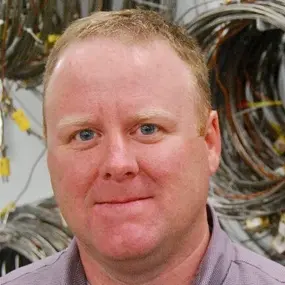
Sr. Vice President
Jim Galligan has over 34 years’ experience with in-situ and ex-situ remediation system design, installation, operation, and troubleshooting, including over 25 years of experience implementing ISTR remedial systems with TerraTherm, having joined the company at its founding in February 2000. Jim was involved in early testing and developments of TerraTherm’s TCH heaters and is co-inventor on two thermal remediation technology patents, and two patents pending. He has a B. S. in Mechanical Engineering, MS in Finance and an MBA, and is a registered Professional Engineer in several states. He has managed dozens of remediation projects from design and bidding through construction, start-up, and operation.
As the business unit leader of TerraTherm, Jim is responsible for ensuring that projects are successfully completed from a technical, economic, and safety standpoint. He is responsible for directing TerraTherm’s operations, including project management, engineering, field service and project supply teams to ensure that projects are provided with necessary personnel, material, and equipment resources. Although he serves primarily in a business management and leadership capacity, Jim also plays an active role in the implementation of larger and more complex projects.


