

 Apple Podcasts

 PocketCasts

 Spotify

 Overcast

 TuneIn

 RSS Feed

 YouTube

 Amazon Music
How Digital Twins Are Revolutionizing Industrial Water and Energy Management
Dr. Slava Libman, co-founder and CEO of FTD Solutions, joins host Sean Grady on the Environmental Transformation Podcast to discuss how digital twin technology is transforming industrial water and energy use. Libman shares FTD’s origin story, explains how digital twins help facilities optimize performance and reduce costs, and explores their impact on sustainability and ESG goals. He also covers real-world applications in semiconductor manufacturing, collaboration through SEMI and IRDS, and how AI and data analytics are shaping the future of industrial efficiency.
Thanks to our sponsors: Cascade Environmental, E-Tank, and WASTELINQ
0:00 In the end of the day, water is water, energy is energy, and optimization is needed everywhere. Everyone is concerned about cost. Everyone, every industry, cares about water and water conservation. Welcome to the Environmental Transformation Podcast where we bring you interviews with industry leaders, climate champions, sustainability practitioners, EHS, and hazmat professionals making an impact in their businesses today. Each leader solving complex challenges and delivering solutions within their areas of expertise. I'm your host, Sean Grady, and thanks for joining us today. Before we jump in, make sure to follow us on your devices and visit my website at www.seankgrady.com and sign up for our newsletter and e-mail announcements. Now let's get started.
0:47 Welcome to the Environmental Transformation podcast. I'm your host Sean Grady and today's guest is Doctor Slava Liebman. He's the Co founder CEO of FTD Solutions and he has spent his career at the intersection of industrial facilities, ultra pure water in and environmental engineering. At FTD Solutions, he and his team are helping some of the world's most water and energy intensive industries as they hit their sustainability targets through advanced digital twin technology, water and energy management services, and collaborative approach to problem solving. In this episode, we'll dive into FTD Solutions and how they're transforming industrial water and energy use, the impact their innovation and sustainability on their sustainability goals, and where Slava sees the future of industrial ESG where it's heading.
1:38 So, Slava, welcome to the show. Thanks Sean, thank you for handing me. Happy to be on the show and share with our experience and thoughts I have. Hopefully useful for the audience. Yeah. Well, why don't we do this? Why don't you give us a little background on FTD solutions and maybe like when you started, give a little bit of the the history behind it and then talk about some of the services or or these services you're actually solving and offering for clients. Yeah, that's probably the origin story can give a little bit of an idea about who we are, what we do and and our why. And I would probably divide this into 3 components. There's a personal journey, there's a partnership journey of of the Co founders and the trigger event. So the personal journey was has been very interesting for me. I started my career at the time when water was not a very fashionable topic.
2:49 There were other areas of expertise that were more attractive to to others. But I have the strong belief that there will be time when that war is going to be recognized, was going to be recognized as a very important for humanity or for industries. So my environmental engineer career started with 12 years of education. My first place of a lot of practical learning was with Intel. Grade school really learned a lot. And after that, I worked for an engineering firm designing new facilities, new systems, and then the managed laboratory. So I have this privilege of seeing the industry, semiconductor industry from different angles, the angle of the engineer responsible for operation, for problem solving, for specifying needs for the facility and then participation in the construction projects and design as well as involvement with problem solving as part of the laboratory experience. So including analytical technology and all this. So with this journey that helped me understand the landscape of the industry and better
4:19 understand what were the impact that can be created or value can be added on the top of what existed that time. My partnership journey was meeting while my 2 Co founders at the times of the challenging problem solving. And with both we we had a great connection and excellent experience. And I I would suggest that if people are considering to found to start their own companies to to have partners like this with the experience of actually going through challenging both technical and operational situations. The trigger point for formation of FTD was the situation where one of the semiconductor companies had a need to expand the ultra pure water system and was the the company was about to engage in construction project to double capacity of the system.
5:24 And we had an opportunity to propose the assessment of of the existing system with the attempt to potentially debottleneck that capacity of the existing system. So between three of us, Dave Wass and myself who were able to figure out creative solutions and provide recommendations for the company that was able to avoid the major capital project. Why this CPN became a trigger? Because we not only we were able to experience a breakthrough, we also realized with the help of of the customer that there was no company that has a business model focus on this style of optimization, but basically taking a complex problem, analyzing the complex problem to the level of details necessary and bringing expertise and creativity to avoid the unnecessary capital investment. So that basically created realization that in the entire supply chain every company is playing some role. Some companies are providing equipment, some companies are designing for construction projects, some companies provide services to support day-to-day operation. But having a a company that is
6:58 organized and designed with a business model to optimize problem solving, to minimize capital expenditure, to help the customers to make decisions that give that would give them the confidence in taking risk on avoiding capital expenditure and doing this at the necessary level of rigor and quality. Those companies to the best of my knowledge didn't exist that time and as far as I know don't exist right now as well. So that was the journey of founding the company.
7:40 Gotcha, gotcha. Well, so it seemed, you know, reading your website and I had a previous conversation with you earlier, you know, one of the biggest, I think differentiators or the ways that you assist these companies is by creating a digital twin of their actual operations. So you can actually understand the needs and the balance of when water's needed and not and how it's being, how and when it's being used and how much. And, you know, talk a little bit if you could about, you know, how FT, DS, water, energy, digital twins work in practice and what makes them different from traditional facility management tools, 'cause I think that's where the big Nexus here of this is your, your value pitch, right? Absolutely.
8:27 So I it would be also good to to bridge between the kind of the founding story and the value proposition. So we quickly realised that in order to be able to help our customers to make those decisions, to minimise risk, minimise cost, the idea of the information management and justification for those decisions was required. Certain type of tools and the tools are needed. Those tools are helping to basically create productivity around information gathering. So for example, if you take any expert that needs to deal with the complex problem solving, the approximately 90% of the time of the experts is going to be dedicated to collecting information, organizing data, developing recommendations. So what we realized that if we want to make an impact that and make an impact at the scale, then we need to find a way how to automate this, this whole process of data organization, data management.
9:48 So this is the reason why why the platform exists. And the and the big difference between what we are proposing, what we're doing and what happened before we engaged was first of all the fact that there's a lot of different types of systems that exist for the same purpose at the system level. So if you take any complex ultra pure water system, wastewater treatment system reclamation, any water system has all the necessary components for operation and control, for information management and would support decision making at the system level as well.
10:31 What did not exist is the platform that can help those decision makers, whether the engineers or facility managers to make those decisions at the site level. And this is kind of the big difference. So when it, when it comes to the entire site water management, it, it gets really complicated because we're, we're talking about not only a large number of different systems that now need to be considered, including all the interactions that systems have between themselves, but we'll also need to look at this from the holistic point of view. We need to understand how those systems affect each other. We need to understand how those systems affect the infrastructure, both the internal, external, how this whole complex influences environmental compliance, environmental sustainability.
11:27 And if we talk about water as example, then those decisions made around water what, what, what the fact that those decisions are going to have on energy, on waste, on air emissions, then it becomes really, really complicated. So. And and the and the cost of water itself too, especially if they're having to pay for it from a utility. Absolutely. But I would say that in this indices the cost of water is probably the lowest kind of element of course that that is taken into consideration. So the the biggest contributor to cost would be the time to market.
12:08 That's the speed of quality decision making throughout construction project and be first on the market with the with the best product. That's what's really important for this industry. The second factor is yield. If ultra pure water quality is inadequate and that affects yield, the impact on the cost is measured in millions or in some cases can be up to billions of dollars. So the the the city water cost or the wastewater disposal cost is not as big as a factor as some of those costs that we're talking about. And if on the top of that, if we add the the system cost and the operation of those facilities that we were really talking about significant, significant numbers here. So when you work with a client and you're a kind of a maybe initially assessing their facility and to basically build their digital twin of their operations. Is this new to a lot of companies? When you bring this topic up to them, I think they're probably thinking, oh, we at the system level, we have all this data. But when you start to explain how you can put it all together visually and data management wise as well to really start seeing operationally at the site level from a management, does the light bulb go on?
13:38 They go, Oh my goodness, this would this is exactly what we've been missing. It's, it's a really good question because when people get the experience of working with the, with our digital twins and our processes, they do realize the benefits of those. And, and yes, the light bulb would go on, But the way to demonstrate this, it's sometimes it's more difficult to explain this without showing, without actually engaging. And the reason for that is because a lot of ways how people learn to make decisions and the processes and the habits developed, they do not leave the kind of the room for, for a question like for example, if you ask what tools people were using before they were, they started using our software platform that we're using Excel spreadsheets. If you're using Excel spreadsheets and you're making decisions, you don't really have a way to even know that whether decision is optimal or sub optimal because you're doing this in certain fashion that you basically that's part of your normal way of doing business.
14:59 Or for example, if we talk about construction projects that quite often the construction projects would be in a way outsource to the general contractors and the general contractors would be doing assessment and analysis in the best way possible for them and they would come back to the customer with specific recommendation. And they even in this case, if there's no platform of modeling simulation is using this communication, then there's just no requirement for doing that. And the and the typical processes would just skip this opportunity and by doing that would also have will not have the ability to even know what's optimal or suboptimal.
15:45 If you if you, if you don't have experience of doing that, you may not know that there's a better way of doing that. Is it? Do I have an easy answer for the question? I, we're, we're still discovering how to basically present the opportunity without having the experience of showing. So the case studies help and sometimes we do presentations, even mutual presentations together with the customers to help others understand. Yes, but there's there's definitely an opportunity here. Absolutely. Well, let's talk about maybe you know, a customer impact.
16:27 Can we talk a little bit of maybe share real world, real world example where water management as a service or energy management tools have helped the client hit major sustainability milestones? Yeah, there have been quite a few examples over 8 plus years of the company operation. I I would probably use examples focusing on three different kind of use cases. Sure, 1 is a Greenfield construction project. The interesting example of Greenfield construction project is that were the time to market drives fast decisions. So for companies that have tradition of making decision based on copy exactly, then copy exactly was in the way enabling factor for fast decisions.
17:21 But if there's no copy exact solution that can enable next generation, then it becomes a little bit more complicated. The other point is that the copy exactly was actually not a better idea when when you need to build a semiconductor factory. But the water infrastructure is a slightly different story because the water circularity is a relatively new theme. Water circularity was not required in the past, but in the recent years, what changed is that the the facilities became so large.
18:02 So whatever facilities are currently under construction, we're talking about almost 2 orders of magnitude larger than the generations of facilities before. So in this case, the required infrastructure, the amount of water that is needed to operate those gigafactories, semiconductor gigafactories is substantial. The sustainability pressure requires water conservation and water management. The compliance adds more complexity. And if you take all this ideas and you put this in the context of each one of the facility site specific conditions, then it becomes apparent that every facility requires site specific optimization.
18:52 What this means that even if facility is built based on copy exact principle, which is becoming less and less popular recently, then for even for those cases the infrastructure needs consideration for the local climate, local infrastructure limitations, environmental compliance and other factors that are specific for that particular facility. So now if I put this in the context of the Greenfield construction project, what is the leader who is expected to make decision? What is that leader going to do if we're talking about exponentially increasing complexity when we talk about budgets and billions of dollars would be and and we talked about site specific need to optimize and make decision. This one becomes really interesting. So I would say that this is one of those classical examples where simulating the the future facility with with the digital twin, in this case the digital twin that gets information not only from the history of the previous projects. But also from the industry road map, from industry standards and other sources, then we have an opportunity to create this vision for optimized to the site
20:22 specific conditions, what infrastructure of super complex facility. As a result, what this is providing is not only ability to meet sustainability goals, but also to meet other goals in doing this with the minimum cost and with the minimum risk. This is one of one of the things that became obvious that you can build facility and organize water infrastructure in so many different ways, but it's only one way that can help to meet the goals at minimum quasi minimum risk. So this is just one of the examples of of the case study of the use case were we were able to collaborate with the customer and reveal an opportunity to to extract substantial value, not so much from the software as a software, but it's more from the information and collaborative expertise that is necessary for those decisions.
21:20 Is it most impactful for a company to engage you guys like, you know, Greenfield type project just described at the very beginning of the design process? You know, not, not after the plants been designed and built and you just coming in to find, tweak or, or optimize something that's already existing. But to really have, I guess maybe an impact or an engineering impact in, in the way they design and structure the, the, the the facility itself is do you get to that level of optimization with, with the customer? Yeah. If, if I could restate the question in the way of we're the highest value that can be achieved out of the use of of this technology. I would say given the fact that this technology is intended to support decisions, every decision from day zero that is going into defining water infrastructure, the value is going to be the highest in the very first decision and the second decision a little bit lower and the third decision a little lower etcetera, etcetera.
22:30 So if I put this in the context of the question in the beginning of design is already not the highest value. The highest value is going to be first of all in the site selection when the when the company needs to decide where to build the facility, because water infrastructure is probably one of the more, if not the most critical infrastructure for the for the new construction. And then from that point, any decisions that are made on the customer side, even before engaging engineering firm, even before beginning of the design process, a lot of those decisions are needed in order to justify budgets, define division and even the scope in the project for design. That's where we we are involved and where, where the value is, is the biggest.
23:25 What's really important from that point is to continue following all the cycles of the decisions from from design into construction into commissioning and then operation, because the value of those decisions needs to be not only turn into execution, but also retained throughout the whole process. Because the biggest concern is every construction project is about changes. It's about change management. So what's happening that in the construction projects with all the forces external and external that require changes, then unless people maintain kind of that the same vision for for the value proposition, unless this value what I call is retained throughout the project cycle. We we have experience of seeing how the great idea and the great vision eventually resulted in the outcome that is different and quite often support.
24:34 Hello ET Nation, I want to thank you for listening to the podcast. If you're enjoying the interviews we bring you, consider supporting the program by visiting my website at seankgrady.com and buy me a cup of coffee. Proceeds will go towards helping me continue producing timely content and offset production costs. I'd also like to take a moment and recognize a few of our sponsors of the show who have been amazing partners and our ET Nation legends. If you're looking for a drilling and environmental contracting firm to help you delineate the extent of contamination at your site and look no further than Cascade Environmental. Cascade has over 37 offices across the country and offers a huge range of environmental and geotechnical drilling, site characterization, and remediation services.
25:20 With their huge fleet of equipment nationwide coverage, Cascade is a great choice to support your environmental and infrastructure needs. To learn more, check out their web site@cascade-env.com. That's cascade-env.com. Hey, are you looking for an equipment rental company to help you with your next wastewater remediation or waste management project? E Tank is the only environmental equipment rental company in the industry that offers 100% guaranteed certified clean temporary liquid storage tanks at no additional cost. This protocol gives Peace of Mind for the previous customer by limiting their downstream liability as well as the future customer by preventing any cross contamination for all of their rental tanks.
26:08 E Tank also runs a one-of-a-kind complete maintenance program for all rental items including liquid tight roll off containers, fluid transfer pumps and filtration items. The next time you are presented with an environmental challenge, call E Tank to come up with the solution for your problem. I want to thank one of our sponsors, Wastelink. Wastelink is the all in one software platform transforming how environmental professionals manage waste, connecting generators, service providers, and disposal facilities in a way that is simple, connected, and transparent. Your platform helps streamline everything from waste profiling and routing to inventory management and billing, giving you the tools you need to operate more efficiently and reduce cost. Whether you're a generator looking for better options or a service provider seeking greater efficiency, Waste Link has you covered.
27:04 If you're ready to take control of your waste management processes and optimize your business, visit wastelink.com to schedule a demo today. So you partner with APM that's been hired to do the design for maybe a manufacturing company to assist them with this whole planning and, and assessment of the, the layout and the design and, and the bringing the data together. So it's all connected. Is that is that accurate? Kind of yes, but the the only the caveat is when you said PM you're implying project manager, but there are multiple project managers involved.
27:45 Yeah, right, right. There's a project, there's a project manager involved inside selection, there's a project manager involved in scoping the project. There's a project manager on the design, on construction, on commissioning, on handover, on operation. So the idea is the project manager profile in the context of decision maker. Yes, that's correct. But the there's quite a bit of complexity in the way how the those decisions are happening throughout the entire cycle of construction, handover and operation. It's just, I can just imagine that with your background experience in the semiconductor manufacturing process that, you know, the consulting advice that you can provide is pretty valuable in addition to this digital twin, you know, data management to decision making process and energy too, right?
28:40 Because there's a lot of energy that's going to be consumed in this whole process too. So that seems like that's another leg here of the conversation. You know, when you talk about data and decision making, you know, in your experience, what's the most overlooked data point or metric when companies try to reduce water or energy usage? You could. I, I think the, the probably the most overlooked is if we talk about the water, would be the water conservation KPI of goals. OK. And there's objective reason why it's overlooked because it's much easier to measure how much water you use. It is also possible to measure how much water you reuse.
29:21 Yeah, right. What's what's impossible is to say how much water you save. Yeah, because water saving is not necessarily what we're using. You can recycle water with significant flow rates with very little effect on water conservation. That's possible too. And depending on how you what reuse formula is defined, that can drive more or less impact on water conservation. What recently in this in the semiconductor industry, the way how the industry address this challenge is that there's a new water use standard, it's called semi F98 that is the recently focused on that particular idea.
30:08 And what what what the forum came up with is the approach that focuses specifically on water conservation. So the water use formula is still included in in that standard, but using those digital twins as the way to define and accurately measure the water conservation, what are called manage water conservation accounting now is becoming possible. That standard has been recently approved and it's going to be a published soon. So I'll let the audience to look at the standards and and appreciate that solution. But this I would say the most overlooked because when when companies invest in water use, what's actually happening that there's a lot of water use infrastructures bill, but it doesn't equate to water conservation directly. Yeah, Yeah, I think too, a lot of companies moving into green spaces, especially in new locations, there is a lot of public concern about, you know, water consumption and how it may deplete the water table locally for other communities using the same water, right.
31:27 And, and is there enough water to feed these facilities, you know, in addition to the the communities that they exist in? So I think from a sustainability perspective, this information is really important to get their hands on so they can talk to the community leaders or, you know, intelligently be able to say, look, this is where we are, this is how much we're consuming. This is the effect it's having on the, the local, you know, water table or whatever. I mean, and I'm sure they're working hand in hand with maybe some of the utilities that they're either one, getting the water from or two, if they've drilled a well to, you know, draw down their own water. I mean, so there there's a lot of these like kind of nuances that kind of fit into this whole sustainability water conservation equation. Are you seeing companies look to you guys to help them, you know, address these concerns for public? I want to say yes.
32:24 Let me elaborate on three points that are related to this question that are important. First of all, when we talk about water consumption, the real consumption is evaporation. Because if the pure water is coming in and pure water is coming out, then there there's no really impact on the watershed or some companies for various reasons are using 0 liquid discharge. That means that pure water is coming in and the only water that's coming out is evaporation. That leads to the, to the point of energy measurement, energy conservation that we're also supporting. And there's a lot of innovation and progress that this industry is making in order to drive energy conservation up or energy use down South.
33:11 With a higher energy efficiency facility, the evaporation is becoming less and less and then the impact is less as well. So that's point number one point #2 is that when we talk about the interface and relationship between the facility and the and the CT and external authority, the data, informational transparency actually is playing an important role in, in this communication. Because when people, the public thinks that the facility is using a lot of water and it's the water resources are going to be depleted as a result, There's a lot of opportunity for education and, and communication, just showing how efficient those facilities are, how much care they give for water conservation, water management, minimizing environmental impact and impact to the infrastructure. So that educational side is important. And what we are helping with our models and the dashboards and KPIs and and information that the companies are using for reporting is that transparency.
34:30 Those digital twins become an important source of, of that communication and clarification. One of our customers received Platinum award from the for their water conservation just by having the ability to demonstrate what they're doing based on on those digital twins and the and the models. Well, that's great. I mean, that's, that's great. I mean, so that's a great use of the, the digital twin and the data that's coming in and, and being able to explain that to stakeholders. You know, talk a little bit of if you could about some of the collaboration you guys you're active in the the semi and, and Irds and any other industry initiatives. I mean, why is cross industry collaboration critical to solving sustainability challenge at scale in, you know, with what you're doing?
35:24 Yeah. This is an important question for me personally because I, I believe that the collaboration in this industry has already demonstrated the value and success. Our company has collaboration as one of our values and we're very much value driven. Why collaboration's important? It's because this industry is a fast pace Moore's Law driven. It's a predictable industry and it's a predictable industry with the cycles of similar decisions that the the industry has been making over the course of 50 plus years. Which means that those organizations like IRDS which is a road mapping organization as well as same standards, they become an important element of mechanism enabling that predictability and enabling success. So what's happening that with involvement of IRDS, which is a 10 year, a new name of the previous ITRS Rd. mapping organization, it's a 15 years look ahead planning collaboration where the industry experts are coming together and learning from each other and then basically producing documents the define technology needs and solution needs. So for example, I'm involved in
36:54 two forms for sustainability and yield enhancement and both forms are critical from the water point of view and energy point of view. What the way how we do this, we learn from the device experts what facility technology needs to be able to provide, to deliver, to support next generation of technology. And at the same time we work with same standards in order to develop standards that help to enable those solutions from quality point of view, from the performance requirements point of view. And, and those two organizations have been kind of the engine for for a lot of those industry wide decisions.
37:40 What's actually happening lately because of the growing complexity of those facilities, there's a growing importance in collaboration. So collaboration in this industry is becoming very actionable. So when if you hear about collaboration in different industries, people do talk about collaboration and there is some collaboration going on in semiconductor industry. It's a critical enabling factor for, for this industry operation and existence. So it's more than just an idea. Yeah, there's a real action behind that. And our company is is just a great example of of the importance of the collaboration that we are building a lot of our knowledge and our expertise based on on those forums.
38:34 We know we've been talking a lot about water management services and platform and digital twins, but let's let's change the subject just slightly because, you know, how does the energy optimization of a facility, because I know you're focusing a bit on that as well. And, and how do you see that relationship between water and then say carbon emissions evolving, you know, in the industrial facilities? I mean, that's, you know, how does that, how's that going to, you know, work together with your platform and solving those two challenges? Yeah, water and the energy Nexus is, is not a new idea. So there are so much interrelated. There's no water without the energy and there's no energy without water.
39:16 So give you 1 simple example that the assessment that we did with with our IRDS forum. On the energy side, there's a process cooling system that is responsible for managing the thermal kind of regulation in the tools themselves. It's super critical system for for the semiconductor factory. So the and there's a lot of energy that is basically waste energy that is removed from from those tools. So from the energy point of view, the cooling for those tools requires a lot of energy in operation of the chillers As the result the the energy that it takes to cool down this water is substantial amount of or percentage of the overall facility energy that is used. So what what we are doing today as part of the IRDS, since directly related to our company is we're looking for the way how to bypass chillers.
40:28 Keep the temperature of the tool higher so we don't need to cool this down to get a low temperature and take this hot water directly to the cooling towers for evaporation. As a result, both benefits are achieved. There is less energy that is is needed to control energy temperature in the tool and at the same time there's less water needs to be evaporated in the cooling tower. So with this one example, I'm just showing how both benefits are achieved, but the number of those examples are very, very significant. So for if we talk about future of facility, I can see that that the future facilities can be built significantly less complex, much more water and energy efficient. But all these decisions require not only specific solutions that we are trying to identify and define, but also decisions that needed to be made by those facilities and decision makers that help to choose the right solution, integrate right solution, make it appropriate for the site specific local conditions and drive the cost lower and the risk lower as well.
41:50 Well, that's good. I mean, yeah, I can see the value and, and looking at those designs and, and having that information available, you know, to make that decision at A at a site level instead of at the, you know, at the operating, you know, unit level, right. I mean, that's so important. You know, I think too, if we go back and say, hey, we've been talking about semiconductors facilities, well, let's let's like broaden the conversation here a bit. What other facilities and industry types could benefit from FTD solutions to help them, You know, with water management, energy management, these optimizations that you can deploy to reduce cost, conservation, etcetera, extending life of you know, equipment, things like that.
42:42 Let's talk through that a little bit. Yeah. So from the facility point of view, if we think about all the elements that we're dealing with, they're not really different in different facilities in different different markets. Like for example, we, we, we have a great examples with oil refineries, with the food and beverage, with the packaged goods facility, any facility or even automotive in the say any facility that we engage with, We always found application and benefits of using our platform, using our approach, using our systems and processes. In the end of the day, water is water, energy is energy and optimization is needed everywhere. Everyone is concerned about cost. Everyone, every industry cares about water and water conservation infrastructure compliance. There's a lot of commonality in in this idea and the fact that we started with semiconductor industry, what what it allowed for us is to create the foundation to support probably the most complex and capital intensive industry that makes it more scalable in the sense to support facilities not as complex as semiconductors.
44:09 So we had experience of helping companies that use water that can be compared to the office building and at the same time facilities that use more significant amount of water. The the interesting observation is as we progress from more complex facility to less complex facility, the relative complexity remains high because what happens that in the most complex facility, there's a relatively significant number of experts involved on the facility side. And this complexity goes down, there's less and less engineers involved, less and less trained staff available to deal with water technology issues. So this is what what I mean by relative complexity, complexity pair expert involved and then it's not just expert, it's also sensors and metrology.
45:08 As we progress to lower complexity facilities, there are less sensors involved, less metrology is available. Then with less metrology and less expertise, the the value of what we call our active water management or water measured application. The value is actually growing because ability to reveal opportunities. Now it's becoming or impact that we create is becoming even bigger. While the engagement is for us, it's actually less complex and more scalable. How is AI assisting you with these, you know, I guess forecasting or you know predictability of of the systems is how are you guys deploying that in your software now?
45:55 You know the. The the data analyst. There has been saying that every company is a technology company with the use of Internet and use all different types of technology. Now every company is becoming AI company. Basically anything we do, we, we employ AI and it's just a matter of time to what extent this AI involvement is is evolving. And a lot of this also depends on the way how we engage with different different companies in different markets. Gotcha, gotcha. Well, you know, interesting conversation about how your tools and your software and creating these digital twins can really help companies better understand their, their design, their optimization, their energy usage, their, you know, helping them meet their sustainability goals.
46:53 I mean, there, there's so much value in, you know, deploying your solutions. Maybe talk to a little, a little little bit with some of the time we have left on what does it look like to bring a company and on board them into your solution? You know what what, what steps do you take to start that process off with a company? Yeah, the onboarding process is well defined and standardized on, on our end and it's relatively straightforward. What what we usually do, we first, quite often we, we go and we visit the customer and we help to collect and organize information that accelerates engagement. And then we based on available information, we build the first digital twin that represents the current facility.
47:41 If we're talking about existing facility, if we talk about planning of the future facility, then we build the model based on available information. Some of this information we are contributing based on the benchmark and information that we have available from the industry road map and standards. So we build those digital twins first, and the first digital twin becomes a baseline. So either it's a baseline for optimization and contraction, whether it's a baseline for operational improvement, or we continue with the same baseline if people need to maintain those models for sustainability reporting. But that engagement, I would say it's divided into 3 parts. The first part that I mentioned is just to build the baseline model.
48:36 The second part is to create alignment within the customer organization to help to understand how the the role of the models in the process of supporting decision making either construction project or in operations. So that's systemic element is necessary. So we're helping the customer to establish those standards on the top of the existing operating procedures and standards. And then the third element is a more training element how to use the platform and use the software in in this collaborative development. So that's good.
49:22 Yeah. And the and the beauty of this is that this whole effort is, is relatively fast effort that can speed up the the rest of the process. So most of the company's going to need some tech savvy individual to help on their end, you know, probably be the leader of, you know, using the application for in collaborating with you guys to to make assessments of the data, start to have conversations with the engineering teams or the management teams and things like that. So there, I'm sure that's probably seems to be part of the the process who's going to be the champion on their end, right? Yeah, that, that's a good question. So for for complex facilities due to complexity of semiconductor facilities as example, yes, we usually collaborate with the technology leaders of of the company. Usually those people have quite extensive background and we work in close collaboration.
50:20 And then in some cases the involvement of our expertise can be dependent on on the need. When we work with lower complexity facilities, quite often we don't engage with the technically savvy experts in water or energy. We usually work with the either facility manager or operational leaders and we bring in this case our expertise and we we help to facilitate everything. While in this case we need less support from the facility owner, more informational support with every information is available. Gotcha, gotcha.
51:05 Well, you know what's next for FTD solutions. You know any new tools, partnerships, goals. You know, how do you envision your role helping companies achieves net zero and other sustainability targets with your digital twin and digital optimization type services here? I, we, we have, we have a lot of plans and big ideas and visions, but I could probably divide the answer for this question into two parts. One part is related to our engagement with the, with end users. We, we are working with the big enterprise companies to to run pilots for demonstration pilots for, for our technology.
51:59 We just finished very successful pilot in the context of 100 plus accelerator with involvement of six major enterprises that hopefully will help us to scale our value proposition throughout their their facilities. So that that's One Direction as well as everything what we're doing with semiconductor industry. So all the engagement that we're having with the end users, our goal is to bring our capability and help as many facilities as possible in the world to make more optimal type of decisions. And at the same time and I I have this on my desk if you can see it.
52:59 It's a bridge. Golden Gold Bridge, Yeah, I I see our company role in the industry as as a technology bridge because of our role as trusted advisor to the to the end customer. We are trying to help the solution providers to find their solution to market feed and create not only productivity on the marketplace so people could find a faster way accelerating their sell cycles, bringing their solutions to the customers.
53:39 And also by doing that also helping the companies who innovate to accelerate their innovation. Because one of the big challenges on water technology is all this long sale cycles in long cycles of innovation. This is why probably water technology industry is less innovative than many other industries for those reasons. So hopefully with the role that we are playing in the industry, we will be able to help both types of companies to to achieve their goals and as a result to catalyze a lot of sustainability practices and create opportunities for efficiency and environmental footprint reduction and all the goals that the companies need to have. And all this when it's happening in AI era, everything is getting accelerated.
54:41 So hopefully our value proposition will be a great feat for everything. What's going to happen in the future? I'm sure will. I mean you, I think you guys are on to something. You're kind of like a data management aggregator of all the disparate little solutions out there that no one can really see the whole picture. Bring it all under your solution, really optimize the the the efficiencies of these manufacturing sites. I think it's a huge, it's a huge benefit to a lot of companies who can't see it right now. It's like you think they can't see the forest from the trees, right? Because they're too, they're just too detailed into it. So I really appreciate you, you know, explaining this a little more. You know, Slava, thank you so much for sharing your insights and experience with us today. You know, it's been fascinating to learn about FTD solutions and using digital twins and data deep facility expertise that you have helping, you know, the semiconductor industries and other industries, you know, save water, cut energy and, and hit their sustainability goals.
55:38 I mean, I think for the listeners who'd like to learn more about FTD solutions, you know, or connect with Slava, you can visit theirwebsite@ftdsolutions.net. And we'll also put a link to your LinkedIn profile on my website where they could just probably look you up is on LinkedIn as well, but we'll give them a QikLink. And you know, as always, you know, for the listeners, if you've enjoyed this episode today, please subscribe to the podcast, leave your review and share with your friends and colleagues who are passionate about sustainability and innovation. And you know, thanks for tuning in and we'll see you next time. Thanks for listening and watching the show. If you enjoyed the show, then please share it with your friends and Co workers on social media and tell somebody in person.
56:24 Thanks for being with us, ET Nation.
CEO
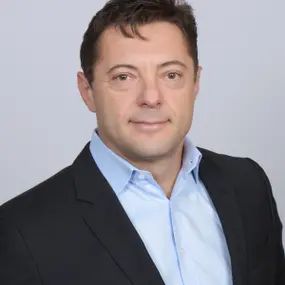
Dr. Slava Libman is the CEO of FTD Solutions, a company at the forefront of digital solutions for water management and environmental sustainability in industrial facilities. With 30 years of experience in water technology, entrepreneurship, business operation, and industry wide collaborative initiatives, Dr. Libman brings new vision for how positive environmental impact can be achieved with less time and resources.


