

 Apple Podcasts

 PocketCasts

 Spotify

 Overcast

 TuneIn

 RSS Feed

 YouTube

 Amazon Music
Implementing safe drinking water policy for PFAS & Lead Pipes - Alan Roberson, Director of the ASDWA
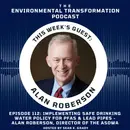
In this episode of the Environmental Transformation Podcast, host Sean Grady talks with Alan Roberson, Executive Director of the Association of State Drinking Water Administrators (ASDWA). Roberson shares insights from over 34 years in water policy, including how ASDWA supports state drinking water agencies, challenges of PFAS regulation, and the impact of federal funding shortfalls on public health protection. The discussion covers drinking water regulations, the role of state labs, infrastructure funding, workforce shortages, and more.
Chapters with Timestamps:
00:00 – Introduction and Guest Background
02:12 – What Is ASDWA and Its Mission
04:33 – ASDWA’s Role in Federal Rulemaking
07:05 – PFAS Regulation Updates and Compliance Timelines
13:42 – State Data Sharing and Collaboration
18:20 – Concerns Over GenX and Short-Chain PFAS
22:01 – Cost of Compliance and Affordability
26:44 – Federal Funding Gaps and SRF Limitations
31:10 – Holding Polluters Accountable
34:40 – State-Level PFAS Standards and Support
38:02 – Lab Testing Capacity and State Limitations
42:35 – Lead Pipe Inventories and Replacement Challenges
46:10 – Regulatory Burdens and Ratepayer Equity
49:20 – Infrastructure Needs and Workforce Challenges
54:00 – ASDWA’s Top Priorities for 2025
57:30 – Final Thoughts and Closing
PFAS drinking water rule, Safe Drinking Water Act, lead pipe replacement, Alan Roberson, ASDWA, EPA drinking water standards, public health and water utilities, SRF funding, UCMR5, GenX chemicals, state drinking water labs, water infrastructure, environmental policy, clean water initiatives, water workforce shortage, environmental transformation podcast
0:00 Affordability, they had blackened Peach to a national cost compliance study looked at their assessment of the rates at different system sizes. And for a system of turn 50 people, you're going to see water rate increases annually of $500,000 a year. And and that can have a real impact on a real community. Welcome to the Environmental Transformation Podcast, where we bring you interviews with industry leaders, climate champions, sustainability practitioners, EHS and hazmat professionals making an impact in their businesses today. Each leader solving complex challenges and delivering solutions within their areas of expertise. I'm your host, Sean Grady, and thanks for joining us today. Before we jump in, make sure to follow us on your devices and visit my website at www.seankgrady.com and sign up for our newsletter and e-mail announcements. Now let's get started.
0:52 Welcome to the Environmental Transformation Podcast. I'm your host, Sean Grady, and today's guest is Allen Robertson. He is the Executive Director of the Association of State Drinking Water Administrators or better known as ASWASDWA. The AASDWA members, they are the state and territorial drinking water agencies are Co regulators under the Safe Drinking Water Act with the Environmental Protection Agency. He has over 34 years of experience in the development of drinking water policy and federal and state drinking water regulations. Prior to him starting at the ASDWA in 2017, he worked in the worked for the American Water Works Association in Washington, DC and he was there for a 25 years.
1:37 So, you know, it's safe to say Alan has been a veteran in water and, and drinking water agency support and then I guess the regulatory policy development for many, many years. He currently is a board member of Fairfax Water Board director. He's been there since 2009. So, goodness, that's been a long, long run there. He's the treasurer, chairman of the Water Quality and Supply Committee. And he also is an egg jump professor, professor at Johns Hopkins Bloomberg School of Public Health and teaching drinking water policy classes there. So, John Allen, thanks for coming on the show. Yeah. Well, thanks for inviting me, Sean. I'm looking forward to our conversation today. Yeah, this has been good because I was your name popped up to me when I was reading the EPA rule and and you were quoted in there and I was like, ah, well, you know, let's connect with Alan and see if there's an opportunity to get some insights from the, the regulatory administrators that are, you know, kind of basically left with implementing these rules and get his take on on what is being proposed. And, and also the challenges that the agencies currently face with implementing the existing current rule for P Foss that's out there.
2:59 So let's dive into that. But before we do, could you give us a little more background on, you know, the association that you represent? What's the mission? How do you help these state agencies and and you know what, what, what are you involved with? Yeah, our mission is really to be the the national boys for the state agencies. And so every state has one. I, I live in Virginia, Virginia Department of Health, across the river, Maryland Department of Environment. And so we, we kind of do three different things. We keep an eye on everything that's going on in DC and kind of curate the news and say, hey, this is what's important you need to know about this. There's a lot of things that go on in DC that are interesting but may not impact that agency directly. Then we also work with those agencies to collect data and information and feed it into EPA as they're developing the rules. And then even after the rules finalize, there's guidances and other things that they work on that. I just got off a call on lead, sort of another big topic on implementation guidances for lead. And then the third thing that we do is broker information transfer between the states.
4:10 So we'll have we had a state's only webinar on Monday about nitrate. Nitrate's a big issue across the country, particularly in areas where there's heavy row crop agriculture. We had a discussion on PFAS what what we might consider saying or doing in regards to EP as recent actions considering that. So we really focus on that information transfer. We've started a lot of teams channels so the states can talk to each other electronically. In the old days it was always, you know, conference calls or you post it on a form. Now with some of the new tools, we're trying to broker the states asking each other for the questions because they may ask a question and none of our people here are going to know it. But oh, the guy in Indiana ask a question and the guy from Montana can answer it and that is helpful for them to talk. We just serve as the broker on that information exchange. That's interesting thing is kind of information out, information in, and then information in between. Well, that's interesting.
5:15 That's a great way to collaborate amongst the agencies as as those teen channels. And yeah, technology is a good thing in that scenario, right? Exactly. I mean, what we're doing here now, it's just a lot easier than what it was 5 or 10 years ago. Yeah, 100 percent, 100% it is. Well, you know, you, you. So the EPA last month came out with a position on the new proposed rule of of the P Foss drinking water rule, which were they want to pull back some of the MCLS for four of the main chemicals that they had previously listed in that are currently in play, the shorter chain P Foss. And then they wanted to keep the 2P fo Apfos a long chain chemicals in play at 4 parts per trillion. And then the main thing that seemed to be besides the the pulling back and wanting to re evaluate the four and maybe establishing an alternative number. I don't know.
6:11 But I think that's what they're planning to do, but was to extend the the time for compliance of drinking water utilities to meet the the upgrades that they need to achieve to meet these numbers. And I was curious, you know, what's the ASDWAS position on how, how, how are they going to go around about, you know, supporting either one, the agencies that are, you know, it left with implementing, you know, a potential new rule like that or even just dealing with the current one, right. And then, you know, how does that affect our our Public Utilities and, and, and you know, I guess affected community.
6:53 So thoughts there, if you could share your ideas there, Alan? Yeah, I mean we're still in the process of trying to develop a concrete position. But in general the the longer construction time frame, compliance time frame in in in many cases it is going to be a good thing. Because you know, if your system is just starting to figure out your P fast problem, you've got to do the bench testing, pilot testing, figure out what technology you're going to use, do the plants and specs, get those reviewed and approved, get the money and and then build it. And you know, to be honest, in the normal five year timeline, that's pretty tight.
7:34 So what would happen in the past is the system in this in the state would develop a compliance agreement saying, hey, you're making progress here, interim milestones you need to hit. And you know, if you're a few years late, you've met all these in term limestone milestones, you can tell your customers you're making progress, it just takes time. And so you know what, what it looks like this wouldn't allow essentially that to happen without these individual agreements. That being said, there's we've already heard discussions on both sides. They want to push as many people as possible to get it in as soon as possible for public Health Protection. So that's the dialogue that we're sort of currently working through now. There's also a question about the other four that are going through this reconsideration process, particularly Gen. X has some concern and that it's considered a replacement for the older P Fo, P Foss, the two more common. And the concern is if you pull it back as more manufacturers and users switch off from P FO and P Foss, we'll see more Gen. X out in the environment.
8:45 Now, I'm, I'm not a health effects expert, Sean. I'm, I'm a civil engineer. And so I I while having worked in the field for a while and I can read health effects information. It's not my sweet spot, so I'll read it. And so I can't, you know, it's Gen. X have less adverse health effects than P fo P Foss. That's my understanding. But how much and if it becomes more widespread how big of an issue it may or may not become. That's the kind of stuff that's just outside my expertise. So we're working through that debate. I mean, I we there the press release of EPA came out with was a little thin on details and that's all they're really going to have until they propose the rule these changes they they hope by the end of the year.
9:33 So what is the What role will the ASDWA play in providing feedback to EPA during the development of the proposed P Foss drinking water standards? One thing we're trying a little better handle on is whether you know, if they maintain the two MCLS for P fo and P Foss and and don't move forward with the hazard index, has that changed the number of systems have to put in treatment? Right now we think it's a small percentage, but we'd like to get more granularity. So we're, we're thinking we may survey the States and the information they have and a lot of them have already done the math on, Oh yeah, it'll be 3% or 8% less that would put in treatment. So it's not a big number.
10:17 It'd be nice to have more granularity and then if there's any more useful information that states have found out in the process of already working through, you know, what was in put in place last year, we'll pass that along to EPA to help them in the formulation of the proposal. So from our point of view, it's how do we make, we call it implementable? How do we make the rule implementable? Easiest implement primarily for state agencies, but typically that also means it's easier for the water systems to implement. So because you kind of have this triangle of EPA and the the utilities of the states, what's good for the states is typically good for the water systems as far as making a rule implementable, understandable people can figure out what's going on it it it's helpful to have that so. Hello ET Nation, I want to thank you for listening to the podcast.
11:13 If you're enjoying the interviews we bring you, consider supporting the program by visiting my website at seankgrady.com and buy me a cup of coffee. Proceeds will go towards helping me continue producing timely content and offset production costs. I'd also like to take a moment and recognize a few of our sponsors of the show who have been amazing partners and our ET Nation legends. If you're looking. For a drilling an environmental contracting firm to help you delineate the extent of contamination at your site, then look no further than Cascade Environmental. Cascade has over 37 offices across the country and offers a huge range of environmental and geotechnical drilling, site characterization and remediation services.
11:55 With their huge fleet of equipment nationwide coverage, Cascade is a great choice to support your environmental and infrastructure needs. To learn more, check out their website at cascade-env.com. That's cascade-env.com. Hey, are you looking for an equipment rental company to help you with your next wastewater remediation or waste management project? E Tank is the only environmental equipment rental company in the industry that offers 100% guaranteed certified clean temporary liquid storage tanks at no additional cost. This protocol gives Peace of Mind for the previous customer by limiting their downstream liability as well as the future customer by preventing any cross contamination for all of their rental tanks.
12:43 E Tank also runs a one-of-a-kind complete maintenance program for all rental items including liquid tight roll off containers, fluid transfer pumps and filtration items. The next time you are presented with an environmental challenge, call E Tank to come up with the solution for your problem. I want to thank one of our sponsors, Waste Link. Waste Link is the all in one software platform transforming how environmental professionals manage waste, connecting generators, service providers and disposal facilities in a way that is simple, connected and transparent. Their platform helps streamline everything from waste profiling and routing to inventory management and billing, giving you the tools you need to operate more efficiently and reduce cost. Whether you're a generator looking for better options or a service provider seeking greater efficiency, Waste Link has you covered.
13:40 If you're ready to take control of your waste management processes and optimize your business, visit wastelink.com to schedule a demo today. So it's safe to say currently that the EPA hasn't consulted with a SDWA on their proposed rule approach to the new, you know, repeal or pull back of some of this currently that they haven't really engaged you, you guys. But we've had conversations and they're willing. They're, they're, we've kind of this dialogue saying, hey, we're going to try and figure out some information and, and bring it in. And they say, OK, that's, that's fine. They just haven't we, if we had the dialogue, they're not exactly sure, you know, some of the details about what we're what they're thinking about. And, and we're in the same boat.
14:25 We're not exactly sure on the details. So it's one of those things where we don't want to have a conversation and appear clueless. So we're doing our homework to try and figure out, OK, we'd like to see this, We'd like to see that one. This one, not so much. And there may be some things where our folks are split. And so we do this. Sometimes we say, hey, several states think this and other states think that and present both sides and let them decide. That's kind of the role of the agencies making some of those tough decisions. So does the association do, I guess a lot of data mining and data analytics on a lot of the, you know, like the UCMR data that's coming through the, the various drinking water utilities across the country in each state and assessing, you know, where the impacts and, and are, are being identified and, and maybe making recommendations or identifying like the severity of, you know, potential exposure of P Foss in the, in the drinking water, you know, operations or communities out there.
15:30 I mean, what are you guys doing? Anything in that space? Yeah, we're just starting to get into that. We haven't. We hired a couple young people that last fall, September and they're starting to figure out how to do that. What we're trying to, what we're finding so far is that in general, you really have to work on what questions you want to ask. You know, it's easy to like kind of get lost in the data. And So what are you trying to assess? And this is one question I mentioned earlier, which is OK, If you just maintain those two MCLS at 4 parts per trillion and take away the others, how much of the pie are you taking away with the other four? And, and that I think it won't be more like scraping. We'll just ask him and they'll tell us what the numbers are and we'll compile them.
16:19 That we're, we're not really like that analytic shot. We're more, we're better at asking the states for the information to compiling that and then turning that into information. That's really more what we do. But you never know. Again, like you said, technology's changing. The tools are changing. We got these two young people that are not that are better at it than I am. Sure, sure. Yeah. I mean, when you look at the, the proposed rule, you know, having the two older long chain PFOS chemicals listed as as the potential new targets. And again, everyone listening, keep in mind the current rule still is in place. It's not being, you know, changed anytime soon yet. There's a whole process here.
17:08 But if we just, you know, played out the, the scenario, so to speak, if they keep the, the two, you know, long chain ones and they, they maybe reduce or don't even have levels for the other 4. You know, I, I mean, I would be surprised if they didn't have levels, but you just say those if they didn't and they had utilities only testing for those two long ones. Well, what about all the chemicals that could be missed or not being evaluated? That's do actually have health effects right in communities? And it it would be interesting to know which communities have more of those shorter chain hits then say these two larger long chain ones, because those that's got a different, you know, impact to those communities to that.
17:56 So I think it's not a. Question, right, Right. Yeah. If particularly if you're in a community like in Cape Fear, North Carolina, where you're downstream of a kimura facility and they found some high levels of Gen. X, so they figured that out early on and I put in treatment. But you're right. The question is how many others are out there that aren't as well known as Cape Fear? Yeah, right. And it just seems like, you know, a large data analytics type exercise of the agency's data that's coming through could really help disseminate or decipher what's really going on across the country. Because, you know, I think that should play into from the science side of things where the big impact areas are that we're seeing.
18:48 I agree with you. It's again, it's something that we we might do again. We're just, we just had our first conversation on Monday on kind of what do we think about that and we'll need more conversations by this technical group that'll feed into our Board of directors for final positions. Sure it's. Going to take some time. I think we have some time, but not a lot, you know, EEP wants to propose by the end of the year. I'd like to get some input into the agency before that to help them formulate their thinking. What might be the proposal? So I, I noticed on the website that you guys also have an initiative to support maybe the laboratory capacity needed for treatment of P Foss or for testing the P Foss. And and maybe you could speak a little bit about what you guys are thinking in that space of you know, is there enough testing capacity in the in the industry to support all this testing needs needs to be done?
19:44 Yeah, we're kind of focusing on, on the the state labs, the ones that they're, they're every state's required to have a lab, how big the lab is and how much compliance sampling they do varies across the state with there's only a few states that, that do all the compliance sampling. I think so far so good that that the commercial labs have expanded their capacity for UCMR 5 and and that will help, but you know UCMR 5 only hit systems. At above 10,000. And so there's still a large number that'll be below. I think they'll be some, you know, supply chain issues when everyone has to do their initial monitoring initially. But I think you're also going to find, you know, a fair number of systems that aren't going to have it. And so, you know, there'll be some supply chains on that first go round, but then for ongoing compliance set when it should be all right.
20:41 So in that process, Alan, from a state's perspective, and they have a state lab, you know, I have an experience with Indiana and they had a state lab and, and, and, you know, I think that the, the technical equipment needed to actually achieve a certain, you know, detections wasn't quite up to snuff compared to the, the, you know, the industry type laboratories out there. And, and I think why wouldn't the states just defer to, you know, the, the local industry labs and instead of relying on their own labs, I think there's good argument that that would be a better approach to, because they're already maintaining the, you know, these testing limits now. Yeah, and it's a tough, I agree with you. I mean, I think, I think some states will maintain the the to maintain privacy, they have to have some lab. But I actually just looked at the requirements. It doesn't say they have to do everything they have to be able to do.
21:49 They they cannot do zero, you know, they have to be able to do basics. And so most of them can do the easier pesticides and VOC's and. Oh yeah. Right, Yeah, I think that will still count. And I just think just a few are probably going to go. I think they're going to let the commercial labs, there's so much not only just the the the equipment, but it's also the clean, the clean sampling and analysis techniques. You know, you've got to use special gloves. You can't wear sunscreen or make it. There's all kinds of stuff because the very low levels you can have contamination pretty easy. Yeah. Yeah, a lot of states would rather just not deal with it and let the commercial guys do it.
22:31 Well, I think that might be a smart way to do it. You know, EPA keeps updating and providing new guidance on the test methods that are out there. So there was a while there that the test methods were not really formalized and and now that now they are, they're getting better and better. So that's good and that's really good. So what are some of the concerns you are hearing from state regulatory agencies regarding the feasibility and cost and timeline of implementing like even this just the current P Foss rule? Yeah, Yeah. It really boils down to probably two big issues. One, we talked a little bit about that initial round of monitoring, you know, making sure that that these smaller systems that are using a commercial lab know how to contract with the commercial lab for this kind of analysis and can do the sampling, do the clean sampling techniques.
23:28 You know, so that that's one issue. And then the bigger issue is for the, I'd say just a few thousand because we don't know exactly they have to put in treatment that long timeline for pilot test, bench testing, pilot testing plants and specs and, and getting the money and building it. And then and then longer term, probably the third piece is operation and maintenance. And if you put in carbon, you're going to have to change the carbon every, I don't know, 9 to 18 months, depending on where you're at. And that while you may be able to get SRF money or other financing for the capital, you should be paying for your operation and maintenance through rates. And so there's going to be a lot of smaller systems that are going to see real rate challenges and affordability issues when you have to put in that treatment. Now how that plays out in the next decade, you could have more and I wouldn't necessarily call it consolidation, but more where larger entities, counties may, may run a water authority that has 20 systems, you know, and, and have a base rate across the entire county.
24:42 We have a county here in Virginia. It's like the 4th county out as the suburbs go out and they have a county water and sewer authority and they've got, I think 22, you know, PW s s and they're scattered. They have one edge. It's the suburban. The rest of it gets more rural and they just scatter it. And because they have the economic development of that one side that's, you know, typical suburban. They've got trained operators. The stuff's all interconnected. The guys have iPads where they can, we went and saw one of their little microfiltration plants and the guy had an iPad and was showing us what he could do on it really new with stuff.
25:24 And and so you may see more of that consolidated system operation to be able to generate the revenues for the ongoing operation and maintenance. That's really the kicker is the how those costs can impact rates and of great affordability issues. Yeah. And then what is the ASDWAS position on, I guess, I guess the fairness, so to speak, in implementing the rule for, you know, ratepayers and, and being a voice for the community because they're the ones that didn't cause the problem.
26:05 It's a, it's an industrial discharge or somewhere. You know what? Where do you guys sit in that space? Because it feels like, you know, there needs to be an advocate and, and you know, for the little guy, right it and it doesn't and, and they're not getting the support. It feels like that I guess they would expect or want to see from these agencies across the board. And, and I'm just curious what your guys thoughts are there and, and how you guys are helping communities in that space. Well, I'd say naturally we're playing the role of Switzerland and staying pretty neutral, you know, but personally, I understand that the, the, again, my previous employer at AWA, we, we ran into the affordability problem several years ago with arsenic, cause arsenic doesn't impact as many systems and it's naturally occurring, which actually makes it more challenging than PFAS because they're, they're man made, somebody else made them.
27:03 But the treatment for it is expensive to put in, expensive to replace some of the same issues. So in the early 2000s, we are grappling with that right now. I'd say we're looking toward the utility associations, AWBA and, and, and ammo and others. AWBA has litigation on the current PFAS rule and a lot of it has to do with exactly this issue, you know, the affordability they had blackened Peach to a national cost compliance study looked at their assessment of the rate at different system sizes and for a system of and I, I mean, I have the numbers exactly right.
27:43 Turn 50 people, you're going to see water rate increases annually of, you know, 500 or $1000 a year and and that can have a real impact on a real community. So we've kind of relied on on rely it's not exactly the right word. We're keeping informed through what they're doing that that I still keep in contact with the folks in the DC office. And so we're kind of letting them be the point of the spear on it. We're sympathetic to these issues and understand the fairness and utilities are passive receivers. You know, they they didn't create it. Wastewater guys upstream are just taking it. Our guys downstream are just the water they have to use and so we're empathetic, but we're not really playing an active role in trying to solve the problem. Well, let me ask you this question then, Alan. What about the association's position on requesting more funding from the EPA to support these, you know, communities with funding?
28:50 Like I know that the Biden administration had into the infrastructure bill allocated a lot of money for each state to support the implementation of this rule. But when you looked at that cost breakdown, you're like, that's not even close to really being enough to help these communities do what they need to really do. It was just kind of like a, a goodwill gesture almost. I felt like to be honest with you because we're like, Oh my gosh, some of these the cost of some of this upgrades for like 1 plant might be the entire budget that was allocated for state you. Know state and you have one big city that gets hit. You're exactly right on your numbers.
29:31 Yeah. And So what what do you do there? I mean, are you guys advocating for a much more appropriate funding mechanism to implement this type of rule and, and what does that look like for you guys? Well, we are advocating for more money, but I can honestly say it's not, it won't be enough either. So the way it works is that Congress has a 2 step process. You authorize a certain amount for the SRF and then you appropriate the money. And, and like you said, under Biden, the infrastructure law, they appropriated more money. And so we, we are in the process. We submit testimony every year to the two Appropriations Committee and we're advocating for finding the SRF at their full authorized level.
30:19 And that's about 3 billion a year. And, and in the past we've averaged about a 1,900,000,000 in that range. So it's an increase, but it's not spectacular. But it's about what what was the increase in the five years of the infrastructure bill funding? So we're going to go from a drop in the bucket to two or three drops in the bucket. OK, it's still. It's still on. It's still woefully underfunded. Yeah. It's still woefully underfunded, yeah. And and and and I'm curious to see, you know, does the association, are you guys putting any more emphasis with the EPA on pursuing the polluters? We are, but again, you know what I've seen, and this is really more my experience at Fairfax Water, you know, unless you have this giant factory close by, it's usually a combination of small sources that accumulate cumulatively can bump you over the MCL.
31:25 If you have a decent sized watershed, you know you might have a hundred of these and trying to track them down and and who's the. Culprit. Bigger the bigger contributors, you know, you may have 100, you may have a dozen of your big contributors trying to figure out the right 12 out of the 100 is really complicated. That's what we're seeing in at Fairfax Water and and at Watershed where they have some issues. So I think again, it's one of those things, yeah, we, we, we have said we have used that term utilities are passive receivers and we support efforts to hold the manufacturers and users accountable. Beyond that, again, we're letting that that's something that AMWA and and AWA and left and knock whether they're really strongly going after that because they understand that the problem is that you need to be honest, Sean. Now we're fighting against the the big manufacturers and even folks like airports and firefighting academies that have been they've kind of been in direct youth problems too. You know, they're, they're buying what was OK to use the time and now they have this kind of the the problem. And so how this will play out on the Hill and and liability exemptions sort of the long term, it's anybody's guess. And again, I, as you, as you, as we said it at the start, I've been working inside the Beltway
32:57 for 30 something years and the things in Congress are at A, at a state that I've never seen before. And so there's a focus now on the budget, trying to get the budget out. We've had the Israel Iran curveball come up in the last couple days, you know, here in, in, in June. And there are plenty of other issues that are occupying these folks thinking. And so the success of those water to wastewater associations will have is, is, is totally to be determined. I, I'm not going to bet on it. I quit betting on things in Congress a few years ago. Yeah.
33:38 Well, I mean, because it's always a constant, you know, cycle of change, right and and, and administrative directives and and priorities and yeah, so it definitely is, is changing constantly. And, and you're right, I got to imagine it's a challenge. We're up on the hill a lot. We're trying to make sure, yeah, again, we've got a young guy that that is, you know, up on the hill once or twice a week trying to talk to make sure that, that folks know about the need, you know, the need for the funding. Even even though it's a drop or two in the bucket, it, it still is better than nothing, which is what it could be.
34:22 And in the current budget environment, we're trying to make sure we don't end up with a zero. And then it's not even for the, for that funding, but there's also federal funding that pays for a portion of every state program, the public water supply supervision grant. And the president's budget zeroed that out. So we're up there saying, hey, if, if we don't have that, our folks can't review the plans and specs for this treatment. They can't do the inspections that are needed as they're building it to make sure that the money is being used wisely. And so we're, and, and I think a lot of people are kind of understanding the implications on that. If there's no money, then all these activities that the state agencies do are going to be drastically reduced because they they get money from other sources.
35:11 But in some cases, the federal money is the vast majority of their funding for their staff and that disappears. That's a problem. That that's, that's a good point, Alan. I mean, you know, the, the, the states are always relying on EPA funding for management and implementation of all the programs, whether that's, you know, hazardous waste, you know, salt, you know, wastewater, wastewater, air. I mean, yeah, they are all getting just. Proposed to be zeroed out. And so all the my compadres and the state environmental regulator associations, we're all up on the hills saying hey, for the appropriators because again, the president makes a budget request and that the people on the hill actually appropriate the money. I think we're starting to make some headway because there are people in those committees whose states have had tfest problems or they have air pollution problems. And so you can say, hey, these programs are at risk. You know that public health is at risk. And I think we're starting to make some headway on that. So, you know, a lot of not a lot, but there are a handful of states that have gone on and created their own P Foss rules and limits that are above and beyond what the proposed EPA ones are.
36:31 What, if any are does the association do to I mean support those those agencies? Is there, is there talk internally amongst the various agencies about helping, you know, maybe you guys helping them draft and come up with alternative approaches to P Foss? I mean, maybe shed some light in that space because we're seeing a lot of movement in the industry where, you know, you got Michigan, you got several other states that are doing similar like new rules that are and you know, in this state, you have to comply with this rule, but it doesn't care what EPA does. You're doing it. But, you know, so now they're, they're taking the, the levels and the, and the rules into their own hands, which is a different approach, right? And and I guess they have premacy to do that if they want to.
37:22 Right, Yeah, states have always, they always can be stricter or move ahead of EPA and that's what we found. And I call this in the pre COVID era, 1718 and 19. You know, there's some states that traditionally have done this a fair amount, not a fair amount, but California, California for New Jersey, sometimes there are a few that would they regulate more, they might regulate at a lower number. And So what we did in that pre COVID time frame was put together a handbook that just for the states that are doing this for the first time, places like Vermont as an example. Here's the things to consider and it kind of parallels the EPA process.
38:06 You got to look at health effects, you got to look at occurrence, you got to look at the cost of treatment, you got to look at the benefit cost analysis kind of a chapter. It was kind of a framework for setting your own state level standards for those folks. And, and we hired A facilitator. We had a couple workshops for both states that had done it before as well as ones that were working on it. And I think that handbook came out in in 2019 and was met with pretty good success. Since then, the ones that we're working on have done it. There really hasn't been any new ones because they could see EPA what was working on coming down with their standards. So there was that push early on because EP as plans weren't really clear.
38:51 People wanted to, they were getting internal pressure. In some cases their state legislature mandated they come up with a rule by a certain date. So they had to based on a state law. So we provided this resource. It was well received, but it and it kind of served its purpose at the time, which is fine from my point of view. You know, that's got to be a big lift for an agency to go through that process to, you know, because it's probably going to be a state funded type effort versus a federal funded effort. So the states have to have their own, you know, budget and, you know, revenue and, and resources to actually do the work to create this new rule.
39:35 And obviously the end game is the one public Health Protection. But more than likely the you know, it's the way I understand states. And since I used to be a former regulator, you know, there's, there's usually some financial hook into a regular, you know, a community or a, a, a rate payer or, you know, somethings where they're going to generate some revenue from the process so they can, you know, fund their future work and, and oversight. So I, I got imagine a lot of states are like, hey, let's, let's, let's wait for the EPA to come out and tell us because we don't have the bandwidth or Technet technical expertise to do it probably. Right, as well as there are some states that are precluded from doing that in their constitution or policy. It's not many, there's probably a dozen, but there's enough that they're just, they just wait.
40:27 They have. To wait and so. And they can't be any stricter, no stricter than the federal government. So it, it kind of varies. But again, most, most, for example, Virginia never set standards, but they did. And this happened to a lot of states. They would, they got money to do sampling, kind of had a UCM R5. They kind of had an idea of and, and in Virginia, for example, they did one round of suspected sites. They got more, more money and they went to kind of like the Tier 2 sites, you know, so they were able to get a kind of a statewide representation of, of how big the problem might be, which was helpful for them to understand, OK, what do we do when the, the feds come out?
41:11 And so that was again, not a rule, but let's figure out. And then the states also used some of the money for emerging contaminants. There was some funding, you know, the, the BIL money had infrastructure, lead and emerging contaminants. They used some of that money for testing too, because some states weren't, some systems weren't ready to build yet. So they said, oh, if we can get ahead and get everyone to do it, then that's a jump on the, it'll help the systems a bit. They may know a couple years in advance of when they'd have to do the required federal monitoring. And I get some time to get to start the, you know, the bench testing, pilot testing, finding a consultant, all that good stuff.
41:55 Yeah. Yeah, no, exactly. Well, you know, I know the association's focus is mostly around drinking water, but give maybe what is your thoughts on the EPA's position on, you know, classifying P Foss as a hazardous constituent under CERCLA and the implications of that with any of the, you know, the the communities that are affected? Does does that play into a bit of your, you know, purview as far as concern or management? And we kept an. Eye on it. I mean really what we've been promoting probably louder is, you know, trying to get these compounds out of commerce, you know that that that really can come out of the source.
42:43 But if not, doesn't even that way, then you know, maybe down the road if there's problems, wait where he gets to be a bit of a sticky wicket. You'd like to do that from the manufacturer perspective so they know what they're doing and they have to report under the toxic release inventory. All that stuff we don't want to happen on the back end that we still have to sort out as what happens to the bio solids from the wastewater plant and then what we call residuals and water treatment. Because, you know, coming off the said basins that dirt is used as an agricultural amendment a lot of places too. And, and you know, there hasn't been as much sampling on that to know, OK, are you just transferring these compounds around from one media to the other? And so we, we haven't really taken, this is another one where we kind of see both sides of the problem. We we're aware of it and we weigh in, but it's not been as much of A focus as trying to help our States and the systems comply with these MCLS that are out there. When it comes to treatment technologies that you know, maybe the ASDWA would be kind of supportive of, right, like here's some, here's a handful of technologies that we know are effective.
44:03 We are really positive on this. Do you guys have position papers on that or, or you know where you're communicating to utilities? This is what we support now at this point in, in this I guess the stage of technology that's out there 'cause it, it seems like it's an ever evolving landscape of new products and services solutions, but what's, what's that look like for you guys? Well, it, it, it, it's good that you asked that we, we have our biggest concern or one of our biggest concerns was the, the, the workload on state agencies and evaluating treatment, be it evaluating these pilot testing. And then this is for more traditional advanced treatment, you know, Jac, maybe some of the sort of media, let alone some of the more innovative technologies. So we partnered with a WA, my former employer, and we just put together this handbook on PFAS treatment evaluation. So it's a it's a process that talks about how the systems and their consultants work with the states to get a smooth process, how you optimize that process of evaluating the treatments. This was just released earlier in 25. There was a session on at the AWA conference last week in Denver.
45:27 And, and what we're trying to do is to broaden that out a little bit for some of the more innovative technologies, destruction technologies, even looking at other technologies that might be for something like nitrate or arsenic or we still have problems out there and people are coming up with new media or, you know, maybe there's a media that was out there and the guy went out of business. So now you're having to evaluate another one cause you can't replace what you have. And so the engineers, the state agencies still have to do that. So we're trying to, this was a pretty successful project with AWA and getting that done. And so we're trying to do what we can to focus on that part of it. We don't really have the resources to evaluate, you know, this destruction technology or that. We're trying to figure out a framework that can help everybody.
46:18 And again, we have one of these teams channels that focus on this. It's seen a little more traffic these days. Are you guys helping facilitate technology providers and getting their technology in front of these agencies like in webinars or promotional type things where you know, obviously you're not promoting any individual company or whatever, but you're saying, hey, we want to put it on the webinar. This is a technology you guys could consider and here's we're going to do something to educate you guys more about it. You know, you can follow up with these guys later, but obviously this is something that might look promising. Are you doing anything like that? Where? You're going, it's a good idea. I like it, Sean.
47:00 I mean I haven't because again we did that a little bit with let's service line inventories. The initial inventories we had, we did a series, this is early on, couple three years ago, did a series of free webinars. One we had just kind of all the big engineering consultants talk about what they're doing and what they were finding. We had another one where there were more software providers, Esri and their Arc GIS module 120 water and others on their offerings. That's not really our sweet spot, but I think it's helpful. We can play that role and, and, and do it in a way where, you know, it's kind of like open season.
47:41 Anyone's offered, you know, anyone's able to participate. But that that may be an effort that will take almighty this year. I like the idea. We just haven't done it. Yeah, there are a lot of software providers that are doing a lot of the what they call it the AML, you know, technology tracking real time water usage, you know, really helping control the the treatment and and delivery process and rates, you know, for they got to collect the, the, the rates for the usage of water and, and those types of software really help. But then, you know, we haven't really touched on it, but I'll bring it up. You know, the lead, the lead contamination, there was a a big push with the EPA to have all the utilities go out and identified lead pipes in in their their networks throughout their, you know, throughout the country really. And, and I think that that's still in progress. Really.
48:35 I don't know that that's complete yet and there. Seems to be able to work well. Almost everybody's submitted some. I mean literally most states have a handful. They could have 40 if it's a big state, but they've all had some who just haven't submitted anything. And there's enforcement going on. But most, most it's something. The issue is reducing the unknowns. And so and the cost to go figure that out? Exactly. And even if you don't, you know, you're not going to have to dig up everything, but at a minimum you're going to have to dig up some. So you have a data set and then it's some kind of model statistics to figure out if you don't. And that takes time and money if you say you know.
49:15 And so people and it kind of varies how the systems are doing it. Some they want to reduce all the unknowns because if there's an unknown, you have to send an annual letter to those residences for you have an unknown saying, hey, it's unknown. We're working to figure it out. Might be LED, you know, and then the utility gets a lot of phone calls for getting a lead test for the water. So they, they'd like to reduce the number of letters they send out. And then you have some that just say, I'm just going to send out the letters and wait and, and kind of wait it out and see what EPA does. So it ranges, but in general, you know, most of the systems did an inventory and we found that, you know, most or at least reasonable, they passed the laugh test. We did sponsor a couple of the deadline was October 16th, the last year of 24 sponsor some states only discussions in November, December.
50:12 So you could talk amongst each other and it was, you know, generally pretty positive. So we thought that was a good thing that they didn't come to us and say, oh, these, these all stink and the systems are being lazy. I think most systems took it pretty seriously. There were a lot of programs through rural water and other technical sense providers to do it for the very small systems. And so with that you probably got a higher caliber submissions and if they hadn't offered that, that service. I got to imagine a lot of these, sorry about that. It's OK, We're having it here. We're just not getting the the we're getting rain. They haven't gotten the Thunder yet. Yeah, so. Got the. Thunder, I'm here. Yeah, I was going to say, yeah, I'm so I'm, I'm sure a lot of utilities don't want to be a Flint, MI right.
50:57 And they don't want, they don't want to have that, you know, exposure. And so, you know, they want their community to be safe and they need to do it. I think it goes back again to a lot of funding challenges to, for these utilities to pay for the, the work that needs to be done. And then once the assessment's done, there's still a lot of work to be done on replacing and the pipes. And you know, that's another difficult, I guess, pill to swallow from a, a, a consumer too, because sometimes these rules are written like, well, the, the pipe goes to your house. You have to pay for that like. That's right, you know from the right away to the building wall what's on private property you have to pay for. Now a very small number of utilities will set up like a separate foundation and they'll get philanthropist to contribute to fund some of those.
51:47 But those are needs based. It makes sense that you know if if you know if you live in a $2,000,000 house. You could probably afford to do that, probably afford the. Plumber to do that, you know, but but there are plenty of people who can't you know that that they're they're scraping to get by and pay the normal bills every month. 100 percent, 100%. I'm supportive of these programs. I mean, it ties back into some of the affordability discussion we had on, on PPS treatment that all of a sudden if, if, if you're scraping by and they say, hey, we need $4000 for the, the, your side of the line, you're going to go, I don't have $4000, I don't have $400.00, you know? Meanwhile, I'm, I'm exposed to lead, lead pipe, you know, the water, you know, that's not, that's, that's, that's not good too.
52:30 And then of course, those guys aren't the ones who put those pipes there and they, you know, so. That was some plumber builder back in the day, you know, and so these, so I I think it's a it's a it again isn't, that's just a longer term problem you have to chip away at. I think that that over time the lead service lines will come out, but it may be, it may take more time than what EPA requires. And that may be something that the new administration might take a look at is be a little more flexible on the on the end game and and having some way to certify the of a reasonable, a reasonable effort to get the lines out of the ground, the lead lines.
53:10 So besides Lead and P Foss, what are the big issues of the day for ASDWA? I, I'd say the last one I want to, there's two, I'd say workforce and resilience. So we're seeing a, a real workforce challenge across the sector. And for a long time, Sean, it was always about the water operators, you know, the operator in a little town, he's been there forever. But what I'm seeing is it, it cuts across anyone that works in water. So it's at EPA, it's at our agencies, it's at the the consultants, they tell me they can't find people with like 12 years experience, 15.
53:52 Those are hard to come by. People in my in my try. We're we're all retiring. You know, the boomers are, are coming out. And so there's a real workforce issue across the board. And, and again, with this budget crunch at EPA and the state agencies, they're struggling to replace those people. And so there, there have been some strategies. Again, we do a lot of state to state information transfer. How do you find good workers? How do you recruit and retain? You know, if you can hire someone and they work 3 or 4 years and they go to work somewhere else, you're starting over. So a lot of work on that. The other one is resilience.
54:32 And you know, a lot of systems are, are, are quite old and, and even a bigger system, they may not have maintained it properly. And they can, you know, whenever you have a system failure, usually it's a confluence of multiple factors. It's not one thing. And so you always think about that and the the challenges of a small system, but they're major metropolitan areas. Same problem. That are on shaky ground. Same problem, yeah. They haven't reinvested or upgraded their infrastructure over time. They haven't allocated budget for constant improvements. I mean, that's.
55:13 A big problem, one thing that I see that relates to that, I think a big difference is whether utility is in a a city government or a separate authority or utility district. So Fairfax Water is a separate authority for the county. The board is appointed by the county supervisors. There's a real separation between the board of directors and the elected officials. So Fairfax Water has been raising their rates 5% a year the entire time I've been on the board and even before I started. So they 20 years of 5% a year. And they're, they're, they've doubled the amount of infrastructure they're replacing and they're trying to double that again to level off so that they're now replacing their pipes at an adequate amount. And, and we're taking a hard look at backup power, you know, so there's there's a lot of issues. And, and the one that happened here was the city of Richmond, their treatment plant went down and they were out of water on the day the legislature was coming back in the town to start their session in January.
56:09 So that gets everybody's attention when the Legislature kind of gets called the order and immediately adjourns, you know? Yeah, hey, you get to boil your water. What's that safe? They were out for a while and then you got a boil of water for three or four days. Yeah. So, so that got everyone's attention and, and, and, and, and in the after action report, you can see that they just, they weren't keeping up with the infrastructure and the workforce wasn't properly trained. A lot of the issues that that I talked about. And so I think that's an issue that I wanted to think about a little differently is how do you, how do you be better prepared? Cause water is 24/7 through 65. You don't notice it, You don't have it. And we, everybody, we all need it. We all need it.
56:53 If you think about every time you touch water during the day, starting from when you get up in the morning, everyone in the morning, they go to the bathroom, they have coffee or tea or just drink a glass of water, you know, nobody gets through. I don't. I shouldn't say that, but I don't know anybody didn't get first through their first two hours and get touched by water a couple times. And so you expect it until you don't have it and you've lived just 24 hours. And that's happened a couple times in my life through primarily power outages. But you adapt and adjust. But if those 24 hours turn into a week, it it it changes things really quick. Yeah.
57:33 So backup power is important. Backup power is important, thinking about infrastructure, single points of failure, all that kind of stuff. So. So what are the let you know you got the the rest of this year, you got six months now looking forward the end of this year, what's your top priorities for the remaining part of this year? I, I think it's really it, it's trying to get advocating for this funding on the Hill. I there's two, I think that's the big one. You know, how do we make sure they understand the need for the, the, the cult categorical grants for all the environmental regulators? You know, we go up there, we talk about for our members, but we say, hey, by the way, that's one of nine for the environment. That's all about protecting public health and the environment. So I, I think that's a big message and I think it's also working with EPA and what they might do on PFAS and, or LED to make sure the changes that get proposed are, are, are better if they, if that's the way they decide to go. So we're doing the.
58:32 Dialogue with EPA is what we're what we're looking at doing. Right, right. Yeah, that would be good. That would be good. Well, hey Alan, this has been a great conversation. I really appreciate you taking some time to kind of give our listeners a little bit more insights on the association of safe drinking water. You know, water administrators and what you guys are doing to support the agencies across the country and the big tasks they have at hand and, and how you're aggregating and brokering and being that go between, between the the Hill and the EPA and the agency. So I really appreciate that you explaining that for our listeners. Appreciate the work you're doing and to keep up the great work and let us know maybe we can revisit maybe in a couple months or so or six months down the road, see if there's any positive impacts or you know, think outcomes that you've been able to achieve and, and we just keep in touch.
59:26 So it would be great. Thanks for the opportunity today, Sean. Thanks for listening and watching the show. If you enjoyed the show then please share it with your friends and coworkers on social media and tell somebody in person. Thanks for being with us, ET Nation.
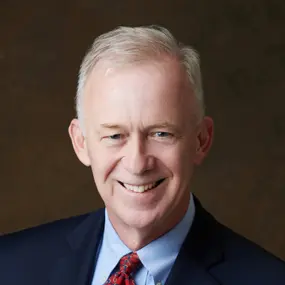
Executive Director
Alan Roberson is Executive Director of the Association of State Drinking Water Administrators (ASDWA). ASDWA's members (the state and territorial drinking water agencies) are co-regulators under the Safe Drinking Water Act (SDWA) with the Environmental Protection Agency (EPA). He has over 34 years of experience in the development of drinking water policy and federal and state drinking water regulations.
Prior to starting at ASDWA in 2017, he worked in AWWA’s Washington, DC, office for 25 years. During his time at AWWA, he authored or co-authored over 20 peer-reviewed papers, authored or co-authored a handful of book chapters, written numerous columns and Feature Articles for Journal AWWA, and made numerous presentations on a wide range of water quality and regulatory issues across the country.
He has been on Fairfax Water’s Board of Directors since 2009 and serves as Treasurer and Chair of the Water Quality & Supply Committee. He also is an adjunct instructor at Johns Hopkins Bloomberg School of Public Health, teaching a drinking water policy class annually at the Summer Institute.
He has a Bachelor’s in Civil Engineering from Georgia Tech and a Master of Science in Civil Engineering from the Virginia Tech extension in Falls Church. He is a registered Professional Engineer in Virginia. He received the Fuller Award from the Virginia Section of AWWA in 2025.


