

 Apple Podcasts

 PocketCasts

 Spotify

 Overcast

 TuneIn

 RSS Feed

 YouTube

 Amazon Music
Potential Impacts of the Newly Proposed EPA PFAS Rule to Affected Communities with Emily Donovan
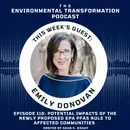
Emily Donovan of Clean Cape Fear returns to the Environmental Transformation Podcast to discuss the EPA’s rollback of PFAS drinking water rules and how it’s impacting contaminated communities like hers in North Carolina. Host Sean Grady explores the legal, regulatory, and public health stakes behind the EPA’s May 14 announcement, with Donovan providing on-the-ground insight into the movement to hold polluters accountable, protect public drinking water, and stop PFAS exposure.
📍 Chapters:
0:00 - Intro and Emily Donovan returns
2:05 - Clean Cape Fear’s 8-year mission
6:40 - PFAS origins and EPA rule rollback
10:10 - Anti-backslide concerns and regulatory uncertainty
17:15 - Public health risks of short-chain PFAS
22:00 - Who pays for clean water? Utilities, polluters, or the public
27:50 - Legal action and transparency challenges
32:10 - National awareness and the role of media
38:45 - Partnerships with advocates like Mark Ruffalo and Keen
43:10 - Final thoughts: Doing what’s right for communities
🎧 Listen, learn, and join the “little army of goodness” working to end PFAS contamination.
0:00 And I know this because for the majority of my life, I assumed that when I turned on the tap anywhere in the United States that I was going to get clean, healthy, safe drinking water. But what I got was Clearwater. When I moved to Wilmington, I didn't. I couldn't see the the toxins. I couldn't see the contaminants, couldn't see them, couldn't smell them, but they were there. Welcome to the Environmental Transformation Podcast, where we bring you interviews with industry leaders, climate champions, sustainability practitioners, EHS and hazmat professionals making an impact in their businesses today. Each leader solving complex challenges and delivering solutions within their areas of expertise. I'm your host, Sean Grady, and thanks for joining us today. Before we jump in, make sure to follow us on your devices and visit my website at www.seankgrady.com and sign up for our newsletter and e-mail announcements. Now let's get started.
0:56 Welcome to the Environmental Transformation podcast. I'm your host, Sean Grady, and today's guest is Emily Donovan. Emily is the. She's got the record. I think she's a three time returning guest on the show. So we're super excited to have Emily back on the show and she can catch us up on what's going on with the Clean Cape Fear and all the great work that she's been doing to help her local community there in North Carolina. And so Emily, welcome back to the show. And if for the listeners who haven't really caught up on any of the previous episodes that we've talked about, share a little bit about what you guys are doing at Clean Cape Fear and kind of your mission in life there with that, the organization. Yeah, so Clean Cape Fear.
1:40 We're a grassroots community group. We actually just had our 8th anniversary. Never thought we would. You know when we started this that we would be at it still today. But we did know this was a hard fight. So we formed after learning that DuPont, now called Commors, had dumped extreme levels of PFAS, including Gen. X, into our water supply, which ended up in our tap water. And so, you know, these last eight years, our whole focus has been holding our elected leaders accountable, stopping PFAS exposures, making sure that the polluter pays and not the communities that were impacted, and then making sure that we understand the health risks. And so that's kind of been the sole focus of our journey these last eight years.
2:24 It's been a bit of a wild ride. Well, I know and you know, we connected several years ago and it was interesting because it was a time when the Dark Waters movie was coming out and I think I just had Robert Blott on the show. And shortly thereafter, we connected and, and we talked about some of the good work that you've done and then supported Robert and Mark Ruffalo and some of the work that they're doing to promote, you know, these rules that were implemented by the EPA, you know, just last year. And which was a seem to be like a monumental achievement for all of the hard work that Robert and his team and other attorneys have done and, and plaintiffs over the years who've been suing, you know, DuPont, Kim Moore's, other companies like them who have been responsible for disposing of PFOS and either watersheds or landfills or wherever, you know, and it's had a big impact on local communities.
3:30 And so we connected and I thought that was a great way to kind of, you know, give a different perspective for our listeners of individuals who really have a stake in the game of this, this exposure that's that people are having. Because I think a lot of people don't really have a real serious connection to, you know, massive for large amounts or acute, you know, amounts of, of pee Foss exposure. It's it's more of a chronic or just they don't know that they're even exposed. But you guys have real exposure issues. And I thought was a great, you know, way to shed a light on that aspect of what community, what communities are dealing with that are similar to maybe if you've watched the Dark Waters movie, what they face.
4:19 So thanks for coming on the show to talk about what you're doing with Clean Cape Fair because it's, it's, it's so important and my heart goes out for you guys and everything you're doing. So let's roll this up a little bit. Here we are June to 2025. We just, you know, had the, the new rules that were passed by the EPA in the Biden administration last year. And now just this, this past month and on the 14th of May, the EPA has come out and they are pulling back four of the six compounds that they regulated through the Safe Drinking Water Act. And they were all, I think mostly the short chain P FOS, you know, not the long chain ones, the P FOS and the P FOS. So I mean, what are you guys thinking and what's happening on your front?
5:12 Yeah. Well, you know, there's a couple of things that that are important for listeners to remember. It's that, you know, these were finalized maximum contaminant drinking water levels. And so because they're finalized, the Safe Drinking Water Act has an anti backslide provision within it. And so we think that what the EPA is currently doing right now may looks like a rollback and that would be illegal. So I think that's the first thing that we need to consider. And the second thing that we need to consider is that the the what what the EPA is doing with the four, there were six PFAS, like you said, that were approved last year for drinking water standards. They're delaying the implementation timeline for two of them.
5:55 That's PFLS and PFLA. Those are both no longer in commercial use. And then they're taking the ones that are in commercial use and they're saying that they didn't want to rescind and re evaluate them. This is put a, this is, is going to put a tremendous burden back on communities where it does not belong. You know, communities need to have a level of certainty with regulations to say here's what the expectation is. These are the drinking water levels. And, and as you decide if you have a problem in your area and you need to upgrade your treatment process, you can have a clear timeline and a clear understanding of of what you need to treat towards. By removing these 4 PFAS, there's creating a cloud of uncertainty and chaos.
6:41 And that again, that bird now falls back on a community like mine because eight years ago, when we learned we had Genex in our tap water, we kept hearing over and over again that the water met or exceeded all state and federal guidelines us because there weren't any, that wasn't saying much of anything. And what the EPA is doing right now, this new administration is now trying to, it feels like they're rolling back, finalized and already set into law drinking water standards for compounds that are that some of them are still in commercial use. These are the compounds that we may start seeing showing up more prevalent more frequently in drinking water. So I think they, they estimate that it's showing up in about 10% of public water supplies within the United States right now.
7:29 You know, there's a real concern that that's just going to continue to grow because these are the PFAS that are being used by yearly now. So, you know, I, I, I think that's one thing for listeners to remember. Another thing for listeners to remember is that this absolutely is your problem, even if your tap water is not contaminated because 96% of Americans have detectable levels of PFAS in their blood. How'd it get there? You know what we're getting, we're clearly being exposed and that and you know, we have to know that that blood exposure is not the only benchmark for PFAS exposures. These newer chain PFAS like Gen. X and the ones that the EPA is creating uncertainty around, these pass through the body quicker. So they may not accumulate in the blood, but that doesn't mean that when you're being exposed to them that you're not having some sort of impact.
8:25 You know, we liken it. A lot of researchers and scientists use the analogy of chronic alcohol consumption, you know, having a glass of wine here and there or beer every now and then, not a problem if you do it every day for years and years and years. It catches up to you. It absolutely you know it body the body will show signs of toxicity. You know, we have to, that's reasonable to assume that the same thing would be occurring with PFAS. We're not consenting to this. That that's the one thing I think listeners also need to recognize is, is, you know, you can choose to eliminate alcohol from your diet. You can choose to eliminate anything from your diet, but you can't choose to eliminate your exposures to PFAS when they go unregulated, when they're allowed to. To hide in our tap water, hide in our food supply, hide in our air, hide in our waterways.
9:16 You know, great points and and it is interesting when you think about it, this kind of rollback almost is going to be reigniting so many new lawsuits in my mind against the, the the polluters of these chemicals to go through a whole nother like cycle of dark water scenarios of, you know, epidemiology studies testing human, you know, exposure. Is it really going to be, you know, is it really causing cancer for all these, these compounds that that just got repealed? And there's this I just see like this is going to be just a similar cycle again for this these chemicals because they're taking them off the the list.
10:04 And, you know, they've already done the work to demonstrate that they have the toxicity and the, and the, you know, cancer causing concerns. And now we're just going back and, and reassessing it again. What was the wrong with the assessment The first time? I guess would be a question I would have you know. Well, and I, I think that's a really nuanced and detailed question that our community, you know, we're our community is not in a position, we're not technical experts at that level. You'd want to ask a training professional to find out, you know, why, why is the chemical industry relitigating what appeared to be settled science? You know, that is definitely a question that we should be asking back to, to the chemical industry, to the the current EPA administration. What are they doing?
10:53 Why are they doing it? From a contaminated community perspective? Here's what's important to remember for the average American. That's what I am is, you know, here's something that that what we do know, it's harmful for the ones that we've studied, for the ones that lack the level of study that PFOA and PFOS have. Why? You know, let's use precautionary principles. This should not be in our tap water period. You know, if we're following the Clean Water Act. The Clean Water Act is very clear that these chemicals are not supposed to be released or discharged unless there's been approval and in the permitting process. And the one thing that we found in North Carolina is that DuPont did not disclose.
11:41 They didn't disclose this chemistry. They it was grandfathered in. They hid it from the government, they hid it from regulators. 3 M DuPont both did it. I mean, that is settled the the whole, they knew the toxicity when they when they were when they were making it, they knew they were releasing it. That is very settled. This newer replacement chemistry. They're trying to do the same thing. They're trying to say that this is safe. But where's the body of evidence? Where is the body of evidence that 100% confirms that this is safe? That doesn't exist, I think. But you know, before we try to explain why do we have to rehash the finalized drinking water standards, I think that's incredibly important for listeners to fully understand this is law. These six, these six PFAS are current law right now. So while the chemical industry is challenging the current law and the EPA issued a press release, that's all this was, was a press release saying here's our plan. Our plan is to no longer defend the drinking water standards. Our plan is to review, delay two of them and review four of them that while they delay and while they review, it's my understanding these are still the federal drinking water standards.
13:00 You know, I mean again, not a regulator, not A and not a, a water utility expert. So I would Fact Check that. Or an attorney the. Overexposed contaminated community member who did not consent to, to being poisoned through tap water with Kfas that is very concerned that our community had, you know, excess levels of Kfas not only in our blood, but in our tap water. We're seeing it in our waterways. It's showing up in our sea foam along our, our beautiful beaches that bring in, you know, $1 billion annually in tourism economy fish that's contaminated to the point that it's advised to eat it maybe once a year.
13:45 You know, there's this is this is a toxin that we really need to remember rises above all the rest. You know, at, you know, at the NRDC made a really good their, their science advisor made a really good point that just said, you know, of all the toxins, why is PFAS the one that gets so much attention? And it's because it does rise above the rest for its persistence, for it, you know, the fact that it stays in the environment, doesn't naturally degrade. There is no proven safe disposal method at this time. The fact that every every time scientists study, they find some organ system that is impacted. And again, I think what the chemical industry is trying to do is they're trying to say keep drinking this until science proves that it's unhealthy at this level.
14:35 That burden does not be that burden should not be in our body, that we are not the Guinea pigs. Yeah. No, Yeah. Well, I do think in the past few years there has been some pretty good advancements on treatment of pee Foss in, in water in, in, in certain applications you're still going to have a residual of of pee Foss at some level for disposal. But there are some new promising technologies I think that's pretty good out there. So there are some good things I think on the forefront to help address the treatment side of this, which I think is good. I think the biggest thing I'm kind of without, I mean, guess reading between the lines here with EPA is they're really concerned about the cost impact to municipalities for complying with this rule.
15:28 And basically, I don't think the EPA or these municipalities have put together enough funding to adequately support these these utilities with the type of treatment systems that are needed to meet the level. And now they're like, wow, we need to probably rethink this because it's billions and billions of dollars and we didn't account for that much. I mean, that's kind of what I'm sensing, but maybe I'm wrong. But what are you? What are you? What are your thoughts? Well, I think that the, you know, Congress through the Bipartisan Infrastructure Act and the Inflation Reduction Act gave money, I think it was a bipartisan infrastructure act that actually earmarked funding specifically for this 'cause I think what utilities don't like is unfunded mandates don't, don't make us treat, treat for something and then not provide us with resources and for, for, for low income communities and, and you know, disadvantaged communities of all types. That is a huge concern and 100% something we should be addressing.
16:33 And I think that's exactly what the Biden administration was doing as they were saying, hey, we know that we want our administration to issue first ever federal PFAS drinking water standards. And we know that this cannot be unfunded. We know that there needs to be money and assistance provided. I think, you know, there's, that's why PFOA and PFOS were designated as hazardous substances to make sure that there it was a legal pathway to, to be able to, to get cleanup costs. You know, we're in litigation right now. This is now what, 60 years running that our utilities locally have been shouldering the burden of the cleanup. We've made the upgrades and the majority of our, of our communities, there's, there's still unfortunately one county, Brunswick County that still has not been able to upgrade their treatment process through a series of construction delays.
17:24 These have been massive investments. We have seen our water rates go up. We are frustrated that the water rates are rising. We also know that it's not our fault. We didn't 'cause this, that it is polluter that should be paying. And so I think there needs to be a clear faster mechanism to ensure that the polluter pays for the cleanup. There's massive litigation that happened, huge litigation between 3 M and the multi district litigation that happened with a with a triple FI think Rob a lot was also leading that case. That money is supposed to be assisting water utilities to be able to do clean up kmors and DuPont also did a, you know, a massive settlement. So the money is available.
18:07 And I think what we also need to step back and consider is what are we trying to tell the average American? You need to drink these chemicals that have been linked to certain cancers and serious illnesses and diseases. While we know that cancer is on the rise in an unnatural way in the United States. So, so you need to bear the burden, can take the risk and in either drink unhealthy water or let's all work together, shoulder the burden and improve our public drinking water. So there's a couple of, you know, there's a couple things we have to consider. And I will say that what baffles me more than anything that I think listeners really should understand is when when groups like mine, we go to DC and we advocate for these drinking water standards because we don't want T fast in our tap water.
18:57 We don't want any other community to wake up and have their utilities tell them that the water meets or exceeds all state and federal guidelines because there aren't any. And that that's why there's T fast in our tap water And the utility wasn't doing anything about it. The thing that I think it's important to know is we didn't see utilities with us fighting to get these drinking water standards. Why are they fighting against us on these drinking water standards? They're in the public health business. They should be, yeah, they should be right there saying, hey, why are you? Yeah, because it seems like there's, even though they're not the generator of these chemicals, they are a distributor of the chemicals in a way, right? I mean because they're processing them through their system.
19:44 They're making product and that product, there is a trust, There's a public trust that is included in the product. It's that when you turn on your tap water, you're hoping that it doesn't give you cancer or you're hoping that it's not polluting your body. You know, there is a, there is a trust that's happening between you and and if you're on public water and your public water provider that, that you're getting what you need. Can I know this? Because for, for the majority of my life, I assumed that when I turned on the tap anywhere in the United States that I was going to get clean, healthy, safe drinking water. But what I got was Clearwater. When I moved to Wilmington, I, I couldn't see the the toxins. I couldn't see the contaminants, couldn't see them, couldn't smell them, but they were there, right? Right, right.
20:34 Well, that's an interesting. Perspective that a lot of people aren't really thinking through. Hello ET Nation, I want to thank you for listening to the podcast. If you enjoy the interviews we're bringing you, please consider supporting the program by visiting my website at seankgrady.com and buy me a cup of coffee. Proceeds will go towards helping me continue producing timely content and offsetting production costs. I'd also like to take a moment and recognize a few of our sponsors of the show who have been amazing partners and who are ET Nation legends. If you're looking for a driller and an environmental contracting firm to help you delineate the extent of contamination at your site, then look no further than Cascade Environmental. Cascade has over 37 offices across the country and offers a huge range of environmental and geotechnical drilling, site characterization, and remediation services. With their huge fleet of equipment and nationwide coverage, Cascade is a great choice to support your environmental and infrastructure needs. To learn more about their company, visit theirwebsite@cascade-env.com.
21:38 That's cascade-env.com. I'd also like to give a shout out to Enthalpy Analytical if you're looking for a single source for all your laboratory testing services and give Enthalpy Analytical a call. With their network of accredited laboratories, experienced project managers, chemists, and industry professionals, they have everything you need to support your next project. They can analyze anything from drinking water, groundwater, soil, sediment, sludge, air, and much more. We'll learn more about Enthalpy Analytical. Visit theirwebsite@enthalpy.com. That's enthalpy.com. Finally, I'd like to recognize Zappa Stewart, the leading provider of super absorbent polymer technology for the power, dredging, oil and gas, and remediation sectors for over 20 years.
22:24 When a reliable, fast, and cost effective liquid waste solidification solution is needed, customers count on Zappa Stewart's brand of SA, PS and technical expertise. When liquid waste needs to be out of sight and out of mind, give Zappa Stewart a call. To learn more about Zappa Stewart, go to mywebsite@seankgrady.com. That's Sean K grady.com. Now, let's dive back into this interview. I mean, yeah, it is interesting that the Public Utilities aren't, you know, shouldering, you know, the burden with you side by side to go and advocate for these these changes because they are, you know, they're delivering the the actual and, and contaminated water and they haven't been able to process it. And, and I think their fear more than likely is probably that, Oh my gosh, how do we, you know, treat all this and what's the cost to us and, and how do we pay for that? And, and you know, is it going to have to be taxpayers or, or ratepayers to, to support us or, you know, it's, it's a mess because there's not a clear way of getting this resolved. And I think in an effective way that is addressing the issue and looking at the EPA statements, they, they clearly say, Hey, we really want to help our communities without these PFOS outreach type programs and, and things like that. But my can, my thought is like, OK, well, how about the, about having a more robust, you know,
23:57 financial mechanism to help these, these utilities actually address the PFOS treatment process? I mean, the sampling process seems to be to, to confirm they have it. It seems to be a little archaic and in the way they're doing it in the time between sampling events is, is, is, you know, stretched out a little bit, you know, the UCMR type rule of, of sampling, you know, for impacts of drinking water, Public Utilities. I mean, it's, it's not like it's very, very prescriptive. I mean, it's prescriptive and enough that you have to go out and sample like once every six months or something. But you can pick when you want to do it. It's not like, you know, required time.
24:39 So I'm, I'm, I'm, I'm a little interested to, to continue looking at this in a little more objective way so people can kind of really see the full impact. And then that's why I'm glad I brought you on, because you're helping us figure this out, Emily. Yeah, just the, the, you know, the accidental, the accidental advocate, because we, you know, this isn't something that I woke up one day or went to school for, was trained for and said, I'm, I'm going to learn about tap water. This was born out of necessity. It was born out of crisis. And I, I, but I think it's important that, that the communities all across the country recognize that, that we have a tap water crisis.
25:21 I mean, we, we really do, you know, if we look at, at how tap water is regulated, this was one thing that was probably the most shocking thing for me to learn is that, you know, the drinking when the safe Drinking Water Act was put in place, it was actually working pretty well. And new contaminants, EPA was pumping out new contaminants, new contaminants, new contaminants. And then the water utility industry said, whoa, we can't keep up. We don't want this unfunded mandate. And instead of passing a law to make sure that these were funded mandates, they passed, they worked through Congress to amend the Safe Drinking Water Act to make it harder for the EPA to issue drinking water standards. You know, what a, what a backwards approach. What a, what a, what a bury your head in the sand approach. We are dealing with 21st century chemistry and it is getting released and it is getting pumped into our environment and our in.
26:18 In my county, our drinking water facility had not been updated in 40, almost 5040 years. 50. So the amount of pee fast that shows up in the, in the source water is just passing right through to the tap water 'cause there's no filtration for that, you know, So we're dealing with a lot of aging infrastructure that is not keeping up with the level of chemistry that is getting allowed to be used and, and, and misused and companies that irresponsibly release the, the toxicants, you know, so we have a big issue here. And I think utilities are on the wrong side of the fight. I understand their desire to make sure that they provide for their community and we don't, we don't push people into more poverty or make drinking water inaccessible to, to poor and low income families and disadvantaged families. There has to be a better way then. Then show up.
27:17 Show up every day. Instead of fighting for the drinking water standards, you fight for the funding for the drinking water standards. And I'm just not seeing that, nor has that been happening historically. Instead, we tend to see the utilities side with the chemical industry lock and step almost all the time. Yeah, that's, that's interesting and it is disheartening and, and I'm, I'm assuming that there are a lot of groups probably suing the EPA right now for this, this action or this, this call for repealing of the the four chemicals. You know what's what have you heard on that front across the industry or across the, I guess the groups that you're involved with? You know, I mean, I, I work with our allies are the environmental community because we have shared interests, obviously clean Cape Fear and other contaminated community groups. We don't want these exposures.
28:12 So one of, you know, our big pillar is stop the exposure. The environmental community says the best way, the cheapest way, the most affordable way to stop the exposure is to make sure they don't enter the environment to begin with. They don't enter the waterway, you know, and so we we tend to align ourselves in that approach. So what is industry saying? I mean that's you'll have to have industry on to find out what industry. Well, right, yeah, yeah, for sure. And and we may, we may just have those guys on just to kind of get their take on this. You know, some of the things I've heard though is that industry doesn't like the fact that the, the classification of a hazardous constituent was, was dropped into CERCLA because of the joint several liability clauses in CERCLA. I mean, anybody can get pulled in who even just had, you know, basically no real reason to have, you know, have impact on it.
29:11 And, and, and I think the biggest group of people who are, are, I guess most concerned about it are maybe the, the solid waste companies or the municipality utilities like that who are, you know, processing waste from the generators that come to them. They're really aggregators in the, the whole grand scheme of things. They're not really the generator. But now all of a sudden, because they're have a business that is processing water or waste that comes to them now they are responsible for all the pee Foss impacts. I, I get their, their challenge. I mean, I understand it and they're like, it would be better if it was in RECRA, you know, in the Resource Conservation Recovery Act, You know, if it was there, then, you know, it's more focused on the generator and, and, and that would make a more sense.
30:00 That is, is the some of the arguments I'm hearing from industry, you know, leaders in, in in the environmental industry right now. And I kind of think, well, OK, I can, I can kind of decide along with that, that thought process because, yeah, I mean, I've been a part of Superfund projects before. And, you know, you don't want to get one of those, you know, one O 6 letters that say, hey, come join the party. We want you to, you know, start paying for a cleanup when you really didn't have much to do with it. And then that just cascades a whole bunch of, you know, enforcement actions and, and attorneys and things like that. And I, I get, I, I kind of see that point, but we got to have some way to make this effective for, you know, the people who are exposed and people who are in the midst of processing these types of chemicals who really didn't have responsibility for, you know, generating them or, or sending them their way, you know, So.
30:55 Yeah. It's complicated. We we absolutely advocated to make to make T fast as it is under Ricra, we felt that that was the best, strongest path. So we agree there. So you'll have to ask the EPA why the EPA didn't do that because boy, did we. Where did we hound them to do it? I don't think we're going to see this EPA ever do that. And this EPA has already installed, this current administration has already installed 2 chemical industry executives into the chemical safety and new chemical areas. These were the same people that they had previously under the first Trump administration. You know, we're seeing a, you know, a delay in, in PFOA and PFOS and drinking water and a review of the the other four creating uncertainty.
31:40 You know, so we're just not seeing a lot out of this current, this current EPA that shows us that they that they are treating contaminated communities as important as the chemical industry when it comes to having stake ownership and how the EPA is run right now. Another thing that I will, you know, getting back to your your comment of it's very important on the ground community does not necessarily understand that their utility can have two different functions. That one function is they've got the drinking water plant, the drinking water facility and that the other part of the municipality has a waste treatment system. And so I will say that for the waste treatment system, there are systems in play, there are there are programs in place, there are pre treatment programs that empower the waste, the waste treatment facility to recover costs of clean up so that it doesn't fall on them. But what we're not seeing is we're not seeing those municipalities or those interest groups say beef up our funding, make the standards very clear to understand. They're basically saying give me a permit shield and that's that's inappropriate.
32:51 And and I don't think that's the right approach. Again, they're on the wrong side of this topic. We are at Wilmington sits downstream of the Cape Fear River, which is the largest river system in North Carolina. And then it provides 1.5 million residents with drinking water. And so as the last stop before this highly polluted river and industrialized river reaches the the ocean, there's a lot of different municipalities that have been sued for their inability to handle their pretreatment programs. I mean, the laws are already there. The laws already provide for a mechanism for them to control the releases of PFAS from these waste, you know, from these waste facilities. Yes, they may, yes, they're processing it and they're receiving it.
33:36 But again, that is their job. Their their job is to receive the waste and their job is to treat the waste. Treat the waste that they receive appropriately and make sure that it doesn't get they don't release it into bodies of water that are then also used for drinking water down the river. You know, I'm, I'm in the middle of of a treatment pretreatment process program right now for a municipality and, and, and a client that's, you know, wanting to discharge. And you know, there's multiple players in that whole scenario too. So you've got state agencies, right, that issue the MPDS permits to these municipalities. So they have to be on board with what the agency is going to allow them to discharge to receiving body of water. And, and depending on those states that, you know, how aggressive they are with, you know, P Foss and, and things like that, we are starting to see that some states are adding it as a discharge limit.
34:37 You know, in their, their pre, they're in their discharge limit. So that's good. But once those permits are, you know, established for those, those, you know, discharging PTO, WS, whatever you want, you know, publicly owned treatment works, then they have the obligation to create the pretreatment discharge programs with the local industry that discharges to that facility. And now you bring in the city ordinances and, and you have, you know, municipalities at that level that also need to work in hand, in hand with those. It's there's a lot of layers in this that you have to establish those limits and.
35:18 You got to get those people on board. To agree to those, you know, ordinance limits for because now you've got discharge limits and, and also they're not going to let you just make any level because the agency, state agencies also going to oversee what this pretreatment programs are like as well. I mean, it, it's, it's, it can be very complicated. And I think right now a lot of the states are just not in a position or they don't want to take a real hard stance on, on what the, the limits are right now with some of this PFO stuff. And when it, because it's up and up in the air and it's putting everybody in flux. And we, we, we as consultants, me as a consultant, we're all like, well, what's the administration doing now? Because, you know, how's this going to affect our clients now?
35:58 And, and what do we advise our clients? Because we're still kind of trying to get a pulse and, and figure out what's the new direction. Because we had four years of the Biden administration, we knew kind of where it was going. Now we're like, well, maybe things are getting repealed. We don't know. Maybe they're not going to, they're going to do away with some of the environmental regulations. We don't know. And it's, it's, it's been interesting this past six months, right? Well, and, and, and that's unfair. It's unfair to every community because when we learned about PFAS in our tap water and we joined National PFAS Contamination Coalition because then we found that there were other communities just like ours all over the country dealing with very similar problems, whether it be DoD shoe manufacturer, the the customer that purchases from DuPont and Chemours, you know, all of these, all of these communities were finding excessive levels of PFS in their tap water because of the UCMR 3 or UCMR 4. I can't remember which one it was. And, and I think what's important to remember is the first Trump administration oversaw that and, and we worked through the first Trump administration and there was forward movement.
37:11 There was let's address this. Then the Biden administration came and they picked it up and said, let's further that, let's go, let's go farther. So the trajectory was always forward. Now under the second Trump administration is very baffling because the trajectory is not forward. It's low. Let's go backwards. And again, that is a disservice to communities because this has been a bipartisan topic in almost every community I talked to. People universally recognize they just don't want to, they don't want these exposures. You know, the only people that are struggling with this are the ones that are trying to make money off of it. Well, and and then, you know, the misaligned interests, the the municipalities that's that, that have a choice today. They have, you know, the municipalities that have a choice to make, which is do we address this hard topic or do we pretend it doesn't exist and and continue with inaction, inaction at the cost.
38:05 And that cost will still burden your community or it'll burden the your neighboring communities, but it is still a cost and it is still a burden. Oh yeah, 100% it is. And what's, what, what, what are you hearing from some of the legal, you know, groups that you've been kind of supporting and or you know, you know, working side by side with? Have you heard anything from that group who are challenging some of this these rules? Yeah, Well, we are interveners. You know, we partnered with Earth Justice and we intervened when when the chemical industry and the utility association started suing the EPA over the the new drinking water standards last year, we filed to intervene and we got, we got approved to to become participants in that lawsuit.
38:56 So we're following that right now and, you know, nothing has been decided. So we're still kind of in conversation, interestingly enough, you know, you know, I mentioned earlier that our own community has been dealing with a very long lawsuit to try and get the polluter directly to cover its fair share of treatment upgrades and costs. And we had a very interesting development happened earlier this year where Camours filed a motion to seal they did not want Wilmington's Water District to have their brief, their briefings and all the supporting documents available for public view. And you know, this is just classic industry playbook, which is hide, hide the data, hide the toxicity, hide the data, hide the wrongdoing, hide it all, you know, and that's really unfortunate.
39:43 And so we worked and we got 1500 signatures within our community to push back and beg the judge to to dismiss that. Then and were you successful? Well, we're waiting so that you know, this is litigation. OK, OK. It's ongoing litigation, so there's really not a lot we can say. There's not a lot a lot of people are probably saying with ongoing litigation. Right, right, right, right. Well, interesting. You know, if we change gears a bit here, you know, I know that there's been some good stuff I saw you on was the ABC Nightly News or something like that. Tell me a little bit about that experience. Yeah, CBSCBS Evening News Live I think was covering when the EPA made the announcement that they were going to rescind the PFAS drinking water standards.
40:33 And so that was just a super quick segment. It went so fast. But it was it was nice to to to have that platform in that elevation because this is clearly a topic that impacts millions of Americans. I think the EPA had estimated 150 million Americans or have PFAS in their tap water. And so these drinking water standards are incredibly important. Another thing that's important for us to remember that kind of gets lost in the nuance and details of it is that, you know, the EPA kind of was was thinking ahead last year when they created these drinking water standards. There's the Co benefit of, you know, if we set these really health protective standards for PFOA and PFOS, which is supported by science, you know, the best available science did say that these these were the levels at which we should treat the that there would did it. There be a Co benefit of other unregulated contaminants that those would also get filtered out and cleaned out. So we were just improving the quality of American drinking water.
41:31 I mean, who doesn't want that? Again, you know, it's let's make it affordable. Like we 100% agree community should have access to the money. Where is that conversation happening in Congress right now? Does the big beautiful bill have any funding for for communities to upgrade their drinking water? That's a good question and I, I have not, you know, heard that, haven't spoken to any congressman or Congresswoman about that, but that would be interesting to know. And and you do bring up an interesting point about, you know, the the Co benefit of treating PFOS and PFOA that you're going to also kind of catch all these other chemicals. Do you think that is one of the reasons why EP as want to pull this back a bit because they already kind of feel like it's going to get baked into treating those chemicals that they're not regulating if they're going to keep the the two that they have?
42:22 Well, I don't, I don't think you can treat for PFOA and PFOS only. I think, you know, we've, we've always advocated that you need to treat PFS as a class. There are 14,000 different PFAS known. There's hundreds of them that are in commercial use. We're not even talking about the ultra short chains PFAS. And so you know, the end, we partnered with the NRDCA couple of years ago and we did a tap water study when the EPA issued their UCMR 5, which had a what, like 20-9 something sort of PFAS that utilities were all supposed to test for. And, and we showed that, you know, we used Eurofens 70 method to just try and see how many unmonitored PFAS were showing up in tap water. And we were so shocked that the, the majority of the samples came back with this, this compound called PFPRA and it's an ultra short chain TFAS.
43:18 And there then there's TFA, which is another ultra short chain PFAS that we're starting to see an extreme levels showing up in tap water. And I think German environmental regulators actually just issued toxicity profile on TFA linking it to reproductive issues. You know, again, so here's you know what, while we're talking about PFOAPFOS, which is kind of grandma's PFAS and then the EP as looking at the PFAS that we're currently making, some that we're currently making, some that that we're not, we still aren't talking about the ultra short chain PFAS. And the one thing that we did learn through our whole journey is that you can't just treat for PFOA and PFOS because if you only look at PFOA and PFOS, you're going to miss a community like ours.
44:05 Our issue was not PFOA and PFOS. Our issue was an unmonitored and unregulated Gen. X and hundreds of other PFAS that we did not have test standards for that utilities did not know to look for. It took, you know, it took academic researchers to to do some forensic analysis and try and understand, you know, like reverse ninja science to try and figure out what is in this water. So, you know, it seems like we're still on the forefront of still educating the pop, you know, the population and, and, and at large. I don't know how many people I talk to. I go, hey, have you seen that movie Dark Waters? And they're like, what are you talking about? And I'm, and I talk to people that are in the environmental industry and I'm like, shame on you guys. How could you not know about this movie? This is what we do in the environmental industry. And this is totally related.
45:01 Like I, I said, oh, have you seen Erin Brockovich? And a lot of them go, Oh yeah, yeah, yeah, I've seen that one, you know, but that's been out a while, right? But unfortunately, a lot of people still haven't seen Dark Waters. And I promote it constantly. You know, we have Robert coming to be our keynote speaker at the EHS Hazmat Summit in September. We're so excited to have him be our keynote speaker. And I know that now this new, this new rule that's being rebuilt is going to be, you know, front and center as part of this conversation that he will be talking about in his, in his keynote speech. And we were able to get him. We're so excited to have him and he's a big draw for us. And so we're we're so thankful.
45:45 But, you know, I still feel like it's, it's the outreach, it's still the education that we're still really way behind on. Would you agree with that? Well, yeah, and I think there's a couple of things that played out. You know, we had, we had Mark come and be a guest speaker when we did 2 screenings of Dark Water. So it premiered at the at the end of 2019. And yeah, and we, we had Mark come at the beginning of 2020. It, it was like one of the last events we did before the COVID shutdown. So I think we have to remember that there was a massive global disruption that happened, I think really impacted the momentum that Dark Waters was building. Then we also have to remember that we are definitely in a different news environment.
46:35 You know, where, where the, you used to just have a couple of different methods to get the same message out. Now there's it's exponential. There's a bazillion different methods to get information out and everybody's siloed into their, their favorite social media channel. And there's only so much time you have in the day to absorb news. And I think this is what this is what society is struggling with. And we see the symptoms of this struggle, this this chronic, you know, fractured news news cycle happening. And some people appreciate that. Some people feel like I didn't just want one-size-fits-all news. I want to be able to pick and choose my news. And I understand that and I respect that. But we definitely are missing fairness and reporting act. You know, we've that expired.
47:21 So the ability to require journalists to report, you know, report both sides at the same news story. I mean, that guy, that guy that's, you know, expired and Congress decided to never pick it back up. You know, we're, we went into 24 hour cable news in the 90s and now we've got this accelerated social media where social media is the news now. Yeah, no, you're right. I mean and, and and people are digesting their information in one minute clips or two one, you know, 2 minute clips and that's it. They they watch shorts and that's it. You know, they're scrolling and getting going down the rabbit hole on Instagram, you know, or, or TikTok, and that's that's how they're getting their their nose. They are.
48:07 And you know what, honestly, that's the direction we're headed in. I wouldn't say there's anything wrong with it, but I would say is that it's really important that everybody start paying attention to that Instead of fighting it, Learn how to embrace it because those that are embracing it early and quickly you're seeing or are, are, are reaping the benefits and the rewards from it, whether that's right or wrong. I think another thing that we also need to remember too is, is, is information is spreading faster. You know, I mean, that is one of the benefits. And so we actually, you know, if we want to take a step back and go, how is awareness? Yeah, we at 100% need to keep raising awareness. But I think it's pretty darn impressive that when we woke up eight years ago and learned about Gen. X, no one knew what Gen. X was.
48:47 And everybody just talking about PFOA and PFOS and the span of a few short years, we had people talking about the class of chemistry, PFASP fast. We had them talking about that. We shifted that narrative. And then in a few short years after that, we had the EPA issuing first ever drinking water standards for 6P fast, including Gen. X. And this is an EPA that works within a broken system that hadn't in decades issued a drinking water standard without an act of Congress. And so I think this is pretty impressive, pretty powerful, and it's a big testament to the level of community support, bipartisan support, and the National PFAS Contamination Coalition's work to try and make this happen in partnering with allies, you know, and, and the dedication of professional advocates like EWG and NRDC and Earth Justice and Center for Environmental Health, you know, all the big ones.
49:45 Mind the store. Toxic free future. These. All of these organizations coming together and rallying around this immediate, you know, important threat of PFAS exposures. It is a huge it, it really is our lifetimes #1 number one environmental problem, aside from, you know, you've got not to disrespect climate change and microplastics. We're dealing with the level of chemistry that's not going away, that it's been so unmanaged and, and so much in action has occurred with it that we now have scientists say that PFAS has reached the planetary boundary, which means when it rains, it's likely raining PFAS. And it will be for some time, because again, these don't naturally degrade.
50:31 Wow, yeah. I mean, so the fight goes on, the education goes on. We we all need to kind of stay on top of this. And, you know, I know here on the, on the, the show with this platform, we're going to continue to educate the listeners and the ET nation about, you know, what the impacts are of PFOS and, and the regulatory, you know, changes and, you know, the affected communities like Cape Fear, clean Cape Fear. And, you know, I, I, I just feel like we've got a great opportunity to continue being one piece of that media, you know, segment we, if you're following us on YouTube, obviously, even on our podcast channels as well, but YouTube, but our shorts are getting lots of, you know, watches now.
51:20 We decided we'd start hitting a lot of shorts. So just posting the entire episode, figuring that if we did that, it would drive people to watch the entire episode, which we're seeing numbers and you know, go up in there too. But our shorts are just going off the off the charts right now. It's it's amazing. And so that's exciting because now it's like we're having more constant exposure in in impressions and having a greater impact than just someone listening for 1/2 hour or an hour to a full episode. They're getting that daily dose right. And so, you know, we're doing everything we can too on the show. And and and it's people like you, Emily, they come onto the show that, you know, remind us why this is such an important issue. And I really thank you for for being, you know, willing to come back on the show.
52:08 You're such an amazing person. And talk a little bit about that little. I don't know what you'd call it, a promo story or about educating, you know, the kids at the, you know, about P Foss. That was with Mark Ruffalo that put out a while back. And I think you had him on your show or your she was on you or on their show. I don't know. I saw some, yeah. Tell me talk a little bit about that. Yeah. Oh, that was that this is, you know, getting back to the, the idea of awareness and how do we keep building awareness. And so the National P Fast Contamination Coalition partnered with Keen Footwear and Keen Footwear is pretty special. So we're looking for market drivers. You know, we, we know that communities don't want P fast in their product, but we're also learning that consumer brands don't necessarily want it either. And Keen was one of the first consumer brands to voluntarily remove P Fast from their products, intentionally added PFS from their products.
53:02 So we, we partnered with them. They have kind of a, you know, in a film effect side of their, of their brand where they make awareness videos to just kind of explain the footprint that they're leaving on the world. And so Max Rami is this filmmaker, but he's also just a really amazing watercolor artist. And he did the cutest little movie. It's about 10 minutes and he's talking to his two year old son and he's explaining what the term forever means. And then as he explains it, he just kind of goes through and and they talk about P fast, you know, forever chemicals. And we helped. It was really cool experience because the National P fast Contamination Coalition helped connect Keene to Mark Ruffalo.
53:46 And so, you know, we were able to kind of watch this and guide this this film through the whole process. And so I just had an amazing ride, was able to be there for the premiere of the film in Denver at Outside Fest. And so I participated in that. And then Mark and Max and I did an Instagram Live last week where we just sat and and kind of talked about the project. It's called A little Story about forever. You can find it on Keene's YouTube channel. You can on it social media. I've, I've shared it with the, the ET nation on our channel too. And we'll, we'll share it again. But it was it was, it was well done. Absolutely amazing. And the little army of goodness, you know we was. It was a sweet nod to the national PVS contamination, the Coalition.
54:29 We are the little army of goodness, and so is everybody else in this fight. So if you're trying to stop PFS exposures, know your health risks, and make the polluter pay, you are a part of this. You are the little army of goodness. Well, ET Nation, you're part of the little army of goodness, too. There you go. That's great. You know, this has been so good. I mean, yeah, we're, we're super excited to see Mr. Blots in September for, and I get to meet him in person because I didn't meet him in person before. And now I get to meet him in person. I'm, I'm pretty excited about it. And I get to introduce him as our keynote speaker at the conference. So I'm super stoked about it. He's amazing, you know, like there's, there's people that have courage. You know, we talk about, about having courage a lot and in this fight and being as persistent as PFAS and boy is, you know, like he leads by example.
55:22 He, we wouldn't be here today, honestly, if it wasn't for his courage and, and, and hearing a farmer's concern and working to do what was right instead of what was easy. And that's where we're at today. We look at this drinking water fight, you know, we're, we're doing what's right. We are. And, and I encourage every utility out there, don't do what's easy. Do what's right, because that's what your community desperately wants, whether they know it or not. Yeah, no, that's a great, that's a great, great thought there and and a great parting shot, Emily. I mean again, you know, three time guest, you get the record. So thank you for showing up and doing your part and helping the, the podcast grow.
56:09 You know, we've been doing this now. It's hard to believe, Emily, over five years we've been on the pot. We've been doing this for over 5 years now. And you know, it's just been just a labor of love in a, in a lot of ways. And what I get out of it is the just such great connections with people like you and other. It just gets me jazzed up to go do these podcasts because I meet so many amazing people and it's just a blast. And so we get to educate and put put the shine a light on people doing great things and in our, you know, country and around the world. So thank you again for joining. We will put all your contact information on the website, on the post.
56:54 I've got all your details. So we'll get this out probably next week and we'll promote this. And is there anything you can say at the last minute here that if someone wants to reach out and support anything you're doing, how can they do that? Yeah, follow us on social media. We're at Clean Cape Fear. Visit our website, cleancapefear.com and subscribe to our newsletter where we send out regular action alerts when something's pressing. Follow the National Pfast Contamination Coalition. You can find them at pfastproject.net and you can follow that I'm on social media at at Pfast Coalition. All right, Emily, thank you so much.
57:36 And we'll be looking forward to seeing you down the road and continue our dialogue as we, you know, something else interesting pops up. Awesome. I appreciate this is always fun. Thank you. Thanks for listening and watching the show. If you enjoyed the show then please share it with your friends and coworkers on social media and tell somebody in person. Thanks for being with us, ET Nation.

Co-Founder of Clean Cape Fear
Emily is co-founder of Clean Cape Fear, a grassroots community group which formed in 2017 after learning DuPont/Chemours spent nearly 40 years releasing large quantities of PFAS into the drinking water supply used by over 300,000 NC residents and contaminated over 4,500 private wells near their Fayetteville manufacturing facility. Her work has helped elevate NC's PFAS contamination crisis to the national stage. She has testified before Congress twice regarding PFAS contamination. She created a lobby day effort in Washington, DC for local community members and participated in a Washington Post Live panel discussion with actor Mark Ruffalo and lawyer Rob Bilott. She helped organize and co-host two screenings of the movie, Dark Waters, in Wilmington and Raleigh featuring special guest, Mark Ruffalo--both events resulted in NC's Attorney General suing DuPont/Chemours for natural resource damages and NC's General Assembly filing a historic amount of PFAS bills during the 2021-2022 legislative session. Recently, she helped secure reverse osmosis filling stations for 49 public schools impacted by PFAS contamination in Brunswick and New Hanover counties. She is a member of the leadership team for the National PFAS Contamination Coalition and sits on various community advisory boards and coalitions working to address PFAS contamination. She frequents Washington, DC and Raleigh, NC pressuring lawmakers and regulators for quicker responses to our growing PFAS public health crisis.
Emily is also the Communications Coordinator at St. Andrews-Covenant Presbyter… Read More


