

 Apple Podcasts

 PocketCasts

 Spotify

 Overcast

 TuneIn

 RSS Feed

 YouTube

 Amazon Music
The evolving Extended Producer Responsibility (EPR) landscape and its impact on industry with Meaghan Hembree Attorney at Holland and Knight
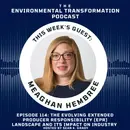
In this episode of the Environmental Transformation Podcast, host Sean Grady talks with Meaghan Colligan Hembree, Environmental, Compliance & Disputes Partner at Holland & Knight in Washington, D.C. She counsels Fortune 500 companies and global brands on chemical risk, environmental compliance, and high-stakes disputes.Hembree explains extended producer responsibility (EPR) laws, how they affect packaging, plastics, recycling, and supply chains, and what companies must do to prepare for compliance across states and globally. The discussion also covers the China waste import ban, circular economy challenges, and the future of recycling infrastructure.00:00 Why Recycling Needs a National Approach01:13 Meet Megan Colligan Hembry: EPR Legal Expert02:25 EPR Explained: Extended Producer Responsibility04:54 The 2018 Turning Point & Policy Responses07:19 Industry's Struggle: Adapting to China’s Ban11:39 How Companies Organize for EPR Compliance13:38 Packaging, Supply Chains, and Regulatory Complexity16:14 Operational Challenges Inside EPR Programs18:46 EPR’s Impact on Product and Package Design21:24 Data Collection & Reporting Complexities24:50 Making Packaging Truly Recyclable28:12 Beyond Packaging: Tires, Batteries & Other EPR Products32:48 Does EPR Drive Innovation and Sustainability?35:47 Federal vs State EPR: Who Should Take the Lead?40:19 RCRA, Universal Waste, and Circular Economy Paths45:47 Will EPR Raise Prices? Costs, Consumers & Fairness50:03 Will EPR Actually Improve Recycling for Consumers?52:00 Why Systematic Recycling Education Matters54:34 Making Recycling Trendy & Accessible55:40 Closing Thoughts & Outlook on EPR and Sustainability
0:00 We need to have a dedicated, consistent educational process for recycling in our country. And it shouldn't be just state to say it should be. I think federally, but also state to state. I was just in Paris a couple weeks ago and I'm in the subway and there's these huge recycling pictures on the subway walls. And it's like, it was a can and it had wings on the can. It says, hey, this can doesn't get recycled by itself, basically saying it takes, you have to actually put it in the trash can. And it talks about it's the, it's the we're trying to accomplish improving sustainability and recycling and things like that. Welcome to the Environmental Transformation Podcast, where we bring you interviews with industry leaders, climate champions, sustainability practitioners, EHS and hazmat professionals making an impact in their businesses today. Each leader solving complex challenges and delivering solutions within their areas of expertise. I'm your host, Sean Grady, and thanks for joining us today. Before we jump in, make sure to follow us on your devices and visit my website at www.seankgrady.com and sign up for our newsletter and e-mail announcements. Now let's get started.
1:13 Welcome to the. Environmental Transformation Podcast. I'm your host, Sean Grady, and today's guest is Megan Colligan Hembree. And she is a member, or actually she's a partner of Holland Knight in Washington, DC, where she counsels Fortune 500 companies and global brands on chemical risk, environmental compliance and high stakes disputes and transactions. Her focus is strategic, helping clients manage complex liability across the life cycle of chemicals from product development and disposal and turn regulatory complexity into competitive advantage. Megan, welcome to the show. I've watched you on some of your posts on LinkedIn and it piqued my interest 'cause you were speaking on EPR a couple times and I thought, you know what, let's bring the expert in illegal expert get her perspective on this.
2:03 So welcome to the show. Sean, it's great to be here with you today. Yeah, thanks. Talk a little bit about let's give a definition for some of the listeners who may not be that familiar with EPR. Maybe you can just kind of give a high level summary of what is it and how does it affect, how does it affect the industry and maybe people personally. I think that's a great place to start because it doesn't exactly provide a clear vision of what it's intending in its name. But if you look at the basic words, the first one is extended. So they're in essence laws that are designed to extend responsibility related to the end of life management for product disposal and recycling to the parties that are producing the plastic as a component of their product and therefore their, you know, their method of transferring their product to customers. So historically, it's very important to start here. Waste is managed at the local level generally, so every municipality has a different way of doing things. There are general obligations under federal law for how landfills are managed and permitted and how recycling infrastructure generally exists, and all of that implementation occurs at the state and local
3:36 level. And in 2018, China stopped accepting waste from other countries. At that moment in time, we saw from a policy perspective a significant moment, a window of opportunity for issues related to the plastics and waste streams in America to take full center screen. And right around that time period, U.S. policy makers and states started asking themselves what are we going to do? How are we going to handle this? At the same time, in Europe, at almost the exact moment in time, we had the EU, for example, developing their first set of plastic bands for single use products.
4:24 This is all around the same time where they started shifting plastic straws to paper straws in the United States in multiple jurisdictions, as well as shifting plastic bag requirements and adding plastic bag fees. And so this 2018 time period was really important for shaping the way the next seven years have gone with plastics and the focus of plastics and everyone trying to figure out what to do. Yeah, it has been a an evolution, so to speak, of watching the industry figure out how to handle this. You mentioned the the China sword type act where they were not accepting any plastic from anywhere, any country they really put a bond on. A lot of companies are in the countries in general. There was a period of time where you could recycle plastic and you were getting some money for it. And then all of a sudden, nobody could recycle any plastic because no one was buying it.
5:20 And that was a big, a big change in the industry, as I recall. Yeah. So now, extended producer responsibility. It's really not a new thing, though, is it? When you link, look back and I can remember way back when I was a young child, you want to go buy Coke bottles of Coke or Pepsi or whatever, and you put down a deposit for some of those bottles so you could get that back 'cause they wanted those bottles to recycle and reuse. And it's the same type of concept here to the extent to where consumers are going to pay a little extra because there's going to be this extended responsibility of the manufacturer to take back those products and do something with it. Maybe you can. Let's talk a little bit about how are companies preparing to comply with EPR regulations across different regions in the industry. We just talked about a few, but plastics might be one that we might be more familiar with.
6:12 And how is that looking and shaping up right now for us as consumers? Let's just say we started our conversation before we were recording about using the word adventure. IA lot of companies are are sitting down and trying to strategize what they're going to do. This overlaps across multiple avenues within a company's operations. We've been assisting smaller companies as well as some of the largest brands in the world with this. And every single company has a different set of resources and a different set of structures with a company that really guide the way they're able to focus and pay attention to this.
6:55 But almost in every instance we're talking to the individual that's managing, I'll say operations and or sustainability. Sometimes those are two distinct people, COO and sometimes they're the chief sustainability officer. We're generally also meeting with the legal department and frequently we're interacting with folks within the ESG setting at the same time and packaging engineers. We're also speaking with people within the revenue divisions of companies. So sometimes the CFO, sometimes it's their sales department, but every single one of those individuals or roles becomes a critical player and figuring out how is a company going to assess their packaging use for reporting obligations that happen to be distinct in the several states in which these laws have been enacted. As well as you mentioned, this has been happening in other places.
7:55 So there are global EPR requirements in Canada, for example, is we're working with a lot of companies that are selling their products into Canada and have obligations there across the globe. Yeah, that's going to be a pretty complex situation for a global company that has products that go everywhere. And at this day and age, any company could technically be global if they got a product that they can sell and ship. It sounds like this is going to be a consideration for a lot of firms to to evaluate when they're making decisions on packaging their products, how they create I guess the return loop so to speak of that product. And maybe you can talk about what that looks like for some of the discussions you've been having with companies. What has been the biggest challenge in from an operational perspective and maybe a financial perspective of where companies implementing EPR programs? I'll start with the supply chain again. Every company is a different size and a different scale and different scope, but we're always coming back to where is this packaging material being manufactured? Is it in the US?
9:01 Is it abroad? Is there a contract with the manufacturer in which the brand remains responsible for the packaging liability? Does the manufacturer take on any of that liability once? Is it imported? Who is the importer of record? Who's the distributor of record? And all of those questions matter. Is anyone licensing the brand? In some instances it's possible that the licensee could be the company required to report. A lot of the brands that we are working with are taking this very seriously, understanding that this generally falls on their lap to understand or distributors whether online retail or in person retail distribution.
9:47 Those companies are assisting by providing the data that they have. But a lot of it is really trying to understand exactly where all the packaging is going, which states is it even going into and how do we make sure that the party that has the responsibility under the specific state law is indeed registering for these programs and reporting under these programs. The complexities continue on, but I would say that's one of the very first. Questions. Yeah, great. Thinking about it from a strategic perspective, you mentioned a few scenarios there, but I'd imagine if you're a manufacturer, if you could write into your contracts for some of these packaging companies that they're that you're buying the material from that they're going to be responsible. That's probably one way to kind of offset or get around some of this type of responsibility.
10:34 Is that correct? So that's a really great point and why I was saying that's just the beginning, right, Because then OK, so what's next now we're looking at the contracts now we're looking at the licensing agreements now. And so it just continues in that you are chasing your supply chain to understand it while also shirring up for future years and future contracts. A lot of the agreements in the packaging world are annual and for also then thinking about strategic messaging for partners within your supply chain and all. And these companies, many of their these relationships are critical.
11:16 It's not in anyone's interest for these conversations to be adverse. So we're also seeing business wide decisions and business wide conversations where companies are sitting down and at the table together to determine how do we best do this as partners? Why do we do this as partners? Because people don't like to talk to me that frequently. Oh, I don't know. Why not? Come on. Hey, so you're in the weeds, so to speak with a lot of companies now trying to navigate these requirements and and advising them, which is great. But how is EPR influencing product and the package design decisions within the industry, within the electronics, consumer goods, automotive and there's a lot there in this area and comes to mind is like how can companies be more thoughtful about creating more of a circular economy related product that you know is going to be used for packaging that's easily recycled? It's not complicated, simple.
12:22 What are you seeing in that space where companies are really investing in a little more thought in that? Before these EPR laws started taking US operations by storm, we saw so many companies being caught leaders around how they could impact sustainability generally. I want to preface with EPR being a, let's say, a tool in the toolbox of moving towards the circular economy. But there are so many other areas of law regulation and also just consumer management and consumer relationship and trust and reputation building that are critical right now.
13:10 There's also greenwashing risks in terms of like how we're how companies are communicating what they're doing to their their customers. So again, I start there because EPR is just a piece of the puzzle and brands are many brands are stepping into leadership roles right now and evaluating that exact question. Some of them are designing new packaging for their products and you can see what when you're out of the store. There's some, I recently saw a very well known brand that indicated on their bottle that they had reduced the amount of packaging from the last bottle that you had seen them using by a certain percentage.
13:55 And companies are proud of this. They're proud of the way they're changing their materials management. They're, they're looking at their climate reporting requirements and saying, OK, in addition to reducing the amount of materials we're using for this packaging, can we transport it in a different way? There's studies out there that show or that if you reduce the weight of packaging, it reduces the amount of GSG emissions. So all of these things are interconnected and companies are building out sustainability committees that are thinking really critically about all of these moving pieces. Then there's, of course, the, like you'd mentioned, the milk bottles, Coke bottles.
14:41 We're also seeing the resurgence of bottle bills. And in some states, if a company is participating in a bottle bill, then they're exempt from EPR because why would you have to pay into something if those bottles are being returned? And actually the California EPR law related to textiles that'll be coming into effect, I think it's in 2026, actually contemplates full circular economy such that our clothes are going back, they're going back into the system, nothing goes into landfill. Yeah. When I think about EPR, the challenge that it seems to be most companies would struggle with is how do you validate that you're actually getting a significant percentage of EPR return, you know, taking place, Especially if you say you get a lot of small products, a lot of small packages.
15:36 In my mind, I go it's ATV or it's a washer and dryer. You're going to be able to track that one a little easier I would imagine, 'cause they're big products, but little things. How is the data collection side of this for reporting actually going to get done in a way that companies could actually with a straight face say we did 60% EPR return on our products this year? Like how does that even happen? I'll tell you this, I'm working with some pretty brilliant people that have complex calculations and they're weighing their materials and they're tracking it line by line. And once there is data, it can be analyzed. I'll say that.
16:20 But if the product doesn't come back to their own say facility, we talk about say this whole, you've got individual EPR company, company where they would set up the whole return cycle process. And then you got this collective type approach too, right, where couple companies bind together and they create this type of return process. Have you started to work with companies that are looking into that direction and doing a more of a partnership or they're creating a group or a team effort here to create a return process so that the data can be tracked, they can validate what happens? I'm just curious because I think this is the one of the biggest obstacles, the struggle for companies with this. There are multiple different EPR regimes and the packaging regime does not currently focus on this return process. OK.
17:20 The packaging side is really focused on these one time materials are adding a protective layer to a box that was a plastic film that gets thrown out. Or I'm sure you buy something for a friend and they open the box and there's some sort of cream in there and then there's some little pretty paper and it's really pretty and you're like, oh, and you take out the little papers, but there's nothing really you can do with that paper again. So a lot of these packaging related APR laws are designed to assess how our recycling infrastructure and landfill infrastructure is designed and to be able to figure out ways to recycle or manage those materials better, noting that they're one time likely or building up recycling infrastructure. So back to the core of why these laws are here, at least the packaging related ones.
18:24 We could talk about other CPR concepts because this goes ways bigger than that into creating the circular economy you're talking about with respect to packaging behind all state laws. If you get to the core of them, they're trying to assess what are the needs for our infrastructure to improve, to be able to recycle and to keep things going back in into the system. And so these fees that are getting assessed are basically designed to, I should say, they are supposed to be signed to understand what a specific state needs to address that particular material.
19:07 And at its core, if we think about it in really simple terms, you know it, I'm just using a random material. If it's determined that 80% of the state's recycling facilities can't handle this particular type of material, then the goal would be that these fees are designed to collect more money for those types of materials. So then that money can then go into the state and into the local municipalities to build their capacity to handle it. And that's really where these fees are designed to go. There's a lot of there's a lot of questions about what will happen once the skis are collected and if it'll really work, but that's at the floor of the packaging related APR. And that that kind of makes sense because to to kind of really manage the whole life cycle of a small package that would be just too onerous.
20:09 I could imagine. I like the concept of creating the packaging to be more sustainably I guess more recyclable essentially and less make it strip the thing down to its bare bones. So it's simple, it's easy. It's it's going to have AI. Guess it's the best way to recycle the product when when it does get recycled, help companies get there because yeah, we don't need a lot of single use plastics floating around just because you keep adding more wrappers or extra material to a product. It's a significant challenge for companies because they'll create products and they'll create packaging that is technically recyclable. But then if the state doesn't have the appropriate infrastructure, there have been lawsuits where if somebody says my material is recyclable, but then it's a link, there's a state that actually can't recycle it. Then they should get an exemption. Instead, they're getting sued for making the claim that their material is recyclable.
21:09 It can't actually be recycled. So there's a there's a lot of moving pieces and why that's why it also really matters for companies. Even though it can be frustrating upfront, I think to have these new fees, I think the vision is ultimately that it creates a system that will be that will minimize those greenwashing risks, will increase the recyclability. But we've got a gap to fill, and states are using EPR as one of their tools to try to close that gap. There's a lot of questions about whether or not it's the right solution. Yeah, I think some of the easier ones you could think of for EPR would be like say tires, you buy tires, you go get a new tire and that tire goes to back to the manufacturer's system.
22:00 That'd be a pretty, I think it's simpler, more an easier way to to have a closed loop type EPR. But I'm sure there's other products but. Hello ET Nation, I want to thank you for listening to the podcast. If you're enjoying the interviews we bring you, consider supporting the program by visiting my website at seankgrady.com and buy me a cup of coffee. Proceeds will go towards helping me continue producing timely content, content and offset production costs. I'd also like to take a moment and recognize a few of our sponsors of the show who have been amazing partners and our ET Nation legends. If you're looking for a drilling and environmental contracting firm to help you delineate the extent of contamination at your site, then look no further than Cascade Environmental. Cascade has over 37 offices across the country and offers a huge range of environmental and geotechnical drilling, site characterization, and remediation services. With their huge fleet of equipment nationwide coverage, Cascade is a great choice to support your environmental and infrastructure needs.
23:04 To learn more, check out their website right at cascade-env.com. That's cascade-env.com. Hey, are you looking for an equipment rental company to help you with your next wastewater remediation or waste management project? E Tank is the only environmental equipment rental company in the industry that offers 100% guaranteed certified clean temporary liquid storage tanks at no additional cost. This protocol gives Peace of Mind for the previous customer by limiting their downstream liability as well as the future customer by preventing any cross contamination for all of their rental tanks. E Tank also runs a one-of-a-kind complete maintenance program for all rental items including liquid tight roll off containers, fluid transfer pumps and filtration items.
23:55 The next time you are presented with an environmental challenge, call E Tank to come up with the solution for your problem. I want to thank one of our sponsors, Waste Link. Waste Link is the all in one software platform transforming how environmental professionals manage waste, connecting generators, service providers, and disposal facilities in a way that is simple, connected, and transparent. Their platform helps streamline everything from waste profiling and routing to inventory management and billing, giving you the tools you need to operate more efficiently and reduce cost. Whether you're a generator looking for better options or a service provider seeking greater efficiency, Wastelink has you covered.
24:39 If you're ready to take control of your waste management processes and optimize your business, visit wastelink.com to schedule a demo today. I like the packaging scenario. I'm sure there's some challenges there. And I could imagine for the company who makes a product and it's recyclable in say New York. And then over there in New Jersey, it's not because they don't have the infrastructure over there, but that's pretty close. They could ship it to New York pretty close. But anyways, if they make the one package and then it's doesn't meet every state's requirements. So that that does sound like a pretty challenging prospect. And I, I love that we're talking about more than packaging because there have been higher EPR laws, OK?
25:22 Connecticut passed one in 2023. Yeah. New York State introduced a bill mandating tire collection. And so there's beyond packaging many other industries, there's long standing battery EPR. Oh yeah. It's out there. There's a lot going on in the space. What's your thoughts here? How might EPR regulations for innovation and material science, recycling technologies and sustainable product development? And it seems to me this whole EPR initiative really going to initiate the advancement of all these new circular economy technologies and things. I would think it just. Oh, and absolutely, it's already happening.
26:03 There's like in tandem of the with these laws are multiple packaging engineers and scientists that are working their tail off to figure out how they can make internal changes outside of the law to make their products have less of an impact on the environment. So really, I think consumers have shown companies that this is a priority to them and companies respond to laws, but they really do respond to their consumers. All right. So there's amazing steps being taken. I also think for the companies that don't have the infrastructure, like the larger sustainability teams, the packaging engineers, they're, I believe, more likely to be financially impacted by this because they're just smaller in general. And this is a whole new compliance requirements on them that they likely didn't plan for, which I think could trigger them to say, all right, rather than deal with this, let's just change our packaging that we have. We don't have the overhead to even make a room for the annual fees for.
27:16 We've got to figure this out. I So, yeah, there are some exemptions for certain businesses, but in some instances you're like, OK, does that what happens if all 50 states have one of these laws and this is how much money they're charging? But we haven't seen that just yet. But it's there's a lot of talk about whether this is one of those moments where a federal solution is the right approach. Yeah, I was just going to go there. I was like, OK, do we have federal DPR laws across all 50 states that have to be adhered to or is it really a state by state approach right now?
28:01 And man, that's a whole interesting prospect in the census, all the environmental regulations that we're already dealing with that you've got federal and then you got to understand the nuances of the state laws associated with the federal. And that's fine, I guess for the most part. But is that is it mostly being led by state at this point? Yeah, absolutely. Although there's been a lot of legislative activity related to this, related to packaging, related to recycling, relating to plastic pollution. At one point in time, I had a list of every single legislative activity that's gone forward in the last eight years or so. But yeah, I think there there's a law called the Break Free from Plastic Pollution Act that I believe has an EPR concept related to beverage containers and some plastic products. We've in the last administration, there was a letter that went out to, I believe it was to most agencies. But in essence the core of letter was basically, hey, when there's federal procurement involved, we don't want to use single use plastics.
29:08 There was there were some Senate hearings last March. The FTC has been evaluating the Green Guides for multiple years. So I think and there have been multiple recycling infrastructure bills, the issue and what makes this a very interesting place to work as an attorney as there's so many cross jurisdictional issues between funking between implementation of the actual infrastructure, between enforcement. So what's the right way to do this? I think we can step back at this moment in time already with lessons learned from the roll out of Oregon's, Colorado's registration and reporting requirements with California's and Minnesota's next in line to see what would the benefits be if there was something at a federal level. Some of the benefits to having this at the state level is it's forcing the process or whenever you have a federal law like this, it would take immense studies, data collection, and to get it right to really create something that was equitable and effective.
30:24 So I do think that at some point in time we'll hit a tipping point within the number of states that have enacted EPR laws where they'll be more and more pressure at the federal level for some sort of synthesizing to occur. Will it get into the nitty gritty of the day-to-day? I don't know. Will it create some minimum recycling standards? I worked on some legislation that proposed that that was issued last fall, that some recycling standards would be very helpful to create, let's call like the foundational web that then all other waste management and recycling issues could be managed through.
31:10 So I don't know, We'll see if there's a laughing downhill. I when I think about a nationwide approach to some of this, it seems that there is probably some low hanging fruit type products that are no brainers. That would be like, yeah, and we just mentioned tires. Everybody has that problem in every single state. Why wouldn't that be an easy one to say? You know what, there's one. How about white goods? Every refrigerator, washer and dryer, anything like like that. All some like also electronics. Those would be, to my mind, the easiest ones to do a nationwide EPR where companies have to put together some more sophisticated infrastructure.
31:59 Not that it's not already there because there's a lot going on in the space, but there needs to be more, right? It'd be it'd be more collection systems and locations, but to me that would be easy from a nationwide perspective. The rest of the packaging I think would be a little more probably state by state, but those would be a big ones. I don't know how many states already have tire EPR laws have come ahead, but I'm pretty sure that there are already OK. If I were to pick up material to start with, it would be electronics because I'm aware of at least 25 states that have electronic, you know, CPR related laws.
32:42 So there's already infrastructure companies are already supposed to be doing this. So why not turn create something that again creates the minimum standards. And that's one of the interesting things about RECRA, the Resource Conservation and Recovery Act, which is real. Our current cradle to grave law in 1976 states are still generally taking over a majority of the implementation of Rick Rickrit has been amended, I think it four times. 1986, you got a few? Yeah, there's a few there. Have been more regulation, more revisions to the regulations, but.
33:32 I think hasn't changed that dramatically from its initial implementation, so. One of my thoughts here is let's go a little bit bigger than EPR Ricro, in my opinion, needs to be amended, needs to be rehauled because again, if we want to create a system that is circular in the United States, when our waste system, our waste lot, and I don't know, in the preamble it says of I'm actually going to say what the preamble says. What I will say is that in every Ricker law class, I can say for sure because I would, I got to take my Ricker class with Jeffrey Miller who helped write the law at Peace Law school.
34:13 The first thing anyone learns about Ricker is that it's cradle, the grief it's getting to end, it's completion generation through disposal. So if we don't want that disposal piece to be the main construct in the way we think about it. Amend that component of the record. I mean everything else is regulatory compliance with hazardous waste characteristic compliance of the reporting, but make more of the emphasis on the the recycling infrastructure closed loop type scenarios. That's good. There's extensive recycling related exemptions I think are just the start. Universal waste is great. You've got the whole, you've got everything and just not everything, but you have a lot in the universal waste rules that are everyday common main products that we all use, electronics, batteries, all kinds of paints, sometimes in certain states.
35:06 There's those all kinds of aspects of universal waste and there is infrastructure being built and there are major companies doing it. Like I, I'm a very familiar with several lamp recycling, the electronic recycling, obviously solvent recycling. There's a lot of their plastic there's, it's all there cardboard, there's, it's, it's there. Maybe there's got to be a better way of tracking how those manufacturers are, how much they're producing and then somehow figuring out how much is going to get returned. I think there is that that once it leaves the play their manufacturing site, how do they track the recyclability of that product at some point I. I think well coming back to one of the first things that we were talking about which is like the supply chain from the.
35:51 So what has made a Recra an effective system for a long time is that it in required has required tracking is created a process that then can be implemented. A lot of what we do is it in the hazardous waste industry and that's really one of my main focus areas is we're tracking how it moves through trucking, We're tracking where it was made, what facility and. When it was generated, how long it's been on site? And then our circle lawsuits related to landfilling end up looking at those hazardous waste manifests. OK, this is, these are the parties that are responsible because they drop it off here, they moved it here. The whole system is built for the way we managed materials, but we haven't paused to create that type of more systematic recycling infrastructure and tracking process. There's again extensive exemptions, but they're complicated.
36:57 We've got certain materials that are exempt from the definition of solid waste altogether. Then we have other materials that are exempt from the definition of hazardous waste if they're managed a certain way. And anyway, so I think there could be a simplification of that whole. It'll be 1 area of the federal regulations that could help reduce or improve the an EPR type circular economy component for sure. I still feel like we're missing the products that are manufactured, that are shipped out to consumers that they won't ever be able to manage themselves, the company themselves technically again, they're just going to hope for the best that society recycles the products better, more effectively.
37:45 And I think that's, I think there's the big disconnect or at least the challenge for EPR in a lot of areas. Plus we come up with some amazing technology that can sort materials that are going into all of these facilities that can better weigh and manage all of the materials. I I think they're. You're spot on. And there are new technologies coming online. There are with AI and visual recognition and processing and there is some huge improvements that are being made in that area. They are costly to get them implemented at a lot of these locations.
38:27 So it's going to take time, I think before a lot of these companies are really in a position to where I guess the technology and the equipment becomes very affordable and standardized. But it's going to be a, it's going to take some time. But I think that there's good signs that's already really available now, but not at the scale that needs to be. Agree, And the other component besides. OK, obviously. Can someone let me rewrite Ricker one day? I'd love to work on it. Yeah, cut to my Bork dream. I'll be honest with you, but OK. It does need to know it needs an overhaul. I'm with you. It's, it's a challenge. There's some of the regulation or the requirements, just you scratch your head and so come on, really. But they were written this in 76. That's a different world.
39:15 And this was their first attempt at a major regulation that was They were tired of seeing companies just dump their stuff in the back 40 like they did a Love canal. That's why. I think it's an amazing law, I'll say that. I also think critical to this discussion is the creation of markets. Yeah. How do we bring all of this online? Again, EPR is a tool. It creates a fee structure that'll put more money into the state's hands to work on and perhaps buy some of that infrastructure and some of that technology. You're talking about a dream world. Now, once that clean material is created, what And what once we actually create it and we keep it out of landfills, what happens next? Who's going to take that material? Who's going to clean it?
40:05 Who's going to process it? And then there's many disputes about what's the proper way of handling and processing recyclable material to have a minimal environmental impact. So. I think that's another critical component of the discussion is and it's another think about America as a free market society. If we create a market for it, it's very for the waste to be handled. Like, for example, China was a market, they made money. Yeah, totally. They totally made money on it and they were just getting inundated by the world basically because they were just kept sending stuff to them. The.
40:45 Biggest issue in I would say, OK, I keep saying the biggest issue, one of the biggest issues of in of all of this is also the contamination of materials. The the complexity of handling material waste streams even at your home, right? Some foods I'm thinking peanut butter, right? Like how hard is it to get your peanut butter consumer gleaning WAP that you could actually be recyclable? Yeah, there's that. And you're right. Now I'm aware of a few firms, Republics one, they just opened up a blue polymer, couple blue polymer facilities, one in Indianapolis where I reside, and they've got one in Phoenix and I think they just opened a new one.
41:27 I'm not sure where, but they heard that they've come up with a way to actually clean and process some of the plastic that is dirty that's so that they can effectively clean it, process it, and then make it a product for resale in the market. And that's great. So strides are being made in certain areas of the business under that and I think that's real important. I've got a big panel discussion coming up in a couple weeks in Louisville at the EHS Hazmat Summit, where I'm leading a circular economy conversation with leaders from Republic, leaders from ERI, which is Electronic Recycling International, and also with a company called Pre Tread. And Pre Tread is a company that recycles tires and makes Rd. barriers out of it. The big concrete ones, you see, instead of using that, they're making them out of recycled tires.
42:12 And it's a great product because the durability of them, the longevity of them and it's a reused product and out to go on or dig up the earth. They can just they've already done it. So it's more sustainable. And we're talking about that. The whole circular economy, infrastructure being built and growing it and dealing with these challenges of that a lot of companies are facing either with EPR or just because the companies want to deal with it because it's the right thing to do from a sustainability perspective. Reducing carbon footprint could all that good stuff, right. So that's a lot of it. When you when do you anticipate APR compliance will increase prices on consumers and how can companies manage then offset this impact? Money is going to have to come somewhere from somewhere, right? So are they going to?
43:04 That's a business decision. I don't know if companies will put that on their consumers or take the hit, but you know, most companies are generally. Passing down the cost. Yeah, I'm seeking to increase revenue. But the other thing is the way I like to think about it is this is where consumers and companies can show leadership in general. It helps if it's not coming through this EPR fee that's assigned to we're going to be assigned based on the weight of packaging used by producers. It would have to come through taxes anyway if we were to work through and enhance and increase the infrastructure. So I don't see a world where we all don't have to invest in infrastructure, all of us.
44:04 Yeah, yeah. Everybody's going to have to contribute to the process to make this work. I think the intent of the law was for producers to hold that back more. But in essence, by doing that, it does then say to conforms, you know what, I'm going to choose the companies that are producing as little with packaging material as possible. Value purchasing is what I call that. And so then it does also potentially shift consumer decisions, which ships market decisions, which ships fees and in all of it. So is that a better approach than taxes and having everyone pay into the states? I don't know.
44:49 I think it should be a consumer based approach in my opinion. If you want to buy the products and that you're willing to pay for it, then great. But if you don't buy those products then you probably wouldn't be fair. You get to pay into it if you're not buying that product. So seems like it'd be best if it's based on the actual products you're buying because then it's directly related to the process and the consumer product instead of just a flat fee that everyone has to pay. I don't know like at least that's my thoughts. I. Think about it with a slightly different product base and chemical issue, but really similar and connected to my larger practice on just product stewardship and chemical management. Excuse me?
45:33 When we look at the history and the way PFOS bands have rolled out, just for a second, we're not going to go there. I know it's not the purpose of the conversation thing. Wait, go for it, go for it because unfortunately, consumers are having to take the brunt of it. In many ways, it's also how consumers are saying are realizing and starting to actually think about what they're consuming, right? They're like, Oh my goodness, I didn't even think that this was something that I should be paying attention to. And so their consumers, even before the bans began, started saying, OK, we're not going to buy those non stick pans anymore.
46:16 Get rid of your non stick pans, everybody. And so then what happened? A whole and a whole new industry became to be we've got a whole new cookware industry overnight of companies that are competing to produce the best nonstick pan that. That's an pee Foss pan. And that's a whole another question of which pee Foss compounds, but we'll just say how do we create a nonstick material that has the lowest risk chemical exposure? Sure, absolutely. And that makes sense. I think from that part or that perspective, the consumer, I think the biggest challenge though right now is all the damage that's already been done by P5 for consumers having to pay that. They're like, we didn't even deal with that stuff and they're being exposed and have to pay for water treatment that they didn't agree to.
47:06 So yeah, that's the biggest challenge I see with a lot of unfairness in the process right now, and there's that. If we get back to EPR though, I think that there's a lot that can be done and I think there is a lot of onus on individuals just to be better recyclers individually. Everyone just does it a little bit and takes the initiative to recycle more and reduce their water consumption and turn those lights off and things like that. Collectively, it'll be a big impact. And so I think that's a big thing. But how might EPR improve the quality and convenience of recycling and waste collection systems for everyday consumers? What? How do you see this really making it easier for them?
47:46 I'll just say to be determined on that one, but that's another component of what these, the fees that are being collected are intended to support. Coming off of Epas. It was either 20, sometime between 2018 and 2020, EPA put out a report or it outlined the critical issues for recycling in the United States and what was blocking us from getting to a recycling rate of 50%. And the number one issue in essence was besides the fact that every state law and municipal jurisdiction just does it differently and handles it differently, was that it's tough for consumers to actually know what's right. I've spoken to many people who are like, I just moved to a new location and and I used to be able to recycle glass, but now I can't recycle glass.
48:41 I can recycle glass, but not from my actual home. I have to stop 10 miles away process into my life to do that. And I want to do that, but when am I going to do that? And I know I'll get to it eventually. And all of a sudden six months pass and you're finally like settled enough into your new location to think about your refuse. So I think, I think that there's more to to be, I'll just say more to be determined here, more to be built out. But the goal is we move in that direction. What we can say is there's a ton of data out there about recycling in general, which gives us the ability to say where are the areas in the country where the least recycling is occurring.
49:27 And my perspective if I was in charge would be to start there. If we can build capacity in the places where we have a recycling rate below even 20%, education, better infrastructure for pick up and drop off which would require more jobs, that would be a great place to start. Yeah, I think the biggest opportunity is the education side of the House. It's educating constantly at a very young age. School, kindergarten, even at kindergarten started there. There should be back in the day. And we grew up as kids, at least when I grew up as kids, we had cartoons that talked about the bill and how that how bills are created in Congress.
50:14 And they always had a constant education process going where you were learning about government and you were learning about how to spell and read and write and all this and stuff. We need to have a dedicated, consistent educational process for recycling in our country. And it shouldn't be just state to state. It should be, I think federally, but also state to state. I was just in Paris a couple weeks ago and I'm in the subway and there's these huge recycling pictures on the subway walls and it's like, it was a can and it had wings on the can. It says, hey, this can doesn't get recycled by itself. Basically saying it takes, you have to actually put it in the trash can.
50:59 And it talks about it's the, it's the we're trying to accomplish improving sustainability and recycling and things like that. Or in another ad was, hey, let's reuse these products. Let's fix them up, rehab them and reuse them. And so there's all these like little new, I guess advertising and it's subliminal because after a while you don't even recognize it, but it's sitting there and if you just look up, you see it's there. And it seems like an educational process for EPR systems, recycling process. That's what we need to do, those schemes and everything. I don't see us doing enough of that. And, and in that federal law, I mentioned to you that was one of the critical components of the recycling standards, a study process that was built in at the federal level of what can we do to best educate and close these gaps. And that will take some time to build out anything that becomes systematic.
51:53 But I agree with you that more education is better, but really also comes down to general culture. Some of these laws, I think, I don't know if they'll shift culture immediately, but the more that circular options are available at the market level that I think the more we'll see cultural shifts. So that to me comes back to what are the barriers to making recycling a profitable exercise? And that's where I want to focus personally, because that I believe can influence cultures in the most organic way aligned with how our culture already works.
52:43 We like a we really do Americans, right? If we how can we make trendy? Yeah, make it trendy. Make it. Easy. Just make it easy. A lot of cities they don't have curbside recycling, They just have normal trash pickup, Make it, make, add those things, add those stream pickups. So that way people are more incentivized to do that. It may take a couple dollars off their their trash bill if they're recycling more, something you come up with, something that just helps them be more incentivized. I'm even having this idea right now, which would be our top stars and our rock stars and our movie stars are very persuasive.
53:23 So if any of you are listening. Come on, help us out. Help us out. Promote these recycling efforts, do some documentaries and stuff like that. Help us figure out ways to make this more effective. When Beyonc�� recycles, it's amazing, right? We just, whatever. Let's just have we want to see Beyonc�� recycling. There you go, Beyonc�� can recycle, get all the big stars recycling. There are a lot of really great stories to be told though. A lot of big events are really focused on recycling at the at their facilities, so they can basically have a better positive impact. I was just at a live golf outing recently and the recycling and trash receptacles are right there next to each other and it's clearly marked.
54:11 Everybody is dropping their bottles and cans in the right recycling section. They're putting their trash waste in the trash. And then for of course, we've got the guys pulling around and picking up the full bags and replenishing the. It was really good to see how effective that some of these big events are being managed from a sustainability perspective on the waste management. It's great. And I think those stories don't get told enough, like they don't get shared with everyday people. Here's the impact that you spectators had at this event, right? You contributed to recycling this much. That's those are the stories I think that are not getting told. And you can you could go to the NFL and be go down the line all these I think big leagues and stuff like that are doing these type of things, but we're not talking about it enough. We need to, yeah.
55:01 Even if there was like a or it's half time and right before the end of the game. Hey, on your way out. Don't forget to drop off your empty container here I mean. I just have every event had a like resource manager, usher who was like designed to pump you up or something. Yeah, right. This way to the most exciting, you know, place at the stadium. Yeah, the recycling center. Exactly. No, that's great. I love our conversation, Megan. This has been exciting, educational for the listeners as well. I really appreciate you coming on the show. I know we could spend probably another 30 minutes easily talking about EPR concepts and some challenges, but I think we've covered the topic pretty well as far as some of the issues that are out there. There's more to be dived into, I'm sure, and explored. I really appreciate all the work you're doing there at your firm, just to keep up the good work at Holland Knight. Really appreciate that and thank you for coming on the show. Thanks so much for having me, it was a pleasure. Thanks for listening and watching the show. If you enjoyed the show then please share it with your friends and Co workers on social media and tell somebody in person.
56:12 Thanks for being with us, ET Nation.

Attorney / Partner
Meaghan is a partner at Holland & Knight in Washington, D.C., where she counsels Fortune 500 companies and global brands on chemical risk, environmental compliance, and high-stakes disputes and transactions. Her focus is strategic: helping clients manage complex liability across the full lifecycle of chemicals—from product development to disposal—and turn regulatory complexity into competitive advantage.
Her experience includes a billion-dollar cleanup, PFAS litigation across multiple states, and defending against RCRA enforcement actions involving hundreds of millions in exposure. She has managed compliance programs across 150+ facilities, led internal investigations into spills and operational gaps, and advised on transactions with legacy contamination, emerging substance risk, greenwashing risk, and sustainability and ESG compliance requirements.
She regularly lead cross-functional response strategies involving RCRA, CERCLA, the CAA, and the CWA, while also helping companies get ahead of risk through practical, forward-looking engagement with federal and state regulators. Clients turn to her for counsel that connects legal strategy with operational realities, investor pressure, and reputational risk.
As a lead drafter of federal and state legislation for industry on extended producer responsibility (EPR), circular economy, and plastics legislation, she brings a deep policy lens and forward thinking strategy to compliance and business strategy. Her clients span manufacturing, transportation, energy, real estate, and consumer goods—industrie… Read More


