

 Apple Podcasts

 PocketCasts

 Spotify

 Overcast

 TuneIn

 RSS Feed

 YouTube

 Amazon Music
Breaking Down Human Organizational Performance with The HOP Nerd, Sam Goodman

Welcome to the Environmental Transformation Podcast with your host, Sean Grady . In this high-impact episode, we’re joined by Sam Goodman , also known as The HOP Nerd —a leading voice in Human and Organizational Performance (HOP) , safety culture innovation, and host of The HOP Nerd Podcast .
🎙️ In This Episode:
Sam breaks down what HOP (Human and Organizational Performance) really means, why traditional safety programs often fall short, and how organizations can shift from blame-based models to system-level improvements that foster real operational learning , psychological safety , and frontline employee engagement .
🧠 Topics We Cover:
-
What is Human and Organizational Performance (HOP)?
-
How HOP differs from traditional safety programs
-
The dangers of TRIR (Total Recordable Incident Rate) obsession
-
Why blame, shame, and retrain doesn't work
-
Moving from “who failed?” to “what failed?”
-
How leadership response shapes safety culture
-
Using comedy and storytelling to drive cultural change
-
The origins and mission of The HOP Nerd
-
Downloadable video resources for safety meetings
🔑 Key Takeaways for Safety Professionals & Leaders:
-
Stop focusing on just injury metrics—start listening to workers .
-
Safety isn’t the absence of incidents—it’s the presence of capacity to fail safely .
-
Silence in an organization is dangerous —learn how to create environments where truth-telling is encouraged.
-
Good safety culture starts with curious, calm leadership responses .
🔥 Whether you're in EHS leadership , a frontline worker , or just tired of meaningless checklists, this episode gives you the tools and mindset shift you need to create sustainable safety transformation .
📌 More from Sam Goodman — The HOP NERD:
🌐 https://www.thehopnerd.com
🎧 The HOP Nerd Podcast – Available on all major platforms
📺 Safety satire videos & learning tools: The HOP Nerd YouTube Channel
👷♂️ Who is Sam Goodman?
Sam is a HOP practitioner , speaker , consultant , and podcast host who brings humor, insight, and real-world experience to the conversation about modern safety systems . His work is deeply influenced by leaders like Todd Conklin and Sidney Dekker , but his approach is distinctly his own—bold, funny, and transformative.
🔎 SEO Keywords:
Human and Organizational Performance, HOP safety, Sam Goodman HOP NERD, modern safety leadership, safety culture podcast, TRIR criticism, safety differently, safety improvement strategies, frontline safety communication, operational learning, leadership response safety, psychological safety in the workplace, HOP tools, safety performance podcast, environmental transformation podcast
📣 Subscribe, rate, and review the podcast to help more safety and environmental professionals discover practical strategies that make a difference!
0:00 If we're operating under this idea that our goal is to make sure that nothing bad ever happens, like ever, because if anything bad ever happens, even if it's a beast bee sting, we suck at safety. I don't think that's true. I I just can't see how that's true Because if you put that in the context of real life and work fits in the bucket of real life, as much as we like to pretend that work is not real life, it's still the world. We're just living in the world. Bad things happen. Welcome to the Environmental Transformation Podcast, where we bring you interviews with industry leaders, climate champions, sustainability practitioners, EHS and hazmat professionals making an impact in their businesses today. Each leader solving complex challenges and delivering solutions within their areas of expertise. I'm your host, Sean Grady, and thanks for joining us today. Before we jump in, make sure to follow us on your devices and visit my website at www.seankgrady.com and sign up for our newsletter and e-mail announcements. Now let's get started.
0:59 Welcome to the Environmental Transformation podcast. I'm your host, Sean Grady. Today's guest is Sam Goodman. Sam is the Hop Nerd. He owns his own, runs his own podcast. He's a safety professional and he is working to, you know, really advanced safety practices and philosophies within the industry. He has his own consulting services and things. So let me think here. He's a speaker, he's an advisor, he's a consultant, he's a hop practitioner and he's probably the hop nerd. And if you haven't checked out his podcast T Nation, I highly recommend you go to, you know, you can find him on all the big podcast channels, but also probably his website and we'll put links to that in the bio on the website so you can get that as well.
1:44 He's the creator of Starting Points, operationally curious questions. And I saw one of your videos on this stamp, so I'll let you kind of share a little bit about that too. That's pretty cool stuff. I really like it. And he's developed this framework because he saw a need for simple, powerful tools to ignite genuine operational curiosity and learning, focusing on learning within daily operations and anticipating challenges rather than solely reacting to after events. So, Sam, welcome to the show. I love your comedic commentary on safety. It is an absolute riot for people who are in this industry who know safety processes program. So thank you.
2:28 Yeah, man, absolutely, absolutely pumped to be here, to get to spend a little bit of time with you. I was so excited, so excited before before starting that I put on my nicest Warren Zevon T-shirt for this. And this only comes out for very specific occasions. So that should tell you I'm I'm here for it, man. Yeah, All right. All right, man, I'm loving it. I'm loving it. Well, hey, you know, a lot of people that listen to the podcast, we're all industry professionals or, you know, people living there working in the, in the industry at different aspects with that sustainability, safety, environmental compliance for me, education, you know, you name it, we sustainability error.
3:08 I think I said that first. So we, we got all kinds of people that listen, safety is always a big topic and some people may not know what hop really is. Why don't you give us a deep dive on what is hop? Because you're the hop nerd. You're the expert in this space. Educate the ET nation. Yeah, absolutely. So I think the first place to start is right here where I kind of found my way into human and organizational performance from the safety profession. And the reason why I bring that up is because I, I think nowadays I would describe myself a bit as a recovering safety professional by something, something kinda somewhere in that space.
3:49 And I grew up towards human and organizational performance. But before I even knew that it was called human and organizational performance or safety differently or safety too, or any of these hundred other labels. We want to put on doing things a bit differently, right? While living in that safety profession and really becoming frustrated with our approaches and in particular frustrated with the way that we were treating the people that we were supposed to care the most about. Which obviously the end users of that system, right, those sharp end folks out there that day in and day out right carry the true the true opportunity for death and dismemberment right with. Yeah, they're on the front lines. Right, those folks, right.
4:34 And so I kind of stumbled my way into this originally by focusing on really humanizing our approaches to the safety of work. And long, long before I discovered the amazing work of people like Todd Conklin or Sydney Decker or some of these other kind of really big voices out there in this world. So I guess to get a bit to a bit of that definition, because my definition has evolved over time from from where we started there, where I started personally there to, to where I am currently. Along the way, I've heard a lot of different definitions of Hop and none of them, none of them really wrong. They're all pretty accurate definitions that sound like human and organizational performance is a scientific based approach to insert something here, right?
5:23 Usually something around the idea of reducing air, reducing outcome, improving safety, etcetera, etcetera. Where I've really landed on this is this idea that what human and organizational performance means to me, It's a collection of better ideas, beliefs, and assumptions from diverse and varying sources that we apply through the lens of a core set of principles. Now, a couple reasons for that definition. We pull from all over the map in this world. I mentioned those names. Those things tend to get lumped together in our world when they're kind of different or they're they're they're different schools of thought around these things.
6:05 So we pull from those things that sound like safety too, or resilience engineering or HRO, right? We pull from those things. We pull from where we have been, what's labeled nowadays, traditional safety, right? There's a lot of great stuff that we've done. Not all of it sucks. There's a lot of good stuff that we've done. We pull that in. We pull in these different ideas and then we, we lead with that. We lead with that through those 5 core principles of human and organization performance. That air is normal. Context drives behavior. Learning is vital, right? Working all the way through our principles, we, we, we lead with those things. Now to continue on this, I always like to add in the point though, the, the OK, but why?
6:52 What's the point in moving from this more traditional way of doing things to this new view or more humanized approach to doing things? So the dot dot dot on the end of that sounds something like this. It's because when we lead with these better ideas, beliefs, and assumptions, when we lead in this more humanized approach, we create an environment we're learning and improving as possible, meaning that we create an environment where people can tell us the truth, which is. A. Really big. Exactly. Which is a really big stinking deal in our world, right? If, if I can't share with you the stuff that leaves me a little bit on edge, just naturally, because it's inconvenient, operational truth, it's scary. Something went wrong.
7:41 I got a Boo Boo, that kind of stuff. Smash my finger. Sorry. If, if I can't share that with you, how in the world do we expect our organizations to ever truly meaningfully get better? It's nearly impossible, right? The only things that we learn about in those more extreme situations where I can't tell you the truth, sounds a lot like the stuff that I just can't hide then. So how do we create that environment? And we found that leading with those more humanized approaches, the output is that if we really want to zoom out, if we really want to zoom out with all of those definitions and all this rambling that I've given you around that what that truly means. The point of human and organizational performance is to create environments which we can operationally learn, improve and innovate over time. Well, OK.
8:28 That's that's the goal. That that's good. I mean, and I I like that approach, or at least it sounds great. So let's let's like maybe level set a bit for the listener. What would you consider our traditional safety approaches that are not hop that people would recognize? We're like, oh, OK, I know that system or I understand now where he's coming from. Yeah. So the, the most traditional way that I can describe this to you, the the absolute most traditional way sounds something like this. And this is what resonates with I think most people. If you've worked in any safety focused industry, loosely put, you're going to know this one, right? Because we've lived through it. It sounds like something bad happens and what follows that is blame, shame, retrain and likely more of the same. All right, So something goes wrong the first thing out of her mouth and those more traditional focus systems sounds something like who was it?
9:28 The very next questions are going to sound like, well, how bad was it or how bad could it have been? And then the follow up question of that is going to sound a lot like what does that person deserve based off of how bad it was or how bad it could have been? It's something that I usually refer to as the hamster wheel of safety mediocrity. We're just kind of running and running and running with this cycle. The blame, shame, retrain, blame, shame, retrain people are the problem. If we can just fix those stinking people, safety utopia will be ours. We'll we'll finally get there, right? We're on the the other side of that right.
10:10 If you back to bringing in these these these these ideas together, if you want to go down that rabbit hole of what's called safety differently, you know, we think pretty much exactly the opposite of what I just described. We don't view people as the problem within our organizations. In fact, we view people as the solution. People aren't the problem to control. They're our problem solvers, and that's an entire entirely different approach. That's a good little spin there. I love that approach. It's. An entirely different approach as compared to, hey, you messed up, all your fault, right, Right. This wasn't a we thing.
10:52 Success. It's funny, right? It's funny that when our organizations succeed, that's always a we did that thing. But as soon as things go wrong, that's a you did that thing. Yeah. When when really and truly both of those things are both we things those are we thanks. So when we go down this path of people are the solution, we start to understand that we'll wait a second. Blame, shame and retrain really not going to help us all that much, right? This this doing more of the same thing, the harder expecting a different result, blaming harder, shaming harder, retraining harder standing down harder, you know, doing all the stuff about our normal playbook. We know the result that that gets. We, we, we know where that takes this. Hello ET Nation, I want to thank you for listening to the podcast.
11:40 If you enjoy the interviews we bring you, please consider supporting the program by visiting my website at seankgrady.com and buy me a cup of coffee. Proceeds will go towards helping me continue producing timely content and offsetting production costs. I'd also like to take a moment and recognize a few of our sponsors of the show who have been amazing partners and who are ET Nation legends. If you're looking for a driller and an environmental contracting firm to help you delineate the extent of contamination at your site, then look no further than Cascade Environmental. Cascade has over 37 offices across the country and offers a huge range of environmental and geotechnical drilling, site characterization, and remediation services. With their huge fleet of equipment and nationwide coverage, Cascade is a great choice to support your environmental and infrastructure needs. To learn more about their company, visit theirwebsite@cascade-env.com.
12:34 That's cascade-env.com. I'd also like to give a shout out to Enthalpy Analytical if you're looking for a single source for all your laboratory testing services and give Anthropy Analytical a call. With their network of accredited laboratories, experienced project managers, chemists, and industry professionals, they have everything you need to support your next project. They can analyze anything from drinking water, groundwater, soil, sediment, sludge, air, and much more. To learn more about Enthalpy Analytical, visit theirwebsite@enthalpy.com. That's enthalpy.com. Finally, I'd like to recognize Zappa Stewart, the leading provider of super absorbent polymer technology for the power, dredging, oil and gas and remediation sectors for over 20 years.
13:20 When a reliable, fast and cost effective liquid waste solidification solution is needed, customers count on Zappa Stewarts brand of APS and technical expertise. When liquid waste needs to be out of sight and out of mind, give Zappa Stewart a call. To learn more about Zappa Stewart, go to mywebsite@seankgrady.com. That's Sean K grady.com. Now let's dive back into this interview. Well, I mean, a lot of a lot of companies are still ingrained with like these traditional safety approaches, you know, yeah, absolutely based safety 12 life saving rules or, or, you know, saving rules in general. And, you know, doing your tailgate safety meetings and, and doing near miss reports and observations on a regular basis.
14:05 I mean, all these things are what I would, I, I, I in my mind, I'm thinking these are traditional safety programming. Roughly, yeah, right. Is that accurate? Yeah, pretty. Yeah, I'm going to say accurate because I am far from an absolutist with most things. I genuinely believe that most things in our world should include a label that says something along the lines of can be used for good and evil, right? So good or evil. And what I mean by that is, is do I think an observation program, an observation card is from the deepest, darkest pits of hell? I absolutely do not Do I? Do I see? Do I see them useful? Absolutely. When applied with the right assumptions around them.
14:47 I've seen them work well for many organizations. So though that's why I say roughly is some of those things that fit in that box. It's not that they're just terrible, awful things. It's that when we, when we form better assumptions about the people entrusted to our care, the people on the front line, when we start to view them as problem solvers rather than the problem to manage. When we start to shift how we think about those things, we start thinking a lot less about how to do observations to them and we start thinking a lot more about how to do observations with them, which is a big shift. That's putting us on that adult to adult playing field, which is where I think we have to be with every adult in our life, work or otherwise.
15:29 That's. That's that's where we. Need to be right. Yeah. But you mentioned something that that I always find interesting because it is a big one of most traditional safety programs. And it's what you said, it's the safety 10 commandments or the six golden rules, right? Or the 17 golden rules. I was in AI was in an organization the other day spending some time with them and they pulled out one that they had used some years back. And it was like the 25 golden rules, right? And let's, let's boil that down. I think most people will know what that means, but to, to put it in very clear language, what the 12 commandments of safety means or the 10 golden rules means, it means that these are the things that if for any reason, no context, black or white, if we find you even thinking about being in violation of these things, you will be fired on the spot.
16:22 That's, that's what, that's what they are, right? That's what they are. Yeah, I, I, I, I let me stop you there because I had a client that I've worked for for many years. And it was the, the, you know, the 12 commandments though, so speak. And if you get caught on your cell phone on their property, you're fired. I mean, it was like, yeah. Really. I mean, we take them serious, real serious. So serious that the only thing that we will, the only thing that will slow us down from getting you off site once we discover that is we might stop and put you in the stocks out front for everybody to throw stuff at you for a minute before before, before we send you off site. Right.
17:04 And the the reason why I bring this one up, Sean, is that it's a it's a great way to highlight the difference in some of this thinking, right? Yeah. So a question that I tend to ask when people show me their, they're 10 rules, right? Or they give me the card that's usually on a lanyard that says carry this with you, 'cause you know that's going to be bad. The question that I tend to ask when people ask me what I think about their rules, it sounds more like this. Do you want to know more or know less about the things that kill people in your organization? Because that's really what those rules are. Let's let's, let's say that we have taken the 12 heavy hitters from our site, our company, our locations and we have put them on the list. These 12 things that we know a lot of times from lived experience kill and horrifically maim the people that work for us and we have put those on a list.
18:00 So to get back to the question though, do we want to know more or less about those things that kill and maim our employees? If we take those 12 things and now we put this big hairy monster of if for any reason, even if with great logic, even if you just stumble into violating anything, any of these things and anywhere in between. There's major repercussion. Even if you have just a close call with one of these things, you're not going to work here anymore or ever again. How likely am I, as that employee that finds myself in a confined space experiencing a close call when I crawl out of that hole and I go, should I say something about this?
18:49 My answer is going to be Nope, never. Even if there was no outcome, even if there it was no doing of my own. If I have any any concern that I found myself on the wrong side of one of those rules, what you're going to get out of me is absolute silence. The problem with that is, is that problem doesn't go away. The problem is, is that typically near miss incident? Other thing, I didn't just go out there making bad decisions. Almost always we discovered that people found themselves at the very end of a long line of problems, problems that need to be fixed. They were the unlucky chosen one that drew that lottery number to win the event.
19:40 And instead of instead of learning and going far deeper than what you messed up, that's where we tend to stick. And there's golden rules. What I find is that they tend to become an area of silence in their organization rather than what they hoped to be. And so I've seen these repurposed a couple different ways with organizations that weren't quite quite ready or just didn't want to get rid of them, which is fine. They turned those around. They removed that big heavy disciplinary action thing around that first thing. Guess what happened? Not chaos, because that's the concern. If we remove the stick, our world will devolve into chaos. Didn't happen, believe it or not. Crazy, huh? People still do good work and do it for the right reasons, even without the rules.
20:24 Can you believe that people are generally good? People, they want to come to do good things to their family. Yeah, could you imagine? People don't just come to work to just kill people and cut off fingers. Yeah, it's yeah, that's not a thing. That's that's not a thing. And they repurpose them into the 12 areas that we need to know the most about. That's good. That's a good they. Repurpose them into 12, learn continual learning opportunities for their organization. The last thing I want to say about this, I know, I know I'm going a little bit deep on this with Sean, but I think it's important to say this last thing. It's it's a general rule that I want people to think about with stuff in their organizations. And if they hear nothing but rambling mess for me throughout the rest of this podcast, if there's one thing that they take away from me with this, I want, I want them to hear this.
21:10 And it's that anything that creates silence in our organizations, and I do mean absolutely anything, if it's gold rules, if it's chasing 0, if it's an observation card, insert anything here, anything that creates silence for us, it's bad for us. It's bad for us as leaders. It's definitely bad for the people working on the sharp end, and ultimately, it's bad for our businesses. I mean, the stories are endless. The stories are absolutely endless of bankruptcies and tragedies and horrific things happening, You know, whether that's harming or killing an employee or, oh, no, we did something not so great and that river doesn't exist anymore. Or I spent a lot of time in the commercial nuclear world. Oh no, the next 200 miles around us that are uninhabitable for the next forever and those kind of things. All of those things.
22:03 Almost always, every one of those examples has a lead up of silence where we think we know what's going on, we think we're hearing stuff, but people really can't tell us what they need to tell us. Silence is bad for us always. And anything that creates silence in their organizations, it's bad for us. That's good. That's pretty powerful. That's good, Sam. I mean, you know, there's a lot of companies that are trying to figure out how do I apply these types of solutions in the field. And so if we talk about it, you know, application in the field scenarios here, you know, can you give an example of a situation where maybe applying hot principles lead to measurable safety improvement? Yeah, I mean for sure.
22:46 So First off, I think this is this is the most interesting thing that I've seen with a lot of companies that start down this path. And I only highlight this because our organizations are extremely focused on output. And I think so much so that we have become obsessed with measure and number and not as obsessed with input as as we should be, right? It's it's that old adage. If you don't change the output by yelling about the output, you go upstream and fix the input side of things if you want to want to focus on the output, right? It just feels weird for us as people, we think we go right there, we hammer on that output side of things, it'll get better. Never does, right? Never does. I highlight this because just about every organization I've ever seen that starts in a bit of a more traditional side of this that then grows towards hop. One of the first positive indicators, and this is going to sound weird, but one of the first positive indicators is that our injury numbers go up.
23:48 And what I mean by that is that we're starting to hear about a lot of things that we would have never heard about in the past. They're covering it up. Yeah, yeah, yeah, yeah. If I say I hurt my finger, Sean, and what you do is meet me back in the office, say hey, good job hurting your finger, I'm going to hurt you more by making you unemployable. Now, I'm not telling you when I when I hurt my finger. I'm just not. I, I know this from lived experience as a safety pro and having focused most of my career on growing relationships with people nearest to the front lawn, that when you start to hear the whispers of, hey, something happened and then you find that person, right? And they've got a bandaged up hand and a whole bunch of sutures and they say didn't happen here.
24:29 Are you sure there's blood on the, on the lathe? There's blood on that lathe. Didn't happen. Didn't happen here. When we're forcing our folks, you know, to go out and seek medical care on their own because we are not mature enough as an organization to hear the bad news, that is a sad, sad thing. It's a sad, sad thing because we owe it at a minimum to those employees to take better care of them than that. Yeah, we owe it. Yeah. I mean, that kind of leads to, you know, some of the experience I've seen in the industry where, you know, a lot of companies are managing triaging, you know, safety incidents, whether you know, for first aid versus a recordable, right?
25:12 And they really try to get in there and and kind of, you know, minimize the reporting aspects of, you know, basically a recordable. And is that the best approach it or is it an effective approach? Is it, is it proper? What's, what's your thoughts on that? Because no. And I'm curious, No, let let me unpack that one because it's something that's very I'm very passionate about and you'll understand why in just a second. But I want to tell you, hold my feet to the fire in the last question you asked me because I'll forget and I want to come back to, but that's, that's, that's a great question. I spent most of my life as a safety leader in some capacity or another, from the sharp end of that structure of of safety in an organization to the blunt end of that structure, safety organization being as close to the work as you can get with us as a safety pro to being farthest away from the work.
26:01 So field safety practitioner, corporate safety somebody, those two are wildly different roles, right? And everything in in between. I say that to tell you that we focused a lot on things like recordability. Yeah. In fact, we would incentivize having low numbers of recordable events, right, right. With big paychecks that came along with having low recordable events. Now what's interesting is we found ways to meet those incentivized metrics. And if you look at them on paper, you would say, my God, they've. Got the safest company ever? They they went from put this in perspective, the company that I'm thinking about in this particular instance was about 65107 thousand employees. They had 30 recordables last year. That's not big for 7500 people, by the way. And now this year they had four.
26:55 My God, these people have stumbled onto some magic, right. Well, you're looking at me, you're looking at magic, because magic manipulation exactly the the go do that we received does make this lower, right? Well, any safety pro out there listening is going to understand exactly what I'm going to say next, you know, because I want a trophy for this, Sean. I want a trophy. I've got it somewhere out in my garage. I've got to dig it out of one of the boxes and it says something like presented to Sam Goodman for dramatically lowering incident rates through creative case management creative. So what we almost always see is that the recordables aren't really going away.
27:36 Maybe even back some of our earlier conversation about how those numbers go up. It's that we just get better at managing those cases. You know, I'm going to go to the doctor's office once a week and bring T-shirts from the company, Donuts, and I'm going to say, hey, you don't forget about me. Remember this face when I come in here randomly, you know, and I've got an employer Remember Me. I'm going to lay the groundwork of that relationship. I'm going to get to know that doctor. I'm going to have their personal cell phone number in in my pocket. When that employee gets a Boo Boo that needs a few stitches, I'm going to walk in there and try to convince them not to stitch it, to do anything other than that right? Anything that's going to fall onto the first aid list. Instead of pushing us over into that territory of recordability, I'm going to say things that sound like you sure, you sure you've got to put that rigid brace on there. You sure we can't just do that with some rest and ice? And don't worry, I've got a job for them when we get back. Just just don't, don't write them off days. I've got it, I've got it.
28:33 And the wacky thing about that, Sean and I shared the story a while back, a very vivid, burned, ingrained memory in my head, is that we did this one time, right? We had an employee that was walking through a parking lot, tripped over thin air, sprained their ankle type of deal. Yeah. What I would put into the not preventable bucket or in the good old days, as we would call act of God, right? Something like that. You trip over thin air. I don't know if I've got an action for that one other just. Happened. Yeah, yeah. And so we go in there, we have what one of our safety pros does the normal song and dance. Just get them back to sight. Get them back to sight. Guess what? Sweeping their shop is part of their normal everyday duties. So they're going to be the shop cleaner for the next week. You know, doctor agrees to it, sends them in there and some type of soft, soft brace split something thing, you know, support walking into the site the next day. Guess what happens?
29:29 They trip over something like an actual something and they fall and they break their other ankle. So at the very least it should be shock and horror to anyone out there, this image of an employee that hurt themselves doing work for us. And now not only are they hurt and they should be at home chilling out, getting better, but we've got them limping around, sight in a boot, sweeping shops like. And then they broke their other ankle. On the worst day, they broke their other ankle. But even on a good day, let that image sink into your head for a second, like is, is that who we are? Is that really who we are? Right. So no, I think that's it.
30:10 There's, there's some great research out there from a guy by the name of Doctor Matt Hallowell. I would encourage folks to read around total recordable incident, right? I won't dive too deep into it, but to put it very simply, I think our obsession around TRIR, in particular recordables is that we've operated under this flawed idea that if we get enough little things, eventually we're going to have gigantic things, right? And there is some truth, I personally, I think around the idea of shots on goal, right? This idea that, you know, if if you're nearly killing somebody every other day, you're probably going to kill some people, that's bad, right? That's probably a great place to go spend some time. But that's usually not what we see on a recordable list.
30:52 It sounds like Sam picked up the trash bag and threw out his back. It sounds like there was a bee sting and the person got some medication that they probably really needed. And now it's a bad day because they got the medication that they needed. That feels not right. It sounds more like things like that. So this idea of time together, 37 recordables, most of which are basic sprain, strain, scrapes, stings, now all of a sudden is somehow going to manifest itself as an occupational fatality is just wild, right? That's a, that's a, that's a wild thread to think would connect, but the research shows that. So I would encourage folks to go take a look at that around the fact that TRR almost always manifests as just random variability.
31:34 It's just noise. And that almost always if we're looking at TRIR as a predictor of larger, more catastrophic events, as it's been put by many others in the past, it's flipping a coin. And if you were to compare coin flips to the tracking and trending of that TRIR as an indicator of that big nasty thing going to happen, the coin flips. Flips are actually more accurate if they're a more accurate predictor. Than Tri well, OK, OK, all right I got you I mean and this is good I like the I like where you're going with this so. Let's sorry, Sean, I'm I go down the rabbit hole, man. I turn down that one. Man, so so here we here we go. So all right, so a company's been really overdoing the the management, the case management of safety incidences.
32:22 They're really focused on this TRRR process. You know, how does Hop transform that mindset of a company into something? The more you know, I guess user friendly, adoptable, you know, I guess more caring for the frontline individual. Can you explain that? Yeah, absolutely. I think that first of all, I, I, I want to insert here that I'm not like the anti TRR guy. So I don't, I don't want to come across as that. It's something that we do and I think it it is something that we probably should be looking at. Right. It is a metric that we need to kind of observe and manage a bit of the performance of business we've. Got to do and trust me, I know, I understand when we get into medical stuff, it gets weird, things get expensive.
33:07 I know I, I get all that I, I understand all that stuff. But I think where my mind goes is to that more safety differently definition of what safety even is. If we're operating under this idea that our goal is to make sure that nothing bad ever happens, like ever. Because if anything bad ever happens, even if it's a bee, bee sting, we suck at safety. I don't think that's true. I I just can't see how that's true. Because if you put that in the context of real life and work fits in the bucket of real life, as much as we like to pretend that work is not real life, it's still the world. We're just living in the world. Bad things happen.
33:47 That's the world. That's just a fact of life. Bad things happen when we think about safety as not being the absence of negatives, but more about the presence of positives, right. When I'm thinking that it's not so much about just preventing every single little bump or scrape or those things, yeah, I'm going to prevent as many of those things as I can. Duh. I of course, like if there's something out there tripping employees, guess what I'm going to be doing the next day? I'm going to have somebody out there with one of those really, really, really sweet little sidewalk grinder things. You probably know what I'm talking about. You put it on the front of like a bobcat or something and they are going to grind that thing down smooth.
34:28 Heck, we might even still put a little bit of orange paint on it so people see that we ground it down. We might even score it because it might be too smooth. So now people won't slip on it. If it rains, we'll take care of it. Of course we're going to do those things, but understanding that the nature of most of our work is there's going to be a bump here and there's going to be a scrape there. There's going to be a trip over thin air there. If we spend all of our time, all of our time focused on just trying to drive that overall number down, I don't think we're putting enough focus where it needs to go, which is on serious injuries and fatalities within our organizations. If we spent just half of the time that we put on driving down TRIR on, on things that sound like safeguards, life saving controls.
35:17 If we put just as much time onto these situations where it's really easy for people to get stuff wrong, like air inviting situations, air likely situation, situations where you depend on me to get that 100% right 100% of the time or things go 100% wrong. Those kind of situations. If I spent my time focused on actually fixing or at very least improving the system in which people work instead of maybe chasing my tail with how do I make sure bees never sting people again? I think that's probably where we're going to get the most bang for a buck because to me that's the most tragic part about where we're at is that we have done a great job at lowering those overall very minor, high frequency, minor injuries within our organizations.
36:10 But basically overall, we kill in Maine people at the same rate as we always have. We've not really put much of a chunk in that. So I think with this question of how does human and organization performance really impact that, it starts to go back to the very beginning of our conversation. There's a couple other things I peppered in there that are super important to of note. Fixing systems instead of people. If you're trying to fix people, good luck. That's that's going to, you're going to have a real bad time. Fix the system in which people work instead of the people that work in the system. Fix the system. Focus on life saving controls and safeguards. Controls save. Lives. Engineering controls. Absolutely. Controls save lives.
36:51 Robust, air tolerant controls, controls that actually plan for me to get it wrong because they know I'm a person and I'm going to do stupid things because I do. I'm graded on stupid things. It's still going to save my life. I didn't say no bump, no scrape. That control might reduce something from dead to broke arm. But I don't know about you man. If I have the choice, you can break both of them. I'll take. 2 broke arms over dead any day of the week. That's the real conversation we have to have in our organizations. It helps us do those things. But most important of all, the point that I'm driving towards is that human and organizational performance creates that environment in which we can learn from those that truly understand the people that are on the front lines, the sharp end of our organizations. We use some different tools, right? Tools that most people probably heard of, things that sound like learning teams.
37:41 And if you haven't heard of learning teams, if you're familiar with any rapid improvement strategy, things like quality circles or, or things like that, you're going to kind of get the gist of it right. You're going to get this idea down pretty pat, pretty quick. And I so I won't, I won't dive into what a learning team is all that, all that deeply other than to say it's learning from the folks nearest to the work, improving with the folks nearest to the work. So the people that that do the things on the sharp end of our organizations, they tend to know where our on or under controlled critical risks are at. They tend to know where our operational struggles are at.
38:22 They know the pain points, they know the problems. The best way I found to describe this is that they know where things haven't gone all the way wrong yet, but they are currently going wrong. Where things haven't failed but they are nearing failure. Stuff that hasn't happened, but it's happening. If we spent time with those folks, if we create that environment which they can really tell us the hard truth, sometimes the conversations that sound like Bob, all the most died over there last week, those kind of conversations. Right. Yeah. And then when then we work with them to Co create what better looks like there we come up with some amazing stuff, absolutely amazing stuff.
39:07 Well, so you're really talking a lot about, you know, getting the feedback directly from, you know, the front line. First hand information. Yeah, absolutely. And they're not being, they're not afraid to do that, right? They're, they're being well, almost incentivized because they appreciate the fact that someone cares right then. And that's, that's going to help them be safe, right. So, and I, I really like the engagement. I love that, that aspect of of, you know, a safety culture. But let's, let's pivot a bit and, you know, let's talk about, well, what role does leadership play in creating a hop culture, a strong hop culture? Talk about that. Yeah, So I, I think the thing that I see more often than not when folks think about doing hop, I'm just going to say doing hop within their organization. And there's so many different ways to say this because we're so cautious around making sure folks understand this isn't a program that you roll out.
40:03 This isn't just a check sheet you can put in your organization. Doesn't it doesn't work like that. We're talking about underlying beliefs, assumptions, collective underlying beliefs and assumptions. We're getting into exactly what you mentioned. We're getting into culture. That's not something you can just go say, hey, go do this. That doesn't work like that. But the first kind of fatal flaw I see people encounter with this is they think that human and organizational performance is something that we do down to our employees. It's something that I'm going to go out and do to my folks. I'm going to go out to them and teach them about hop. I'm going to tell them about how they need to do hop stuff, right. From experience, I can tell you if you get in a room with a bunch of sharp end people and you tell them that, hey, you know what air is normal people show up to work to do a good job. People on the sharp end of the organization, they know the most about whatever it is that they do for a living. They are the subject matter expert of that piece of equipment that they operate.
40:57 No one knows it better than they do. They even know that you got to hit it twice on a Thursday with a hammer to get it to start. They, they know, they know this stuff. And you tell that to them and they go, well, duh, why are you telling me this? You need to go tell them up there. You need to go tell them that stuff and they're right. So human organizational performance to your question is a leadership thing. It is an operating philosophy kind of thing. It doesn't go down to our employees. It actually goes the other way. This is for our leaders in our organizations, right? I've heard it framed up this way from a guy by the name of Todd Conklin that said that for every hour that you spend talking to your frontline folks about HOP, you should probably spend about 6 talking to your leaders. And that's not a rule or anything. It's just highlighting a point that this is for them. So when I think about how that works for a leader, right, I'm going to highlight the, the last principle on the list of, of, of the five hot principles.
42:00 And that's this idea that how you respond matters. So just a really a really good, a really good example of this is that how that impacts my leadership and my ability to create, create that environment in which we have high amounts of information in our organizations. If you bring me the hey, I messed this thing up, this thing broke the the line is down for some reason over here, I got the cut on my finger and I react rather than respond. So I react. And when I react, that means I'm coming from a place of emotion and distrust. I freak out, I meltdown, I panic, I ask who it was, What are they deserve? I freak out on you.
42:46 That's such a critical intersection in our organizations because our employees are taking the risk of bringing us this information and make no bones about it, it, it is a risk to bring bad information up through an organization. I've taken on the risk of saying, hey, things didn't quite work out how we planned. And you meet me in that moment, my courageous act of telling you the truth with I'm going to fire you, I'm going to blame you, I'm going to freak out on you, I'm going to retrain you. How likely is it that I'm ever going to bring you more of that type of information unless I absolutely have to? The answer is I'm not. People only tell us as leaders what we allow them to tell us. Even if we have a big rule that says they got to tell us stuff, I still only tell us, well, what? What we allow them to tell us.
43:38 So, So what? Yeah, yeah. OK. But let me, let me double click on that little thought there. So really from a manager's leadership perspective, the answer is I need more information. Tell me more of the the incidents that are happening so I understand what I can do to help make an impact, to fix things. Tell me more. Tell me you know what's happening or you tell me the bad news and that brave, you know, act that you just did. It's more like, are you OK? What can we do to help you? You're nailing it. Yeah, right. Yeah. Not just, you know, hey, that wasn't very good that way, you know, Why didn't he know he was, you know, you know, doing something wrong, right. Or you know. The, the, the thing, the thing that you see because you, you nailed it. You absolutely nailed it.
44:21 We go down, we go towards response. So that response is more focused on restoration rather than it is blame. So, OK, who's hurt? Is somebody hurt? What do they need? Who's responsible for getting them? What they need are our operations, is our site, is it safe, stable and secure? If not, how do we make it safe, stable and secure? We have to answer those questions anyways. That's the right place to start. And then we ask a question that sounds something like, OK, how do we, how do we best learn from this? What's the path forward? What's the tool that we use? Is this a, you know, a learning team thing? Is this a root cause thing? Do we need to like debrief and just get people in a room and figure this thing out together?
45:02 But most important of all, answering that question, how do we learn? What's, what's the learning here? So really what we're driving towards with a leader leading with these principles, because they're finding exactly what you said, they're discovering more information. The key idea here for leaders is this is that damn good leaders need damn good information. I don't know how other people feel, but I can tell you my time spent as a leader, there wasn't a lot that I needed. Meaning that if you gave me a bucket to set on in a coffee pot, I was pretty OK. I'm good. I don't even need a computer. By God, take it away. I don't want it. But the one thing that I can't live without is information because I need information to make good decisions as a leader. I need raw, real, UN massaged, UN manipulated information, unfiltered information to know how to task and resource and support.
45:59 I need that information I absolutely required. I would go as far as to say that type of information, information that I would describe as operational reality, is mission critical to my role. I have to have it because if I don't have access to that information for any of those reasons that we've discussed, if I'm that person that freaks out, if I'm that person that thinks human error is just something people do and if they tried harder they wouldn't have errors or anything in between on this list that we can unpack. If I don't have that information, I find myself in a position of while educated, usually while well intended, and while being my best. They are just guesses.
46:43 They are best guesses based. On you know the full picture. And my my vantage point in the organization. So The thing is, is that I don't like guessing because I'm wrong a lot. And if I have that information, because I've done the work as a leader to create that environment where people can tell me the stuff I need, even if that stuff is scary, even if that stuff leads to maybe even a not great day for me as a leader, I'm frustrated. But I keep that stuff in check because I understand that that information is the most vital part of my role. I find that leaders almost always go, man, this stuff.
47:24 A good buddy of mine, the quote that I always shares from a good buddy of mine, that's a plant director. He works in in the energy field. And he's one of those guys that when you see him from afar, you'd go, that guy looks scary. He's one of those guys not who would you you would think to be? And I mean this in the most positive way, a big softy, right? You, you just what you just wouldn't imagine it. But he was a bit, you know, a little resistant to trying to change some of the ways that we approach these things originally. And as he started to grow into this and see the effectiveness of these ideas and start to see that in practice in his organization, he stopped me one day and he said, listen, I got to tell you, I love this stuff. He's got this big grub voice that sounds kind of like that. Yeah.
48:09 But I love this stuff. I love this because it lets me hear the raw and the reel. It lets me get that information that I need. And that's what I need as a leader. I'm discovering stuff that I never knew was a problem before. The story he shared with him is he discovered his guys couldn't get respirators and they were going to Home Depot in the middle of the night to buy respirators. And for whatever reason, they, in the past, you know, they brought this up before and someone told them just to try harder. He's like, I just learned about this. I just learned about it. Can you believe that? Right? It it's it's a pretty powerful thing for a leader to experience. Well, you know, and and that information, you know within that, you know the example of this, the person you know, you know it. It seems like just based on your description, he's a really caring person.
48:57 Even the facade maybe not look like it, but he is. And now he gets the information and he can actually use his superpower, being a caring individual, because he's got better. Data, absolutely. It's and you, you nailed it there. It's, it's a, it's a data in thing, right, right. It's a data in thing. And even to come back to the bit of the measure conversation, because that's a, that's a data point for us in our organizations. Our observations can be a data point for us in our organizations. But The thing is, is that measures, metrics, all the stuff we spend time out there with the tape measure on in our organizations without context, they can be a real problem to us. TRR is a great example with without real context around TRR, it's just a bunch of gobbledygook on a page 4.
49:41 Is that good or bad? I don't know. It's, it's, it's, it's just, it's meaningless dribble on a page without context. So to that data that you just mentioned, I don't, I have at least not experienced any other data point in our organization that is as useful to us as organizations. Then the story of normal work, the story of normal everyday, usually successful work, the story of lived experience, people working on the sharp end in our organizations. This story that sounds like things mostly go well and occasionally go wrong.
50:23 Really. This story that, if you wanted to describe it as something real quick, it's the story of how we get things done around here. And that story, I've never found anything to be quite as useful as that. And The thing is, is it the only person that really has that story is the person that lives it. The person that walks in those boots every day. We can walk up behind them and watch them do stuff. We can fill that out on a card, but it's not the real story. I've got to go get that story from them. So really what we're talking about is how do you get that story from them? Well, things that stand. What are way of us getting that story and outgrowing those things? What are some of the strategies you would use to move away from the blame game towards the system improvements? You know when something does go.
51:12 Wrong. Yeah. So I, I want to talk really basic tactical things here for leaders and I spend a lot of time as leaders. It's, it's most of my day job is spending time with people that lead people, right. That's, that's kind of it. And so the things that I encourage them to do, especially on, again, this is very sharpened leadership tactic, right? The first thing that I encourage them to do when they hear the bad news and they are the boss. So they're going to hear the bad news. How much of it is the question, right? You want to hear at least as much of it as you can. But when you get that, and we know this feeling, anyone that's a leader out there, you know this feeling, it's Friday, you're ready to go home. And then you get like the the little like on the door, right? And it's the something went wrong, right? What do you do now?
52:03 What's what's in that moment tactic, right? Stop. The first thing that I encourage folks to do is to literally stop and breathe because some of us, more so than others, just go into that mode where we just start running and gutting. We're going to like RIP people's heads off and start kicking things Like it's going to be wild, right? Some of us, not so much, but we do that in the sense of that disappointed look on our face and the my God, who, who's the idiot of those kind of things? Just saying thank you for the information. Give me 5 minutes and, and we'll figure this out. Shutting the door, screaming at the heavens if you need to, that's fine. Banging your head against the wall, cool. But when you open that door and come out, you're ready to get curious.
52:50 And following that pause up that stop and pause. And most of the time for for some of us, myself included, stop, pause, breathe a couple times, then open the open the door, following it up with this idea that our first words should be curious words. So again, this is sharp end tactic. But instead of saying something like who failed, asking something like what failed, it's a far better question. Who is the one that we want to go towards? We want to go towards last person that touched it, who touched it last. That's probably the problem. But almost always that's a trap because who takes us towards trying to fix who?
53:33 What takes us trying to fix, act towards actual things that we can truly put our hands on and fix? I can put my hands on. What if I put my hands on who? I'm going to get another HR violation to frame on my wall because the only thing that I can do with my hands on who is put my hands around their neck. And that doesn't work very well. Yeah, The Who is who is the blame game? It's the. Blame game. So as a as a leader, if I right out of the gate move towards what, what is taking me towards system things, it's taking me toward what in the work environment can I actually make better? What is the thing that failed these people and how can I make sure that that thing fails them far less than it did today? What takes me towards tangible things that I can actually improve in our organization?
54:22 If you think more broadly speaking with this idea, you know, one of the things that I tend to tee up post event things with, because I do spend a lot of time with organizations after events trying to dive deeper than maybe they traditionally do into events, especially more unfortunately, but especially more around more catastrophic events and organizations, Places where we really got to learn like we, we have to, right? Pretty much every every one of these sessions or every one of these experiences that I'm involved in, I open it up with this idea. Everything made perfect and total sense to the person involved until it suddenly doesn't didn't make sense anymore. Our job in these sometimes tragic post of it moments is to understand how things made sense.
55:08 Because if I can understand how things made sense, I can actually do some pretty meaningful improvement around how that stuff made sense because it did. It's a fact of life. Things made perfect and total sense until it suddenly didn't. No one in our work world says, I definitely knew the next step was cut off my arm and I just did it anyway. Of course not. No one's doing that. It made perfect and total sense until I went, Oh no, my arm. I was as shocked as everybody else, right, Right. So if I, if I can dive into that vein of how things made sense, I'm in a pretty sweet spot of, of learning and improving because there's this idea here that our people are just making bad choices.
55:54 But there's a big difference between making bad choices and only having bad choices to choose from. And almost always when we discover host event and we really get down into that, down into that, down into that figurative trench with them, we discover that. Oh, my God, I can't believe this didn't happen sooner. Yeah, my God, look at what they were dealing with. But my God, this thing failed them. My God, how I understand. I can see exactly why they chose that, because out of the 10 choices, that was all of them bad. That was the least bad one.
56:34 So how do we give them better choices rather than telling them to just choose better? Yeah, yeah, that's good, man. That's really good. You know, for the listeners, as we've been, you know, diving into hop initiatives and, and, and program principles and, and tactics. And that last one about, you know, for leaders the, you know, what failed versus who, that's a key one. I really appreciate your, your, you know, bringing that one up because I think that's probably the one of the most easiest ones you can implement and most impactful right now. When you think about right now. Yeah, absolutely. You know, you know, Sam, for the listeners, one of the the interesting things about you that is really great is your take on all things safety culture that you've lived over the past, you know, a few years in your career and your videos for the listeners who haven't seen you yet.
57:30 Because I'm going to say that preface it yet because after this podcast that they're going to start following you and they're going to start listening and watching your videos and just getting a huge chuckle out of what you're doing. But also realizing there's some like a thread of truth in these in these. These little. Vignettes that you're putting together that are absolutely spot on and and hilarious. And so tell a little bit about how you've kind of in your your business and your, your side hustle here with hot nerd that you kind of put this together. And so listeners kind of get a build, you know, feel for you. Yeah. Well, I'd probably start with maybe some of the back story, right. I mean, we, yeah, where we live in this age where you're always constantly, especially if you have a business, if you're in business, especially in business for yourself, you're constantly sharing stuff on social media. It's just a part of the modern, our modern world and especially our modern business landscape.
58:26 Right, Right. And I decided early on that I didn't like making some of this content stuff. And so I realized, though, that I did like making stuff that was useful. I did like making stuff that was funny things that made me chuckle. And so I started making these videos, right, and started making these videos and I make them with this guy named Darryl, right? And I keep getting accused that I am Darryl. I am not Darryl. I'm not definitely not Darryl. I keep hearing these things that sound like I've never seen you and Darryl in the same room together. I hear stuff like that. I hear this thing like, why are you and Darryl wear the same watch? I get, I get get a lot of this stuff, but the Darryl's just a collaborator. But it's Darryl, the safety man. And I had this kind of thought that I wanted to make these videos that really highlighted the things that I found frustrating maybe in the world of safety and health, things that I would see play out working in organizations that even me as the safety pro.
59:28 And then maybe that person across the room that's, you know, the pipe fitter, right? My buddy that's across the room that we kind of look at each other and we kind of do the silent thing of like, I know this is stupid and you know, this is stupid, but we're not stupid enough to say that it's stupid. That kind of that kind of, you know, non verbal communication that you develop with folks that that you work with, you know. And so I wanted to start highlighting those things. And I mean, there's, I don't know how many there are at this point or how many we've got made all together, but I'm just going to call it 100. There's probably 100. Or so these things out there or coming out there soon, right where it really highlights absurdity that plays out in our work worlds.
1:00:12 Now some of this stuff, my style of comedy is to take something that's already kind of absurd and run it to its push it to its most extreme form to highlight just how hilarious it is, right? And we kind of go, my God, that is what we do. Could you believe that that's what we do? I'll give you a a good example of folks can go watch it. It's out there, but it's getting hot here in Phoenix. I'm sweating as we're speaking because it's already in the triple digits outside and the house has yet to cool down enough today because I need to service my my HVAC. Probably it's that time of year, right? But I'm like, man, OK, what what happens?
1:00:54 What happens when when things start to get hot outside? Well, First off, our safety folks start running around telling people, hey, I don't think you know this because you're not a safety professional, but it's warm outside. That kind of old thing where corporate sends an e-mail from the air conditioned office to tell everybody out there that it's hot outside. It's just how insane that is that we think that that's useful at all. When, when, when we, when we run from the parking structure to the building, you go, my God, I sweated so much in that 5 minutes. And we've got people out there working 12 or 14 hours when it's 107, but they need someone to tell them that it's hot. OK, When you do that, those people look at you and say, what are you going to tell me next? The Sky's blue.
1:01:34 I know this already. I live out of here, right? And then I thought, well, what, what would be next? Because usually we follow that up with some form of hydration campaign. Oh yeah, right. And again, I don't think any of stuff stuff is necessarily bad or evil. It's just hilarious sometimes the way that that we do this, where we'll send out stuff or hang up posters that say drink more water, right, We'll do, we'll do stuff like that. But the one that I always found funny, useful, it is useful, don't get me wrong, useful, but funny are the the the urine color charts that when you go walk into any location, you're going to see the urine color chart and you know, you're kind. Of you're at the urinal and you're going, that's kind of dark.
1:02:17 Is this amber or is this so I, I thought I, I thought the most extreme version of that would be what we called AP card funny play on the word purchasing card right where where Daryl Daryl used AP card observation where he surprises someone in the restroom. You can't see anything. So don't don't freak out. Don't freak out. You can't see anything. And he goes, hey, buddy, yo, you don't know this because you're not a safety professional. I wouldn't expect you to have this level of understanding, but it's hot outside and because it's getting hot outside, you know, corporate has rolled out a new P card observation program. So I am here to do an observation on the color of your stream and it's like, you know, it's it's it's running it to its most extreme, but highlighting. And the guys are going, hey, are you going to watch me do this or what?
1:03:08 And. That's that's to set the scene a little bit. You know, the guys out of urinal, you're just seeing backs. That's all you're saying. OK, got to keep it linked inappropriate, right? I I don't, I don't want it X-rated safe safety failed. Make sure he did drop his pants. Exactly, You know, but but Daryl basically like leaps into the frame behind him, startles him and it's like, I'm here to see what's going on down there. What you got. And and that that's, yeah, that's that was that's been the most favorite line that people have shared with me from that clip was that Daryl's first words are, hey, buddy, what you got going on down there, which is which is safety speak for I'm here to observe you. Oh, that's good.
1:03:54 So, yeah. So ET Nation, what I highly, highly recommend you do is connect with the Sam Goodman here on the Hot Nerd and listen to his podcast. You're getting a good taste of some of his his insights today. You've got to watch these video clips that he has that he, you know, are parodies on safety culture and experiences or situational things that he's exceeded. Basically, we've all been there, you know, some form or fashion. So you're going to recognize these things and they're, they're actually hilarious and spot on. It makes you think like, OK, there's got to be another better way. And I, I think that these, this human organizational principles of, you know, being more interested in the feedback versus, you know, who caused the feedback, you know, the problem that's I think the big paradigm shift and, and so many organizations that they need to make. And I really appreciate saying like all the, the great work you're doing in this space to, you know, highlight that. And I'm sure your, your business is going great. And I'm really appreciative of you coming on the show and, and talking more about this.
1:05:07 I mean, I, I could probably go on for another hour probably with you, Sam. Well. Yeah. We could do another episode too. Subjects, right? Yeah, right. The problem with these subjects, what I would encourage folks to do, you know, we, we took a, we took a little bit of a loose journey through human and organization performance and some of the basic stuff. There's so much to unpack there, right. There's someone think about there. You'd shared my podcast a bit, but I would tell folks that over on the podcast, we're currently right in the middle of working through this What Now miniseries, which focuses on each of the ideas very deliberately. One idea, one principle per episode, talks briefly about that idea, but then really unpacks some key actions that you can think about.
1:05:53 Not that you should just go do, but some things that you could think about doing within your organization if those ideas sound like something you want to pursue. Because I think that's always the important question to answer, especially for leaders and organizations. That's great and all, but tell me what to do now. That stuff's over there for you. And I will tell you that it's it is a blog cast. So there are podcast episodes and you can follow up on the website for a blog post for each one of those as well. So tons of stuff over on the website. If you don't mind, I will tell them to go to the hot nerd.com, HOPVHOP, nerd.com. All the videos you see Shaw too. I don't, I don't promote this enough for people just don't hear it because I talk about it quite a bit, it feels like. But all the videos I make, if you go to the resources page of my website, you can download them. So we're, we're just, we're just giving them. We're just giving them away because I, I got asked this a long time ago.
1:06:46 People were saying like, hey, can I have that video? I want to put in a presentation. Yeah. So if you're looking for something wacky like AP card to start, to start off your next safety meeting or your next conversation around what are we doing this summer? Because it's getting hot, you can just download it and use it. The only rule is put it to good use. That's it. That's do good, do good. And that's, that's amazing. Thanks for listening and watching the show. If you enjoyed the show, then please share it with your friends and coworkers on social media and tell somebody in person. Thanks for being with us, ET Nation.
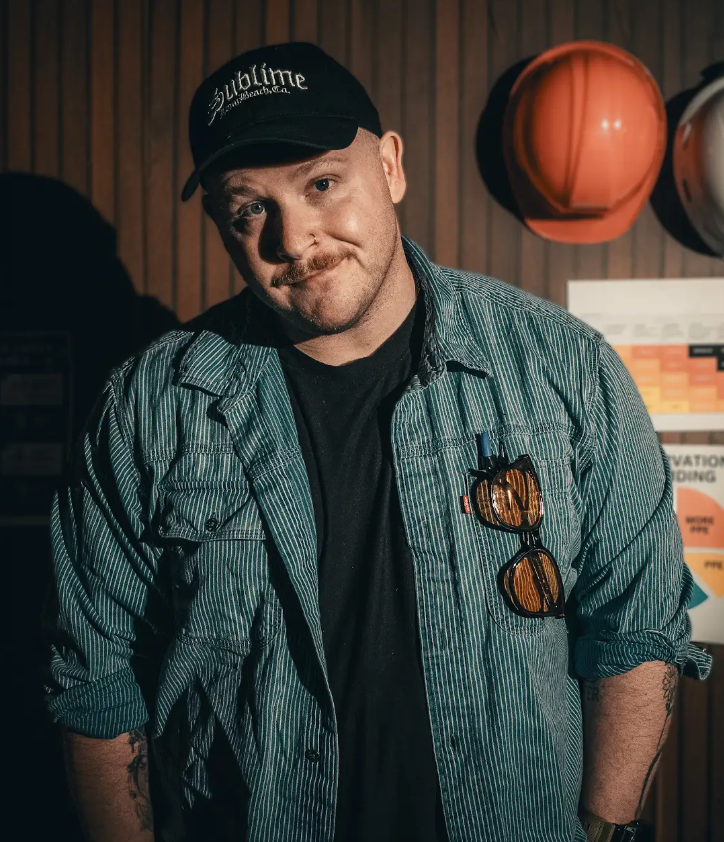
HOP Consultant / Author / Creator
Sam Goodman, founder of The HOP Nerd LLC, has dedicated nearly two decades to advancing safety and Human and Organizational Performance (HOP). He’s a recognized leader and a prominent voice in promoting operational curiosity, effective operational learning, and sustained improvement within organizations. Sam's career is marked by significant leadership roles in safety and human performance across challenging sectors, including power generation—with a specialized focus on commercial nuclear operations—as well as broader power generation, maintenance, construction, and other high-risk industries.
Beyond his consulting work through The HOP Nerd LLC, Sam expands his reach as the host and producer of "The HOP Nerd Podcast," sharing valuable insights on progressive safety concepts. He also brings a unique and effective dimension to his work as a comedian, creating insightful and genuinely funny video content. With a smart, tongue-in-cheek approach, these videos explore the absurdities of workplace dynamics, especially within safety, making critical topics more accessible and engaging.
As a global consultant, sought-after keynote speaker, and an established authority on HOP, Sam is also the author of multiple best-selling books on HOP and Safety that are considered key resources in the field. Through The HOP Nerd LLC, he has partnered with a wide range of organizations, both in the United States and internationally. Their focus is on operationalizing HOP principles, implementing effective Learning Teams, and cultivating a strong culture of operat… Read More


