

 Apple Podcasts

 PocketCasts

 Spotify

 Overcast

 TuneIn

 RSS Feed

 YouTube

 Amazon Music
How Alan McKim Built Clean Harbors into a Five Billion Dollar Environmental Services Company
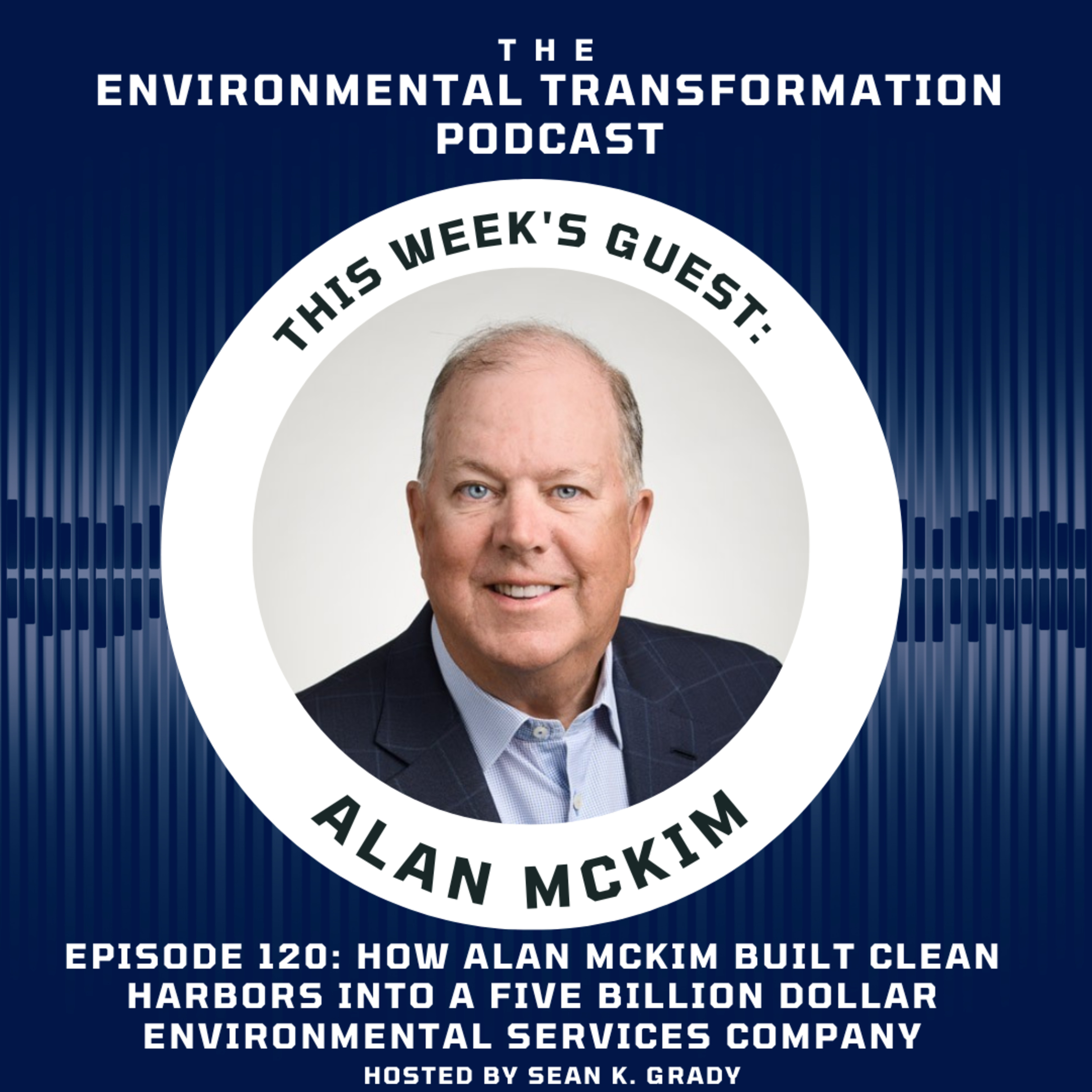
Alan McKim, founder of Clean Harbors, joins the Environmental Transformation Podcast to discuss how he grew the company from a four-person startup in 1980 into one of North America's largest environmental and industrial services providers. McKim reflects on early emergency response work, major acquisitions including Safety Kleen, going public during the 1987 crash, and building a nationwide network of 20,000 employees, 10,000 vehicles, 700 service centers, and 100 permitted waste facilities. He also shares insights from his Undercover Boss experience, the role technology plays in Clean Harbors operations, and lessons from his book, “Doing the Doing.”
Thanks to our Sponsors: WASTELINQ, E-Tank, and Cascade Environmental
0:00 So I was 24 when I started Clean Harvest. I had no clue on how big this company was going to get. As you can imagine, I was interested in starting a business. I had been working in the environmental space prior to that. I left Northeastern University to actually work full time in the environmental industry. My boss was a former Boston Patriot football player and I really enjoyed working for him. And tragically he died of a heart attack at 46 years old. And because of that and changes that were happening after he passed away, I decided I want to go off and kind of do my own thing and never in my wildest dreams that I think we would ever grow to the size that we're at today. Welcome to the Environmental Transformation Podcast, where we bring you interviews with industry leaders, climate champions, sustainability practitioners, EHS, and hazmat professionals making an impact in their businesses today.
0:51 Each leader solving complex challenges and delivering solutions within their areas of expertise. I'm your host, Sean Grady, and thanks for joining us today. Before we jump in, make sure to follow us on your devices and visit my website at www.seankgrady.com and sign up for our newsletter and e-mail announcements. Now let's get started. Welcome to the Environmental Transformation podcast. I'm your host, Sean Grady, and today's guest is the former CEO of Clean Harbors. He's now the Chairman of the board. And Alan Mccab, he's the founding member of Clean Harbors. He's founded the company in 1980. I established Clean Harbors in to become one of North America's leading providers of environmental and industrial services.
1:39 They're probably the largest in the country at this point with revenues over a $5 billion. So this key, this man is a real entrepreneur that started from just basically four guys and a truck. So I'm really excited to bring Alan on the show today. And you know, Alan has grown Clean Harbor steadily over the years, over 4 decades really through M&A and acquisitions of over 60 companies. And he's really become one of the leading, you know, providers of these services. He's his organization is over 20,000 people. He's got over 10,000 vehicles in his transportation fleet and network, over 700 locations and service centers and 100 permitted waste facility, which is amazing. And I think another interesting, you know, tidbit about Alan that maybe some of you don't know, but he was on Undercover Boss and I really thought I saw the, the, the episode on Undercover Boss.
2:38 And Alan, you did a fantastic job of getting in there and getting your hands dirty and see what it is on the front lines. We're going to talk about that in just a few minutes. But the one of the reasons we're here to talk today is about your book, a great book called Doing the Doing. And I want to share with our listeners that book and and you know, the insights that you gave in that book. And so, Alan, welcome to the show. It's great to be with you and thank you very much for having me. Absolutely. I mean, when you look back, you know, back in when you founded the company in 1980, was your ultimate vision to always become like the largest environmental industrial services provider in the country? Or did that kind of vision evolve over time and you know, as you kind of grew with the regulatory landscape and whatnot?
3:25 Talk a little bit about that if you could. Sure. So I was 24 when I started Clean Harbors and I had no clue on how big this company was going to get. As you can imagine, back then it was I was interested in starting a business. I had been working in the environmental space prior to that. I left Northeastern University to actually work full time in the environmental industry and my boss was a former Boston Patriot football player and I really enjoyed working for him and tragically died of a heart attack at 46 years old. And because of that and changes that were happening after he passed away, I decided I want to go off and kind of do my own thing.
4:08 And never in my wildest dreams that I think we would ever grow to the size that we're at today. Wow, I'm sure it's been just an amazing journey or a ride, so to speak, up and down. I'm sure there was some roller coasters and ups and downs and valleys and high peaks, mountain tops. When you go through this growth of this company, if you could maybe talk about a few of the major events that occurred that helped catapult Clean Harbors to become what they are today. And what were the, you know, highlights of some of these big events in your life? Sure. Well, you know, initially when we started out, we were doing emergency response work and a lot of tank cleaning and other environmental service type work here in New England.
4:52 But Recra had just kicked in in 1980, you know, and this was a result of a lot of the Superfund sites that were showing up. And if you remember back in the day, customers would have their barrel recycler take their waste away back in the 30s and 40s and the barrel recycle, the barrel recyclers had more interest in the barrel than they did what was in the waste, right. Years and years of kind of handling waste that way resulted in a lot of locations around the country really creating huge problems like Love Canal. And so we hit the ground just the right time in 1980 because customers were now starting to be held responsible for things that happened years and years before. And so they decided that they really needed to set up their own environmental departments.
5:42 They really needed to focus on who is doing the work that they had doing. And so, you know, being new and and not having any negative history and kind of the new organization out there to offer these kind of services, we really hit the market right and. You, you guys were at the right time, at the right place, right? Yeah, absolutely. And I would say that the RECO regulations are really what drove our growth. But more importantly, we followed what our customers needed, right. And so early on, GE was my biggest account and GE was also figuring out how to stop doing business with a lot of these other players and like shrink the number of suppliers.
6:24 And they said, look at if you want to continue to be one of our supplies, you got to grow and you got to expand. And, you know, they had plants in Ohio, they had plants in New York, they had plants in Arizona. So we really grew as a result of our customer demands forcing us to grow. And it was just so exciting back then. I mean, that's great to hear because you know, and and I guess maybe it with a little trepidation, you're like, yeah, I got this client. They want us to grow. They say they're going to give us a bunch of business if I do this. But then there's this uncertainty, like, will they really give us that work if I do do that right? Right, absolutely. I think it was so much part of our acquisition strategy is like how do we open up and get into those areas where they were so that we could service their needs. And that's what really drove the growth of the company and and quite frankly one of the reasons why we went public back in 1987. Yeah, I know I I, you know, it's, it's amazing, you know, to to look and watch the journey of Clean Harbors and you know, as an industry professional, I've worked with you guys over the years and senior the acquisitions over the years and go, wow, I can't believe they just did that or Oh my goodness, they just acquired this for these guys are like really going after the market.
7:39 This is crazy. And you know, I think too, when I look back, you guys also were kind of in this road, this mode of, hey, we'll be that first responder when the emergency happens. And and then the book, which was great, you kind of detail kind of that exhilaration, that adrenaline rush you guys got when you were the first on site to win the work. And but when you when you start to see some of the bigger events that happened like 911 Katrina, some of those bigger events, you guys were at the forefront and in there at the beginning. I mean, talk about some of those events that also catapulted the growth of the company. Yeah, absolutely. So we're that's really in our DNA here. Our culture is much, very much a response driven organization and the employees here love, you know, running out the door, the bell rings, we run out the door and we go after the events, right.
8:33 And we wanted, we want to do good things for our customers and obviously for the environment. And so we've really been involved with so many events over the years. And you mentioned Katrina and Reader, for example, the BP spill was a major, major cleanup effort. You know, 9/11. Prior to that, just a number of major oil spills throughout North America that happened, whether it was Valdez up in Alaska where we provided resources there or anything that you can possibly imagine when there's a large response needed. You know, our culture here and our mindset is very much response driven. It's really about who we are.
9:14 Yeah, yeah, yeah. And I love the name Clean Harbors. I mean, it's like, and I'm AI used to be a regulator way back in my early career. And in my I started out in the Office of Water Management. And so we were, we were the river rats basically because we were out on the river doing the water quality studies and doing the fish kill evaluations and things like that. You know, this is way back in the early 90s, not as far back as you go, but I mean, still nonetheless, it was back then. And and so I always really like the water. When you, when I heard those clean harbors, like these guys get it, man. They're cleaning the water. Cleaning the harbors is what they do. This is like innate in their DNA. This is awesome. Yeah, absolutely.
9:56 It's a, it's a, it's a great name. And our logo sort of has survived a lot of marketing departments here. You know, a lot of people look at that and, hey, you know, maybe we should think something differently. And it survived the many, many different ideas that people have had. And I love the brand and obviously I love the name. Oh, yeah. No, I mean, exactly. I mean, and when you think about it, when you're in this growth mode at the very beginning in 1980, you start, I mean, Fast forward seven years and now you're going public in seven years. That's like so fast. What was that like? You know, I think it's a little bit like what's happening in the market right now with, you know, AI, right? It was hot, environmental was hot back then. A lot of companies were going public and we were only a $70 million company when we went public. We only initially were going to raise $15 million. And at that point, I only had $15,000 of equity in the business.
10:57 And so it was like we really needed to get some cash. We really need to kind of get away from just having traditional bank borrowing. And so we need to raise some money and we're going to raise $15 million. And then the crash of 87 happened. And you remember in October of 87, we still decided, let's go let. We've done all the work. We've got all the audit work done. We've spent a ton of money. So we subsequently raised $8 million and that took us two weeks to go out and do the road shows all over the country to raise $8 million. And you see companies today going public with $8 billion. Yeah, it's crazy, right? Yeah. It's crazy. So, but what was great about it is it it gave us liquidity, it gave us cash.
11:42 We did a secondary offering in 88 at $15 this year. So the stock rose and we raised some more capital and then we were able to use our equity, our publicly traded equity to buy other companies. So we bought another public company in 1989 called Chem Clear and that gave us plants in the Mid-Atlantic, in the Midwest, even in the West Coast. And so again, part of our growth strategy was trying to figure out how do we continue to grow to meet our customers needs and having that public equity really helped us out. Yeah. I mean, the when you guys were in that growth mode, looking at like the minds that are like, I guess being in the war room saying, OK, where can we grow?
12:25 Who's got the best assets out in the market that are suffering that we can go and fix? And I love in the book when you talked about you've always had this like innate kind of drive to turn one man's junk into another man's treasure, right? Absolutely. And so, you know, when you see that and you have that mindset and you start evaluating these these opportunities and these other assets that are there, what you know, you got to be licking your chops half the time when you're looking at these these deals. Absolutely. You know, and we have been really fortunate that the number of the acquisitions we've made and we've done over 80 of them now have really worked well for us. And I think the secret to our success has really been to have a single platform to run our business. So when we acquire a business, we really put them on our platform and from a quote to cash, you know, accounting, HR systems, customer master file, all that kind of stuff is it's so important because we end up, when we acquire companies, we find it so fascinating to see how inefficient they are because they have all these disparate systems that don't talk to each other and they have people in between. And, and so I think we've been able to take advantage of companies that have been not doing well, maybe as a result of recession like the early 90s or, you know, the 2008 Great Recession.
13:49 So Laidlaw going in bankruptcy back in 2000. So we really, in many cases you know that the company, but looking back, I mean they were fantastic deals, fantastic deals. Oh yeah, I mean, just when I mean, we're going to get off talk about a topic a little bit here. But I mean, I because I want to segue into the whole safety clean situation was took the whole, I think industry by, you know, storm and and by shock. And I mean, it was like, Oh my gosh, they just got safety clean. This was amazing. Yeah, it was amazing. And you know, the first part of that business that we bought out of bankruptcy was just some wonderful assets. I mean over, over a billion dollars worth of assets we got. And you know, and the key there was we had the ability to come up with a financial assurance to meet what the EPA needed for those plants to stay open.
14:44 And but after three years, I mean we were really starting to cook back in 2004, 2005 and then subsequently in 2012 when we bought the remaining safety clean the pots washer business, that became just a fantastic business for us. And bringing those businesses together, which was the original goal back in the day, bringing them, bringing them together has been the best thing I think to help both of those companies do so well. You know, in your book there was like there was a conversation in one of the chapters. I can't remember which chapter it was now, but it was about the safety clean conversation and you met with the the the former CEO of Laidlaw who who was taking some position on you, right denotes to you. And you kind of you kind of won the battle on that situation, if you ask me.
15:36 Yeah, we did. We were close though. I mean, we had publicly traded debt back then and they evidently had had gathered up that public debt and they were maybe looking for us to trip and fall. And it turned out to be the other way around. And it, it was just a, a amazing. And you know, what's so amazing is the, the people that came over from, from that business. I mean, yes, fantastic leaders. Many of them had already been with that company for years and subsequently stayed with us for years. So the longevity of a lot of our leadership is a result of us not only acquiring businesses with great people, but keeping them and and really making them part of our company's future now.
16:22 Yeah, now that is that's so spot on this the recognition of good talent like that and and then keeping them and bringing them in. And, and because I've been through some mergers acquisitions before and they promise you all, we're going to let you guys, can I main maintain some leadership roles and, you know, some, some control over, you know, managing the business and then reality sets and you're like, you're not doing any of that. That's very frustrating in, in life, in business life. But it's great when you can recognize the the, the value of that business and maintain that and then continue to grow, invest and fix things, right? Absolutely.
17:02 Yeah, having that knowledge of how those businesses ran and the relationships they had with their customers was so important to hold on to those people and, and, and we've been blessed, you know, to to have such a great team here that stayed together and work together for a long, long time. That safety clean business, I mean they were used oil recyclers, parts washers and solvent recyclers. And while they were there picking up those products and servicing those products, they were either one selling other products to them, you know, parts, you know, equipment or PPE or whatever materials and supplies.
17:43 And then they were picking up waste too. So they would, you know, have multiple revenue streams as, as I kind of saw the business and I was like, wow, you guys just expanded your whole business client list by like tenfold. With that, absolutely yeah, 300, three, 100,000 customers, you know, many, many of them small companies, you know, that were on a subscription that we went out to every, you know, 12 weeks and provided that POTS washer service. But as we continue to expand the kind of services to meet those customers needs, right, we just keep growing and growing and it was fantastic. That's crazy. Just amazing. You know, in your book Doing the Doing, you know it speaks to the dedication and execution of, of the work. And you know that you've done at Clean Harbors. But, you know, beyond the literal meaning, what is the core philosophy or principles you believe that has been the most, I guess single greatest driver of the of the success of Clean Harbors?
18:40 I think it's our focus on people. I think knowing that our that our workforces our number one asset and I think the entrepreneurial spirit that we have here, the responsive culture that I mentioned earlier is so important. You know, the, but I think what's really been important is people could grow in this company as we grow. And so my, my original 4 employees stayed here for 40 years and it was just an amazing opportunity. And many, many, many, many other people grow inside the company. And when you're, when you're growing, you provide so many opportunities for people. And it's great that they don't have to leave to go, you know, grow in their career. They could move into a different part of the company. We could educate them, we could get them, you know, degrees, we could provide them training.
19:30 And because we really felt that the longer we can keep our employees, the safer we're going to be #1 because, you know, we know that safety is most impacted by young new employees. So that's really going to improve our safety. But it's really going to provide sort of that, you know, mature workforce that really understands who we are and and what kind of services we offer. So that was really, really important. Yeah, that's great. I mean, that continuity you're able to continue to manage and grow with, you know, employees Plus, I mean, it's, you have to admit it's, it's probably a big cost savings too at the end of the day, you know? Oh my God. Yeah, onboarding a new employees and the HR and I mean Oh my goodness, today is it's way bigger than it ever was when you started in 1980, I'm sure. Absolutely it must.
20:20 It must cost, I'd be guessing because I don't, I don't know the exact number, but it's probably $15,000 to bring an employee on now with all the training and you know, medical and all the things. Yeah, absolutely. Yeah, absolutely. I mean, well, you know it. You discuss in the book Trials and Tribulations and can you share some important or how important it was for you to have a mentor or mentors that were helping you throughout the tough times when you were growing the business? I really liked in the book how you kind of were able to reach out and find a few of those those gentlemen that really helped you in certain ways to help you educate yourself more or or just understand the business better.
21:04 I mean, talk about that, if you could, about how important it was for you. Sure. Yeah. And I think before we went public, I had I'd gone back to Northeast and to get my MBA and I met a professor there who really helped me a lot going through school while I was still running the company and still raising four children. It was a tough time, right to all those things. And he was a fantastic man. And I asked him to join our board and he became our our first board member. He became our lead director. And subsequently for 30 years, he was my lead director. Wow. My lawyer who actually helped found the company, you know, who incorporated the company was our general counsel for 40 plus years.
21:46 And and so those, those early folks were so critical to me personally and also to the company's success. But also along the way, whether it be bringing board members in who could help with a certain area of expertise that maybe we were struggling with at the time, whether it be regulatory or might have been finance or it might have been, you know, growth, whatever the issue is, I think that was so critical for us. But then bringing in leaders, you know, bringing in people. So when when we got to $100 million, it was very much hitting the wall. And none of us in the company at that time had ever worked for $100 million company. And so bringing people in that, you know, had the experience, you know, people like Clyde Keaton, as I mentioned, who came over from GE, for example, and it was really important to bring people in from outside the company as much as it was to help people inside the company grow. So you, you know, what I realized is that you really needed both.
22:48 You just can't have it all being an internally growth orientated company, right? You've got to get people who have expertise and leadership skills to come in as you continue to see the company grow. And obviously the first year in business we did $600,000. This past year we did $6 billion. You need different people. You need a lot of people. Yeah. And a lot of people, yeah. Yeah, hello ET Nation. I want to thank you for listening to the podcast. If you're enjoying the interviews we bring you, consider supporting the program by visiting my website at seankgrady.com and buy me a cup of coffee. Proceeds will go towards helping me continue producing timely content and offset production costs. I'd also like to take a moment and recognize a few of our sponsors of the show who have been amazing partners and our ET Nation legends.
23:39 If you're looking for a drilling and environmental contracting firm to help you delineate the extent of contamination at your site, then look no further than Cascade Environmental. Cascade has over 37 offices across the country and offers a huge range of environmental and geotechnical drilling, site characterization and remediation services. With their huge fleet of equipment nationwide coverage, Cascade is a great choice to support your environmental and infrastructure needs. To learn more, check out their website at cascade-env.com. That's cascade-env.com. Hey, are you looking for an equipment rental company to help you with your next wastewater remediation or waste management project? E Tank is the only environmental equipment rental company in the industry that offers 100% guaranteed certified clean temporary liquid storage tanks at no additional cost. This protocol gives Peace of Mind for the previous customer by limiting their downstream liability as well as the future customer by preventing any cross contamination for all of their rental tanks.
24:46 E Tank also runs a one-of-a-kind complete maintenance program for all rental items including liquid tight roll off containers, fluid transfer pumps and filtration items. The next time you are presented with an environmental challenge, call E Tank to come up with the solution for your problem. I want to thank one of our sponsors, Wastelink. Wastelink is the all in one software platform transforming how environmental professionals manage waste, connecting generators, service providers, and disposal facilities in a way that is simple, connected, and transparent. Their platform helps streamline everything from waste profiling and routing to inventory management and billing, giving you the tools you need to operate more efficiently and reduce cost. Whether you're a generator looking for better options or a service provider seeking greater efficiency, Wastelink has you covered.
25:43 If you're ready to take control of your waste management processes and optimize your business, visit wastelink.com to schedule a demo today. No, that's great. I mean, and I think as you know, as ACEO as you in your position, it may at times may have been a struggle or challenge to realize I need to let go of the reins in a certain area of this business because I can't do everything or that's really not my best highest value used, but it's important. But I just that's not my best skill. What was that like? You know, making those decisions to bring in the right people? It was the most important thing certainly for me because I wore all the hats early on as any entrepreneur does who owns the business.
26:28 But I really felt like, you know, I really focused on technology. I really love technology and I think I really could help the business and run better and, and more efficiently with technology. And I also felt it was a key differentiator as it related to our acquisition. So building out software and building out platforms has been something that has really been my focus and realizing that maybe Eric Gerstenberg is a better engineer than me and he does a better job of running our plants. So how do we continue to develop Eric to become the Chief Operating Officer and now the Co CEO, right. So we definitely bring people in and realize whether they're in transportation, they're in safety or they're in finance, bringing those people in and, and complimenting your skills to allow you do the things that you really, really are good at. And that was tough to let go when you had to start giving up all the power, so to speak, right? But I think as an entrepreneur, you know, that's one of the things I learned is that you've got to surround yourself with people that are better than you, especially in the areas that might be your weak spot.
27:36 Yeah. Now that makes total sense. I mean, and then I guess that's just one of those Vince in the in the journey. You can just go, I have to do this or we're not going to be successful as or as successful, right? And, and I think you do it to take one for the team almost right. Absolutely, yeah. You know, when you we talked about, you know, building the team and, and acquisitions and, and, you know, as you guys were growing and, and it your growth has been heavily linked to the strategic acquisitions like safety, clean, hydrochem, PSC, those types, you know. But how did you and your team evaluate the unique, I guess the financial or the operational or the regulatory risk associated with integrating these massive companies?
28:17 And then what was your personal like risk threshold that you'd be like, OK, these are some high stakes decisions. I yeah, I'm going to go or not going to do, you know, passing up, you know, tell me maybe walk a little bit through that and how that happened or what you guys did evaluate. You know, I think early on we had worked with a couple of consulting firms and Mackenzie was one of them that that helped us integrate some of the larger acquisitions we made. But over the years we really developed a great playbook on both doing pre acquisition as well as post acquisition, right. So how do we evaluate and do all our due diligence and how do we integrate the businesses after we've made a decision to go forward with it. And I think over the years, Brian Weber, who now heads up our M and A group is really honed that playbook and we've set up an organization, an internal organization to do that.
29:10 And, and so I think we're really, really good at it. And I think I actually brought on one of the key McKenzie partners who's been on our board now for 10 years and has done an awesome job for us after he retired from McKenzie. And it is something that we really do well. And I don't know if anybody doesn't any better from people who've told me. And so I think that playbook has been, you know, sort of a critical thing. I think the decision about finally making that ultimate, you know, go or no go decision. We really evolved the board. You know, we really got their feedback and we really collaborated with them. And we in 40 plus years of being chairman of the board, we have never had a, a decision by the board that wasn't unanimous. And so look at if we're going to make a vote and someone's not feeling comfortable about it, well, we're going to continue to work on, you know, what are the issues here? How do we solve your, you know, your uncomfortableness with something that maybe we're contemplating here. So I think realizing that you need to have the board support, you need to have your leadership team support, but ultimately when you do make that final decision, it still could be gut wrenching, right?
30:25 Sure. I mean, I mean, especially when you know maybe potentially you're taking on environmental liabilities for some of the assets. And it's like did I do I have enough due diligence to to determine the real amount that I think I'm going to have to take on, right. And that's got to be tough. It certainly is. And I the, the thing that I always looked at is that's the business we're in. And so if we're acquiring a business and all of a sudden some environmental liability pops up, whether it's a off site Superfund issue or maybe they're they have some problems on one of their sites that we're picking up. That's our business. We we felt really comfortable about taking on those kind of risks. You know, some of the other risks become even greater of a challenge for us obviously that are out of our control.
31:06 But I think, you know, we've done a good job here and we've had a good track record. I think so too. I think so too. I mean, you know, when you talk about being in this business and, and the importance of building a solid team around you, you know, how important was that to build and you know, for the scaling of your business? I mean, I think we've touched on in the previous conversations that that we just recently had, but you know, what specific strategies did you employ to foster say like employee loyalty and Co cohesive culture over the four decades it's really helped you grow this business? Well, I think again, one of the nice things about being a public company is you've been able to share opportunities of growth and financial wealth and, and growth with, with a lot of your employees, right?
31:53 They could, they could get stock options, they could buy some of the shares, they could be given performance based share programs. And so I'm there's nothing that makes me more happy to see some of our leadership here really doing well for themselves because the stock is appreciated and they hung in there with us. They might not have been the highest paid, but they got stock and they got performance based awards and that. So going public and having that, you know, sort of liquidity for them, that was an important part of of keeping people here. We did lose a number of people over the years as you would any business after 45 years, right.
32:36 I'm proud to say that I think my last count is we've had 20 people leave to become CE OS of other companies. Yes, I thought that was amazing stat actually that you, you mentioned that when we met a couple months back at the EI Digest, a conference in San Diego. I thought wow, that is really impressive. You know, you get some quality people that work for you that now started their own businesses or went to go run other businesses. Exactly. Yeah, and you hate to see them leave in many, many examples, but in some cases they've come back after we've maybe bought their business, after we acquired them, that they went off. Yeah.
33:18 But that that Clean Harbors alumni is strong out there. And I always proud of myself in the fact that we can. You were an important employee while you're here. When you leave and go off, we want to maintain that relationship and be able to go out and have a beer together still. Right And. So. I think that relationship, you know, this is a very small community, people in our industry, and it's nice to maintain those relationships. Well, you know, now they can become partners with you because you know, and invariably, you know, all these companies, they might be able to do most of the things, but they can't do everything. So everybody needs partners. Everybody needs partners. We need partners today and absolutely. Yeah.
34:02 Well, you know, you touched a little bit on technology and I'm, I'm a little bit of a technology geek myself in the sense that he's back when I was running a consulting business for waste management and selling services. And I used you guys, as you know, vendors to deliver the services for our clients. We had to develop our own software too, and we released our software back in 2012 and then it kind of grew. And then we're like, we got to modernize this thing. We got to make it better. In 2018, we started to redevelop and make it a cloud solution. And, you know, everybody who was wanting to be a differentiator realized the data, you know, was the big thing. And I always said he who holds the data holds the work.
34:45 That's so true. I mean, right and you know, you can get into that and, and maybe talk a little bit about your interest in, you know, you created the wind system there at at Clean Harbors and how that really built out to just build your whole platform. Absolutely. So when today is over 750 applications and it basically is the supporting software for our entire business. We have a, a CRM and we also have all of our financials in Oracle, you know, with HR and finance, GL, all that kind of stuff. But when is everything around waste tracking, invoicing, quoting, contract management, you name it. And, and I think your point is we have the data. We have a massive amount of data, not only data that we've generated ourselves, but also through our, the acquisitions we've made, we've kept that data and we have an on Prem data center.
35:41 And one of the things that we're really doing is mining gold out of that data. Now we're building Co pilots, we're building agents, we're building assistance, we're using the classic machine learning. We're also using generative AI. We're actually kind of creating your own clean harbors GPT to talk to that data. And so I wish I was 40 years younger because I, I, I look at where the, where the technology is going and I say, this is so much fun and this is going to be life changing for companies and for people. And, and that's why I stayed on as a, as a technology officer here, you know, while I stepped down, I just find it to be amazing technology that we can continue to employ here and do a better job of servicing our customers.
36:32 Well, and that's, that's a great, you know, kind of a, a segue from the, the big daily day role and into, you know, kind of like a passion role, a passion play role, right. Absolutely. That's just kind of gets you still something to stay connected. You're still involved with the business, but maybe not so at the top all the time and and and now you still have a big impact. I think it's still an amazing segue there for into the technologies. I'm because technology is changing. I mean E manifest is still not been cracked. I mean, as effectively as most as EPA would love to see it and most service providers are still struggling to, you know, have a good communication back and forth with that. And I think the whole, you know, transportation logistics side of that whole equation is the big, you know, kind of let down because nobody has really figured out what's the most efficient way of just doing everything electronically. And it's still a challenge.
37:25 And is it's, I think they're well meaning, but I still feel like it's going to struggle to really be what they envision it to be. Yeah, absolutely. I think I actually think industry is probably a little ahead of EPA in that regard. And you know, the investment that the government needs to make in their platforms is not kept up. And you know, if we want to build API is directly with our EPA friends, you know it, it takes a lot of work to get those kind of things done. They don't have Microsoft probably in the background helping them design the interfaces and and all the APIs that you need to integrate with every company who needs to do it and create standards for Clean Harbors and every other service provider. Exactly.
38:09 Yeah, exactly. So true. Yeah. No, that's great. I mean, you know, another, another differentiator or I think something that's been on the horizon that everybody in industries kind of, you know, enamored by, which is P Foss, right? I mean, think about, I mean, this is like the hottest topic. It's the new frontier of the environmental revolution, so to speak, that we, I mean, climate change is right there too, but this is the biggest thing that's hottest that's in the industry. Now. How's Clean Harbors addressing the regulatory impacts industry's facing? And how do you think that you know what, how big's the potential market for this for service providers like Clean Harbors?
38:50 You know, from what I can see it's it's going to be a big market and I'm not sure whether it would be bigger than the PCB market that was back in the 70s if you remember, but very similar. And it's sort of a different aspect to clean up, right, Whether it's cleaning up water on site and removing P fast from the liquid phase or it's removing the solid materials and bringing it to A an incinerator like one of our, you know, hazardous waste incinerators to destroy the P Foss. I think we and I think the industry is really well positioned to serve EPA and serve the public. And we got to getting these kind of contaminated sites cleaned up and removed and and remediated.
39:35 So I think it's a wonderful opportunity and I think the technology is available. We've proven with DOE that we've got the technology to destroy the PFAS in our plants and we hope that the continued regulatory framework will be created to to really turn that that whole cleanup effort on. Yeah, Yeah. No, I think so. I think EPA still trying to evaluate some of the new limits that they recently set last year and now the new administration's kind of pulling back a little bit saying we're going to reassess and I saw there's certainly. Uncertainty on where things are going, you know, right now it seems like, but a lot of people are very cautious and concerned.
40:18 And I think the framework of where PFOS sits in CERCLA is kind of one of the biggest challenges a lot of people are struggling with is just because wow, this could be anybody could be pulled into a CERCLA situation when they really don't have responsibility for it. And and so I think if it went to RECRA or created its own P Foss regulation, I think that would be the best situation. And moving forward, I don't know where EPA is going with it yet, but I think that some of the topics we are talking about on the podcast on a regular basis. Sure. And I think that I think it's needed, it really does. That framework is needed and I'm hoping that, you know, the regulatory agencies will continue to create that framework that'll make it so that everybody knows what the playing field is going to look like. Yeah, I mean, like, you know, landfills who accept waste, they didn't generate the waste.
41:10 They're just storing it. And now all of a sudden they potentially could be Superfund sites because, you know, it's it, I mean, it's where does the compliance, you know, really land? And I think that's the ambiguity that's out there right now. It still needs a lot of clarity. Yes, they agree. Well, let's talk about Undercover Boss because I think that's a great story and I think you went through a really interesting experience there. And maybe you could talk a little bit about that experience. But you know, you know, what was the most surprising impact or most surprising or impactful lesson you learn from the day-to-day realities of your frontline employees and, and maybe how did you take that information and make subsequent decisions at your executive level? It was a great experience and you know, as much as I thought I knew our employees because I, I spent a lot of time in the field and traveled all all over to our plants and, and knew many, many employees over the years.
42:08 When I got out and started traveling with some of the drivers or working with some of the field supervisors on some of the projects they're working on, it was eye opening. It was, it was surprising to hear maybe how they thought about corporate, how they thought about leadership, what their issues were, you know, and it was, and I didn't believe any of them recognized me. So I, and I thought I did a pretty good job of disguising myself there to, to that. And, you know, so I, I think, you know, our people work incredibly hard. And in one event, I was inside a tank with a woman who did that every day.
42:49 And it was in Chicago and it was extremely hot and, and she was cleaning rail cars out as part of her job and really appreciating the facilities that she had to work in and maybe the lack of a locker room for a female employee nearby. And, you know, you started really seeing first hand things that our employees were challenged with, whether they were out in the field or they're actually working in one of our plants. And, you know, driving with a truck driver there isn't anything better than driving with a driver. Boy, you're going to hear everything that you probably don't want to hear, but it was a great experience to handle to hear feedback directly from one of our drivers driving up and down the highway here.
43:31 I'm sure there was some of moments that probably weren't caught on tape that you got to hear some, you know, unvarnished direct conversations, and I'm sure that was very impactful for you as well. It was and, and also to see how maybe supervisors interacted with our employees too, you know, how did, were they treated with respect? You know, where they supported, you know, because I was just sitting on this on the sideline might be at the dock and, you know, wondering, you know, where is the supervisor here? Oh, he left early today. He always leaves early. And, you know, hearing little tidbits and things like that was sort of interesting, you know, but it was, you know, it had a little bit of downside to it. And that was, is that people realize how approachable I was in there.
44:20 And I started getting reached out by a lot of employees via phone and e-mail after the episode aired. And, and even today, unfortunately, people want to skip the chain of command and they want to reach out to Alan. And hey, I remember you on Undercover Boss and you helped out this person and wondering if you could help me out. And so fun. Yeah, I know. Well, I mean, you know, it's, it's good to be the, the people's CEO. Right. Absolutely. I mean, and I think, you know, some of the changes you made, were there anything, you know, like you said, the women's bathrooms did you, you know, implement a lot of these like things like we have to fix this.
45:02 We can't just let them not have you know, the the utilities they need. And you know what? We'll talk a little bit if you could do some of the things you implemented as as a result of Undercover Boss. Yeah, I think we, we came back and really talked a lot about the feedback. I used it and by the way, they, they reached out to me a couple years before and wanted us to to do it. And it just didn't have the time at the, at that, at when they asked, but we ultimately agreed to, and we, we circle back together as a team and sort of brought all the feedback together and said, you know, hey, these are some of the things that we should be thinking about here. And I think putting out an employee survey and trying to get more feedback.
45:43 So now we have a regular broad employee survey that kind of get employees feedback. And we've, we set up, you know, some employee resource groups. You know, we have 7 employee resource groups now set up to, you know, have the, you know, employees who want to do it themselves, but they want the company to support them at the same time. So I think there was some really good things that came back from that. And I think we all had a, an appreciation of how hard our team members work. But I think having that direct interaction with them and bringing that message back to the executive team, I think was helpful. That's great.
46:24 That's great. I mean, seeing you go on that, would you recommend other CE OS of large service organizations to participate in something similar to this? I got to imagine it's very beneficial. Yeah, absolutely. Yeah. And I've watched a lot of those other episodes, you know, and I find, you know, watching them is is brings back good memories also. But it also kind of says, you know what, this this guy is really having an opportunity to the otherwise wouldn't have to be able to kind of be out there and and do what he's doing without them saying, oh, that's the boss I got to I got to hide what's really going on here. Yeah. I can't be, you know? Yeah, I can't. I got to be protecting myself here, not giving the real story. Yeah, that's true.
47:08 Yeah, you know, when I was reading the book, it was great book, by the way. I really loved how you prefaced a lot of the chapters with some major events or regulatory, you know, dynamic that's just catapulted your, your organization or that was really helpful to see your journey of how things were tied to each other and how the company grew. I I really appreciate that in the book. But one of the chapters I want to touch on is, is chapter 30 and it's your leadership book. I mean, it's your leadership chapter in the book and there was a couple things there that I thought was great. So you reflect on some of the qualities and skills and make a good CEO and some of the ones that you possess to help. Grow your company and I wanted to. Read a few of these and just get your take on them. OK.
47:55 So one of them was there's no shortcut to excellence. Another one was, I believe another great quality is that that makes a good leader is curiosity. And another last one, it's another one here that I thought is great is I believe one of the secrets of success to be able to grasp the complications, the implications, the subtleties of your business, to be able to take it back, break it down to its most simplest things. And like this is how you know you do it. And I think if you could talk a little about those three thought those three items, if you could, that would be interesting. Yeah.
48:37 Well, I'm a business process guy and I have always kind of felt back when we started initiating business process re engineering probably in the middle 90s, that understanding sort of your business and all the different processes that go into it and understanding how to break down all the barriers that that get in the way of a business performing better. And so I, you know, I think I'm one of those guys that really drives efficiencies. Technology is an enabler of that. But more importantly, I think getting the right people in the room and trying to understand the business process and trying to, like I say, simplify the problem and break it down into manageable pieces so that you can attack it and, and make make an improvement in that business.
49:25 So I think that was really, I think an important skill that I have and one that I think is used throughout the business even today. You know, we released a big software package last night and I'm I walked down and challenged the checked in on the team that's doing a lot of the phone calls for people calling in on the hotline and how's it going? And everybody's like high 5 and excited and, and I know that we're impacting thousands of people with that release that we did last night. And so I know that those are the kind of things that really excite me about making the business run more efficiently and breaking it down into small bites so you can eat it. I love that and that that kind of leads into, I mean, that's kind of following up and you're, you know, being curious and, and understanding the complexity of things. But the other one that I really thought was there's no shortcut to excellence.
50:18 I mean, the bottom line is you have to put the time in to be good at what you're doing. Yeah. And I think Dan McCarthy, as I mentioned as my lead director, my force lead director, I mean, I, I learned a lot from him. And one of the things is there's no shortcuts and what whatever it is, there isn't shortcuts to be taken because in the long run those are going to come back and bite you. And I think our focus on safety and empowering any employee to shut a job down and anytime if they feel like it's an unsafe condition, that to me is excellence. And I think, you know, it's like, how do we measure the near misses? How do we measure confined space entry safety permits? How do we measure things to make sure that every employee goes home every night the same they came in, You know, so that safety is such a critical part of our company and not cutting quarters is so important for that. Well, and just helping people understand that they actually do have the power in their own hands to do a stop work, right, even at the entry level, like if it's unsafe, I'll stop work. We will stop and listen, right?
51:36 You will stop and, you know, figure it out. I mean, I think empowering employees is that's a real important piece there. I'm glad you mentioned that. That's, that's really good. Yeah, I, I thought that was really great that that's that chapter on leadership and and some of the skills and there was a few other ones in the book. I'm not going to go through them all because I want people to read this book. It's a fantastic read. Another chapter I was inspired by was your chapter on giving back. And, you know, if you could share with us why it's so important to help others and why you set up the Mckim Family Charitable Foundation to help others, you know, give a little bit of background on why you did that and why it's so important to you. I think first I've been blessed beyond, you know, my wildest dreams financially and and and personally with four beautiful children and 11 grandchildren. I, I, every day, I count my blessings and, but I also realized that not everybody is as fortunate as me. And early on I got involved with different organizations that, you know, had needs and I wanted to be helpful, whether it be in a small way or a large way to, to support them. I also wanted to give back to my alma mater. I wanted to give back to Mass Maritime for their wonderful programs there that creates so many wonderful employees of ours.
52:53 You know, hundreds and hundreds employees came out of the maritime Academy. And and so there there's in my mind there's a real need for people who are successful to give back. And if, if they don't give back, then what are they doing? You know there's only so why? Are we here? Why are we here Not we're here to help one another. And you know, whether it's a local hospital or it's a local food pantry, if we have capacity, we need to help, right? And I, I, and I wanted to instill that into my children. And that's why I created the Family Foundation because I wanted my 4 kids to be part of that.
53:34 And when I pass away, I want them to do that. I want them to, you know, run that foundation and and and make good decisions and and help others. Well, I think you're doing just an amazing job with that. And, and I couldn't be, you know, more proud to just say I know Alan Mckim and thank you for for doing that. I mean, it's, it's, it's amazing. And you know, you, you can tell your Christian faith is just immense. Putting together a terrible foundation like that and, and giving to others is just really the true essence of humanity and what we do in life and what we should be doing. You know, I, I went through the, the final postscript. You know, it's like the 10 lesson learned for, you know, entrepreneurs trying to get into the business, right? And they're really 10 here.
54:21 I'm not going to go through all 10, but I just want to mention a few of them. And you could just touch on a couple, but one is safety. We've been talking about safe being first, right? Safety's first. Second one was cash is king. And you know, and then the third one was raise money when you can, not when you need to, It's. So true. It's so true. You know, like that's one thing that I have regrets about early on when, when I was running the business, when I was starting the business, I, I only had $15,000 invested in the company and I really was borrowing on receivables and living hand to mouth. And I wish that I had maybe taken on a partner or brought more equity in and because then when I really needed the equity, maybe it wasn't the banks weren't willing to lend. I was too over leveraged.
55:09 And so I think that was just one of the things that I always look back and say maybe those first 10-15 years in business might have been a little bit easier if we had a little bit more cash and had not been so tight running to the mailbox every day to get, you know, paychecks covered. Yeah, right. I like #5 it said. Build a strong professional advisor network, have a great legal team, a good banking, a good accountant and a good board of directors, right. Those are some like key ones there. And I think that's great words of advice and be willing to take risk and fail, but obviously don't fail too often. But you got to be able to do that, right? Absolutely.
55:53 Yeah, and the book was amazing. I think anybody who's in our industry, in the environmental industry needs to read this book. I promoted it on my monthly newsletter that I do for the podcast and sends out to a couple 1000 people that's on my list and I get it out and, and share with, you know, what's what's the latest episode? Who's on the horizon? Do kind of a NEWS UPDATE for the month, what's going on. And then I always do a book of the month, and I highlighted your book this month. Oh, wonderful. Thank you very much for that. You bet. It's really a tribute to the employees here at Clean Harbors and you know, I've been blessed be because of them. Oh, I can, yeah.
56:34 Yeah, it's great to. It's great to have you on the show, Alan. I really appreciate your willingness to take my invitation to come on to the show. I think you are an amazing individual, an amazing leader in our our business. You are kind of like one of the Mount Rushmore of the environmental business leaders in my mind when I think about who's grown this business to where it is. This is great to have you on the show. I really appreciate you. Thank you very much for having me and I really appreciate your kindness. Thank you. All right, Alan, well, we're going to get this out episode out here in the next week and it's going to be great. And feel free to share with all your friends and your network. I appreciate it. And I'll give you, I'll give you some feedback by e-mail, if that's all right, along the way. Absolutely, 100%.
57:20 I would love it, absolutely. Thanks for listening and watching the show. If you enjoyed. The show then please share it with your friends and Co workers on social media and tell somebody in person. Thanks for being with us, ET Nation.

Former CEO / Chairman of the Board
Since founding the Company in 1980, Mr. McKim has established Clean Harbors as North America’s leading provider of environmental and industrial services. The company’s revenues are expected to be approximately $5 billion this year. Under Mr. McKim’s leadership, Clean Harbors has steadily grown over those four decades both organically and through M&A, including more than 60 acquisitions. The Company that began as four friends, a single truck and a small garage has evolved into an organization that employs 20,000 workers, maintains a fleet of more than 10,000 vehicles and a network of over 700 locations, including 100 permitted waste management facilities.
During that time, Mr. McKim established Clean Harbors as the go-to emergency response company for the nation’s biggest disasters including 9/11, the anthrax attacks, Hurricanes Katrina and Sandy, the BP oil- spill and several avian flu outbreaks Today, Clean Harbors offers a comprehensive array of services to more than 300,000 customers and counts the majority of the Fortune 500 among its customer-base. Its customer base spans a number of industries, including chemical, industrial and manufacturing, as well as numerous government agencies. These customers rely on Clean Harbors to deliver a broad range of services such as end-to-end hazardous waste management, emergency spill response, industrial cleaning and maintenance, and recycling services.
Alan has been instrumental in driving the company’s deep commitment to sustainability by adding considerable recycling capabilities over the years. Through … Read More


