

 Apple Podcasts

 PocketCasts

 Spotify

 Overcast

 TuneIn

 RSS Feed

 YouTube

 Amazon Music
Robert Bilott on PFAS, Dark Waters and Fighting Forever Chemicals
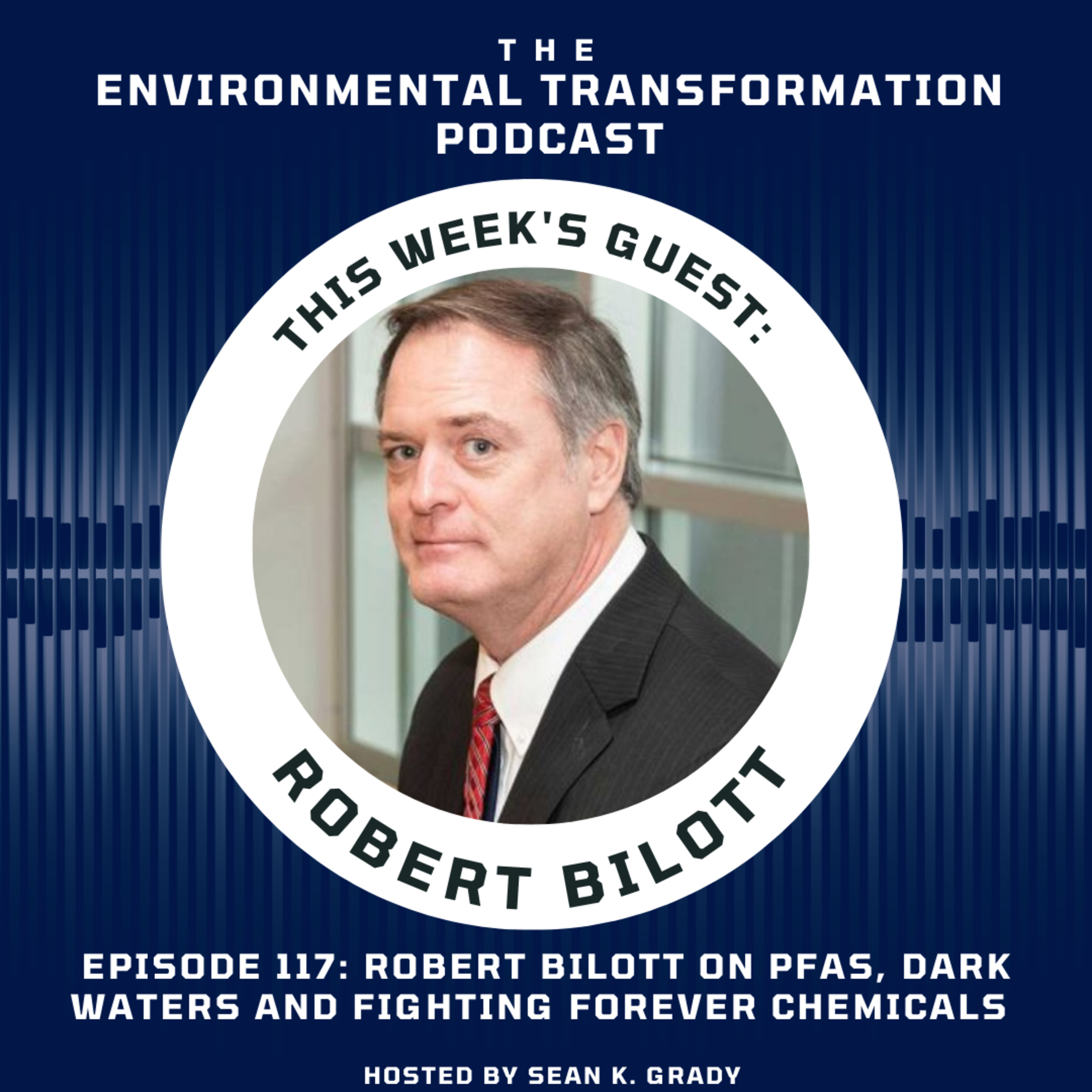
Host Sean Grady interviews attorney Robert Bilott live from the AHMP EHS Hazmat Summit in Louisville, Kentucky. Bilott, the lawyer whose work inspired the film Dark Waters, shares his decades-long fight against DuPont over PFAS contamination, the failures of early chemical disclosure, and the challenges of pushing the EPA to regulate forever chemicals. He discusses his book Exposure, the ongoing litigation nationwide, the impact on water utilities and ratepayers, and how consumer demand is forcing change. Bilott also explains how states like New Jersey and Minnesota are leading regulation, the global scope of PFAS contamination, and the need for new technology and laws to address the crisis.
0:00 Took several years digging through documents to finally realize I was dealing with something a lot bigger than that, and it was something that was impacting a lot of folks, not just the farmer and his family, but this was a contamination that was possibly spreading across the whole community, but not the whole country and the whole world. Welcome to the Environmental Transformation Podcast, where we bring you interviews with industry leaders, climate champions, sustainability practitioners, EHS and hazmat professionals making an impact in their businesses today. Each leader solving complex challenges and delivering solutions within their areas of expertise. I'm your host, Sean Grady, and thanks for joining us today.
0:40 Before we jump in, make sure to follow us on your devices and visit my website at www.seangrady.com and sign up for our newsletter and e-mail announcements. Now let's get started. Welcome to the Environmental Transformation podcast. I'm your host, Sean Grady and today's guest is the amazing Robert Balat. Robert, thank you for joining the podcast today. We are here live at the AH and P Hazmat Summit in Louisville, KY. And Robert just completed his keynote speaker speaker spot for us here this morning. And it was an amazing speech and the audience was just so happy and and amazed by your your talk. So what was your take on the response for the the audience? Oh, it was incredible.
1:26 I was so pleased to be able to be here. I mean, this is really the folks that hopefully will be helping us figure out how to fix this whole issue with P phos forever chemicals. Yeah, exactly. I mean, the, the, the storyline that you gave about, you know, from your the start and to where we are today was a timeline that it's really hard to put together, but you did it so well. You just explained it 'cause you've been living it for so long. But I think the audience were just amazed that, you know, it's been a 252426 year journey for you to see where we are today. Talk about what it was like to, if you could for the audience to hear, like, what was it like to be in the trenches every day in the courtroom trying to convince people that this is a real issue and you guys need to acknowledge this and stop the, you know, stop the cover up here. Frustrating, very frustrating, you know, to be doing everything you really could at the time.
2:24 And I was trying to do everything I could as a lawyer to, to raise awareness, you know, filing briefs and arguing in court and trying to make information public. But it was incredibly difficult to breakthrough and took a lot of additional steps. You're reaching out to the media and screenwriters and storytellers to help get this story to finally breakthrough. Yeah, So for the listeners who don't know Robert, and there may be a few of you, but he is the attorney behind the movie Dark Waters. And so if you haven't seen that movie, I highly recommend you take a, you know, an afternoon off or evening and watch the movie Dark Waters. It is. It's the story of the Parkersburg, WV community that's been affected by P Foss contamination and your journey of helping win lawsuits against DuPont.
3:15 Yeah, it's the movie actually ends around the time of, gosh, 20/15/2016. And since then, unfortunately, what we've seen happen is the same story repeating itself all over the United States and now all over the world. So hopefully more communities, when they're finding out that these chemicals are in their water and their oil, that they can at least take take some comfort in knowing that we've come a long way over the last 20 years and have a lot of information now that people can use to help fix the problem. I think the thing I recognize was the challenge of getting the EPA to actually formally regulate this chemical and the evidence that you provided over courses of years, that was plain as day in my mind that based on the information and it took him so long to get there. And I I'm just scratching my heads. Why did it take so long?
4:12 Yeah, it's one of the reasons I wrote the book Exposure was, you know, I hear that question a lot. How is this, that this is still an ongoing issue and that why is it that we're just now beginning to regulate these chemicals decades after the story came out? And, you know, that's unfortunate. Fortunately, it's the way our regulatory system was set up from the beginning in the 1970s that just led to this incredibly difficult process with unbelievable burdens that are required to with different types of proof and evidence and science that are needed to move even the smallest steps forward. And even when we get there, you know, we're finally at the point where we're beginning to regulate some of these chemicals in the US. And we see even when we get there, that's challenged in court, you know, when lawsuits are brought to try to stop it. So it's an incredibly, it's an incredibly complicated and confused process that hasn't worked very well. Right.
5:14 I think you know, is it like, you know, I'm a former regulator, I've been a consulting for 23 years and I've worked with Superfund, you know, projects and remediation cleanups and PRPS and and companies just doing Retra. The interesting part about the lack of disclosure of this chemical through the Tosca process at the very beginning, they knew it was toxic and failed to report it. That was like the big what? Are you kidding me? They had an obligation as a corporate company to do it. They didn't. And I think that was like the big miss from the beginning. Yeah, absolutely.
5:54 You know, a lot, a lot of this global contamination might have been avoided, you know, if some of this had started to be disclosed when it should have back in the the mid 1970s, you know, when Tosca first came out and these companies had an obligation to report substantial risk information. And, you know, this is one of those situations that what happens when they don't. You know, unfortunately, nobody knew that until we were able to get in through litigation and see these internal documents and show, well, wait a minute, they did have information and didn't disclose it. Well, by then, decades have gone by and the contaminations occurred. And it's kind of difficult, if not impossible at that point, to put the genie back in.
6:36 The bottle toothpaste doesn't go back in the bottle, right? That is just so mind boggling that that occurred. And and I think just them knowing all along that it it had this level of toxicity and not really bringing it and disclosing it. It's just man's shame on those industries. You know, that did that in the in the movie, you were really brought into this whole situation that you weren't really aware of your yourself at the time, but by a family friend. Talk a little bit about the for the listeners, what that was like when you realized I can't ignore this. I have to do something. Yeah.
7:16 You know, I first first sort of started this whole process back in 1998 and at the time really had no idea this was going to turn into a process that dragged on the next 26 years. It was, you know, a friend of my grandmother's had referred a farmer in West Virginia to me, Mr. Tennant, who was having trouble with his cows. And at the time, I thought it was a pretty simple, see a straightforward issue with some, some, some chemicals probably coming out of a landfill that we could address and clean up pretty quickly. And it was took me a while, took several years digging through documents to finally realize I was dealing with something a lot bigger than that. And it was something that was impacting a lot of folks, not just that farmer and his family, but this was a contamination that was possibly spreading across the whole community, but not the whole country in the whole world. Yeah, I think, I mean, I'm sure it was pulling on your heartstrings too, a little bit like, OK. And after you saw some of the evidence that he provided you, you're like, Oh my God, we have to do something. You can't just ignore.
8:21 It absolutely, you know, not only did we get the chance, obviously to talk to Mr. Tennant and his wife and see all of the photographs and the videotapes and hear about how this was really, you know, devastating his family. But to visit the farm and to visit the the other family members and to see, you know, that this was a real problem for folks that were, they were struggling with it every day and really felt like we had the ability to help them. We helped big companies like DuPont. We didn't represent DuPont, but we we worked with big companies. And if we had the ability to maybe fix this problem, again, these were people in the community my mom grew up in.
9:03 This is something we ought to do. And I was fortunate to be able to to be at a law firm that let me do. It in the movie, though, there were sometimes I think that the law firm was getting a little nervous about the cost that was going into funding the, the work you were doing on behalf of the plaintiffs. Talk a little bit if you could, like the challenge and the and the, you know, the stress that that caused because in the movie, you know, I think you went to the hospital over, you know, talk a little bit, if you could about that, because that's important. Yeah, You know, after we realized that this was a problem that was much bigger than Mr.
9:43 Tennant and the the one farm of West Virginia, Yeah, we made this decision to launch a big class action lawsuit against DuPont and using a law that really hadn't been used much before. So we here we were bringing, you know, this big class action against one of the world's biggest chemical companies and owner completely unregulated chemical under new laws. It was a big risk and it dragged on for several years. And it wasn't clear how that was going to shake out. And then even once we settled that case, we had set up this process to to have scientists figure out what the chemical could really do to people. And at the time, you know, we thought again, that would be hopefully wrapped up in a year or so.
10:27 And it stretched out over 7 years. And during that time, it just so happened to be the point in time where we had this massive economic meltdown going on in our country, 2008. Right. So here's money going out the door and all these years of cost building up and building up. So very stressful because in the meantime, not only was, you know, this costing a lot for the law firm, that you had people getting sick in that community, people waiting for these answers. So a lot of pressures built up during that. Period. Oh, yeah, I can only imagine. And I'm sure the hours you spent like this was your sole job. There wasn't any other thing you were really doing.
11:07 This was 100%, probably 60 to 80 hours a week this job, right? Yeah. I mean, by the time we had resolved that, that big class action lawsuit and we're waiting for the science panel in most, almost all of what I was doing was working on this case. And you know, because a lot of the corporate clients weren't necessarily calling me at that point. So it was a lot of stress. Oh, I can imagine. You know, the EPA now has come out in, what is it September of last year, I think it was where they came out or and said, OK, we've established MCLS for P Foss largely based on a lot of the UCMR data that was collected and the information you provided and seeing the lawsuits.
11:56 Where do we stand now because they came out and said we're regulating the long chain, the 2 long chains down to four parts per trillion and the six or four of the six shorter chain ones down as as well, the Gen. X ones, right. And now it went into rule, I guess the law, but I don't know if it actually like really officially implemented. I'm kind of thinking because there was a lawsuit that just was submitted by the industry about no, that's not so is that rule like in a stay position? It's not really a in in play. Maybe talk about that. And then also the recent announcement for the new administration that they want to pull back the, the, the, the new MCLS for the four shorter chain compounds and study them further.
12:50 Yeah, it's it gets pretty complicated because as you mentioned, we had the USEPA right, kind of at the end of the prior administration announced official MCLS, enforceable drinking water standards for I believe it was 6 different P Foss including the two that we know the most about PFOAPFOS, the C8 long chain, right. And they also announced rules that they were going to regulate those two PFOA and PFOS is hazardous substances under Superfund. Those laws became effective, but they had implementation periods that they would be phased in over time. And when the new administration came in with the drinking water rule, they have stood by and are keeping the two drinking water standards for PFOA and PFOS stated that they were going to pull back the standards for the other ones and re evaluate those and possibly resubmit them again.
13:49 We don't know yet. And in the meantime, there were lawsuits filed as you indicated by industry and I think some of the water associations against the water rule and also industry filed lawsuits to try to stop the Superfund designation. Those lawsuits are still pending. They haven't been resolved yet. And after the new administration came in, what's been happening is we keep seeing extensions of time, stays of that litigation to give the EPA time to figure out what position are they going to take. So we unfortunately just don't know yet. What we do know is there's going to be more time for folks to comply with the drinking water rules that's been extended.
14:33 Two years right to 2031 now. It's been extended and and at a minimum at least we have PFOA and PFOSMCLS remaining effective. Oh, that's good to hear. I mean, and and you know, if you're in the process of treating P phos contamination and you're going to try to get those two out of your system, that system will more than likely take out the. Other one Hello ET Nation, I want to thank you for listening to the podcast. If you're enjoying the interviews we bring you, consider supporting the program by visiting my website. At seankgrady.com. And buy me a cup of coffee. Proceeds will go towards helping me continue producing timely content and offset production costs.
15:16 I'd also like to take a moment and recognize a few of our sponsors of the show who have been amazing partners and our ET Nation legends. You're looking for a drilling and environmental contracting firm to help you delineate the extent of contamination at your site, and look no further than Cascade Environmental. Cascade has over 37 offices across the country and offers a huge range of environmental and geotechnical drilling, site characterization, and remediation services. With their huge fleet of equipment nationwide coverage, Cascade is a great choice to support your environmental and infrastructure needs. To learn more, check out their website at Cascade dash env dot. Com. That's cascade-env.com.
15:59 Hey, are you looking for an equipment rental company to help you with your next wastewater remediation or waste management project? E Tank is the only environmental equipment rental company in the industry that offers 100% guaranteed certified clean temporary liquid storage tanks at no additional cost. This protocol gives Peace of Mind for the previous customer by limiting their downstream liability as well as the future customer by preventing any cross contamination for all of their rental tanks. E Tank also runs a one-of-a-kind complete maintenance program for all rental items including liquid tight roll off containers, fluid transfer pumps and filtration items.
16:44 The next time you are presented with an environmental challenge, call E Tank to come up with the solution for your problem. I want to thank one of our sponsors, Waste Link. Waste Link is the all in one software platform transforming how environmental professionals manage waste, connecting generators and service providers and disposal facilities in a way that is simple, connected and transparent. Your platform helps streamline everything from waste profiling and routing to inventory management and billing. Giving you the tools. You need to operate more efficiently and reduce cost. Whether you're a generator looking for better options or a service provider seeking greater efficiency, Wastelink has you covered if you're ready to.
17:28 Take control. Of your waste management processes and optimize your business. Visit wastelink.com to schedule a demo today. So what states do you think are like the first movers and adopters of establishing their own P FOS levels for industry in their state? I think we've had several states that have really sort of led the way on the science on P FOS. In fact, even the USEPA has looked to the folks within these states. States like New Jersey, which have adopted some of the very first state enforceable MCLS in Minnesota is another as well. Other states have started to move forward and unfortunately those are states that have really good toxicologist risks assessors.
18:10 They have programs to do this. There are a number of states though, that don't don't have those resources and have been waiting for the federal standards or they've got laws that don't allow them to be any different from the federal standards. So unfortunately there are a number of places throughout the country that are dependent on what the USEPA does. Yeah, that makes a lot of sense. And, and you're right. And I used to be a former regulator in Indiana and yeah, I don't believe they have the resources. They're they, they would definitely default to the EPA standard and I can see that. What's your take on the, you know, the drinking water utilities and how they're responding to this rule and addressing the contamination in their systems?
18:56 Because I kind of feel for them. They didn't 'cause this, but they're required to fix it. There's not enough money to go around to actually support them from a state funded type support. It seems like I know that the, the infrastructure bill was supposed to allocate a lot of money, but it really wasn't enough adequately. And then the ratepayers are the the, the innocent bystanders here that are really paying in a lot of ways and talk a little bit about your what you see there. Exactly. You know, the part of the one of the main victims of all of this are really the the water suppliers. You know, these folks didn't put the pee fuss in the water yet. They're the ones that are getting stuck with the bills to try to now comply with these drinking water standards and to try to figure out how do we get this out of the water. And we, we're representing hundreds of water supplies all across the country that are facing this issue. And one of the things we've been trying to do is make sure that those costs don't get pushed onto the ratepayers, or at least as much of that cost as possible. It's placed on the people who really are responsible, and that's the people who created these chemicals. So that's why you see all this litigation and that's been going on across the country against the makers of those chemicals and firefighting phones to make sure those costs. Don't get pushed onto the cities. And that's what led to these recent settlements of, you know, billions of dollars from three M
20:26 DuPont and Tycho BASF, you know, to to to go out toward the water suppliers to help them. And as you mentioned, the federal government has also allocated billions. And yes, it'll probably still cost more than that, but at least we're trying to do everything we can to make sure that as much of those costs as possible don't get pushed onto the victims of the contaminants. Yeah, and and I, that's only fair. I mean, and I look at it and it's, it is a travesty, but it does feel like maybe I just not seeing it, but I, I feel like the utilities could be a little more vocal and, you know, and also supportive of this situation, But maybe they are. I again, it's it's a problem that is really hard to deal with.
21:11 And and then I think that the regulating pop P Foss as a rate, you know, hazardous substance under CERCLA opens up a whole different can of worms, doesn't it? I mean, now you've got, you know, all appropriate inquiries that it opens up, you know, you've got the circle of liability potential. Now a lot of states are looking at this like, well, we've got remediation programs. Maybe we have to reassess a site now that we never anticipated foreclosure, that we already gave closure for kind of harkening back to like the vapor intrusion era when that came out. Well, we have to reopen some. So what is? Is circular really the best regulatory framework to to manage this and could it be a different process? I think you've highlighted some issues which really help explain why there's a huge debate going on right now over the Superfund designation and, you know, possible RECRA rules coming out and other ways to try to regulate these chemicals. Because really the, the main thrust here has been want that this desire to make sure that the people who created these chemicals are the ones responsible for the cleanups. And, you know, one of the ways that was thought to do that was, you know, well, let's designate them hazardous under the Superfund law.
22:29 What makes the polluter pay? And there's been real concern, though, about whether that's the way it'll work and whether those costs are are possibly going to actually get shifted down to the victims, to the water providers. For example, when they clean the stuff out of the water and they end up with spent carbon or other material that's contaminated with these materials, suddenly they're now generating this waste that's going out as hazardous under the Superfund law. That's going to increase their cost. So there's a real push and a lot of debate going on right now as to whether there should be exemptions for certain sort of innocent. Landfills, landfills come to mind. I mean, they've got leachate and they'll treat it, but then there's some levels of that material that may, you know, leak a little bit and they didn't 'cause it. They just were the receivers of it. And now under Circla, they can be a super fund PRP. Exactly.
23:31 And so that's why you see, you know, a real concern being raised by water providers, by landfill owners, airports, other folks that are concerned about where those costs are going to end up. And, yeah, there's been recognition that maybe we need even a new law. You know, something I had back in, I think it was 2021, you had new legislation proposed by Senator Gillibrand out of New York and others that were looking at, you know, how do we make sure that these costs actually get placed on the people that created the chemicals and not the downstream folks? And that was called the PFOS Accountability Act. And it was introduced and really didn't go anywhere, never even got hearings. It got reintroduced just recently, another year or so ago, and again, didn't go anywhere.
24:15 But so I think it highlights that folks are really searching for what's the most effective way to make sure the right people, the people that actually caused the problem, are the ones who pay these costs. And that's, that's incredibly difficult in our legal system, right? Now yeah, I can. I can only imagine. Well, I definitely feel like my personal opinion is it shouldn't be in circle ish problem, maybe be in RECRA or or maybe a new law, right that you just mentioned, which would be great. And I think that would be appropriate. But let's see where the government goes with that and legal minds, you know, help shape that narrative and conversation. That would be great. You know, when you look to the future, where do you see technology helping or or opportunities that they can help address some of these contamination situations we have in our hands? I think there's an unbelievable opportunities that are presented right now in the PFOS world on the technology side. I mean, you're, you're dealing with these chemicals that are pervasive in our soil, our water, food, animals, plants, people, air, I mean, the entire planet contaminated and some of these chemicals being of the nature that they'll be there virtually forever, millions of years, if not longer. And so we need ways effective technologies for actually removing, getting rid of this stuff because everything we've pumped out since the 1940s, which is still there. So yes, we can filter the water.
25:48 We could be, there are technologies that already exist for getting this out of our drinking water, but getting it out of the aquifers, getting it out of the streams, getting it out of the lakes, getting it out of the soils. Those are very difficult challenges, but it's creating incredible opportunities because the market for this is so huge that I think you're seeing a lot of folks jumping in trying to develop those technologies. Now how do we, how do we, can we burn it? Can we incinerate it? Can we use plasma? You know, there's all these different technologies being developed, and I think the people in that field have just some incredible opportunities before. I know that the designation of PFOS as a hazardous substance is having a pretty sizable effect on the waste industry. A lot of companies, even landfill firms, they're like, well, we don't want to start taking this anymore. We need to, you know, I think we just you guys go incinerate that or find out maybe deep well or other, you know, scenario. But you know, talk about if you could have you sensed that? I mean, because it's a, there's a lot of bent up or there's not a lot of capacity to treat all of the peep postets out there. I mean, that's another challenge I think industry's faced with. They're like, we don't have enough capacity to treat everything if it's going to go like incineration. Absolutely.
27:08 And in fact, part of the problem is too that the laws are also changing there. You have jurisdictions that are now preventing or prohibiting incineration or are saying we don't want this being brought in to our states or you know, it's so it's, and then now you've got sort of this inconsistent patchwork, you know, across the country and internationally as well. Now we we see some companies that are trying to ship this stuff overseas or from overseas back into the US to try to figure out where to dispose of it. So it's sort of the Wild West out there right now as far as what can you do with it, What is allowed, where is it allowed, you know, and how long. Yeah, I, I've, I've just noticed there's a lot of firms that are just like it's we can take it in has waste landfill, but we're not taking it non has in the unregulated portion portions of it. They just don't want to deal with the future liability, right.
28:01 And and that's the big challenge. You know, earlier you did mention during the speech that there's a lot of activity around PFOS in, in and around the world, like in Europe or Australia. There are a lot of other countries that are dealing with the same type of issues that we're dealing here from pretty much the same type of chemical manufacturer facilities that are there. Can you, have you been involved or have you been able to talk to other country leaders you know, that are dealing with and, and, and what's their take on how they're addressing it? Yeah, I have. I've had the opportunity to speak with folks at the EU and the UK and the Australian government and the French as well that are folks that when they're trying to figure out what would be the most effective laws and what do we know about the science. And so trying to really help these folks understand what do we know and what is known about this. And So what you've seen is, yeah, we're we're seeing sort of an awakening across across the planet that people are realizing, wait a minute, we're finding the same chemicals in the water in Japan and Australia and Europe and what's going on here?
29:11 And I think they're trying to grasp, is this the same stuff? Is it different from what we were dealing with in the US? And the laws are different and the their approaches are different. So you end up with varying approaches to how these other countries are trying to address it. And we know, I'm just trying to make sure that I can do what I can to help them at least know what we know and what is what information is available. Is it a lot of these places when they find these chemicals, they're thinking, oh, this is something new. Nobody knows enough anything about it. And we gosh, we need me When you start doing all these studies. No, we've got a lot of studies. We've got a lot of data. Let's let's move forward and not redo a lot of it.
29:53 So it's a, it's a. It's very confusing in a lot of places, right? Now, yeah, it really is. So it's probably fair to say that you you're in large amounts of ongoing litigation, a lot of cases across the country, yeah. There's a lot of litigation still going on. You know, as I mentioned, in addition to all the water systems we've been dealing with, you know, you've got claims we're representing a number of States and dealing with trying to make sure their natural resources are protected. And you've got individual cases now being filed by thousands of people across the country are concerned about cancer and other health effects. And now you're seeing a lot of litigation we're not necessarily as involved in with, you know, companies being sued that are sort of downstream, you know, that whose products have been found to have these chemicals in them. So it's unfortunately the litigation is only growing. And it's not just here in the US. It's starting now overseas as well. Wow.
30:54 You know, I do feel like there is an awareness now in industry manufacturers are trying to, you know, eliminate P FOS chemicals and their products. They're advertising PP FOS free and it seems like education wise and I guess corporate steward being a good company steward, you know, is having a big impact a little bit. There's a change, there's a shift, but obviously it sounds like we need more, right? Yes, and I think consumers are really driving a lot of that. Even though the laws are starting to change, a lot of that hasn't happened yet. A lot of it's still being debated among the law of the lawmakers and policy makers. But in the meantime, consumers have started to become aware films and other outreach efforts and you know, they're starting to say, well, I'm not going to wait for the law to say this shouldn't be in the product. I don't want it in the stuff I'm buying today. So they're they're reaching out to the big retailers and saying we don't want these chemicals in our products. And we're seeing the impact of that. Some of the biggest retailers in the planet have you know, fast food makers, fast food wrapper makers, clothing, carp carpeting and all these companies coming out and voluntarily saying we're going to take these chemicals out of our products now. And you know, a lot of times that's difficult because which chemicals are you talking about when you say P Phos free, which chemicals are you including and that what detection level is P Phos free?
32:21 So it's difficult, but at least you're seeing awareness that that is an issue and consumers are are driving that. And that's good. You know, they're putting their money where their mouth is. They want to buy the products that are, you know, lining up with their values. And that's really good. You know, another topic you hit on I thought was quite interesting is that you talk about SDS documents and you know, when you're looking at the chemical makeup of a product and it says proprietary, I don't know how many SDSS I've seen like that, like hundreds of them. And it's not disclosing the actual chemical. And you know, we're environmental professionals here in this at this attending this conference and it's our job to report on, you know, chemical exposure to potential to admit or or cause harm.
33:12 And if you can't get that information from your SD S S and you're unknowingly exposing your, your coworkers or your, you know, customers, it's not good. Now, and that that's been a, that's been a, a problem going back quite some time, at least with these chemicals, as you indicated, unfortunately, a lot of times this was considered proprietary confidential information. What's what's in the secret sauce, you know, that's got these chemicals on. And even when the companies finally did start revealing some of that in their material safety data sheets, you saw continuing misrepresentations about what the effects were. You know, this is the no, no possibility of harm or there's no evidence that this could cause risk of harm. And so, you know, it's one thing to disclose it and then it's whether the chemicals even there. But then you need accurate information about what the risks.
34:06 Also, particularly when if you're the only company making it or you have the information about what those risks are, you need to be transparent about what they really are. Absolutely, absolutely. Yeah, totally agree. And well, where do you see next few years now in the forecast because you know, now we're going to look forward. I mean, we've been looking backwards about, you know, what's transpired and the amazing work you've done. And I personally feel like you single handedly have been the the driving force of the EPA regulating this material. And thank you for doing that and and all your tireless efforts. But where do you see them moving forward? I think, I guess I'd remain optimistic that we're going to can see continuing efforts to really regulate and control these chemicals. I think not only do we have the public now demanding it, I think you have a lot of lawmakers, a lot of folks within the scientific community now that do understand enough about these chemicals and realize the real risk they present to human health and the environment that this is now perceived as a real public health threat issue.
35:13 Yeah. There's going to be economic impact because these chemicals are are so pervasive within not only our economy, but the world economy. Yeah, it's going to cost money. But I think we also know that we've got society now that's also keenly concerned about public health. And, you know, this is something that we hopefully can do something about. And, you know, these are chemicals that we know enough about now to actually do something. Robert, I, I, you're like my environmental hero and you should be on the Mount Rushmore Environmental Heroes. So I want to thank you for taking the time to come and speak with me and our audience here on the Environmental Transformation Podcast and also our fantastic members and attendees of the EHS Hazmat Summit that we're all environmental professionals trying to do better and make our world better place to live and comply with the rules and laws.
36:10 And so we really thank you for coming and sharing your story, just an amazing story and, and continue doing what you're doing. We're here to support you any way we can and so really appreciate you well. Thanks so much, it's a pleasure. All right, Robert, thank you so much. Thanks for listening and watching the show. If you enjoyed the show then please share it with your friends and coworkers on social media and tell somebody in person. Thanks for being with us, ET Nation.

Attorney / Author
Partner in the Environmental Practice Area of the Litigation Department in the Cincinnati and Northern Kentucky Offices of Taft, Stettinius & Hollister LLP, and author of the book, “Exposure” and attorney behind the movie "Dark Waters". Representing corporate, governmental, and individual clients in wide range of environmental, regulatory and toxic tort matters in federal and state courts and administrative entities across the country. Handling complex mass tort, multi-district, class action, cost-recovery, environmental permitting, medical monitoring, and common law tort actions for both defense and plaintiffs, with extensive experience in several of the nation's first cases involving human exposures to perfluorochemicals (PFCs), such as PFOA and PFOS.
Practice Areas: - Toxic Torts, including Bodily Trespass/Toxic Trespass
- Class Actions/Multi-District Litigation
- Environmental Permits
- Drinking Water Litigation
- Cost-Recovery Litigation
- Perfluorochemical (PFC) Claims/Litigation (including PFOA and PFOS)
- Environmental Compliance Counseling


